Best MySQL Websites of 2026 (20 Real-World Examples)
MySQL-associated brands: public website patterns and carefully scoped database evidence
These 20 public properties represent organizations named in official MySQL customer material. The sources vary from detailed engineering-linked cases to narrower customer associations, many historical. Screenshots illustrate public design; they do not prove that each pictured page runs on MySQL.
A relational database is usually hidden beneath the experience people recognize. A marketplace may use MySQL for metadata while other services handle media, search, recommendations, and publication. A newsroom can share a brand with a database customer without sharing its application runtime. Keeping those boundaries visible makes the examples more useful than a list of logos presented as a complete stack inventory.
YouTube, BBC, Uber, GitHub, and Booking.com open the collection as recognizable brands with individual official customer references. The public captures include explanatory, editorial, corporate, and feature pages as well as storefronts. Each review distinguishes the pictured property from the documented business workload, and a bare customer entry is not expanded into a more detailed architecture than its source supports.
Before the examples
What makes good MySQL website development in 2026?
Make the record and transaction boundaries explicit
Write down what one completed action means: an accepted order, an updated note, a new membership, or a queued task. InnoDB’s transaction model is useful technical context, but a database transaction cannot by itself complete an action across every external system. The interface should distinguish accepted, pending, failed, and completed states honestly.
Official MySQL documentation describes different replication models, including asynchronous and semisynchronous approaches. A project must decide which reads can tolerate delay and what a user should see after a change. Adding another database server does not automatically make a particular screen current or an entire application highly available.
Scale from evidence rather than brand imitation
Several customer references discuss sharding or large-scale operations. Those are accounts of particular systems, not a default starting point. First establish query behavior, record ownership, growth, and the operating team’s capacity. Avoid importing complexity because a recognizable marketplace once needed it.
The collection · 20 examples
20 MySQL website examples worth studying
Each example has an official MySQL reference, an original public-page review, and independent capture metadata. Historical customer and engineering material remains historical. Spotify and Betterment are kept at a narrower customer-association scope where the available reference does not support a detailed current workload claim.
We start with five recognizable brands or organizations: YouTube, BBC, Uber — About, GitHub — Features, Booking.com Newsroom. Each attribution applies to the named website property, not every product or website belonging to its organization. This is a curated reading sequence, not a measured ranking.
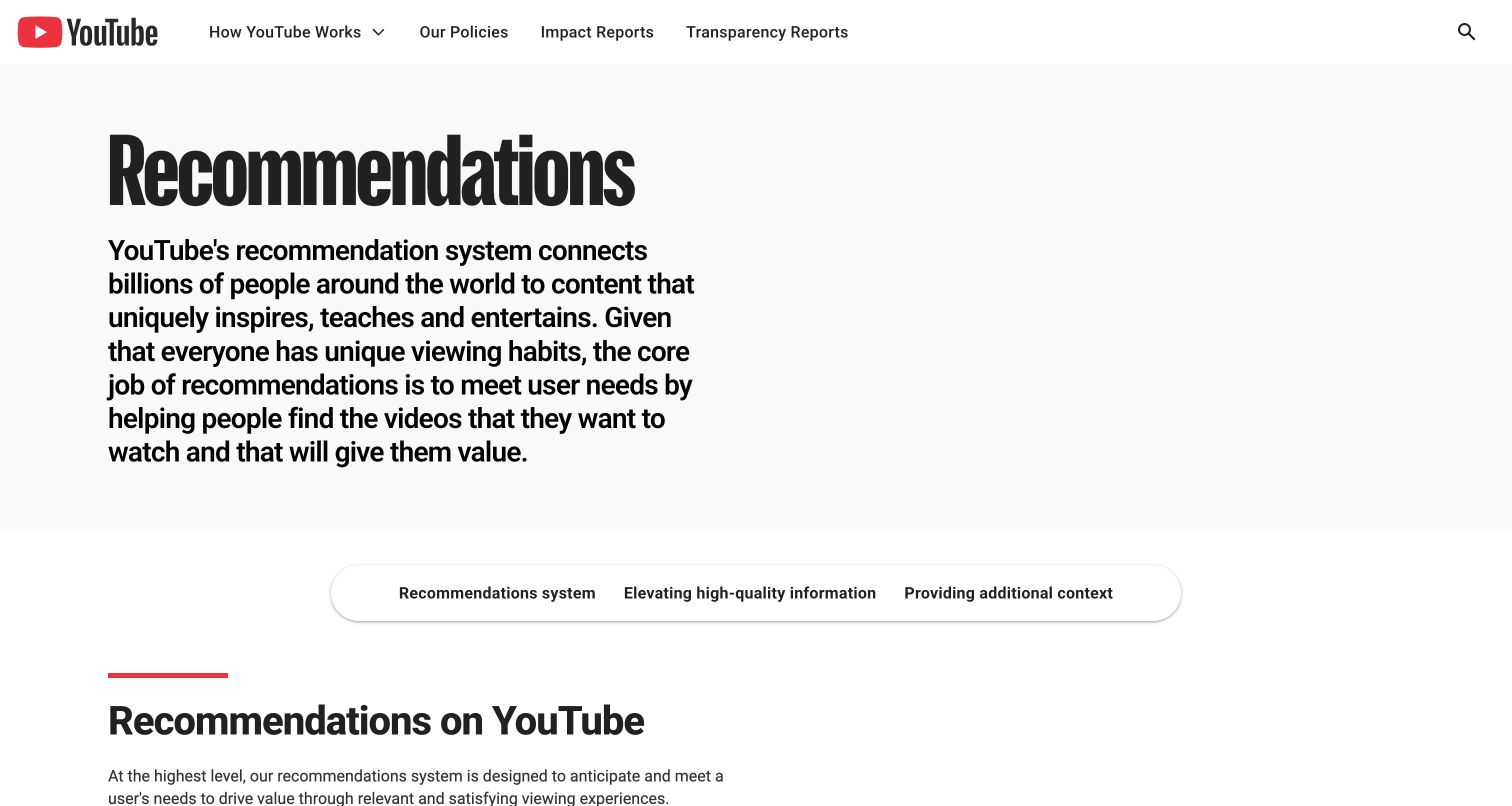
YouTube’s recommendations explainer is an educational property rather than the familiar watch-page feed. It organizes a complex platform topic into readable explanations and a clear company context. That separation is valuable: a public explanation can help visitors understand a system without requiring them to operate it, although it cannot disclose every implementation detail or reproduce a personalized recommendation journey. Documented association checked November 8, 2026: Oracle’s named YouTube customer reference documents historical MySQL scaling in the video platform; it does not identify the public explanatory page’s runtime.
What you can learn
Use an explanatory page to clarify the purpose and limits of a complex feature. The historical database reference supplies platform context, but it does not connect a particular recommendation model, a specific video request, or this explanatory site to a current MySQL deployment.
Pros
A dedicated explanation can answer questions that would distract from the main viewing interface.
Readable thematic sections make a complicated platform behavior more approachable for non-specialist visitors.
Cons & considerations
An educational overview cannot reveal all factors affecting an individual person’s recommendations.
Historical infrastructure material should not be mistaken for a complete current architecture of video delivery.
Platform source: Official MySQL customer or product evidence. Oracle’s named YouTube customer reference documents historical MySQL scaling in the video platform; it does not identify the public explanatory page’s runtime. Official customer reference may link historical engineering material; no current full-stack audit is implied. Official documentary association is scoped to the named product, workload, dependency, or database service. No marketing-homepage runtime, complete company stack, independent performance, or private customer workflow is inferred. Platform evidence is separate from the direct website screenshot and is not a complete current infrastructure audit.
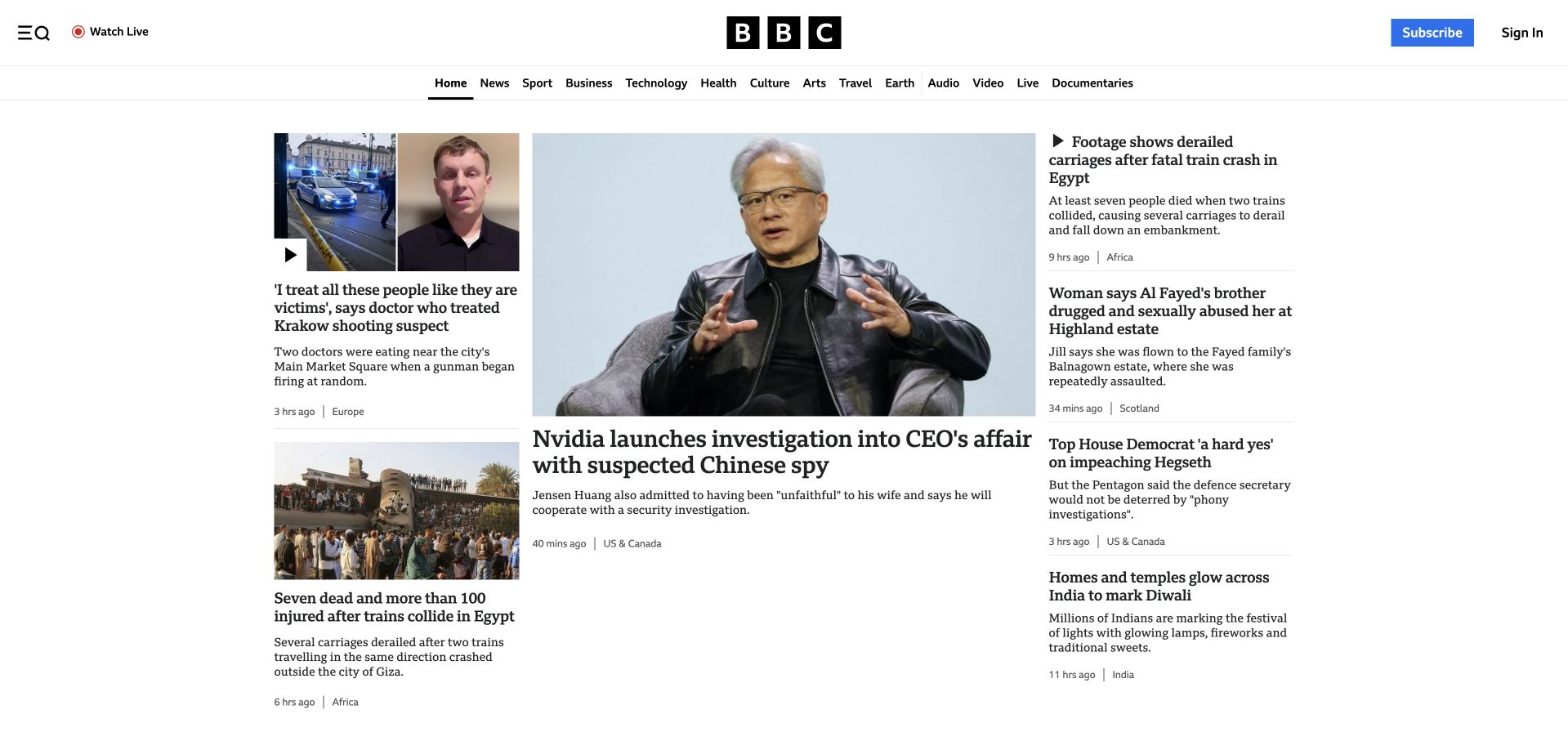
The BBC’s public editorial presence combines a highly recognizable identity with current stories and broad subject navigation. A changing headline hierarchy lets the publication serve immediate news interest while preserving routes into other topics. The page illustrates editorial priority, but the pictured news surface is only one part of a much larger broadcasting and digital-services organization. Documented association checked November 8, 2026: MySQL InnoDB Cluster for high-availability broadcasting services, documented in Oracle’s BBC customer reference; not every BBC property.
What you can learn
Keep the MySQL InnoDB Cluster case scoped to the broadcasting services it documents. High availability is an operating requirement that must be tested within a specific deployment; neither a vendor case nor a news homepage proves that every BBC property uses the same database.
Pros
A recognizable masthead makes a broad and continuously changing editorial environment easier to orient within.
Subject navigation gives readers an alternative to following only the publication’s current lead story.
Cons & considerations
Numerous competing stories can make sustained attention difficult when a visitor has a narrow information need.
The public news page cannot reveal the infrastructure of separate broadcasting or internal BBC services.
Platform source: Official MySQL customer or product evidence. MySQL InnoDB Cluster for high-availability broadcasting services, documented in Oracle’s BBC customer reference; not every BBC property. Official customer reference may link historical engineering material; no current full-stack audit is implied. Official documentary association is scoped to the named product, workload, dependency, or database service. No marketing-homepage runtime, complete company stack, independent performance, or private customer workflow is inferred. Platform evidence is separate from the direct website screenshot and is not a complete current infrastructure audit.
Uber’s public About page provides a useful alternative to the personalized account experience. It explains the organization and its ambitions through editorial sections rather than asking visitors to arrange a trip. The corporate property is separate from the operational screens where riders, drivers, and other customers complete their tasks. Documented association checked November 8, 2026: MySQL engine as the low-level storage layer for Uber’s Schemaless trip datastore, with links to Uber engineering explanations; public corporate-page capture does not identify its runtime.
What you can learn
Distinguish the low-level database engine from the application abstraction built above it. Uber’s Schemaless example is relevant to trip-data architecture; it does not mean MySQL supplies every service unchanged, nor does the corporate About page expose those operational data flows.
Pros
The About format makes organizational context available without requiring a ride request or account interaction.
Editorial sections support audiences interested in the company rather than a single immediate transaction.
Cons & considerations
Corporate storytelling offers limited help to someone trying to compare the details of a specific service.
The public page cannot demonstrate how current trip records, dispatch systems, or financial workflows are implemented.
Platform source: Official MySQL customer or product evidence. MySQL engine as the low-level storage layer for Uber’s Schemaless trip datastore, with links to Uber engineering explanations; public corporate-page capture does not identify its runtime. Official customer reference may link historical engineering material; no current full-stack audit is implied. Official documentary association is scoped to the named product, workload, dependency, or database service. No marketing-homepage runtime, complete company stack, independent performance, or private customer workflow is inferred. Platform evidence is separate from the direct website screenshot and is not a complete current infrastructure audit.
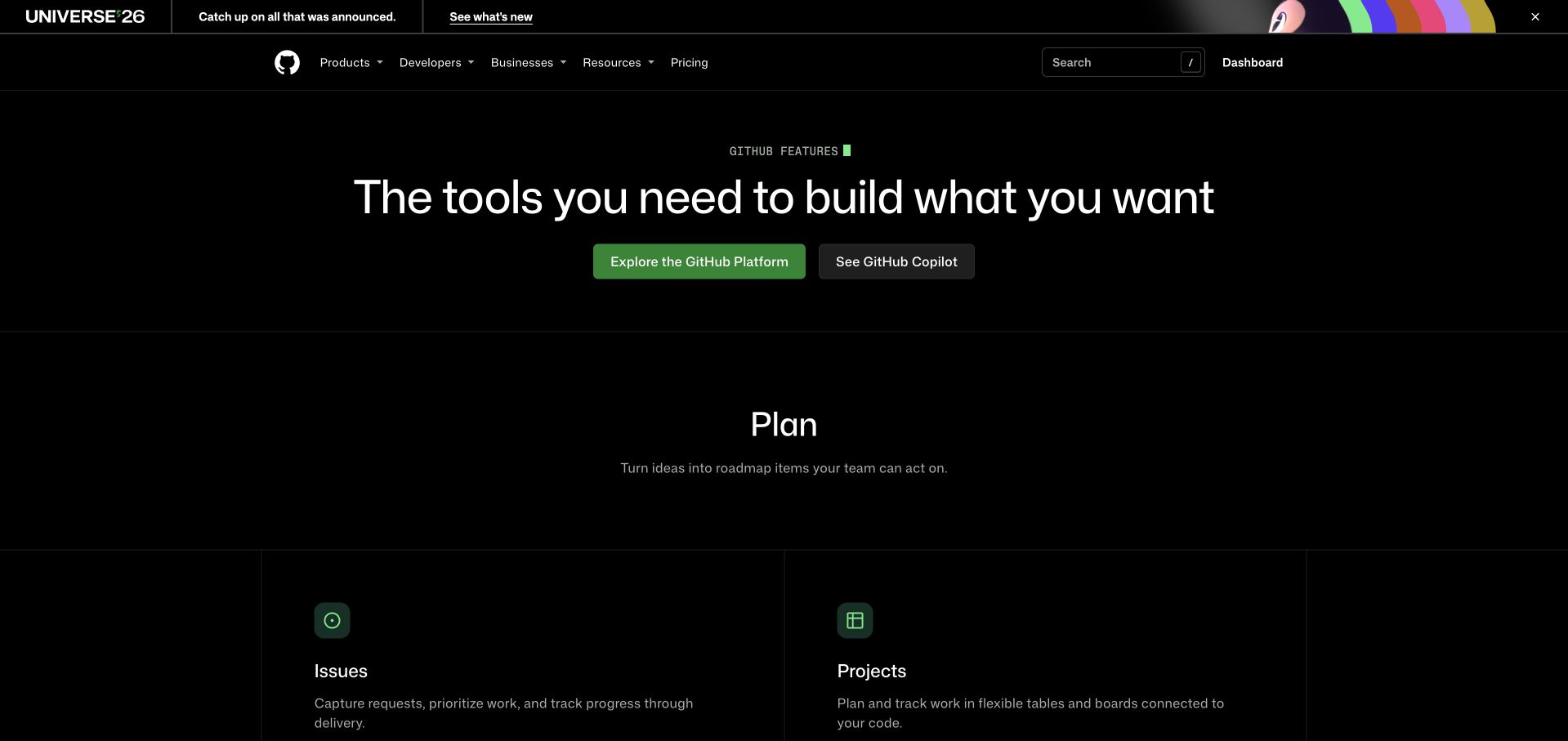
GitHub’s feature overview uses a broad product narrative to organize coding, collaboration, automation, and related capabilities. It remains a public marketing page even when an existing browser session exposes a generic dashboard route. Feature grouping explains the expanding platform, while the technical examples and product vocabulary assume a reader already understands software-development work. Documented association checked November 8, 2026: MySQL relational data and user metadata for GitHub.com, with linked GitHub engineering material on MySQL 8 and partitioning; the feature overview is the pictured public property.
What you can learn
Use relational metadata as a concrete boundary for the MySQL discussion. GitHub’s engineering-linked customer record is useful for persistence and scaling questions, but it should not be generalized to source-code storage, search indexes, AI inference, or the runtime of every feature page.
Pros
Feature grouping gives a large developer platform a more understandable structure than a flat capability inventory.
Developer-oriented examples let the page discuss real work without turning the introduction into API documentation.
Cons & considerations
The breadth of capabilities can make the most relevant starting point unclear to a new developer.
A feature overview cannot expose the independent storage and retrieval systems behind each product capability.
Platform source: Official MySQL customer or product evidence. MySQL relational data and user metadata for GitHub.com, with linked GitHub engineering material on MySQL 8 and partitioning; the feature overview is the pictured public property. Official customer reference may link historical engineering material; no current full-stack audit is implied. Official documentary association is scoped to the named product, workload, dependency, or database service. No marketing-homepage runtime, complete company stack, independent performance, or private customer workflow is inferred. Platform evidence is separate from the direct website screenshot and is not a complete current infrastructure audit.
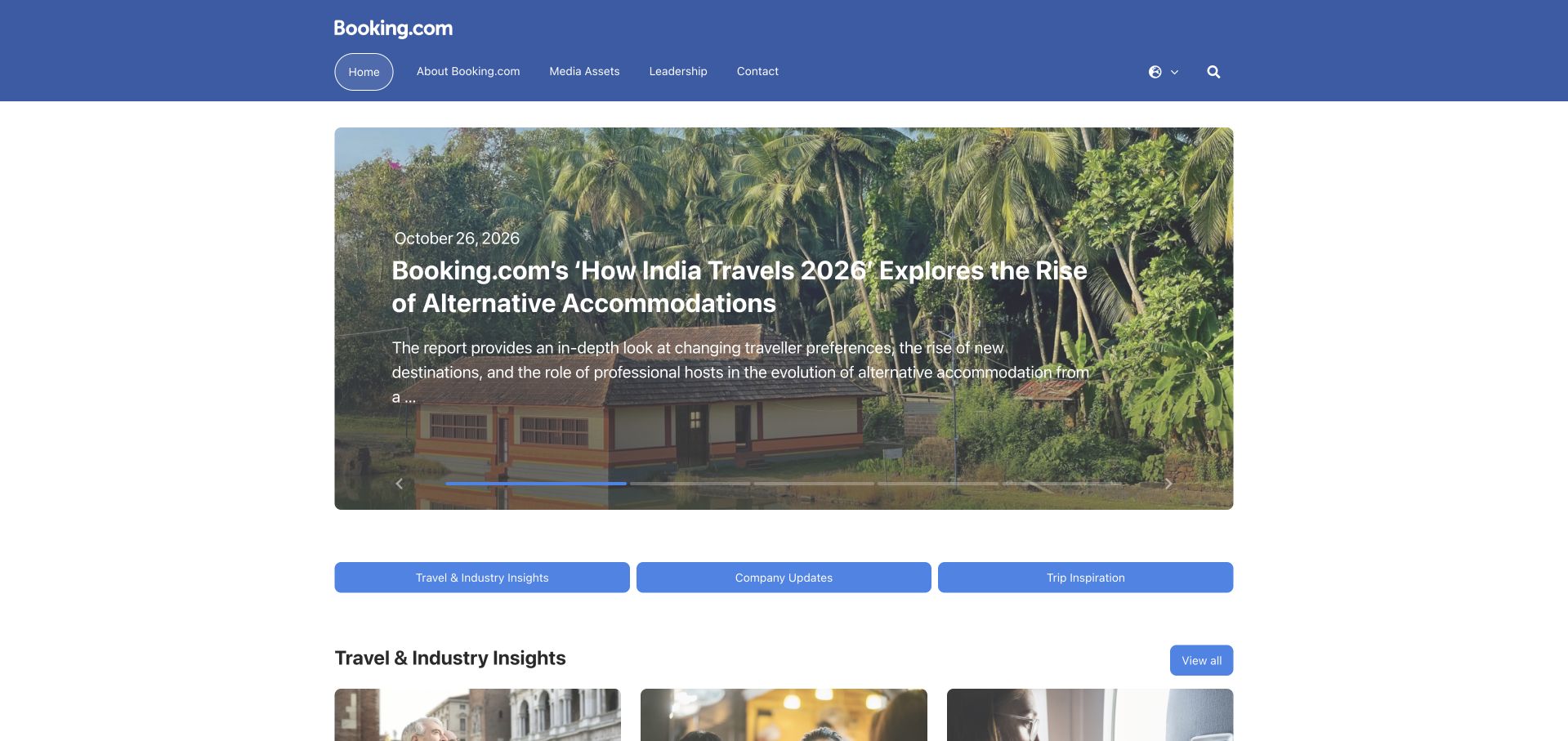
Booking.com’s newsroom is a public editorial surface for company announcements and travel-related business context. Its news-oriented hierarchy differs from the destination and availability search most travelers associate with the brand. That distinction makes the page useful for studying corporate publishing, but the design should not be evaluated as if it were a hotel comparison or reservation-completion interface. Documented association checked November 8, 2026: Documented MySQL database architecture and replication supporting Booking.com’s booking business; this separate public newsroom capture does not establish a newsroom database.
What you can learn
Match the evidence to the booking business rather than this separate publishing property. The documented MySQL architecture supports discussion of database replication and scaling; it does not establish the newsroom’s CMS or prove the consistency of a particular room offer in a live search.
Pros
A distinct newsroom purpose keeps corporate announcements separate from the much larger traveler-shopping experience.
Editorial organization helps journalists and other business audiences scan updates without entering a booking flow.
Cons & considerations
Visitors seeking accommodation have to recognize that the newsroom is not the transactional travel product.
The public editorial surface cannot demonstrate reservation availability, replication behavior, or the database serving its articles.
Platform source: Official MySQL customer or product evidence. Documented MySQL database architecture and replication supporting Booking.com’s booking business; this separate public newsroom capture does not establish a newsroom database. Official customer reference may link historical engineering material; no current full-stack audit is implied. Official documentary association is scoped to the named product, workload, dependency, or database service. No marketing-homepage runtime, complete company stack, independent performance, or private customer workflow is inferred. Platform evidence is separate from the direct website screenshot and is not a complete current infrastructure audit.
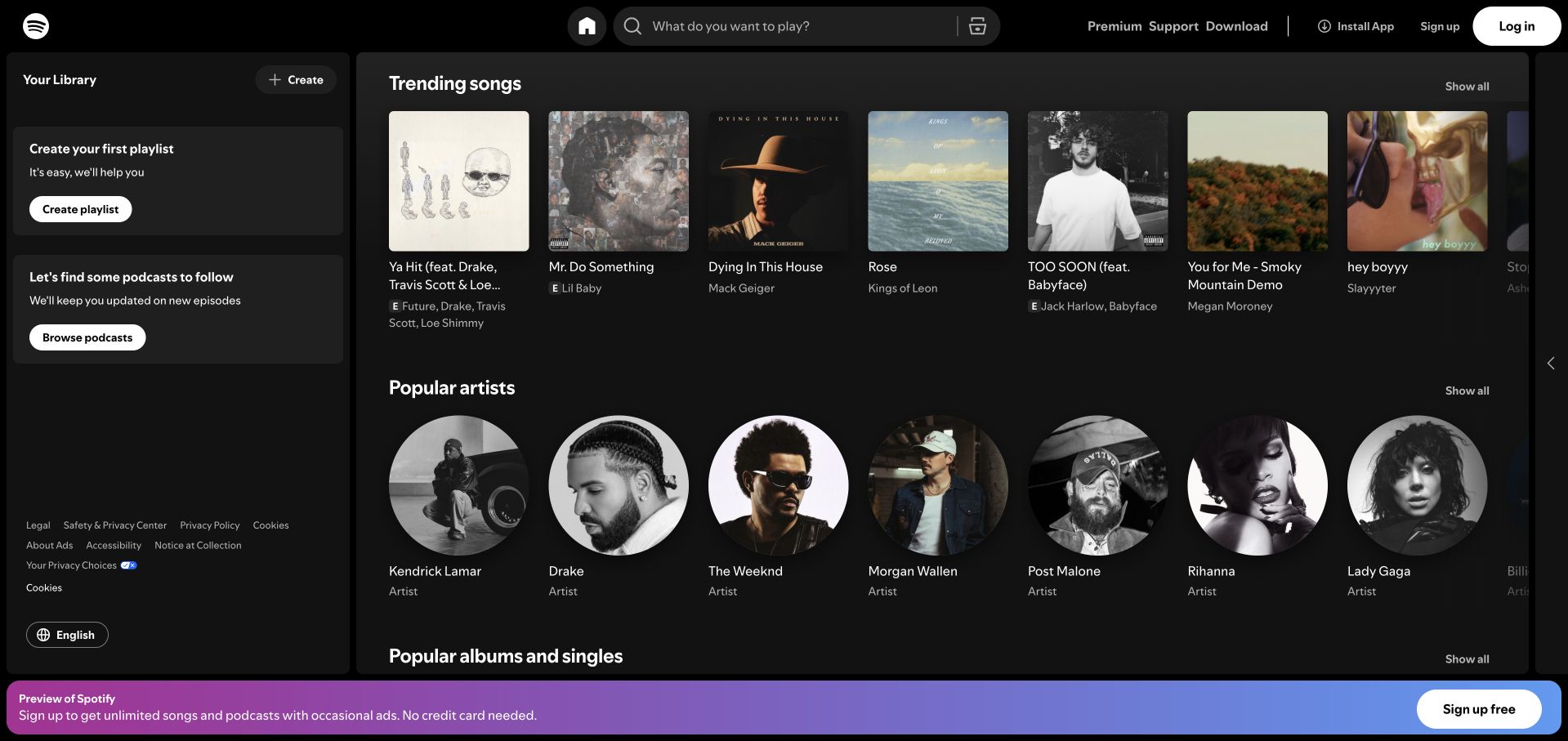
Spotify’s public page emphasizes a recognizable consumer subscription product through a small number of prominent commercial choices. The familiar brand and simple proposition reduce the explanation needed before a visitor understands the offer. That clarity is useful, but a public acquisition page is a limited view of a service whose listening, account, and discovery experiences mostly occur elsewhere. Documented association checked November 8, 2026: Oracle’s Spotify customer reference establishes a documented MySQL customer association; it does not specify the complete current music-service database estate.
What you can learn
Keep a named-customer record at its actual evidential strength. Spotify’s Oracle entry confirms a MySQL customer association, but does not disclose a specific current workload; the page’s appearance cannot fill that gap or justify claims about music recommendations and listening-state storage.
Pros
A recognizable product category lets the page concentrate on a small number of visitor decisions.
Prominent subscription routes make the commercial purpose clear without first explaining the whole platform.
Cons & considerations
The acquisition page provides little direct evidence about the day-to-day experience inside the music service.
A vendor customer listing without workload detail cannot support a detailed current backend diagram.
Platform source: Official MySQL customer or product evidence. Oracle’s Spotify customer reference establishes a documented MySQL customer association; it does not specify the complete current music-service database estate. Official customer reference may link historical engineering material; no current full-stack audit is implied. Official documentary association is scoped to the named product, workload, dependency, or database service. No marketing-homepage runtime, complete company stack, independent performance, or private customer workflow is inferred. Platform evidence is separate from the direct website screenshot and is not a complete current infrastructure audit.
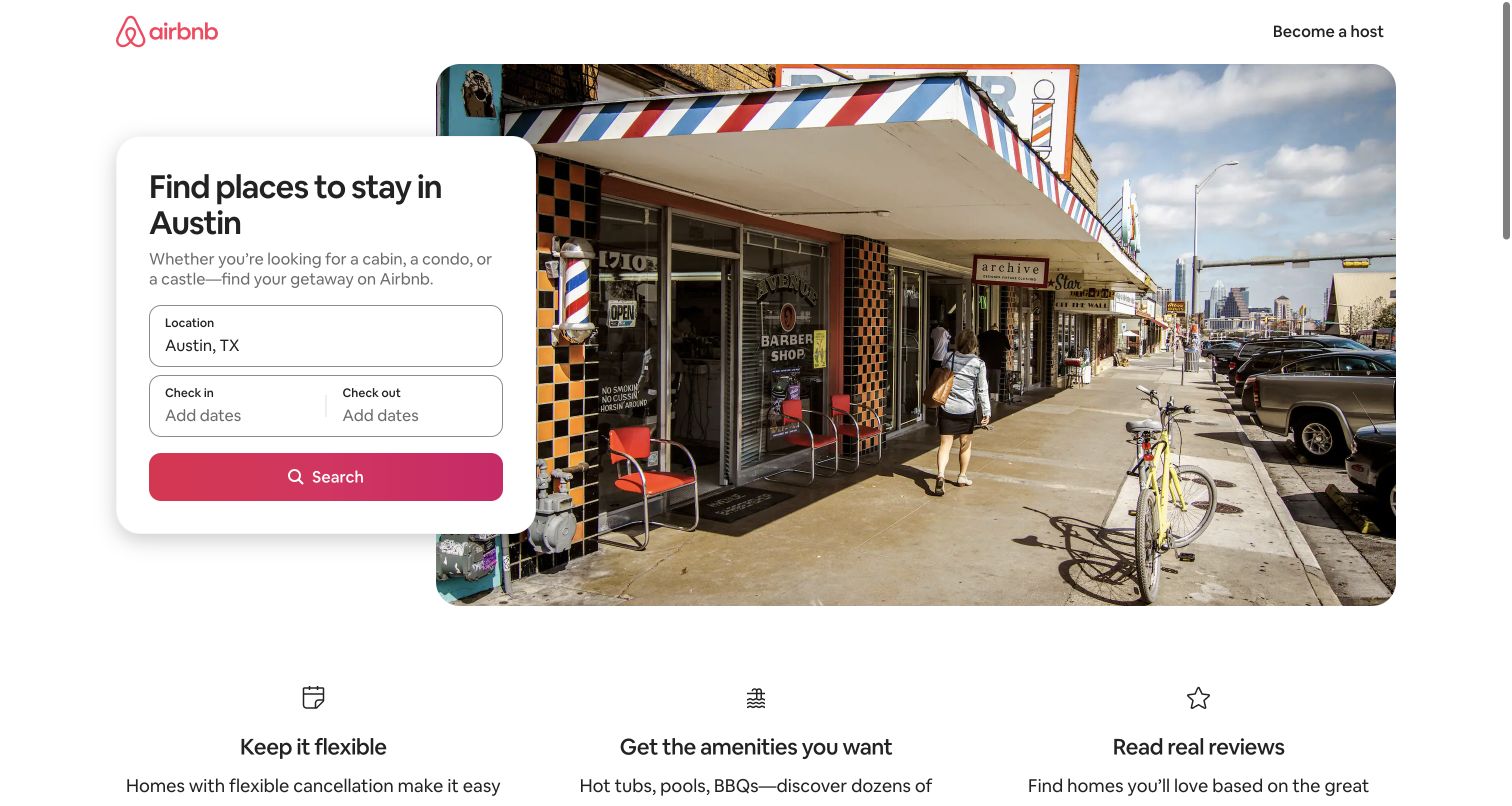
Airbnb’s Austin landing page turns a very large marketplace into a destination-specific search entrance. A city photograph, location field, and date choices give the visitor a concrete starting point instead of a broad corporate proposition. The useful pattern is the connection between a known place and a clearly framed trip query, while meaningful accommodation comparison requires further dates, availability, fees, and listing details. Documented association checked November 8, 2026: Airbnb’s documented main-database partitioning and MySQL replication; the customer reference does not identify every component serving this Austin landing page.
What you can learn
Treat marketplace partitioning as a data-ownership problem, not as a visual pattern. Airbnb’s documented MySQL history provides an architectural example, but does not prove which current systems produce this landing page or independently verify the accuracy of every displayed accommodation detail.
Pros
A named destination narrows a very large inventory into an understandable initial search context.
A clear location-and-date form turns destination interest into a specific next step without exposing private account information.
Cons & considerations
A destination overview cannot settle availability and total-cost questions without additional trip details.
Documented database partitioning does not identify every present service involved in generating this public landing page.
Platform source: Official MySQL customer or product evidence. Airbnb’s documented main-database partitioning and MySQL replication; the customer reference does not identify every component serving this Austin landing page. Official customer reference may link historical engineering material; no current full-stack audit is implied. Official documentary association is scoped to the named product, workload, dependency, or database service. No marketing-homepage runtime, complete company stack, independent performance, or private customer workflow is inferred. Platform evidence is separate from the direct website screenshot and is not a complete current infrastructure audit.
Etsy makes a heterogeneous marketplace browseable through category cues, product imagery, and a recognizable shopping frame. The page has to accommodate known-item searches and exploratory discovery at the same time. Its strongest lesson is that a varied catalog needs visible structure; the homepage alone cannot explain the quality, fulfillment, or trustworthiness of every independent seller represented within it. Documented association checked November 8, 2026: Oracle’s Etsy customer reference documents the marketplace’s historical MySQL scaling and database migration.
What you can learn
Separate marketplace persistence from seller-specific operational facts. Etsy’s historical migration and scaling material supports a MySQL association, but a useful new implementation still needs clear ownership for listings, order states, and inventory rather than copying a large company’s sharding decisions by default.
Pros
Product imagery gives a diverse marketplace an immediate browsing mechanism beyond a purely textual category list.
A familiar shopping frame supports both exploratory visitors and people looking for a known item.
Cons & considerations
Very different product types can be difficult to compare when the first view emphasizes visual discovery.
The homepage cannot establish individual seller reliability or the current database handling every marketplace workflow.
Platform source: Official MySQL customer or product evidence. Oracle’s Etsy customer reference documents the marketplace’s historical MySQL scaling and database migration. Official customer reference may link historical engineering material; no current full-stack audit is implied. Official documentary association is scoped to the named product, workload, dependency, or database service. No marketing-homepage runtime, complete company stack, independent performance, or private customer workflow is inferred. Platform evidence is separate from the direct website screenshot and is not a complete current infrastructure audit.
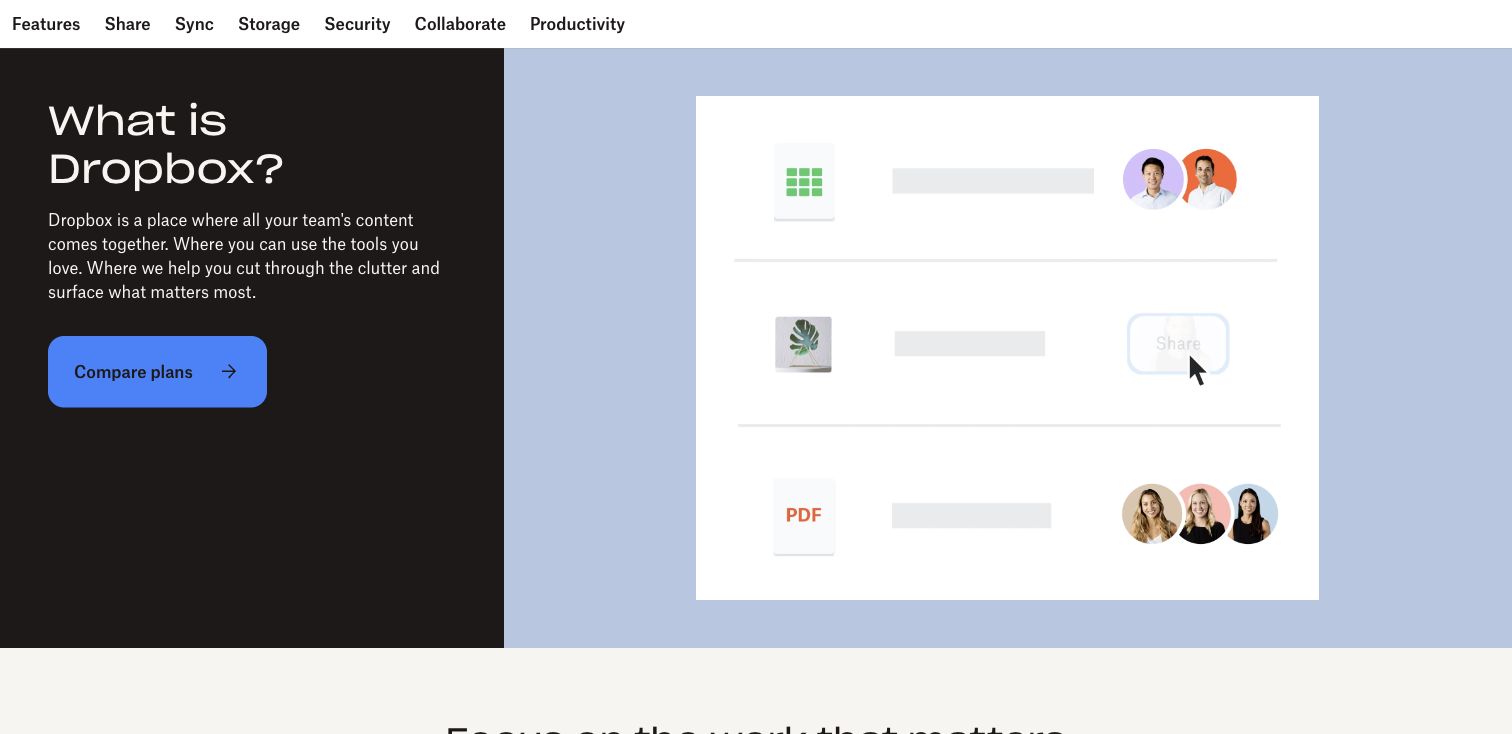
Dropbox’s features page explains a collaborative work product through capabilities rather than exposing a user’s private files. That public framing is useful when a service’s actual value is normally visible only after sign-in. Product sections make the offer approachable, but visitors evaluating a particular team workflow still need to understand where file storage, collaboration, administration, and other tools begin and end. Documented association checked November 8, 2026: Documented Dropbox MySQL scaling and cross-shard database transactions; the public features page is a visual example, not a database probe.
What you can learn
Use the documented MySQL metadata work to distinguish file bytes from the relationships around files. Cross-shard transactions are an engineering concern beneath collaboration features; the public features page does not establish that all content, search, or AI functions use the same datastore.
Pros
A public capability overview lets visitors understand the product without revealing or requesting private documents.
Feature-based sections can explain collaboration benefits more clearly than a generic cloud-storage slogan.
Cons & considerations
Adjacent collaboration tools can become difficult to distinguish without a concrete team scenario or comparison.
The pictured overview cannot reveal metadata consistency, file durability, or the implementation of every current feature.
Platform source: Official MySQL customer or product evidence. Documented Dropbox MySQL scaling and cross-shard database transactions; the public features page is a visual example, not a database probe. Official customer reference may link historical engineering material; no current full-stack audit is implied. Official documentary association is scoped to the named product, workload, dependency, or database service. No marketing-homepage runtime, complete company stack, independent performance, or private customer workflow is inferred. Platform evidence is separate from the direct website screenshot and is not a complete current infrastructure audit.
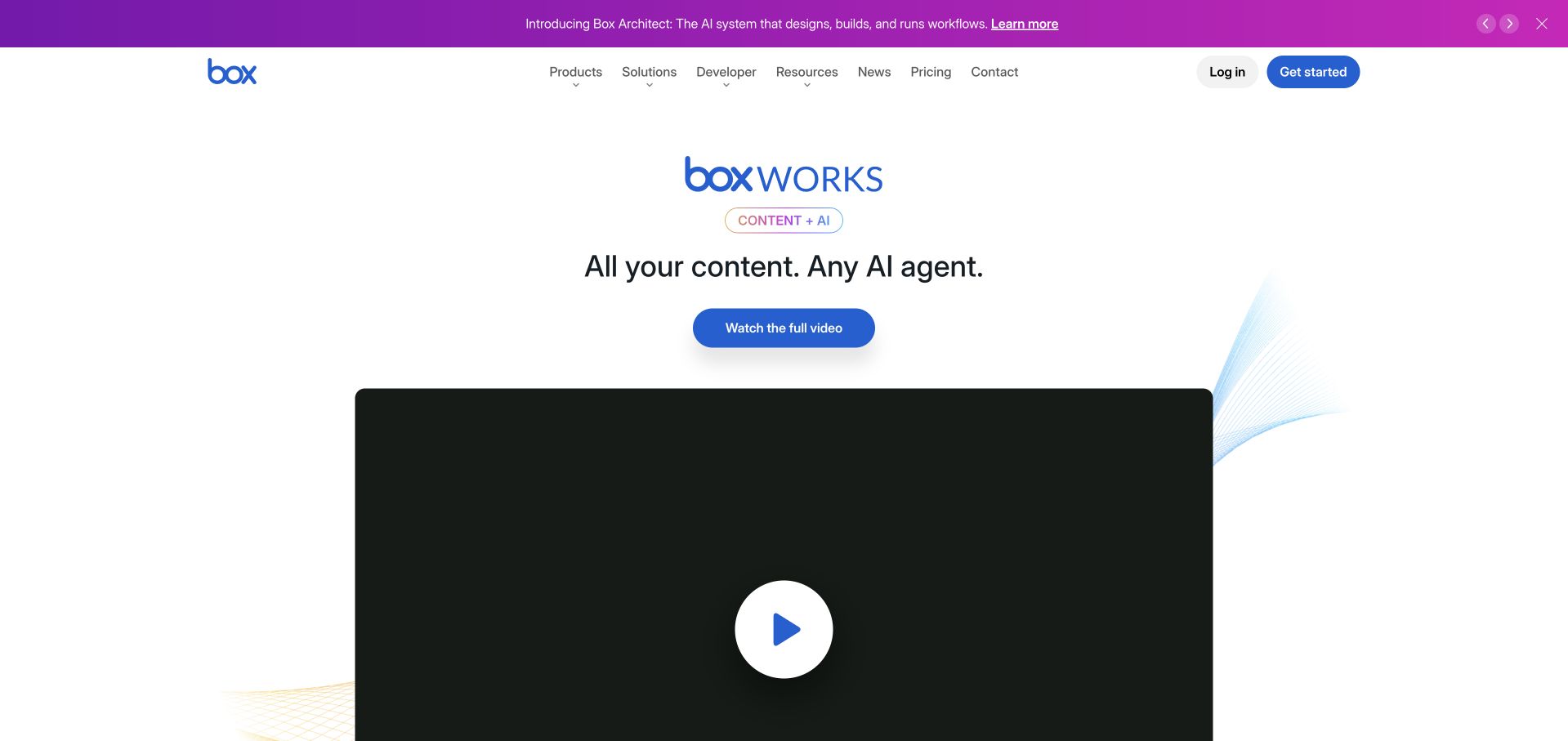
Box presents a broad content platform through an enterprise-oriented public storefront. The emphasis is on organizational needs and product capabilities rather than a simple consumer file upload. This helps explain a wider business proposition, but it requires careful distinctions among storage, content workflows, administration, and newer AI features so that an evaluator can understand the actual scope of the offer. Documented association checked November 8, 2026: Box’s documented decision to retain MySQL and shard its largest collaboration-platform tables.
What you can learn
Connect the database reference to the tables and metadata it actually describes. Box’s documented MySQL sharding decision is an example of evolving an established application, not a reason to assume every content object, permission check, or public page is implemented in the same database.
Pros
An enterprise framing makes organizational evaluation more explicit than a purely consumer-oriented storage presentation.
Capability grouping helps the brand communicate workflows that extend beyond keeping files in one place.
Cons & considerations
Broad platform language can obscure which capabilities are essential for a particular team’s use case.
A public vendor page cannot demonstrate the behavior of permissions or the full storage architecture.
Platform source: Official MySQL customer or product evidence. Box’s documented decision to retain MySQL and shard its largest collaboration-platform tables. Official customer reference may link historical engineering material; no current full-stack audit is implied. Official documentary association is scoped to the named product, workload, dependency, or database service. No marketing-homepage runtime, complete company stack, independent performance, or private customer workflow is inferred. Platform evidence is separate from the direct website screenshot and is not a complete current infrastructure audit.
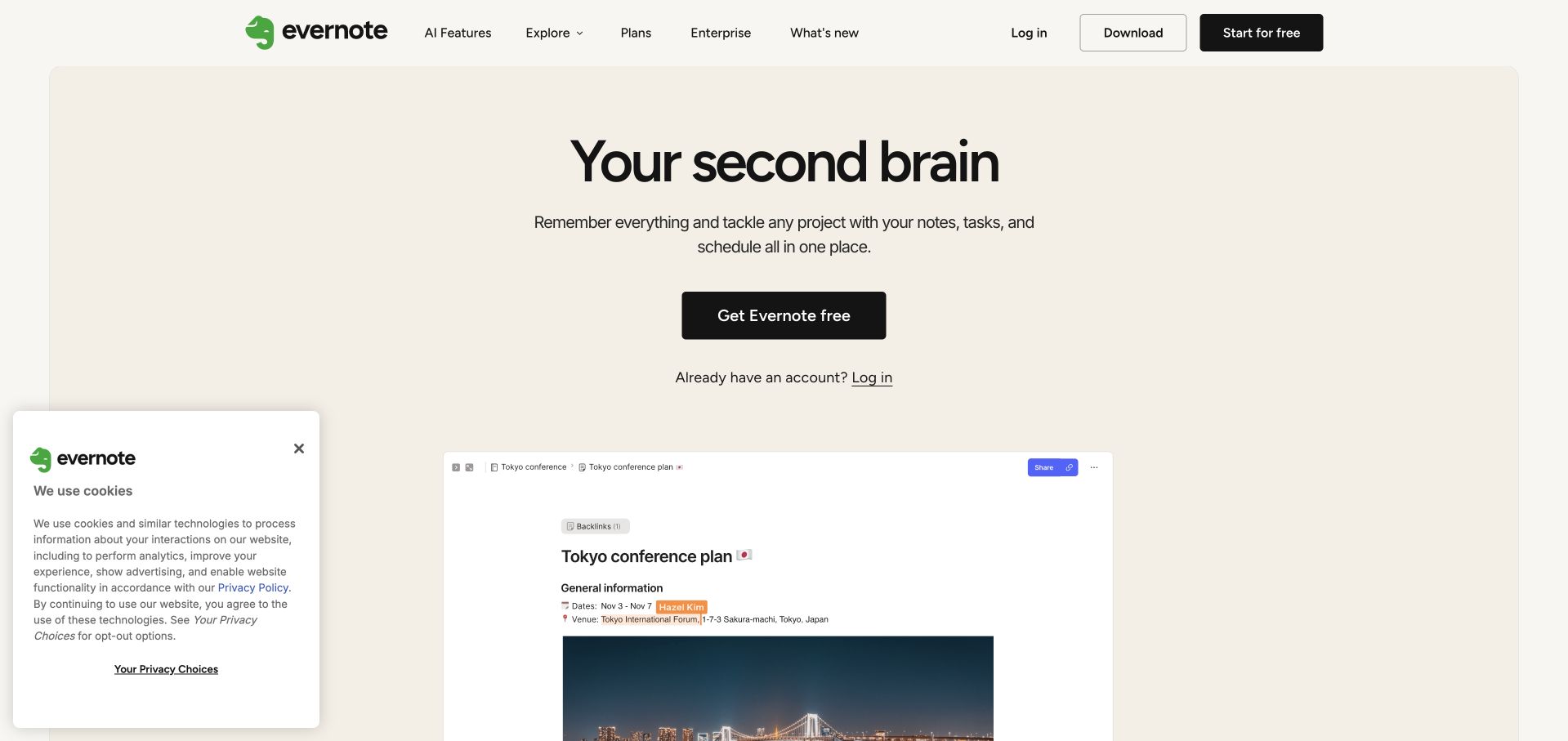
Evernote’s public site introduces a familiar note-taking product while directing visitors toward its current feature set and adoption routes. The value proposition is easier to grasp when tied to capturing and organizing information than when expressed only as a list of tools. The marketing surface remains separate from the private notes, synchronization states, and everyday editing experience that determine whether the service fits a person’s work. Documented association checked November 8, 2026: Oracle’s Evernote reference links its historical MySQL/InnoDB persistence and architecture explanations.
What you can learn
Use the historical InnoDB reference to discuss persistence requirements, not to infer every current feature. A note product needs clear expectations about saving and synchronization; an older architecture account does not verify today’s AI tools, device behavior, or this marketing site’s runtime.
Pros
A familiar information-capture task gives the product a concrete purpose before visitors compare individual features.
Public product explanations allow evaluation without exposing a personal notebook or requiring account access.
Cons & considerations
Feature expansion can make the core note-taking proposition harder to distinguish from adjacent productivity tools.
The marketing page cannot prove synchronization reliability or the database choices behind the current application.
Platform source: Official MySQL customer or product evidence. Oracle’s Evernote reference links its historical MySQL/InnoDB persistence and architecture explanations. Official customer reference may link historical engineering material; no current full-stack audit is implied. Official documentary association is scoped to the named product, workload, dependency, or database service. No marketing-homepage runtime, complete company stack, independent performance, or private customer workflow is inferred. Platform evidence is separate from the direct website screenshot and is not a complete current infrastructure audit.
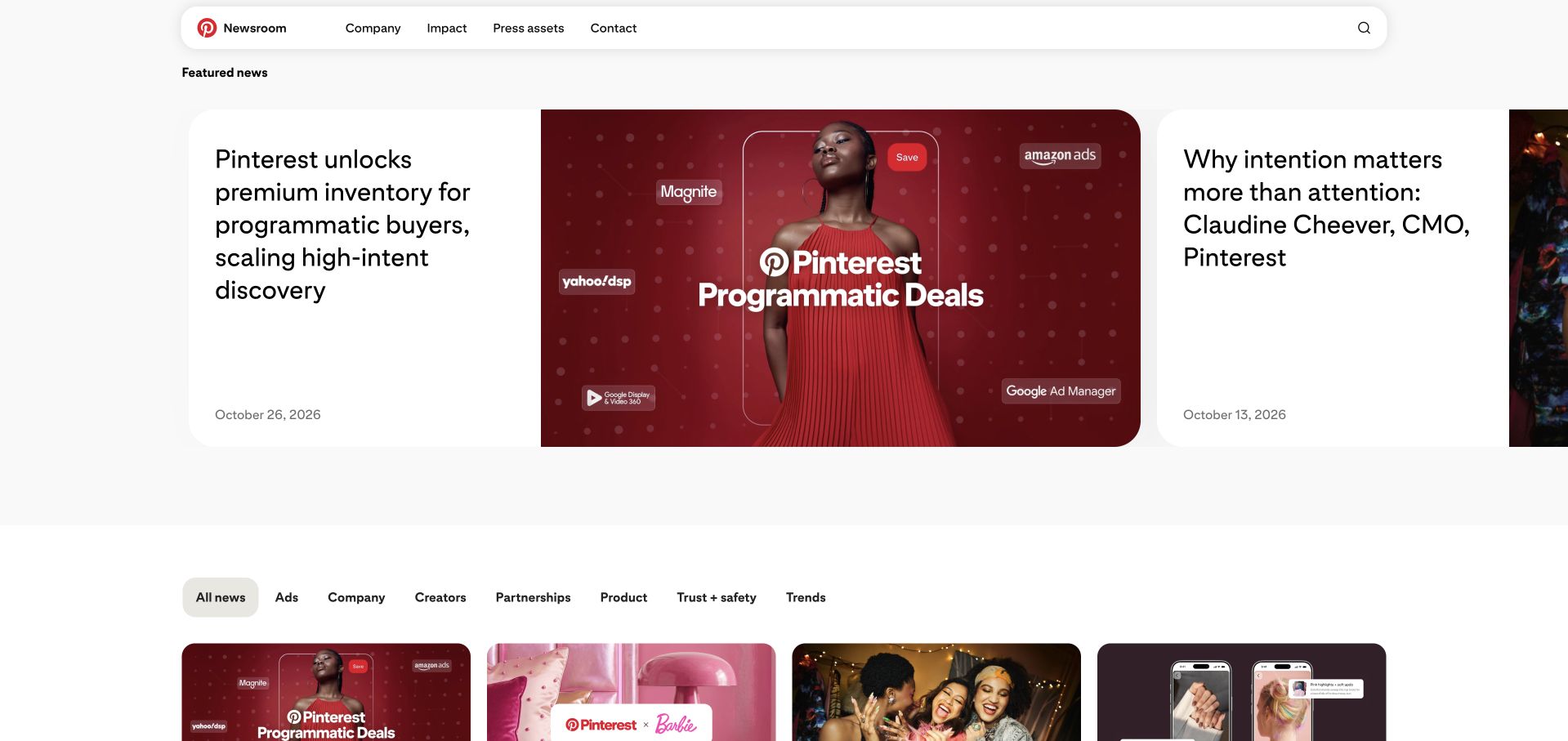
Pinterest’s newsroom presents the company through public announcements and an editorial archive rather than a personalized image feed. The everyday homepage can depend on an existing account session. The public page gives corporate audiences a stable information route, but it should not be confused with the visual discovery product or treated as a view of an individual person’s interests. Documented association checked November 8, 2026: Oracle’s Pinterest customer reference documents MySQL platform shards and ingestion; this separate public newsroom is not itself runtime evidence.
What you can learn
Scope the MySQL evidence to Pinterest’s documented platform shards and ingestion systems. A corporate newsroom is a distinct property; its presence under the same brand does not establish the same runtime, nor does a database association explain recommendation ranking or image-delivery architecture.
Pros
A dedicated public newsroom provides company information without exposing a personalized discovery or account interface.
An editorial structure gives announcements a more predictable home than a changing consumer feed.
Cons & considerations
Corporate announcements do not let readers evaluate the full browsing experience of the core discovery service.
The brand-level infrastructure reference cannot identify the newsroom’s own publishing database or current recommendation systems.
Platform source: Official MySQL customer or product evidence. Oracle’s Pinterest customer reference documents MySQL platform shards and ingestion; this separate public newsroom is not itself runtime evidence. Official customer reference may link historical engineering material; no current full-stack audit is implied. Official documentary association is scoped to the named product, workload, dependency, or database service. No marketing-homepage runtime, complete company stack, independent performance, or private customer workflow is inferred. Platform evidence is separate from the direct website screenshot and is not a complete current infrastructure audit.
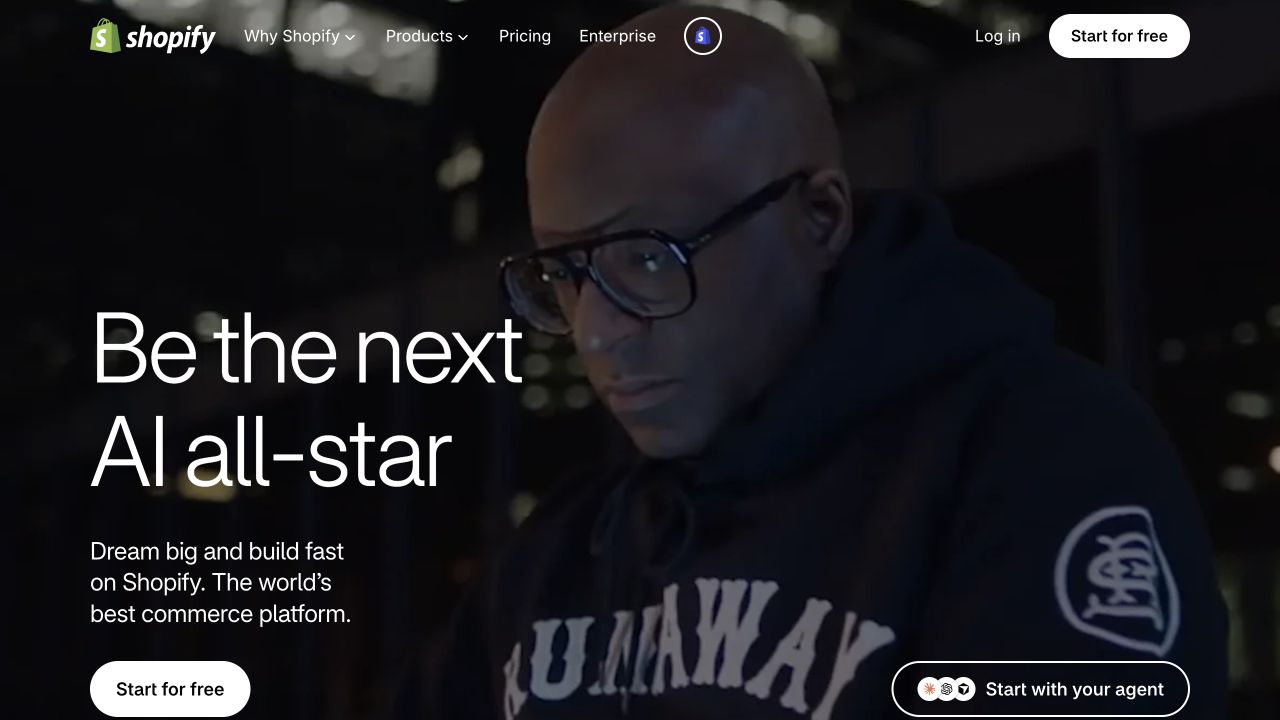
Shopify introduces a large commerce platform through merchant ambitions, product demonstrations, and several routes into its ecosystem. The site is useful for showing how a technical service can begin with the work a customer wants to do. Its challenge is to preserve a clear starting point while serving new merchants, larger organizations, developers, and businesses that need different selling channels. Documented association checked November 8, 2026: MySQL customer reference for Shopify’s commerce platform, with linked engineering evidence for its database architecture.
What you can learn
Read the MySQL association as commerce-platform engineering context. Shopify’s documented database evolution is not a claim that every merchant theme or third-party app uses the same storage system; plan orders, product information, and integrations according to the actual project’s ownership boundaries.
Pros
Merchant-oriented framing connects infrastructure capabilities with the concrete task of building and running a business.
Visible product context helps explain a platform that would otherwise be difficult to summarize in one paragraph.
Cons & considerations
The growing ecosystem can make simple entry-level needs and enterprise requirements compete for attention.
A platform engineering reference does not establish the implementation of an individual merchant storefront or extension.
Platform source: Official MySQL customer or product evidence. MySQL customer reference for Shopify’s commerce platform, with linked engineering evidence for its database architecture. Official customer reference may link historical engineering material; no current full-stack audit is implied. Official documentary association is scoped to the named product, workload, dependency, or database service. No marketing-homepage runtime, complete company stack, independent performance, or private customer workflow is inferred. Platform evidence is separate from the direct website screenshot and is not a complete current infrastructure audit.
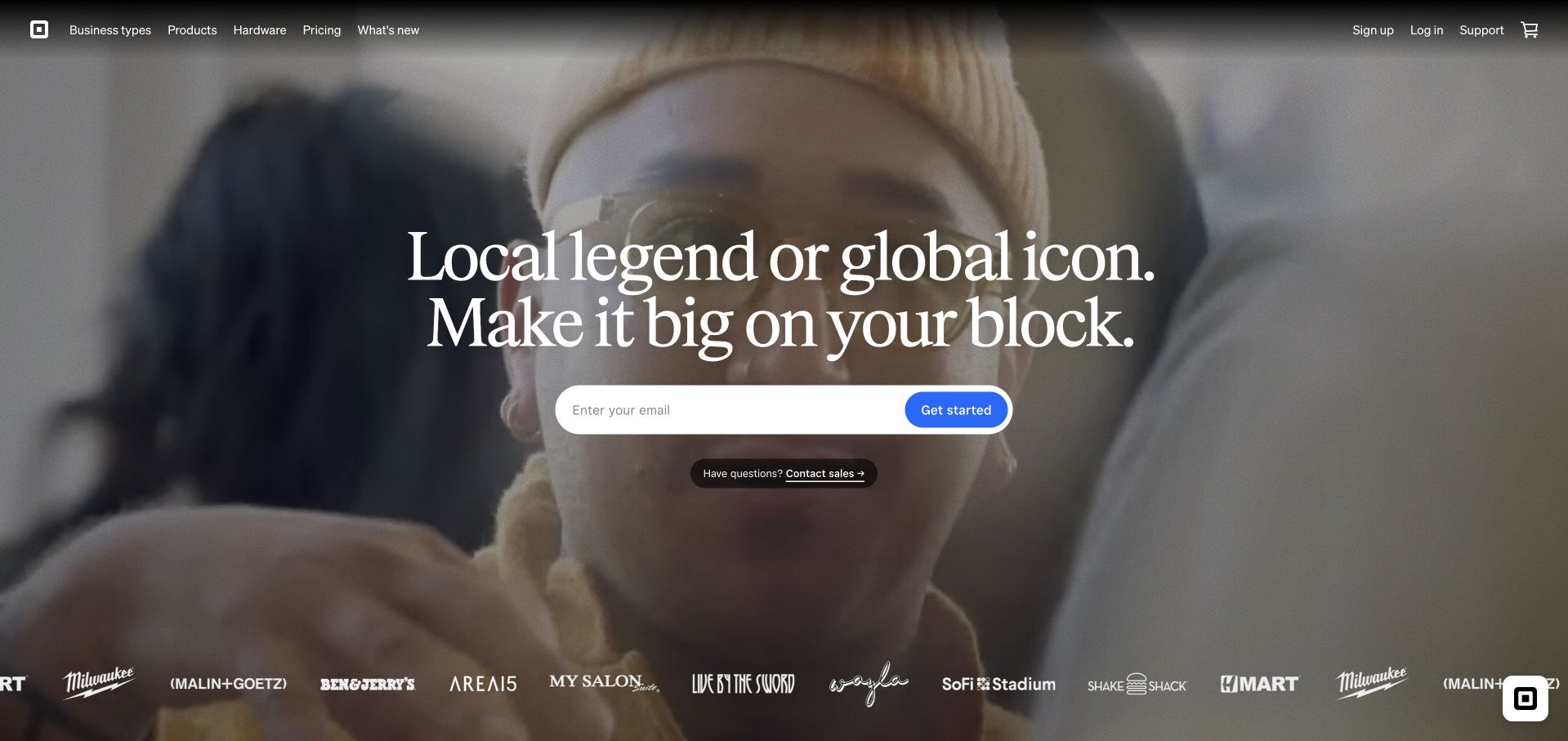
Square’s public site organizes a wide business-tool portfolio around the needs of merchants and service operators. The recognizable brand helps visitors accept the broader offer, while product and business-type routes make different use cases more concrete. The important design problem is clarifying the relationship among payment acceptance, operational software, and other services instead of presenting them as interchangeable features. Documented association checked November 8, 2026: Oracle’s Square customer reference documents MySQL in the payments-business backend, not every public merchant product.
What you can learn
Keep the database association below the product boundaries it actually supports. Square’s documented MySQL use is relevant to backend engineering, but it does not independently verify payment authorization, settlement timing, or the runtime of every public merchant-product page.
Pros
Business-oriented routes help visitors find a relevant context within a broad operational software portfolio.
A consistent public identity ties together tools that might otherwise feel like separate vendors or products.
Cons & considerations
Related merchant services still require explanation before an unfamiliar visitor can identify an appropriate combination.
A public product overview cannot demonstrate the correctness or availability of private payment-processing workflows.
Visible tech stack
Earlier / documented evidence
MySQL
Platform source: Official MySQL customer or product evidence. Oracle’s Square customer reference documents MySQL in the payments-business backend, not every public merchant product. Official customer reference may link historical engineering material; no current full-stack audit is implied. Official documentary association is scoped to the named product, workload, dependency, or database service. No marketing-homepage runtime, complete company stack, independent performance, or private customer workflow is inferred. Platform evidence is separate from the direct website screenshot and is not a complete current infrastructure audit.
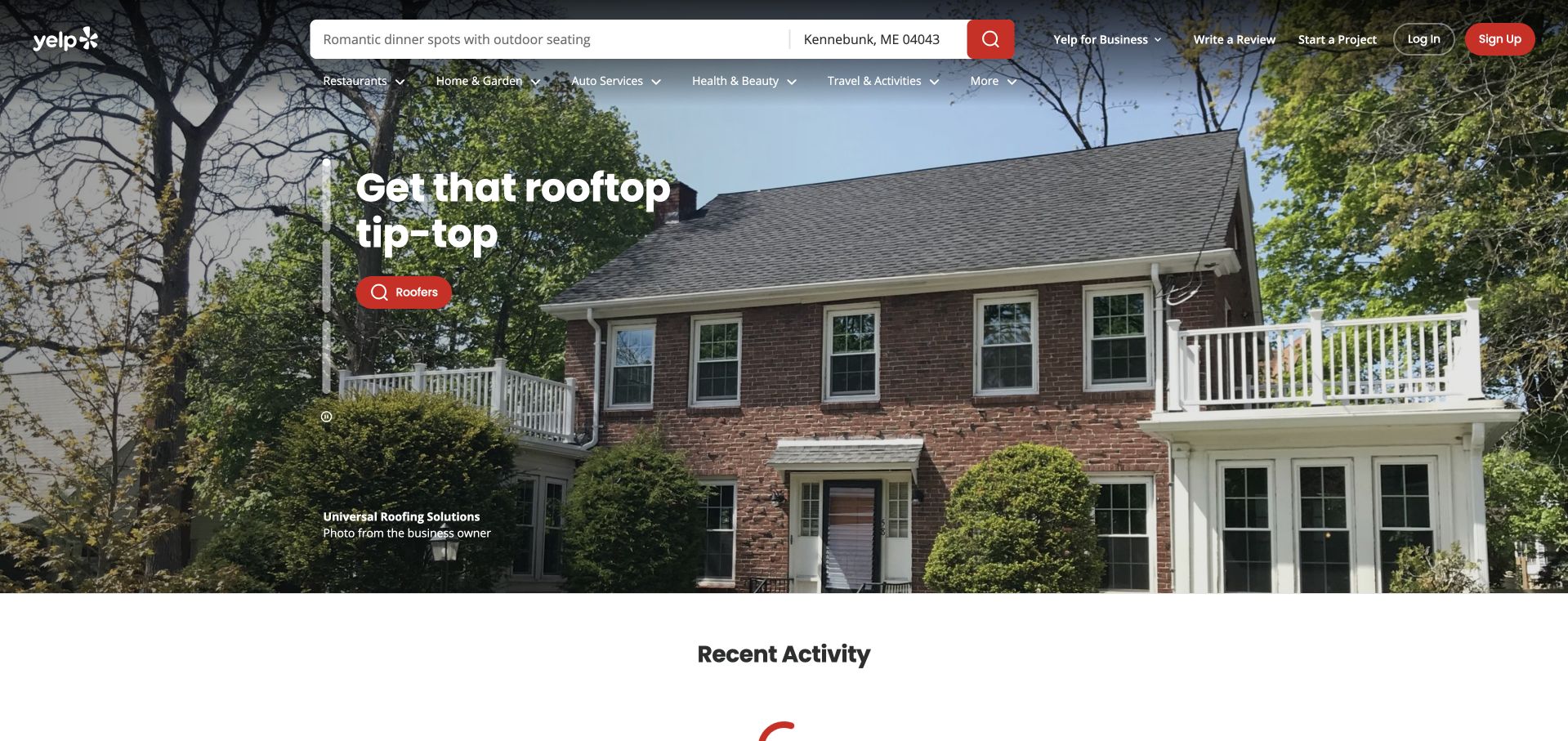
Yelp’s public page leads with local discovery and a clear search-oriented mental model. Business categories and location context make a large information catalog more approachable than a generic directory would be. The design is useful for studying intent-driven navigation, while the quality of any particular result still depends on information beyond the homepage, including current business details and the context of individual reviews. Documented association checked November 8, 2026: Oracle’s named Yelp customer reference documents MySQL association with the local-discovery platform.
What you can learn
Treat the documented MySQL-to-streaming relationship as a data pipeline example. Local-discovery pages need explicit freshness expectations, but the customer reference does not establish that every search result, review-ranking component, or public page is directly served from one relational database.
Pros
Search and location provide a practical frame for a catalog spanning many unrelated local business categories.
Recognizable category cues support visitors who are exploring rather than searching for a known business.
Cons & considerations
A discovery homepage cannot establish the currency or completeness of every independent business listing.
Visible reviews and rankings are not a transparent view of the platform’s full persistence and indexing systems.
Platform source: Official MySQL customer or product evidence. Oracle’s named Yelp customer reference documents MySQL association with the local-discovery platform. Official customer reference may link historical engineering material; no current full-stack audit is implied. Official documentary association is scoped to the named product, workload, dependency, or database service. No marketing-homepage runtime, complete company stack, independent performance, or private customer workflow is inferred. Platform evidence is separate from the direct website screenshot and is not a complete current infrastructure audit.
Chess.com presents a concrete activity before expanding into a wider chess ecosystem. Playing and learning routes give visitors recognizable next steps, while the established game provides a shared vocabulary that many software products lack. The design lesson is to anchor a broad service in a clear primary activity without making every newcomer understand the full collection of lessons, events, communities, and account features first. Documented association checked November 8, 2026: Oracle’s Chess.com customer reference documents MySQL in the online-chess service.
What you can learn
Separate a game platform’s persistence requirements from its visible interaction design. The documented MySQL case supplies backend context; it does not independently establish current query volumes, live-game latency, fair-play systems, or the database behind every instructional and community page.
Pros
A familiar game makes the central activity immediately understandable to a wide range of visitors.
Playing and learning routes accommodate different levels of confidence without requiring a complex initial explanation.
Cons & considerations
The expanding ecosystem can distract from a newcomer’s simple choice between playing and learning.
A public entry page does not demonstrate the reliability of live games or the implementation of fairness controls.
Platform source: Official MySQL customer or product evidence. Oracle’s Chess.com customer reference documents MySQL in the online-chess service. Official customer reference may link historical engineering material; no current full-stack audit is implied. Official documentary association is scoped to the named product, workload, dependency, or database service. No marketing-homepage runtime, complete company stack, independent performance, or private customer workflow is inferred. Platform evidence is separate from the direct website screenshot and is not a complete current infrastructure audit.
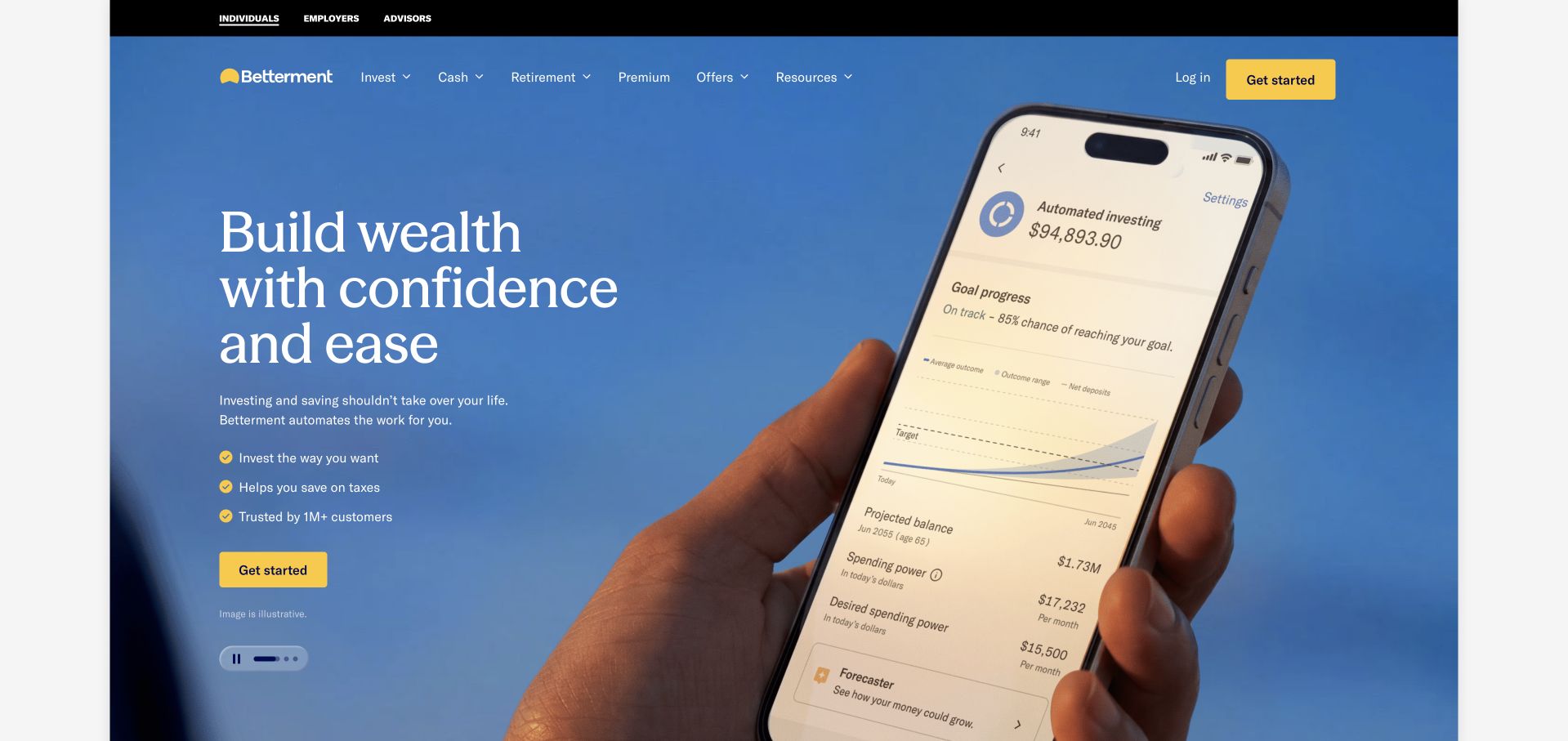
Betterment introduces an investment service through a consumer-oriented public presentation with separate product and educational routes. Clear category language matters because visitors arrive with different goals and levels of familiarity. The page is useful for examining how a financial brand organizes information, but its marketing polish cannot establish suitability, returns, or the quality of advice for an individual person. Documented association checked November 8, 2026: Oracle’s named Betterment customer record establishes a MySQL association without identifying an exact current application workload.
What you can learn
Preserve the limit of the available evidence. Oracle’s named customer record establishes Betterment’s MySQL association without a complete current workload description; do not use that association to infer investment calculations, custody systems, account protections, or the runtime of the marketing homepage.
Pros
Distinct product and educational routes can support visitors with different levels of financial-service familiarity.
A consumer-oriented presentation makes a complex category easier to approach before detailed account research.
Cons & considerations
A concise marketing proposition may leave important product conditions and eligibility questions to deeper pages.
A named database customer record cannot verify financial outcomes or identify the whole current backend estate.
Platform source: Official MySQL customer or product evidence. Oracle’s named Betterment customer record establishes a MySQL association without identifying an exact current application workload. Official customer reference may link historical engineering material; no current full-stack audit is implied. Official documentary association is scoped to the named product, workload, dependency, or database service. No marketing-homepage runtime, complete company stack, independent performance, or private customer workflow is inferred. Platform evidence is separate from the direct website screenshot and is not a complete current infrastructure audit.
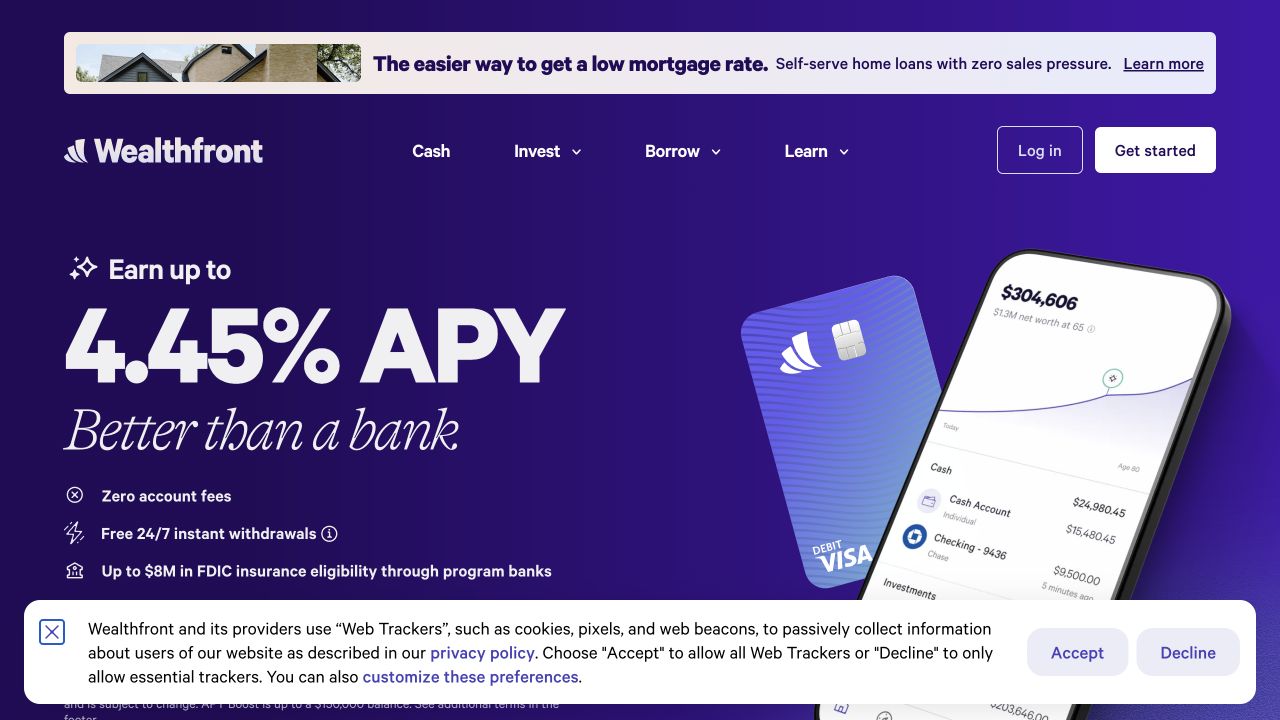
Wealthfront’s captured public page gives a cash-account promotion prominent space inside a broader investment-and-borrowing product family. The large yield headline, card illustration, and loan banner make the commercial emphasis immediate. Its transferable lesson is the need to keep product categories and offer conditions understandable when related financial propositions compete, without treating a promotional rate as advice or a prediction for an individual visitor. Documented association checked November 8, 2026: Oracle’s Wealthfront customer reference documents MySQL association with the financial platform.
What you can learn
Use the documented persistent-queue discussion to ask how background work is acknowledged and retried. That MySQL association is narrower than the entire financial platform; it is not evidence about every portfolio calculation, transaction, or public page, and does not guarantee a financial result.
Pros
Product categories give related financial offers distinct places instead of collapsing them into one general promise.
Recognizable product navigation gives visitors alternatives to the cash-account promotion dominating the main panel.
Cons & considerations
Simple top-level messaging cannot replace careful reading of the conditions attached to individual account products.
The public page cannot reveal queue correctness, transaction processing, or the complete database architecture.
Platform source: Official MySQL customer or product evidence. Oracle’s Wealthfront customer reference documents MySQL association with the financial platform. Official customer reference may link historical engineering material; no current full-stack audit is implied. Official documentary association is scoped to the named product, workload, dependency, or database service. No marketing-homepage runtime, complete company stack, independent performance, or private customer workflow is inferred. Platform evidence is separate from the direct website screenshot and is not a complete current infrastructure audit.
Brown University’s homepage balances institutional identity with current academic stories and routes for several audiences. The editorial entrance is useful for expressing a university’s intellectual life without treating the whole institution as a course catalog. That breadth also creates a navigation challenge: prospective students, researchers, alumni, and current community members need different practical information beneath the same recognizable public identity. Documented association checked November 8, 2026: Oracle’s Brown University case study documents MySQL Enterprise Edition for the university’s database environment; not proof of the university homepage’s runtime.
What you can learn
Scope enterprise database evidence to the university environment described by the customer case. Brown’s MySQL Enterprise association does not identify the homepage’s publishing system, every research database, or all student services; institutional technology estates contain independent systems with different owners and requirements.
Pros
Academic storytelling communicates institutional character beyond a purely administrative list of departments and services.
Audience routes can help several university communities share one public entrance without requiring identical journeys.
Cons & considerations
Editorial prominence can make a narrowly practical admissions or campus-service task less immediately visible.
A university database case cannot establish the technology of every departmental, research, or public publishing property.
Platform source: Official MySQL customer or product evidence. Oracle’s Brown University case study documents MySQL Enterprise Edition for the university’s database environment; not proof of the university homepage’s runtime. Official customer reference may link historical engineering material; no current full-stack audit is implied. Official documentary association is scoped to the named product, workload, dependency, or database service. No marketing-homepage runtime, complete company stack, independent performance, or private customer workflow is inferred. Platform evidence is separate from the direct website screenshot and is not a complete current infrastructure audit.
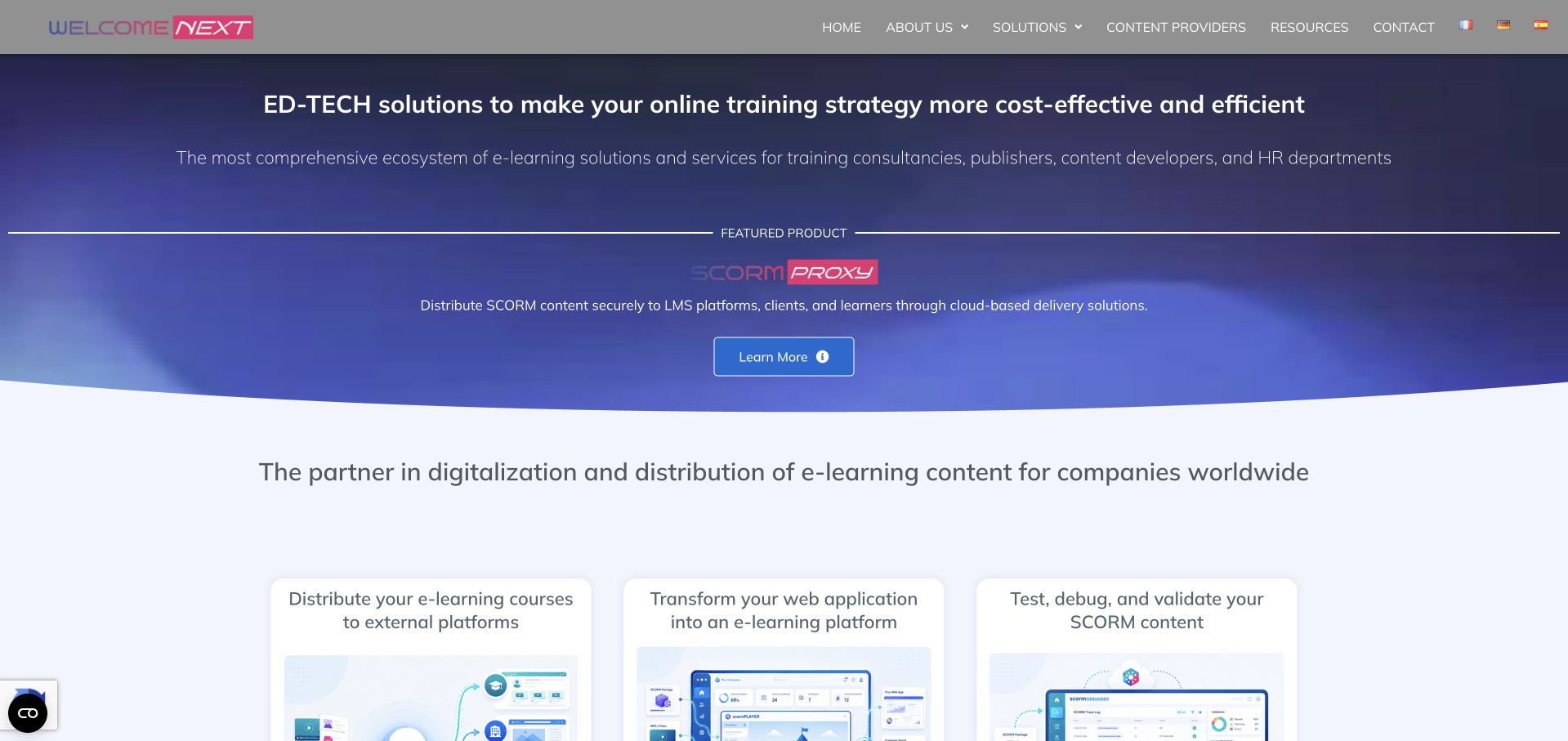
WelcomeNext presents a specialist learning-technology business through its services and organizational proposition. The corporate format helps explain what the company does before a visitor encounters an individual learning environment. It is useful for studying a vendor’s public communication, but evaluating the experience of a learner requires a different surface with course content, progress states, and actual interaction details. Documented association checked November 8, 2026: Oracle’s WelcomeNext customer case study documents MySQL HeatWave on OCI supporting its e-learning solutions.
What you can learn
Connect the HeatWave association to the e-learning solutions described in Oracle’s case. A managed database service can support those products without determining the visual design of this corporate site; do not infer the implementation or learning effectiveness of every customer deployment.
Pros
A specialist vendor introduction gives business audiences context before asking them to inspect individual learning products.
Service-oriented organization can accommodate several organizational education needs within one recognizable public company presence.
Cons & considerations
Corporate capability language offers limited evidence about the day-to-day experience inside a particular learning environment.
The public vendor site does not independently demonstrate database performance or educational outcomes for its customers.
Platform source: Official MySQL customer or product evidence. Oracle’s WelcomeNext customer case study documents MySQL HeatWave on OCI supporting its e-learning solutions. Official customer reference may link historical engineering material; no current full-stack audit is implied. Official documentary association is scoped to the named product, workload, dependency, or database service. No marketing-homepage runtime, complete company stack, independent performance, or private customer workflow is inferred. Platform evidence is separate from the direct website screenshot and is not a complete current infrastructure audit.
Kegan has 15+ years of experience working with small businesses, Fortune 500 companies, and everything in between. No development job is too big or too small: he brings the same hands-on attention to a focused improvement, a complete website, or a custom application.
For MySQL projects, he can help with data modeling, application data access, query design, search and cache integrations, migration planning, access boundaries, and maintainable handover. He works directly with clients on scope, design, implementation, testing, and handover, with an emphasis on clear communication and a system that remains practical to maintain after launch.
Show 3 other MySQL developersHide other MySQL developers
Define stable identifiers, relationships, and the changes that must be coordinated. Pair the schema with user-visible state transitions and an error-handling plan. A marketplace listing, note, and university service record have different ownership rules even when they use the same database engine.
An established application that needs to evolve
The engineering-linked references show teams changing an existing database environment rather than building only greenfield systems. Plan migrations, compatibility, and cutover around the current application. A successful empty-database demo is not evidence that a change will preserve an established product’s records and operating behavior.
Background work and derived information
Wealthfront’s historical queue reference and Yelp’s streaming material illustrate responsibilities beyond a simple page query. Specify how work is acknowledged, retried, and reconciled, and which system remains authoritative. Do not let a dashboard or confirmation message claim a completed downstream action merely because an initial record was written.
From references to requirements
Plan the application around known states
Write the smallest complete journey
Choose one important user action and list the records it touches. Include duplicate submission, delayed response, and a rejected change. Decide which state a returning user sees and how support can determine whether the operation actually completed without asking the user to repeat it blindly.
Document reads after writes
Identify any replica, cache, search index, or external service used to display the result of a change. Decide where immediate visibility matters and where a pending state is acceptable. Test the actual path rather than assuming that the presence of replication creates the same freshness behavior everywhere.
Practice change and recovery
Rehearse a realistic schema change and restore in an appropriate test environment. Assign ownership of backups, application reconnection, and data checks. Oracle’s backup documentation supplies technical options; the project still needs a clear procedure for deciding that the product is usable again after an interruption.
A useful handover demonstration
Ask the actual team to carry out its routine job: publish a realistic update, correct a mistake, preview a narrow screen, and identify who owns an integration failure. For a library or frontend framework, also ask who maintains the content source and deployment. A polished screenshot does not answer those operational questions.
Beyond the screenshot
MySQL project checklist
Name the application and exact database role.
Define records, identifiers, and relationships.
Describe the transaction boundary.
Design accepted, pending, failed, and completed states.
Handle duplicate submissions deliberately.
List representative queries before scaling.
Document replica and cache freshness.
Keep background-work acknowledgments explicit.
Rehearse migrations with existing data.
Test a restore and application reconnection.
Assign operating and incident ownership.
Keep historical customer claims dated.
Test with real content, a keyboard, a small screen, slow or failed requests, and the people who will maintain the system. These are planning checks, not an accessibility, security, performance, or search-ranking certification.
Sources & editorial method
How this MySQL collection was reviewed
Twenty distinct public properties were selected and individually reviewed for this MySQL collection. Public browser captures were visually inspected; each image preserves its actual captureUrl, captureDate, dimensions, and provenance. New captures occurred November 9 UTC during November 8, 2026 Pacific research. Reused captures retain their original dates and timestamps; capturedAt:null means only the original day is known and no time was invented. Official primary customer, engineering, operations, or product documentation establishes only the named application workload, dependency, or database-service association. A company’s use of MySQL is not evidence of the pictured homepage’s runtime or its entire technology estate. Historical accounts remain dated, and customer-reported results were not independently benchmarked. Reviews are original design criticism, not endorsements of financial, clinical, security, service-quality, or AI outcomes. No logins, account forms, transactions, or private workflows were used. Images and trademarks belong to their owners. A separate bounded public stack audit is performed by the sole publisher before publication; it is not replaced by these documentary associations.
Every image is an unmodified capture from the actual website, with its source and capture date. Some captures are reused from our shared catalog; their dates remain the original capture dates. None comes from a vendor gallery or a generated reconstruction. Moving imagery and live content can change.
Technology attribution uses public page assets or metadata, official platform documentation, or a cited first-party project case study. Documentary and framework-relationship evidence is identified where used; it is not a complete current backend inventory. A CMS image CDN alone does not establish a full CMS deployment. A library’s presence does not prove which individual controls use it, and a platform label does not establish AI authorship.
The composition notes, lessons, pros and tradeoffs are original editorial observations. We have not measured conversion, traffic, security, performance or accessibility conformance. Website owners retain their brands and imagery; these examples are not our client portfolio. Written, Edited and Curated are independent records, not dates advanced by a build. See our editorial standards or suggest a correction.
Questions worth asking
MySQL website development FAQs
Does an official customer reference prove a current homepage stack?
No. It establishes the association described in that reference. Many records link historical engineering work; some provide only a named customer relationship. The pictured public property and its runtime remain separate unless direct evidence supports a narrower claim.
Why is Spotify not assigned a detailed MySQL workload?
The available official customer entry identifies Spotify but does not specify its complete current database estate. The review preserves that limit instead of guessing about listening history, recommendations, or every present music-service component.
Is replication the same as backup?
No. They serve different purposes. Understand the selected replication behavior and maintain a separate, tested recovery procedure. A replicated mistake or a healthy replica does not by itself prove that the application can be restored to an appropriate earlier state.
Should a new project begin with sharding?
Only when its demonstrated requirements justify it. Start with clear ownership, representative queries, sensible schema design, and an operating plan. A historical large-company case does not make the same complexity appropriate for a smaller application.
Can these financial and trading examples guide an investment decision?
No. They are website and technology-association examples, not financial advice, an assessment of service suitability, or an independent verification of trading, custody, or account-security outcomes.
Use MySQL customer history to ask better questions about records, transactions, freshness, and recovery. Do not use a brand’s public appearance as a substitute for evidence about its application architecture.