Best Airtable Websites of 2026 (20 Real-World Examples)
Real public websites, documented Airtable workflows, and a practical brief for connected business applications.
Explore how organizations with documented Airtable use present themselves online, then plan the records, interfaces and responsibilities behind your own workflow. A customer association is not proof that Airtable renders the pictured website.
Airtable is most useful to study as an operational layer: a way to connect structured records, people and repeatable work. The cases in this collection range from editorial rights and creative production to research insights and product-launch coordination. Their public websites offer separate lessons in hierarchy, audience routing and visual identity. Both are worth examining, but they answer different questions.
Begin with a workflow that has a recognizable trigger and finish. A request arrives, somebody evaluates it, records change and another person receives a dependable result. If the current process depends on a spreadsheet, email and one employee’s memory, mapping those responsibilities is usually more valuable than recreating the spreadsheet with prettier colors. Decide what Airtable should own and what should remain in another system.
Before the examples
What makes good Airtable website development in 2026?
Model the thing, not the spreadsheet tab
Separate projects, products, assets, requests and people when they have distinct identities or lifecycles. Repeating a product description across many SKU rows makes corrections difficult; combining every content type into one giant table makes responsibility obscure. Define stable identifiers, meaningful relationships and required fields before designing interfaces. A visually impressive dashboard cannot repair contradictory source records.
A requester, reviewer and executive rarely need the same screen. Present the relevant fields, state and next action for each role, with a clear route to supporting context. Do not assume that hiding a field in a convenient interface is the same as establishing the right underlying access policy. Review both the human workflow and the actual permission boundaries.
An automation should have an accountable owner, a defined input and a recoverable failure state. Decide who receives an invalid request, what happens when an external service is unavailable and which changes require review. Start with deterministic routing or reminders before introducing generated classifications. An AI summary can assist a reviewer without becoming an unquestioned source of truth.
The twenty examples combine actual public-page captures with official, product-specific documentary evidence. Some cases describe a named department or regional operation; several older customer associations retain their 2021 date. None establishes an organization’s complete current technology stack.
We start with five recognizable brands or organizations: eBay, Red Bull, OpenAI, Intuit, Schaeffler. Each attribution applies to the named website property, not every product or website belonging to its organization. This is a curated reading sequence, not a measured ranking.
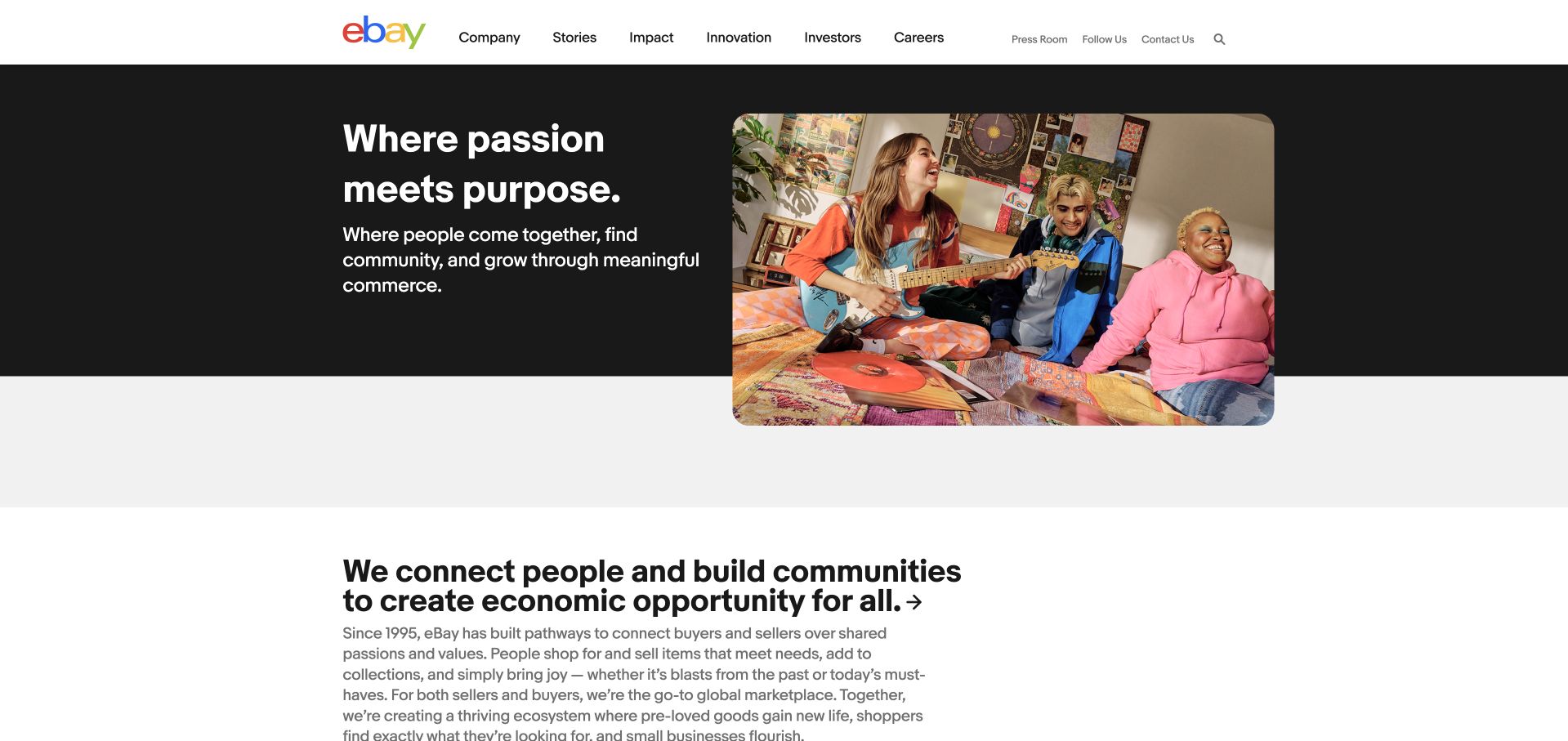
eBay’s corporate page puts a colorful community photograph beside a short purpose statement, with the image extending below a dark opening band. The familiar multicolor wordmark does much of the branding work. A second heading introduces the organization’s economic role instead of immediately sending visitors into a product search. Airtable describes ProductCentral customer-feedback intake, classification and Jira handoffs in eBay product operations, beginning with advertising; the organization-wide rollout is described as a next step.
What you can learn
Connect operational complexity to an understandable human purpose, then give each audience a clear next destination. In an Airtable project, that means translating a large feedback collection into meaningful categories and ownership, not simply building an impressive grid. Keep the corporate page and internal product workflow conceptually separate.
Pros
The staggered image creates depth without making the reading order difficult to follow.
Community photography gives a marketplace business a concrete human subject before organizational detail.
Cons & considerations
Purpose language needs specific evidence below the hero to avoid remaining abstract.
Visitors intending to shop must recognize that this is the corporate property, not the marketplace.
Platform source: Official product-specific customer case or dated announcement. Airtable describes ProductCentral customer-feedback intake, classification and Jira handoffs in eBay product operations, beginning with advertising; the organization-wide rollout is described as a next step. This establishes only the stated organization, workload, product family, regional or historical association. It does not prove the pictured public page runtime, reveal its CMS or frontend, establish a complete current stack, or independently verify vendor-reported results. Platform evidence is separate from the direct website screenshot and is not a complete current infrastructure audit.
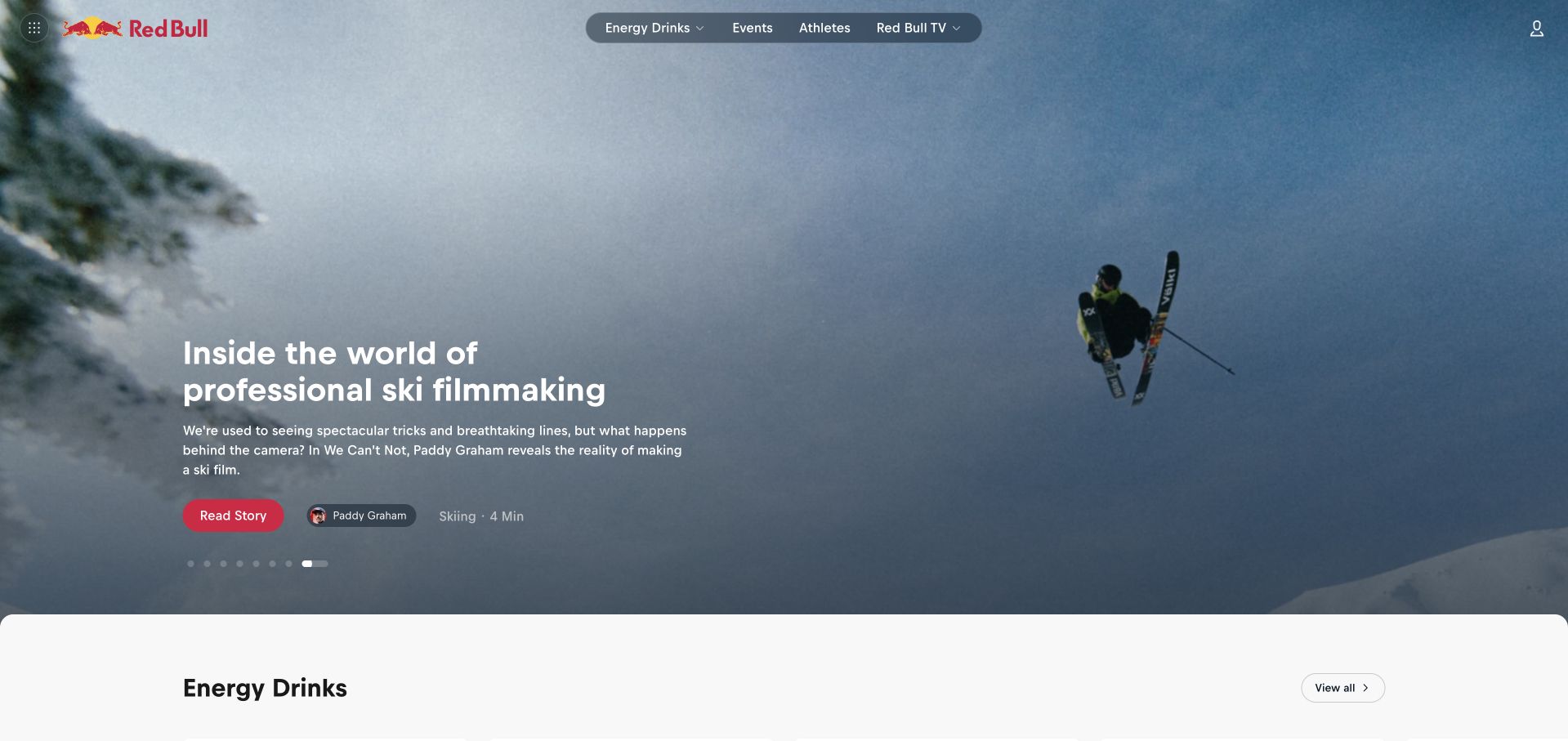
Red Bull’s page opens on an immersive ski-filmmaking feature, with a short story teaser positioned over a darkened snow scene. A compact red action, author information and slider indicators sit together. The next category, energy drinks, starts below, linking editorial adventure to the commercial brand without merging every content type. Airtable documents Red Bull internal media-asset management, facility seat planning with identity-management integration, and other departmental planning workflows.
What you can learn
A rich content operation needs both spectacle and reliable structure. Borrow the relationship between a memorable lead asset and clearly defined categories, then manage rights, owners and publication status behind the scenes. A workflow database can coordinate media without being the system that streams the public video.
Pros
The large action photograph establishes a distinctive editorial world immediately.
Story metadata and a single reading action give the cinematic opening a practical purpose.
Cons & considerations
A rotating full-bleed feature can make secondary sections harder to discover at first.
Text over fast-changing media requires dependable contrast and a usable reduced-motion alternative.
Visible tech stack
Earlier / documented evidence
Airtable
Platform source: Official product-specific customer case or dated announcement. Airtable documents Red Bull internal media-asset management, facility seat planning with identity-management integration, and other departmental planning workflows. This establishes only the stated organization, workload, product family, regional or historical association. It does not prove the pictured public page runtime, reveal its CMS or frontend, establish a complete current stack, or independently verify vendor-reported results. Platform evidence is separate from the direct website screenshot and is not a complete current infrastructure audit.
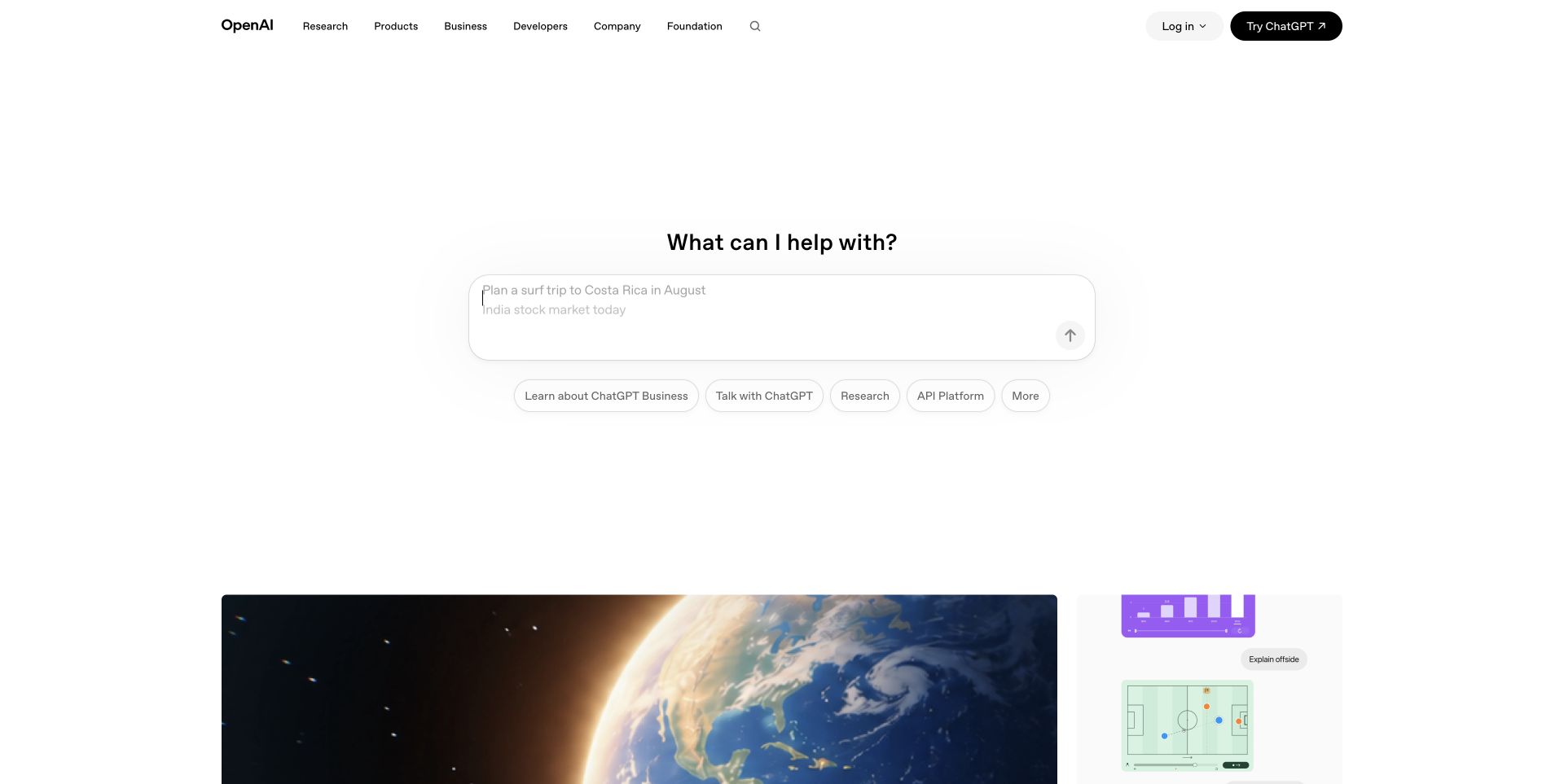
OpenAI’s public page centers an empty prompt-style interface beneath a small question, surrounded by abundant white space. Compact chips provide alternate routes for business, research and developers, while content cards begin lower down. The opening demonstrates a product interaction without showing an account, conversation history or any entered private information. Airtable documents OpenAI product operations: launch calendars, project milestones, weekly updates and AI-assisted summarization. This is not evidence of ChatGPT inference infrastructure.
What you can learn
Start from the user’s immediate mental model, then expose the larger system gradually. For product operations, the equivalent is a concise intake or status view backed by well-structured records. Do not confuse a company’s public prompt interface with the internal launch-planning application documented in the associated case.
Pros
The centered interaction gives unfamiliar visitors a simple focal point before introducing the full organization.
Small audience-specific links preserve alternate routes without competing with the main proposition.
Cons & considerations
A very sparse opening can leave enterprise buyers looking for more immediate implementation detail.
A prompt-like interface needs clear submission behavior, limits and privacy context beyond its visual simplicity.
Platform source: Official product-specific customer case or dated announcement. Airtable documents OpenAI product operations: launch calendars, project milestones, weekly updates and AI-assisted summarization. This is not evidence of ChatGPT inference infrastructure. This establishes only the stated organization, workload, product family, regional or historical association. It does not prove the pictured public page runtime, reveal its CMS or frontend, establish a complete current stack, or independently verify vendor-reported results. Platform evidence is separate from the direct website screenshot and is not a complete current infrastructure audit.
Intuit pairs a close human photograph with a large question about helping the visitor. The brand’s major products appear in a separate top strip, while the main navigation remains comparatively restrained. The small blue treatment within the headline connects the visual to Intuit’s identity without overwhelming the photograph or introducing another competing illustration. The vendor case describes Intuit international research and design operations, including its International Truth insights database across six regions, not the QuickBooks application backend.
What you can learn
An umbrella organization should explain the common value of its products while keeping individual destinations easy to identify. Apply that same discipline to a shared research repository: create a consistent structure, but preserve the region, study and audience context that makes each insight useful to other teams.
Pros
The product-family strip explains the relationship between Intuit and several familiar software names.
A human-centered image gives an abstract financial platform a more approachable opening.
Cons & considerations
A broad assistance question needs specific product routes before visitors can act confidently.
The layered utility, product and primary navigation rows require careful mobile prioritization.
Platform source: Official product-specific customer case or dated announcement. The vendor case describes Intuit international research and design operations, including its International Truth insights database across six regions, not the QuickBooks application backend. This establishes only the stated organization, workload, product family, regional or historical association. It does not prove the pictured public page runtime, reveal its CMS or frontend, establish a complete current stack, or independently verify vendor-reported results. Platform evidence is separate from the direct website screenshot and is not a complete current infrastructure audit.
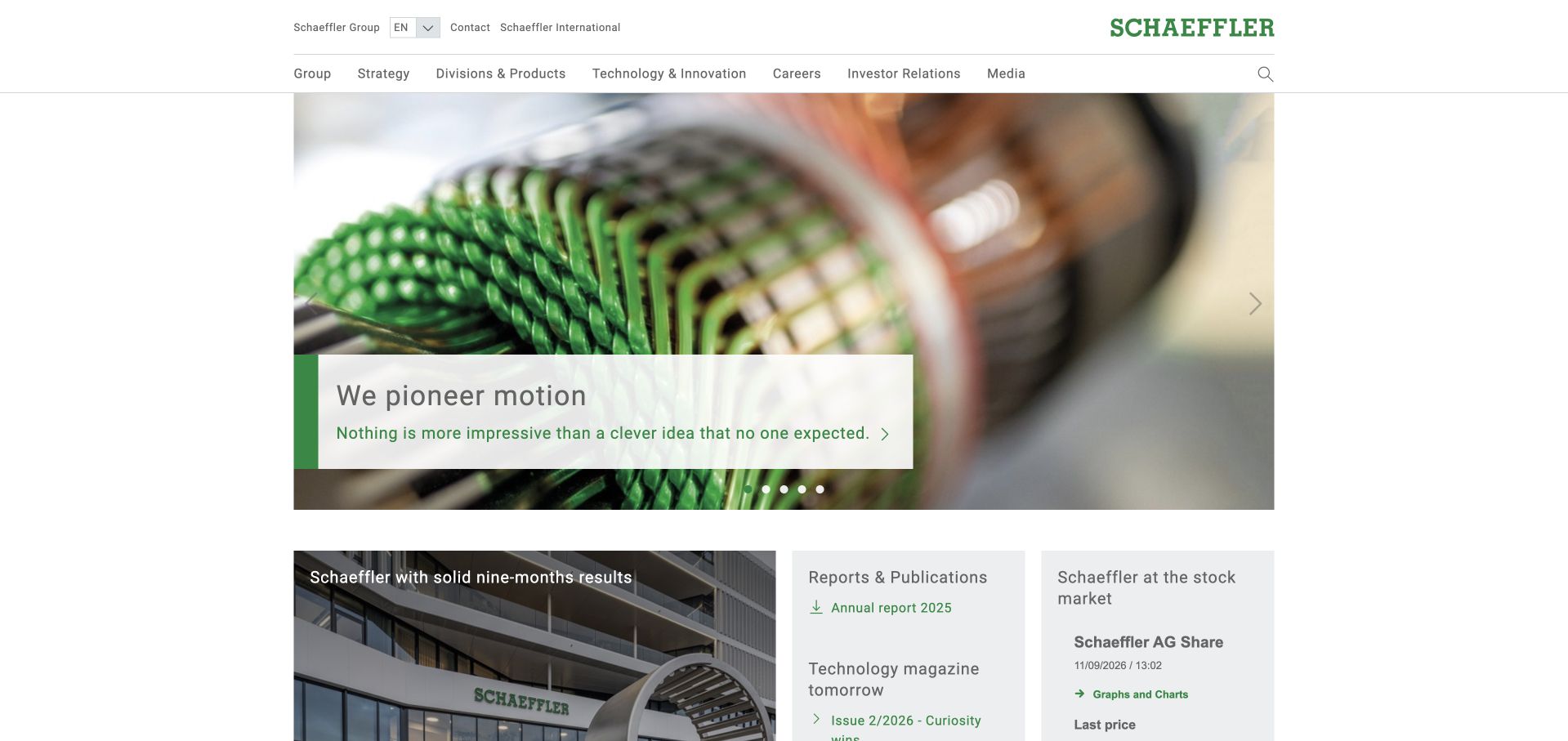
Schaeffler uses a close view of a green mechanical component inside a bounded hero, with a light text panel over the lower edge. A conventional company header and adjacent reports and stock information keep the presentation firmly corporate. The machinery gives the motion-technology proposition a specific physical anchor. The case covers Schaeffler Global Branding and Marketing intake, assignment, content assets and reporting, following a content-strategy initiative begun in 2023.
What you can learn
Use a concrete product or process to make a technical business understandable, then give supporting corporate information a secondary position. When planning a content workflow, separate global taxonomy from local team execution. A common calendar is useful only when its requests, assets and approvals retain clear owners.
Pros
A detailed mechanical image connects the company’s abstract motion theme to a tangible object.
Reports and market information remain visible without displacing the main product-oriented feature.
Cons & considerations
A large corporate navigation and several information panels can feel crowded on smaller displays.
Short thematic headlines require deeper explanatory content for buyers who lack sector knowledge.
Platform source: Official product-specific customer case or dated announcement. The case covers Schaeffler Global Branding and Marketing intake, assignment, content assets and reporting, following a content-strategy initiative begun in 2023. This establishes only the stated organization, workload, product family, regional or historical association. It does not prove the pictured public page runtime, reveal its CMS or frontend, establish a complete current stack, or independently verify vendor-reported results. Platform evidence is separate from the direct website screenshot and is not a complete current infrastructure audit.
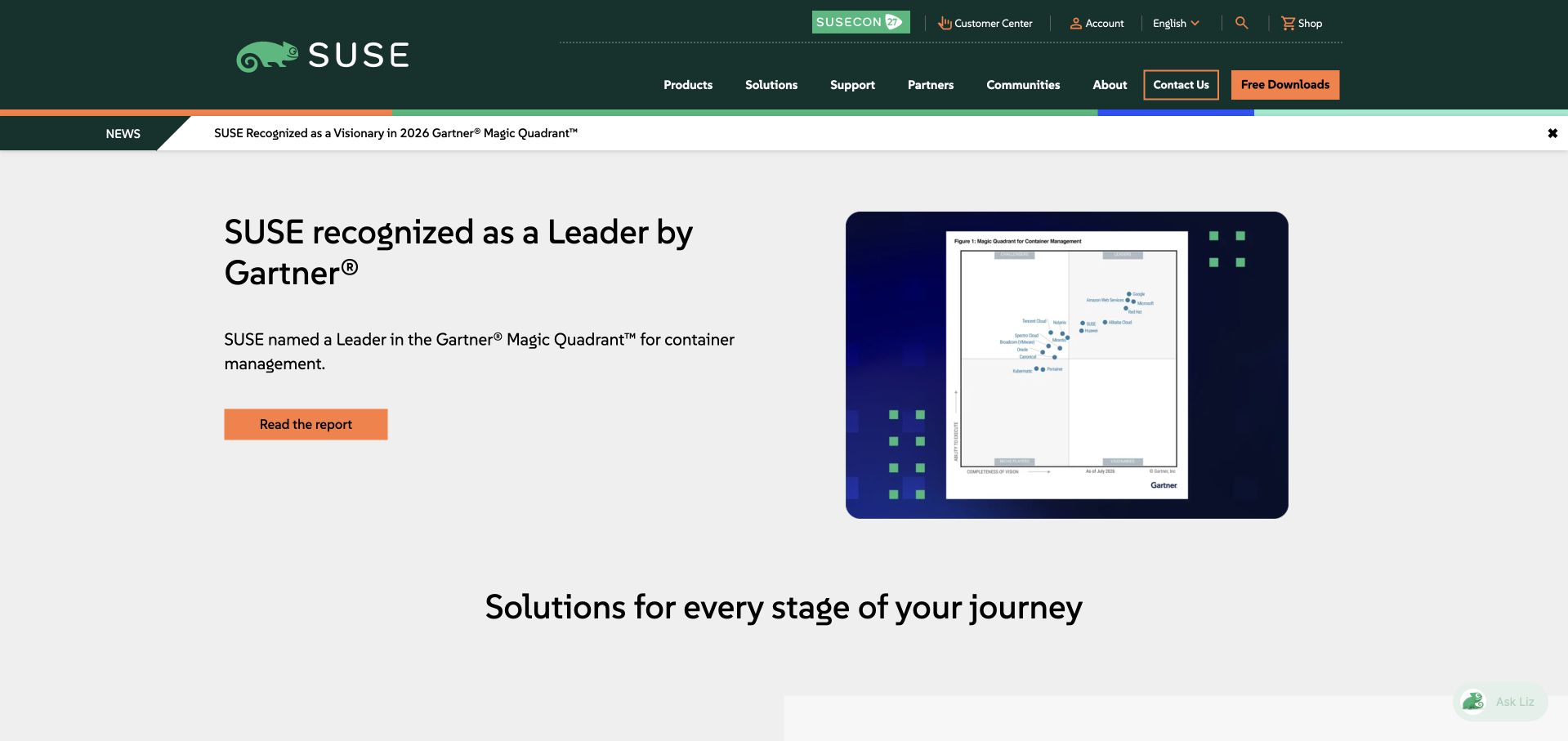
SUSE’s green header leads into a pale hero featuring an analyst-report proposition and a small report preview. An orange action provides contrast, while a broader solutions heading begins below. The layout distinguishes the featured evidence asset from the company’s larger software catalog instead of trying to explain every product in the first viewport. SUSE marketing operations uses Airtable for campaign management, UTM generation and lead-quality checks integrated with other business systems; the case is not about Linux runtime.
What you can learn
Treat a report or campaign as one structured object within a wider content system. Define the asset, destination, campaign identifiers and handoff rules before automating distribution. An Airtable marketing workflow can coordinate those elements without replacing the company’s products, CRM or public publishing infrastructure.
Pros
The report preview makes the featured asset more concrete than a text-only award claim.
A clear transition to the wider solutions catalog prevents the campaign from becoming the whole site.
Cons & considerations
Analyst recognition is not a substitute for product-specific technical evidence or evaluation.
A large navigation system and announcement strip can dilute the focus of the primary action.
Platform source: Official product-specific customer case or dated announcement. SUSE marketing operations uses Airtable for campaign management, UTM generation and lead-quality checks integrated with other business systems; the case is not about Linux runtime. This establishes only the stated organization, workload, product family, regional or historical association. It does not prove the pictured public page runtime, reveal its CMS or frontend, establish a complete current stack, or independently verify vendor-reported results. Platform evidence is separate from the direct website screenshot and is not a complete current infrastructure audit.
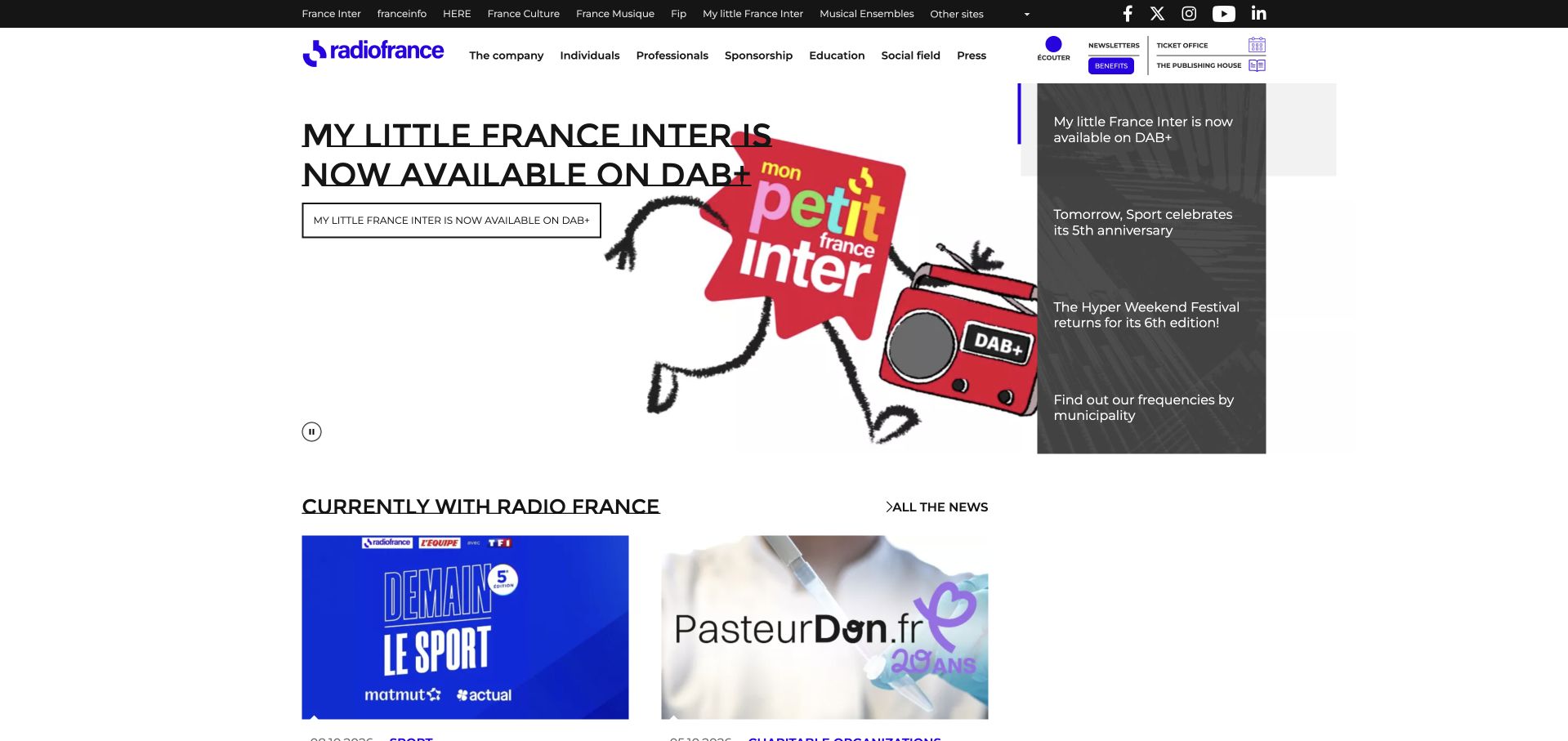
Radio France combines a thin network-brand strip, a substantial corporate menu and a playful lead illustration. A dark stack of related stories sits beside the feature, while current-news cards continue below. Blue accents and compact headline treatment create a recognizably editorial rhythm without making the page resemble a single radio-program landing page. Radio France uses linked Airtable bases for editorial rights, program-production requests and legal coordination. Planned expansion into further departments is not treated as completed deployment.
What you can learn
A multi-brand publisher needs a shared wayfinding layer without erasing individual editorial contexts. Borrow the clear distinction between the institution, featured item and related stories. Behind that presentation, model rights and production requests as connected records rather than assuming every asset can follow one identical approval path.
Pros
The network strip communicates the relationship between individual stations and the parent institution.
A related-story column offers useful alternatives without breaking the main feature’s hierarchy.
Cons & considerations
Several navigation and editorial layers may overwhelm readers seeking one specific station.
Illustrations and compact story panels need carefully maintained text alternatives and readable mobile layouts.
Platform source: Official product-specific customer case or dated announcement. Radio France uses linked Airtable bases for editorial rights, program-production requests and legal coordination. Planned expansion into further departments is not treated as completed deployment. This establishes only the stated organization, workload, product family, regional or historical association. It does not prove the pictured public page runtime, reveal its CMS or frontend, establish a complete current stack, or independently verify vendor-reported results. Platform evidence is separate from the direct website screenshot and is not a complete current infrastructure audit.
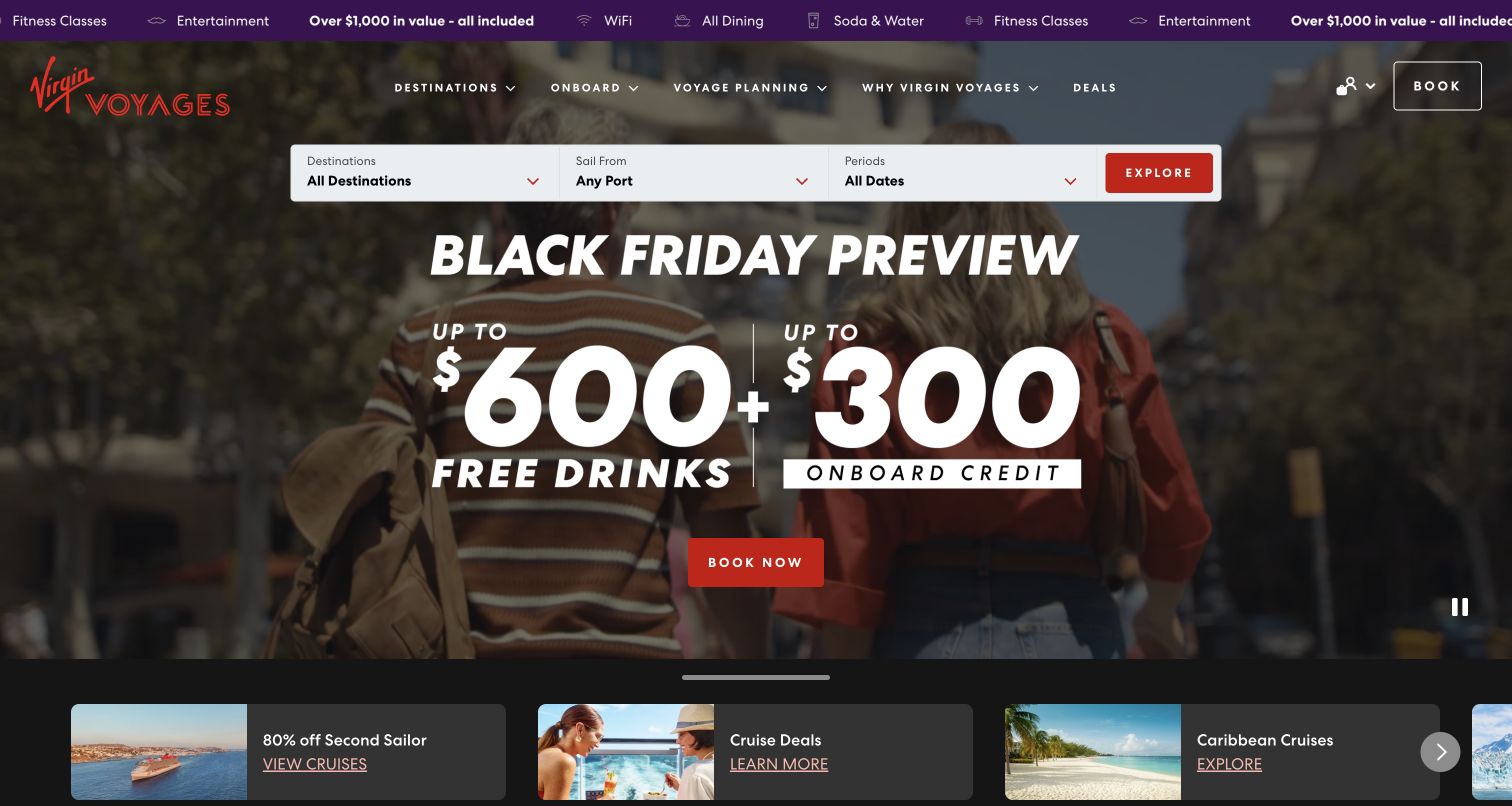
Virgin Voyages places destination, departure-port and date selectors directly over a large travel promotion. Purple utility messaging, red buttons and bold white offer typography create a high-energy identity. Smaller destination and deal cards appear below, so visitors can either begin a search or continue browsing before choosing a voyage. The case documents Virgin Voyages marketing campaigns, creative production, asset approvals, reporting and selected shipboard scheduling workflows.
What you can learn
Keep the commercial task visible while giving undecided visitors a lower-pressure route to explore. The operational lesson is to connect campaign assets, dates and approvals to a single source of truth, while treating public booking, shipboard coordination and internal marketing as separate systems with different access needs.
Pros
Trip-planning controls are available immediately rather than hidden behind a purely inspirational hero.
Distinctive colors and typography create a consistent identity across the promotion and browsing cards.
Cons & considerations
Several simultaneous offers can make the actual value proposition difficult to compare.
Background motion and large promotional numbers need accessible alternatives and careful performance management.
Platform source: Official product-specific customer case or dated announcement. The case documents Virgin Voyages marketing campaigns, creative production, asset approvals, reporting and selected shipboard scheduling workflows. This establishes only the stated organization, workload, product family, regional or historical association. It does not prove the pictured public page runtime, reveal its CMS or frontend, establish a complete current stack, or independently verify vendor-reported results. Platform evidence is separate from the direct website screenshot and is not a complete current infrastructure audit.
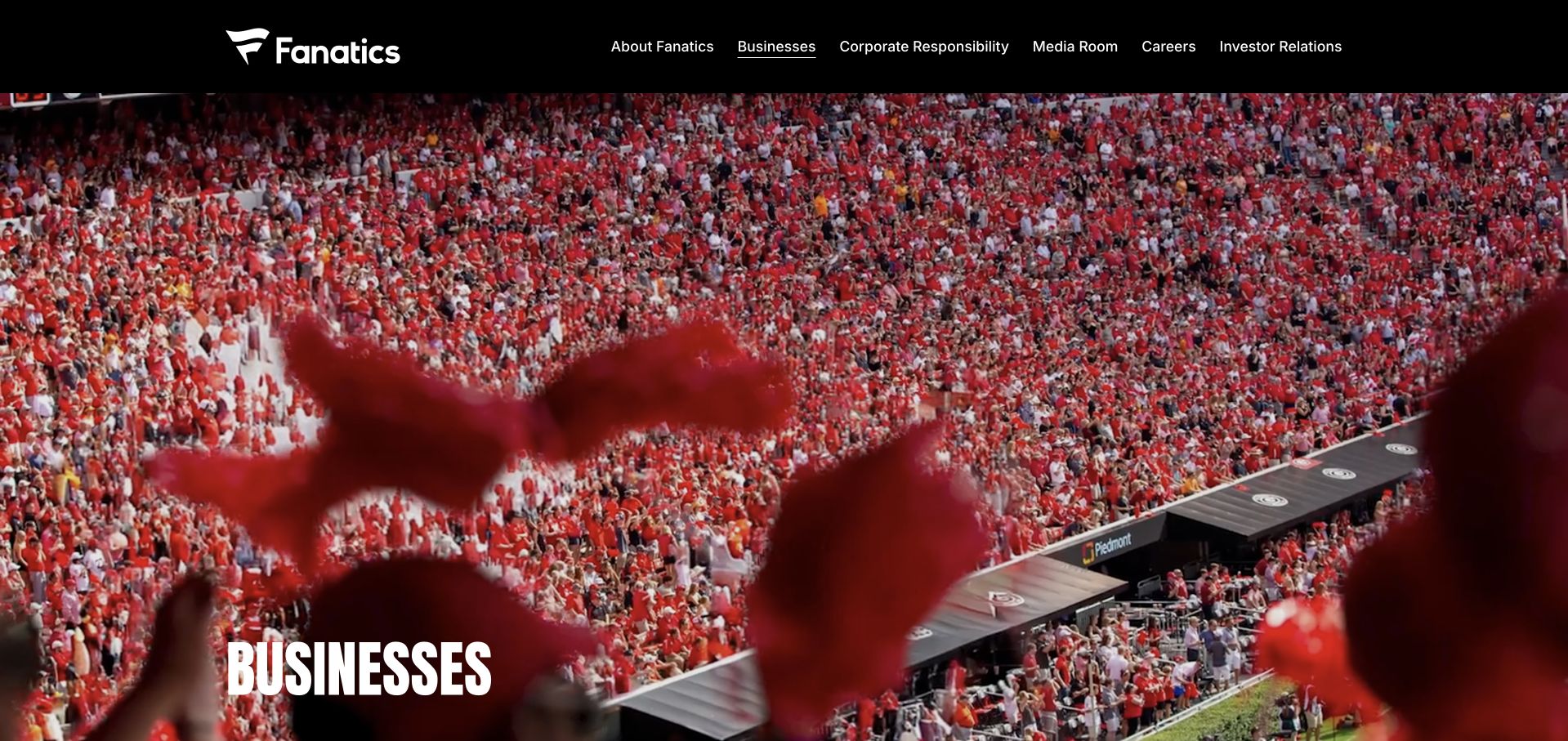
Fanatics’ businesses page uses a tightly cropped stadium crowd, black corporate navigation and a large white section title. The image communicates sports participation and scale before the reader reaches individual business descriptions. This is the parent-company portfolio page, not a betting interface, customer account or interactive wagering product. The association is specifically Fanatics Betting and Gaming content, creative requests, marketing and compliance review workflows. The photographed parent-company businesses page is a separate public design reference, not a sportsbook application.
What you can learn
When a group contains different operating companies, make the hierarchy visible and keep technical references attached to the correct subsidiary. A dramatic parent-brand image can introduce the portfolio, but it cannot prove that all divisions share a workflow, compliance process or public application stack.
Pros
The stadium image establishes a clear sports context without needing several competing brand panels.
A simple section title makes the page’s portfolio purpose understandable before detailed company descriptions.
Cons & considerations
The large image delays the actual comparison between the group’s different business lines.
Shared branding can obscure subsidiary boundaries unless captions and technical claims are explicit.
Platform source: Official product-specific customer case or dated announcement. The association is specifically Fanatics Betting and Gaming content, creative requests, marketing and compliance review workflows. The photographed parent-company businesses page is a separate public design reference, not a sportsbook application. This establishes only the stated organization, workload, product family, regional or historical association. It does not prove the pictured public page runtime, reveal its CMS or frontend, establish a complete current stack, or independently verify vendor-reported results. Platform evidence is separate from the direct website screenshot and is not a complete current infrastructure audit.
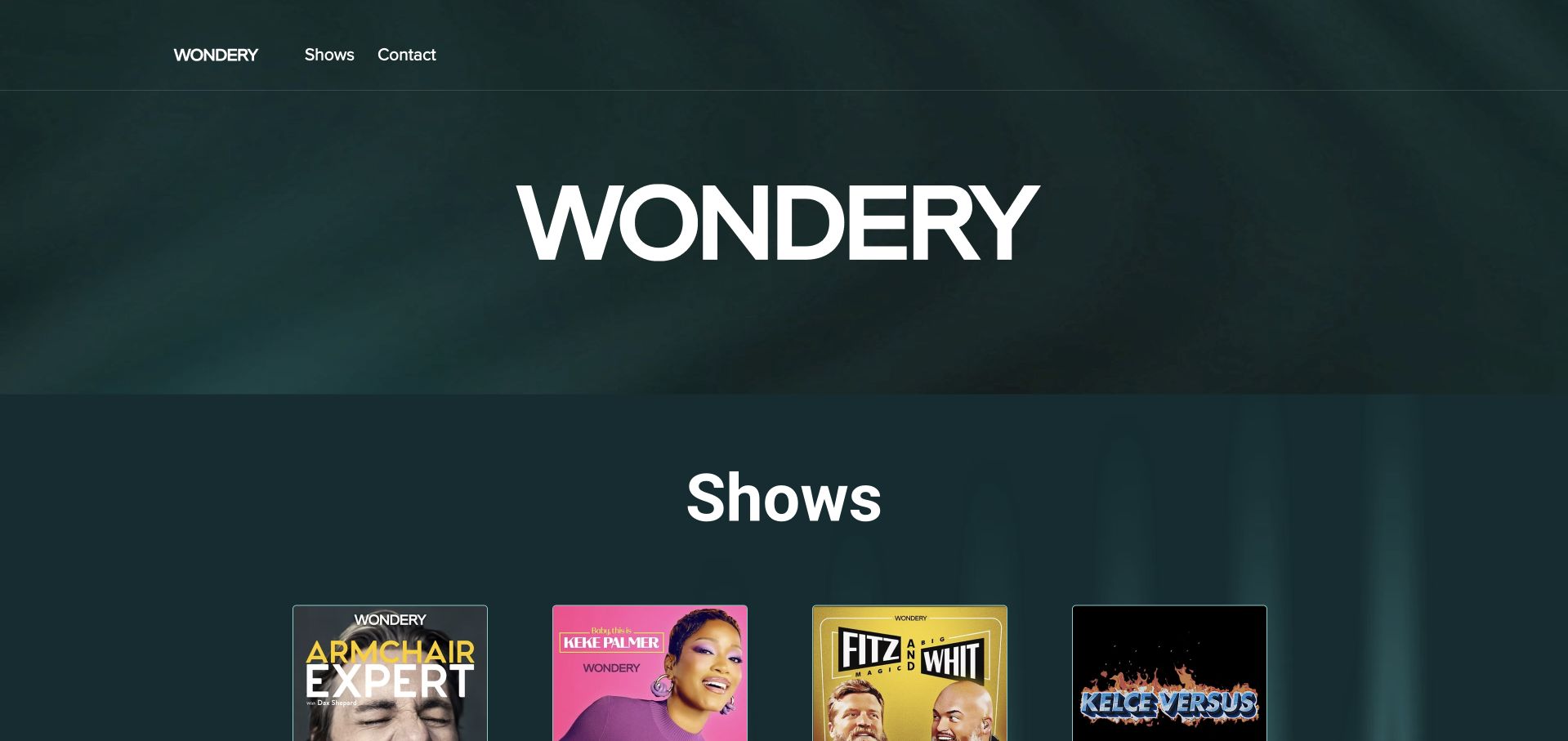
Wondery’s current public property uses a dark green background, a large wordmark and a simple shows heading. A row of colorful podcast covers provides the first substantial browsing content. The sparse top navigation leaves the identity of individual shows to do most of the explanatory work instead of adding a long corporate introduction. Wondery production calendars, transcript-based metadata, episode reporting and brand-mention analysis are documented in Airtable. The current public catalog is not evidence of its audio delivery runtime.
What you can learn
For a media library, consistent metadata and strong cover assets can create a useful discovery system with relatively little interface decoration. Design the editorial record behind each show carefully, then keep production, distribution and advertising workflows distinct. A shared planning database does not establish the audio-delivery stack.
Pros
Show artwork brings variety and recognition to an otherwise deliberately restrained page.
The minimal header gives the catalog a direct focus without a large promotional navigation layer.
Cons & considerations
A title-heavy catalog needs useful descriptions and accessible labels for unfamiliar listeners.
Very large wordmark space can postpone the first useful show choices on shorter screens.
Platform source: Official product-specific customer case or dated announcement. Wondery production calendars, transcript-based metadata, episode reporting and brand-mention analysis are documented in Airtable. The current public catalog is not evidence of its audio delivery runtime. This establishes only the stated organization, workload, product family, regional or historical association. It does not prove the pictured public page runtime, reveal its CMS or frontend, establish a complete current stack, or independently verify vendor-reported results. Platform evidence is separate from the direct website screenshot and is not a complete current infrastructure audit.
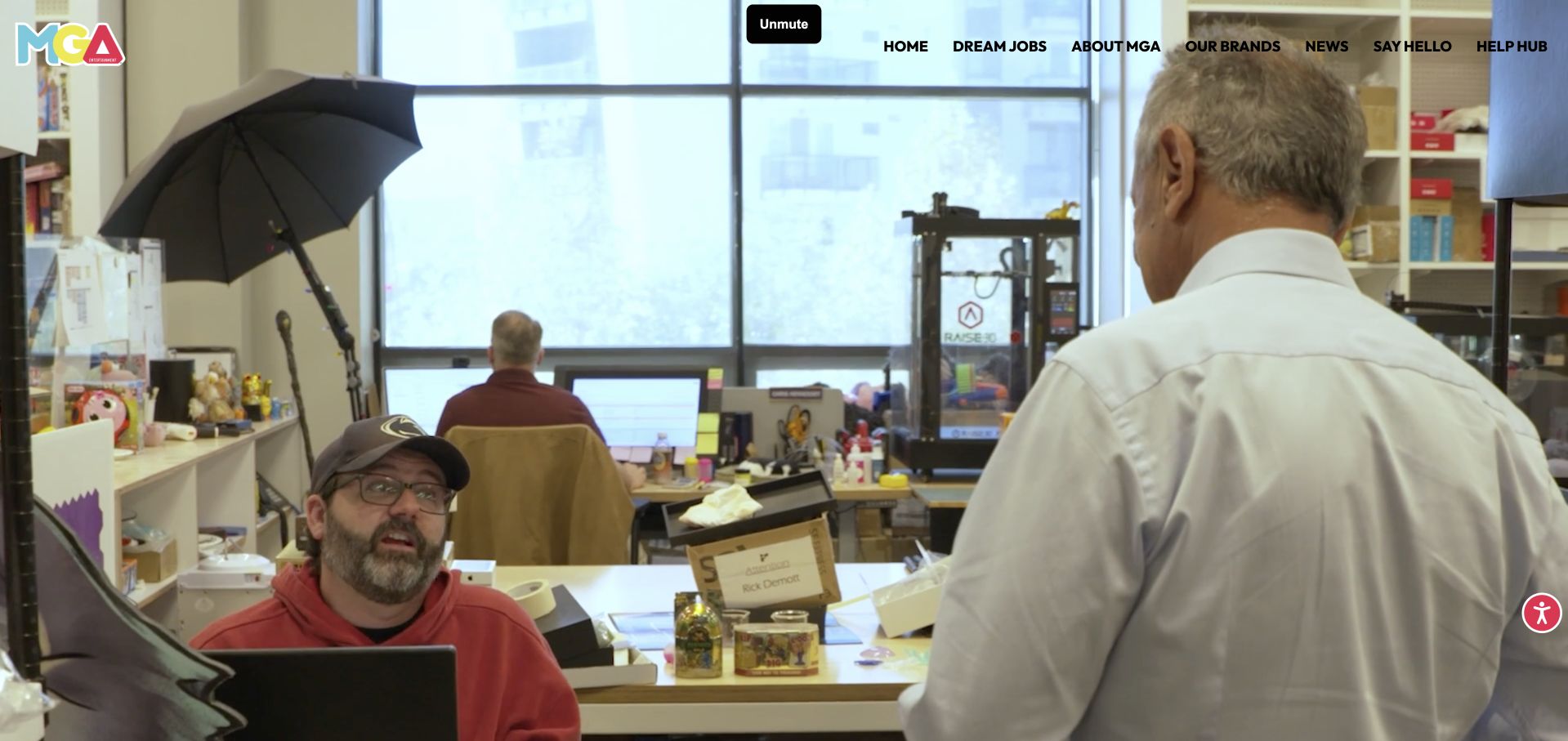
MGA Entertainment opens with footage from a working creative environment, keeping its colorful logo and straightforward company navigation above the scene. People, products and studio details communicate a hands-on business rather than a generic corporate illustration. The video has an explicit unmute control instead of assuming visitors want audio. MGA Entertainment marketing operations uses Airtable for brand coordination, creative intake and asset management, building from an existing Miniverse team workflow.
What you can learn
Showing the people and setting behind a product can explain a company more effectively than a long claim about creativity. Support that narrative with a structured asset library and clear ownership. Marketing coordination should not be mistaken for the manufacturing systems or consumer experiences associated with every individual toy brand.
Pros
Real workplace imagery gives the company’s creative identity a tangible setting.
A visible audio control lets visitors choose whether to hear the introductory media.
Cons & considerations
A footage-led opening may lack a concise explanation for visitors who do not know the company.
Video needs a useful poster, reduced-motion behavior and reasonable loading costs to remain inclusive.
Platform source: Official product-specific customer case or dated announcement. MGA Entertainment marketing operations uses Airtable for brand coordination, creative intake and asset management, building from an existing Miniverse team workflow. This establishes only the stated organization, workload, product family, regional or historical association. It does not prove the pictured public page runtime, reveal its CMS or frontend, establish a complete current stack, or independently verify vendor-reported results. Platform evidence is separate from the direct website screenshot and is not a complete current infrastructure audit.
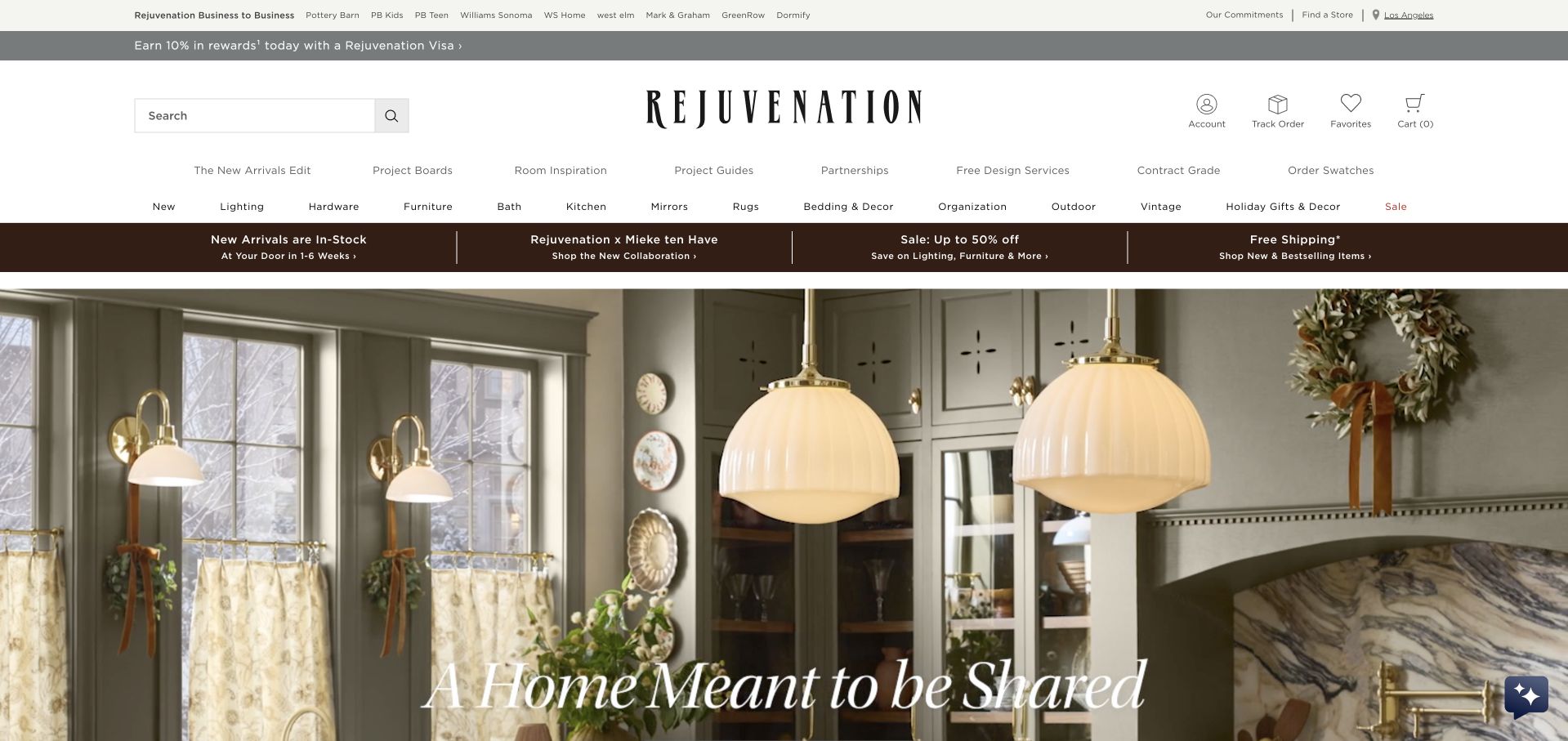
Rejuvenation’s storefront places large pendant lights within a fully styled room, with an elegant seasonal line over the image. A substantial header groups shopping categories, planning resources and service options. The result is aspirational, but the navigation acknowledges that visitors may be comparing finishes, planning a project or seeking professional help. The Rejuvenation case describes connected product-launch records and agent-drafted product copy with human editing; a pilot result is not generalized to every Williams-Sonoma brand.
What you can learn
A rich lifestyle image works best when the underlying product information is dependable. Plan shared product and SKU records, clear specification ownership and human approval before publishing generated descriptions. A workflow that produces copy is not necessarily the commerce platform that renders or fulfills the public product page.
Pros
The room scene helps shoppers understand scale, material relationships and intended use.
Shopping categories and planning resources support both immediate buying and longer project research.
Cons & considerations
Several utility and promotional rows can crowd the opening before the main image appears.
Image-led inspiration must not bury dimensions, configuration rules or other consequential purchase details.
Platform source: Official product-specific customer case or dated announcement. The Rejuvenation case describes connected product-launch records and agent-drafted product copy with human editing; a pilot result is not generalized to every Williams-Sonoma brand. This establishes only the stated organization, workload, product family, regional or historical association. It does not prove the pictured public page runtime, reveal its CMS or frontend, establish a complete current stack, or independently verify vendor-reported results. Platform evidence is separate from the direct website screenshot and is not a complete current infrastructure audit.
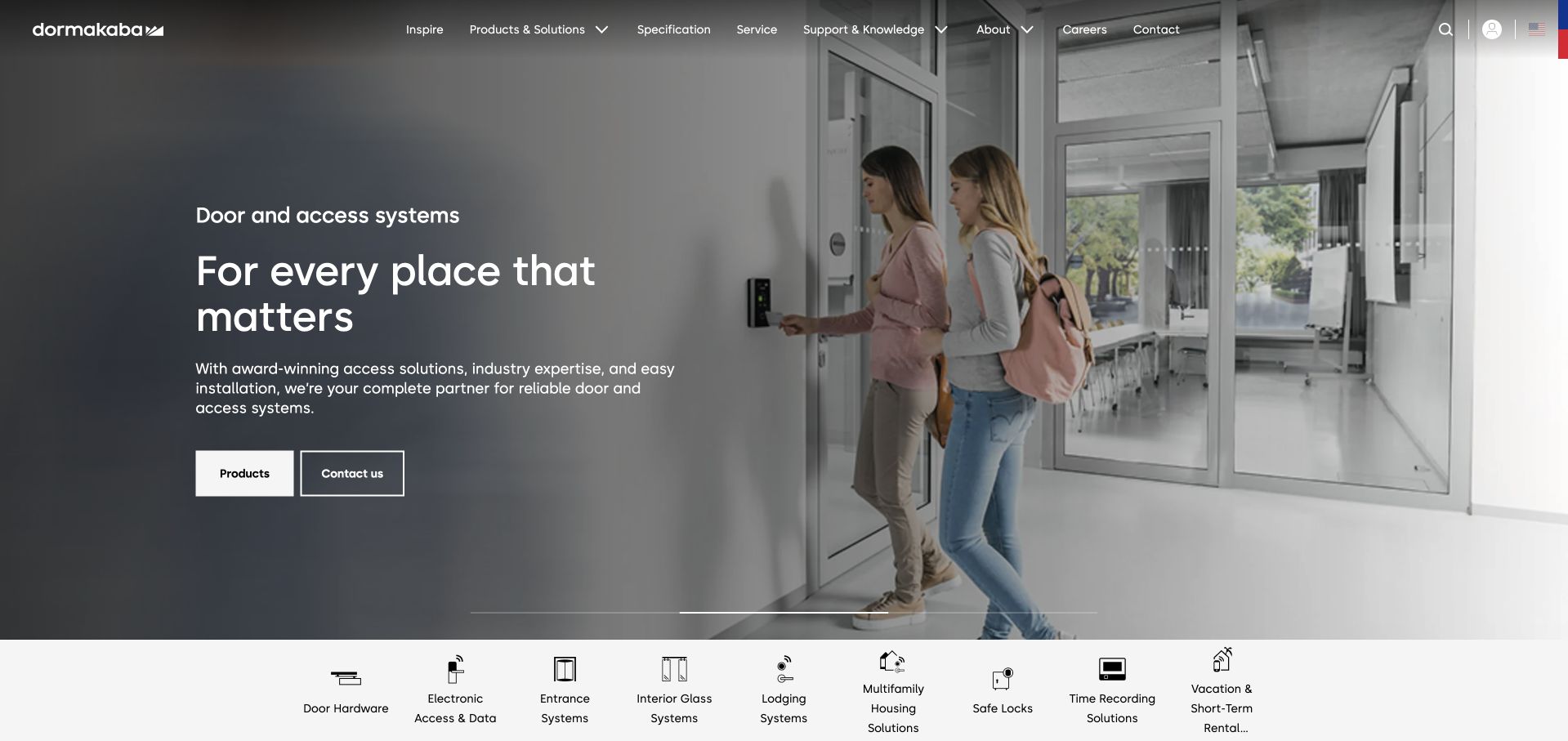
dormakaba’s US page shows people passing through a glass entrance, with a quiet headline about access and two practical actions. A row of product-category icons begins below the photograph. The image makes access infrastructure understandable as part of a real building rather than an isolated technical component or diagram. The case concerns dormakaba Austria order, installation, logistics and maintenance coordination, not all dormakaba country operations or the public US website backend.
What you can learn
Use a recognizable setting to explain what an infrastructure product enables, then offer precise categories for technical evaluation. When documenting operations software, retain regional boundaries: installation scheduling in Austria is a different claim from a worldwide product platform or the publishing system behind the photographed US page.
Pros
An installed entrance provides an understandable context for a broad access-solutions portfolio.
Product-category icons offer a practical transition from brand positioning into specific equipment families.
Cons & considerations
The general access message still needs technical specifications on the linked product pages.
Text over light architectural photography requires consistent contrast across responsive image crops.
Platform source: Official product-specific customer case or dated announcement. The case concerns dormakaba Austria order, installation, logistics and maintenance coordination, not all dormakaba country operations or the public US website backend. This establishes only the stated organization, workload, product family, regional or historical association. It does not prove the pictured public page runtime, reveal its CMS or frontend, establish a complete current stack, or independently verify vendor-reported results. Platform evidence is separate from the direct website screenshot and is not a complete current infrastructure audit.
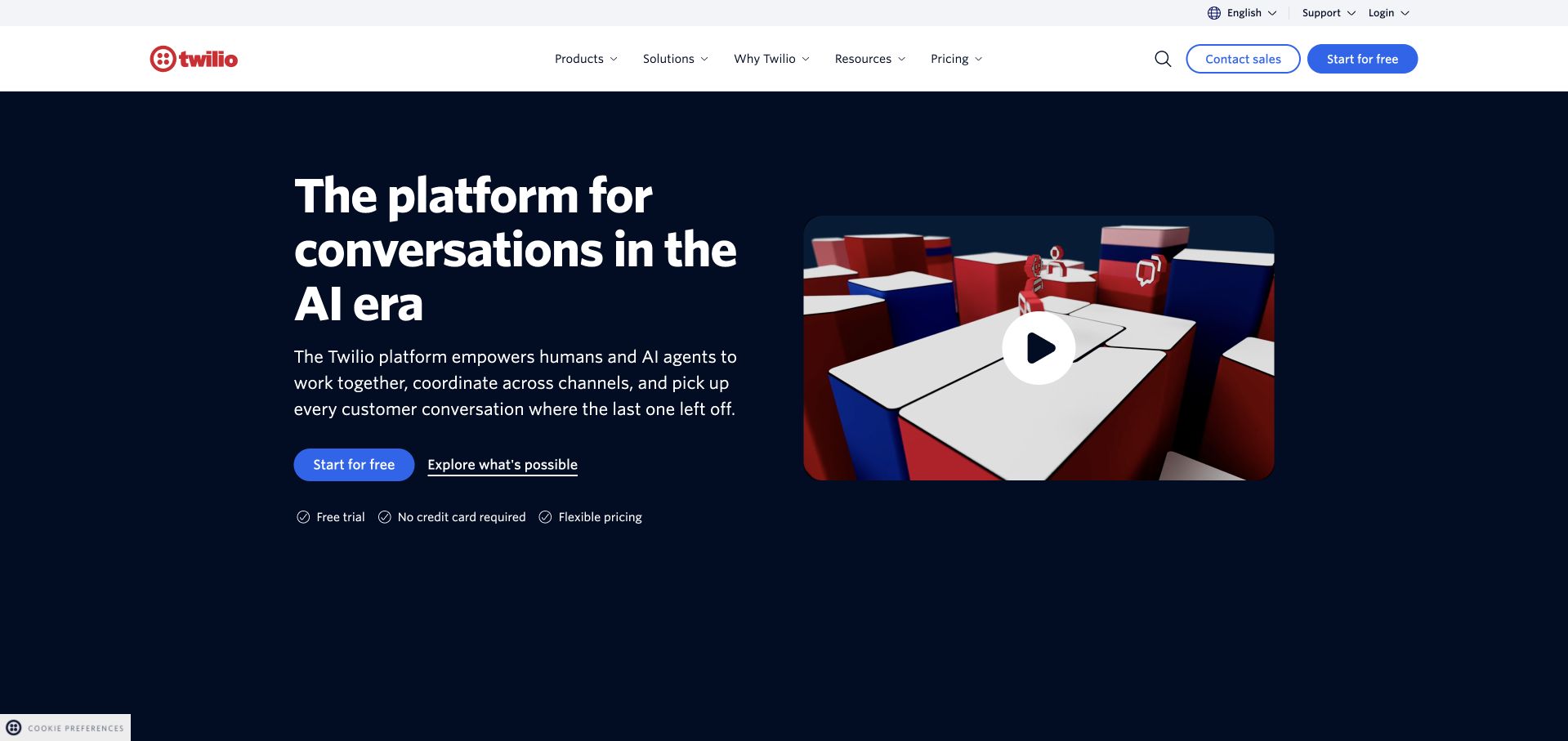
Twilio’s current homepage pairs a dark navy proposition with a colorful video preview and two different next steps. Small trial-related facts sit beneath the actions, while product, solution and developer routes remain visible in the white header. The introduction frames a broad communications platform around ongoing conversations rather than a list of endpoints. Airtable’s December 13, 2021 announcement explicitly describes Twilio product operations using Interface Designer. This is dated documentary evidence, not a current 2026 frontend audit.
What you can learn
A complex platform needs an understandable organizing idea before users compare its components. Pair that idea with routes for developers and business evaluators, and maintain the distinction between an internal planning tool and the product being marketed. Historical customer evidence should keep its original year and workload attached.
Pros
The contrasting video preview gives the platform story a concrete visual companion.
Separate trial and exploration actions accommodate visitors with different levels of commitment.
Cons & considerations
The AI-era headline needs supporting technical detail before an integration can be evaluated.
A broad navigation can overwhelm newcomers unless deeper pages keep product boundaries clear.
Platform source: Official product-specific customer case or dated announcement. Airtable’s December 13, 2021 announcement explicitly describes Twilio product operations using Interface Designer. This is dated documentary evidence, not a current 2026 frontend audit. This establishes only the stated organization, workload, product family, regional or historical association. It does not prove the pictured public page runtime, reveal its CMS or frontend, establish a complete current stack, or independently verify vendor-reported results. Platform evidence is separate from the direct website screenshot and is not a complete current infrastructure audit.
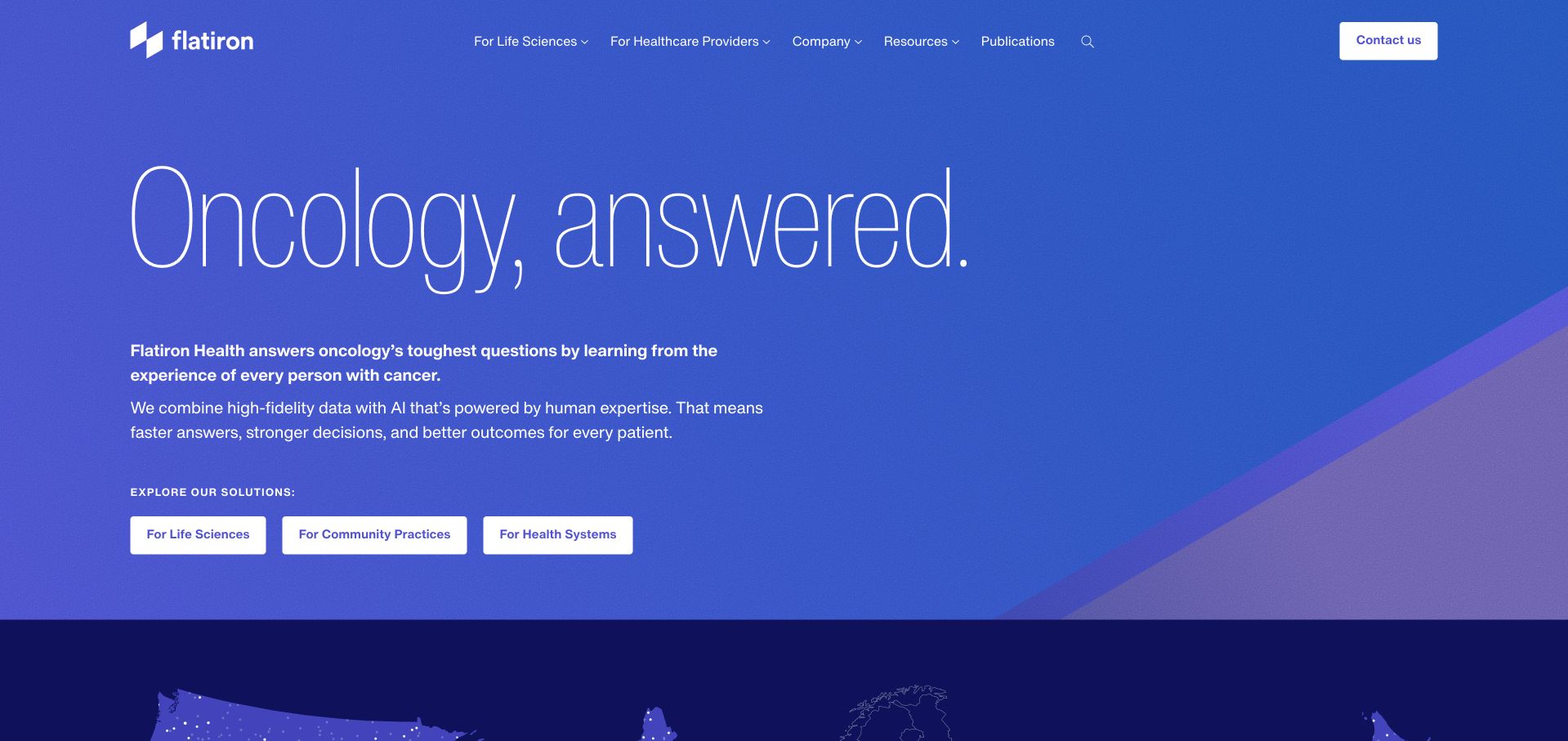
Flatiron Health combines a large blue field, thin headline typography and a brief explanation of its oncology focus. Three light buttons distinguish life-science organizations, community practices and health systems. The visual treatment is restrained, making the audience choices more prominent than a decorative product mockup or an oversized photograph. Flatiron Health product operations uses Airtable for roadmaps, customer feedback synthesis and account planning. The case does not establish clinical system hosting or treatment outcomes.
What you can learn
When a specialist business serves several professional audiences, use explicit audience routes before presenting implementation detail. Keep product feedback and account planning records separate from sensitive clinical data. Neither a marketing headline nor an operations case should be read as evidence of treatment effectiveness or patient-system architecture.
Pros
The three audience actions provide immediate routes through a specialized and potentially complex offering.
A limited blue palette and generous spacing keep the opening relatively focused.
Cons & considerations
Very thin display type can lose clarity at smaller sizes or on lower-quality screens.
Platform source: Official product-specific customer case or dated announcement. Flatiron Health product operations uses Airtable for roadmaps, customer feedback synthesis and account planning. The case does not establish clinical system hosting or treatment outcomes. This establishes only the stated organization, workload, product family, regional or historical association. It does not prove the pictured public page runtime, reveal its CMS or frontend, establish a complete current stack, or independently verify vendor-reported results. Platform evidence is separate from the direct website screenshot and is not a complete current infrastructure audit.
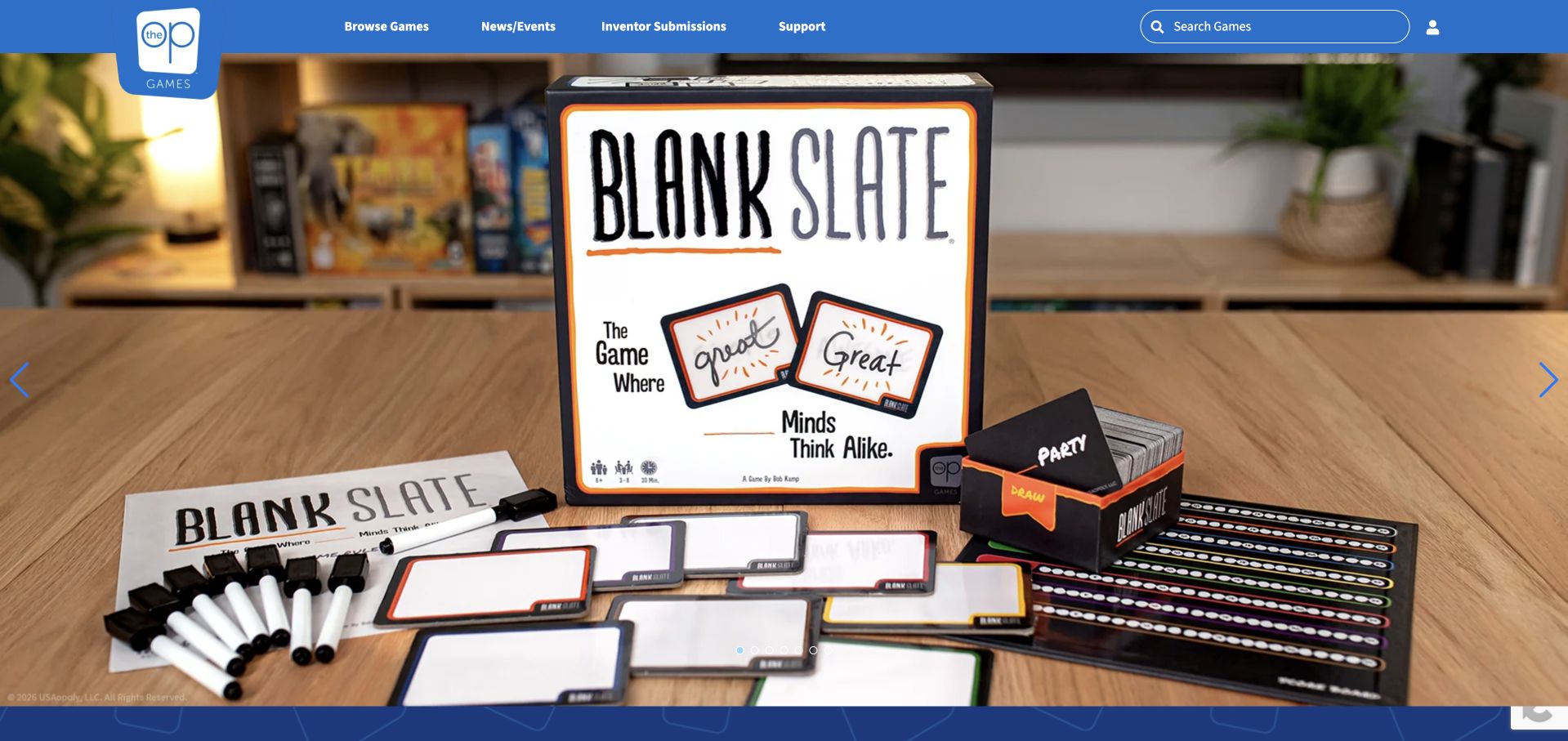
The Op Games opens on a tabletop scene centered on a recognizable game box and its playing pieces. The blue header keeps games, news, inventor submissions and support accessible, with search at the right. The photograph communicates the physical product and social setting before visitors read detailed rules or catalog descriptions. The Op Games began using Airtable in 2022 and describes a Product Hub connecting inventor submissions, product development, playtesting, creative production and marketing.
What you can learn
A product can explain itself visually when the scene includes the pieces, context and activity that matter. Support that surface with structured inventor intake and playtest feedback rather than disconnected files. Internal product coordination should not be confused with the storefront or with the creative ownership of licensed properties.
Pros
The tabletop photograph gives visitors a useful sense of the physical product and its components.
Inventor and support destinations remain visible alongside consumer-oriented game discovery.
Cons & considerations
A carousel featuring one title at a time can hide the breadth of the catalog.
Visitors unfamiliar with the featured game still need a concise explanation and accessible product details.
Platform source: Official product-specific customer case or dated announcement. The Op Games began using Airtable in 2022 and describes a Product Hub connecting inventor submissions, product development, playtesting, creative production and marketing. This establishes only the stated organization, workload, product family, regional or historical association. It does not prove the pictured public page runtime, reveal its CMS or frontend, establish a complete current stack, or independently verify vendor-reported results. Platform evidence is separate from the direct website screenshot and is not a complete current infrastructure audit.
Jamjoom Fashion’s corporate page leads with a carefully composed pink retail interior beneath a cream navigation bar. Investor information, brand routes and company news establish a group-level audience, while the store setting gives the organization a concrete visual identity. The page is distinct from either Nayomi’s or Mihyar’s consumer storefront. The case is Jamjoom Fashion, including Nayomi and Mihyar, using Airtable for product lifecycle, product information and supply-chain coordination. Future AI forecasting exploration is not represented as deployed.
What you can learn
For a multi-brand company, show a real brand environment but retain the organizational relationships that make the portfolio understandable. Connect product, supplier and launch records behind the scenes without flattening all brands into one process. Present proposed AI capabilities as plans rather than established operating features.
Pros
The retail interior provides a specific visual setting for an otherwise abstract group-level business.
Brand and investor routes acknowledge different corporate audiences in a relatively restrained header.
Cons & considerations
A full-height store image delays the explanation of how the portfolio is organized.
Group branding needs clear captions so one brand’s visual identity is not mistaken for the entire business.
Platform source: Official product-specific customer case or dated announcement. The case is Jamjoom Fashion, including Nayomi and Mihyar, using Airtable for product lifecycle, product information and supply-chain coordination. Future AI forecasting exploration is not represented as deployed. This establishes only the stated organization, workload, product family, regional or historical association. It does not prove the pictured public page runtime, reveal its CMS or frontend, establish a complete current stack, or independently verify vendor-reported results. Platform evidence is separate from the direct website screenshot and is not a complete current infrastructure audit.
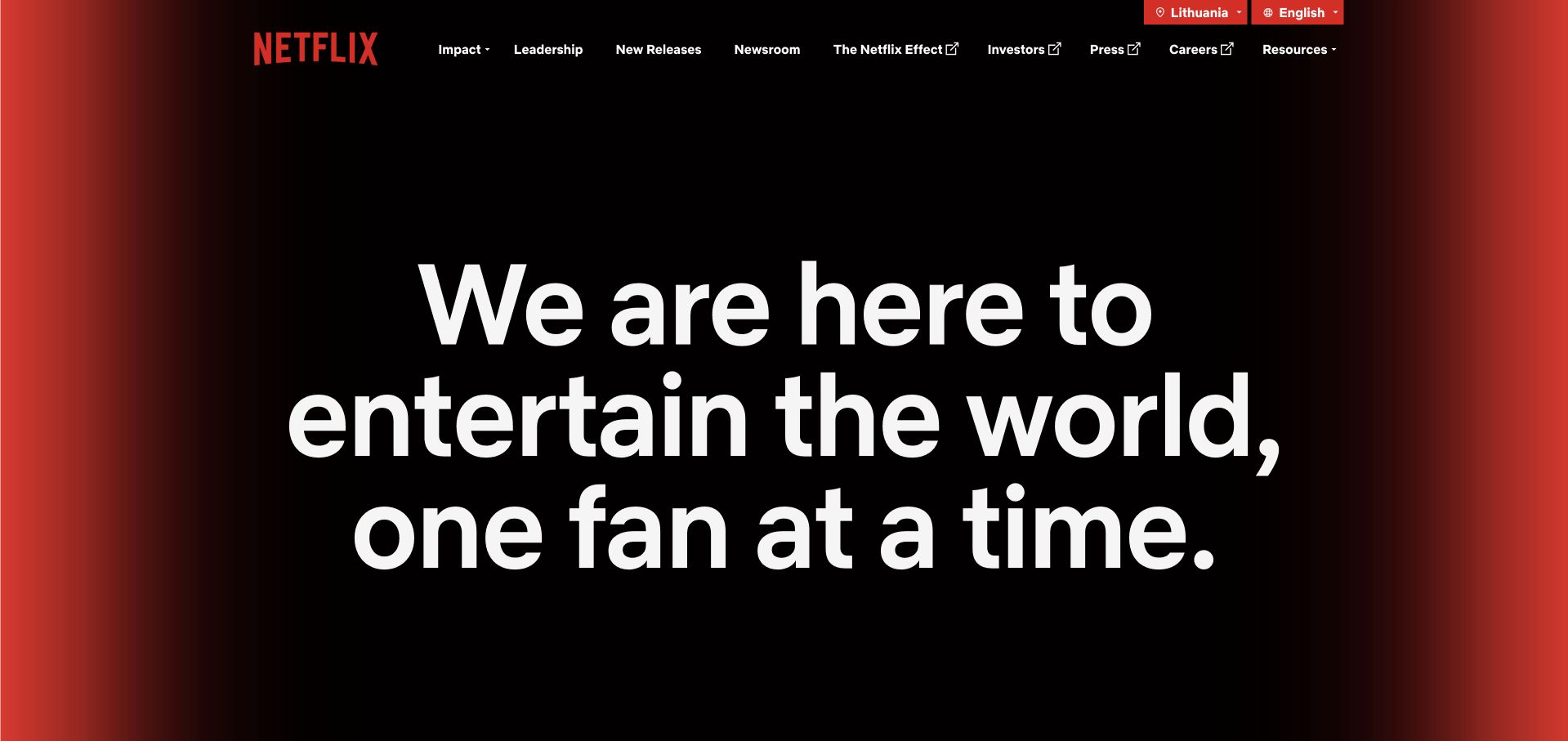
Netflix’s corporate opening centers a large entertainment mission inside a black field edged in red. Corporate navigation is compact and the statement occupies most of the viewport, without thumbnails or subscription pricing. The approach depends on existing brand recognition and a deliberate separation from the consumer viewing experience. Airtable names Netflix as a customer in its December 13, 2021 funding announcement. No individual Netflix workflow or current implementation architecture is specified.
What you can learn
A known brand can use a concise opening, but a technology collection must still explain exactly why the example belongs. Keep historical customer evidence separate from current design observations and resist assigning a detailed workflow when the primary source provides only a named relationship.
Pros
The oversized statement and red framing produce a memorable, exceptionally simple focal point.
Corporate links keep company information separate from the consumer catalog and account experience.
Cons & considerations
Readers unfamiliar with the organization receive little immediate operational detail from the opening.
A historical vendor customer list cannot establish present-day departments, architecture or public website technology.
Platform source: Official product-specific customer case or dated announcement. Airtable names Netflix as a customer in its December 13, 2021 funding announcement. No individual Netflix workflow or current implementation architecture is specified. This establishes only the stated organization, workload, product family, regional or historical association. It does not prove the pictured public page runtime, reveal its CMS or frontend, establish a complete current stack, or independently verify vendor-reported results. Platform evidence is separate from the direct website screenshot and is not a complete current infrastructure audit.
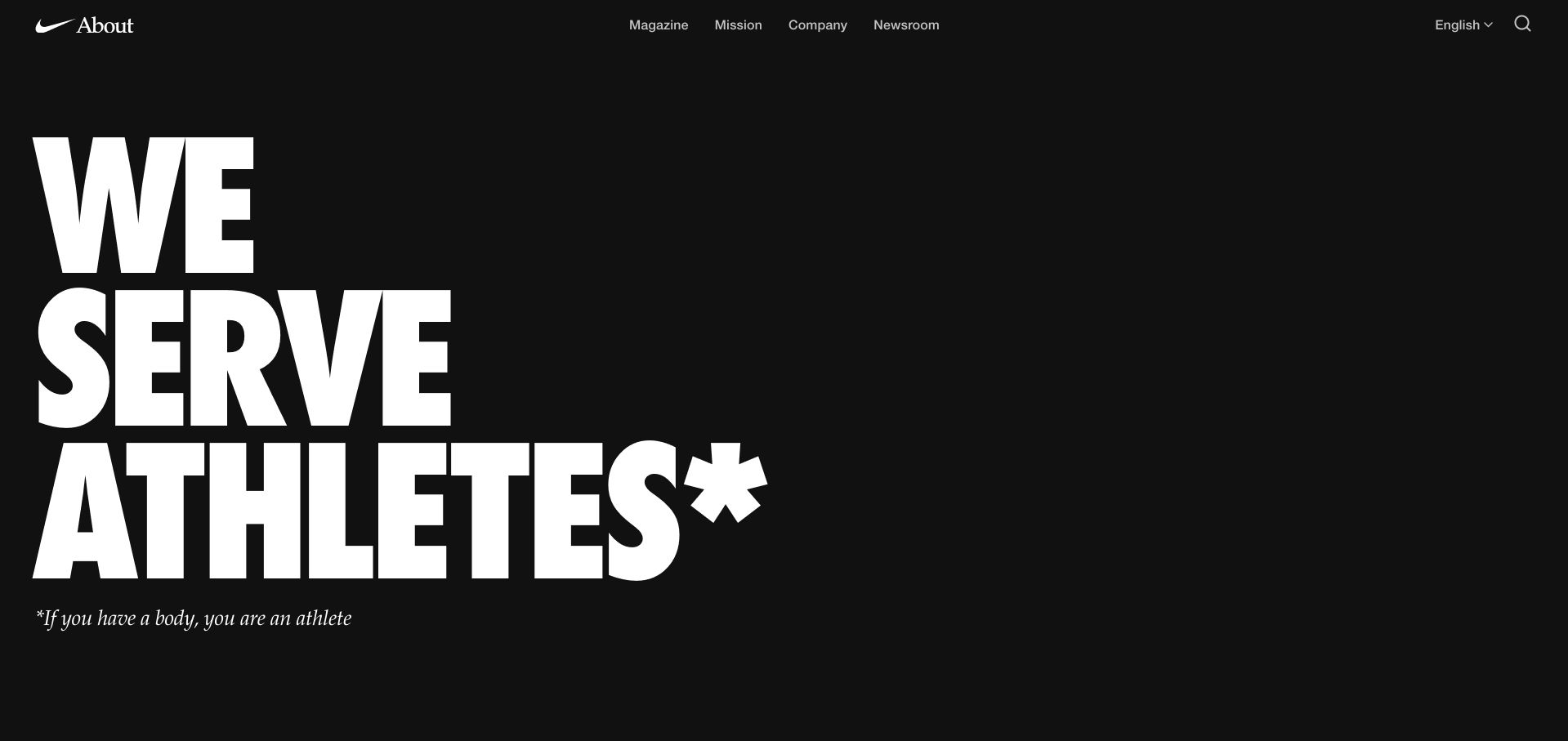
Nike’s About page uses enormous stacked white lettering on black, a small explanatory footnote and a compact magazine-and-company header. The deliberately cropped-feeling typography dominates the screen without photography. Its impact comes from scale, contrast and a familiar point of view, not from elaborate interface components. Airtable names Nike as a customer in its December 13, 2021 funding announcement; it does not identify a department, present-day configuration or public website runtime.
What you can learn
Borrow the confidence of a sharply defined message, not the exact slogan or brand voice. For an unfamiliar organization, add enough context to orient readers. In a technology guide, keep a dated named-customer association honest instead of inventing the internal workflow behind a striking public page.
Pros
Extreme type scale creates a strong hierarchy using a remarkably limited set of visual elements.
The small explanatory footnote adds meaning to the central statement without introducing another major section.
Cons & considerations
Large stacked lettering can require considerable scrolling before practical company information appears.
The approach relies heavily on brand recognition and is less suitable for an unexplained technical service.
Platform source: Official product-specific customer case or dated announcement. Airtable names Nike as a customer in its December 13, 2021 funding announcement; it does not identify a department, present-day configuration or public website runtime. This establishes only the stated organization, workload, product family, regional or historical association. It does not prove the pictured public page runtime, reveal its CMS or frontend, establish a complete current stack, or independently verify vendor-reported results. Platform evidence is separate from the direct website screenshot and is not a complete current infrastructure audit.
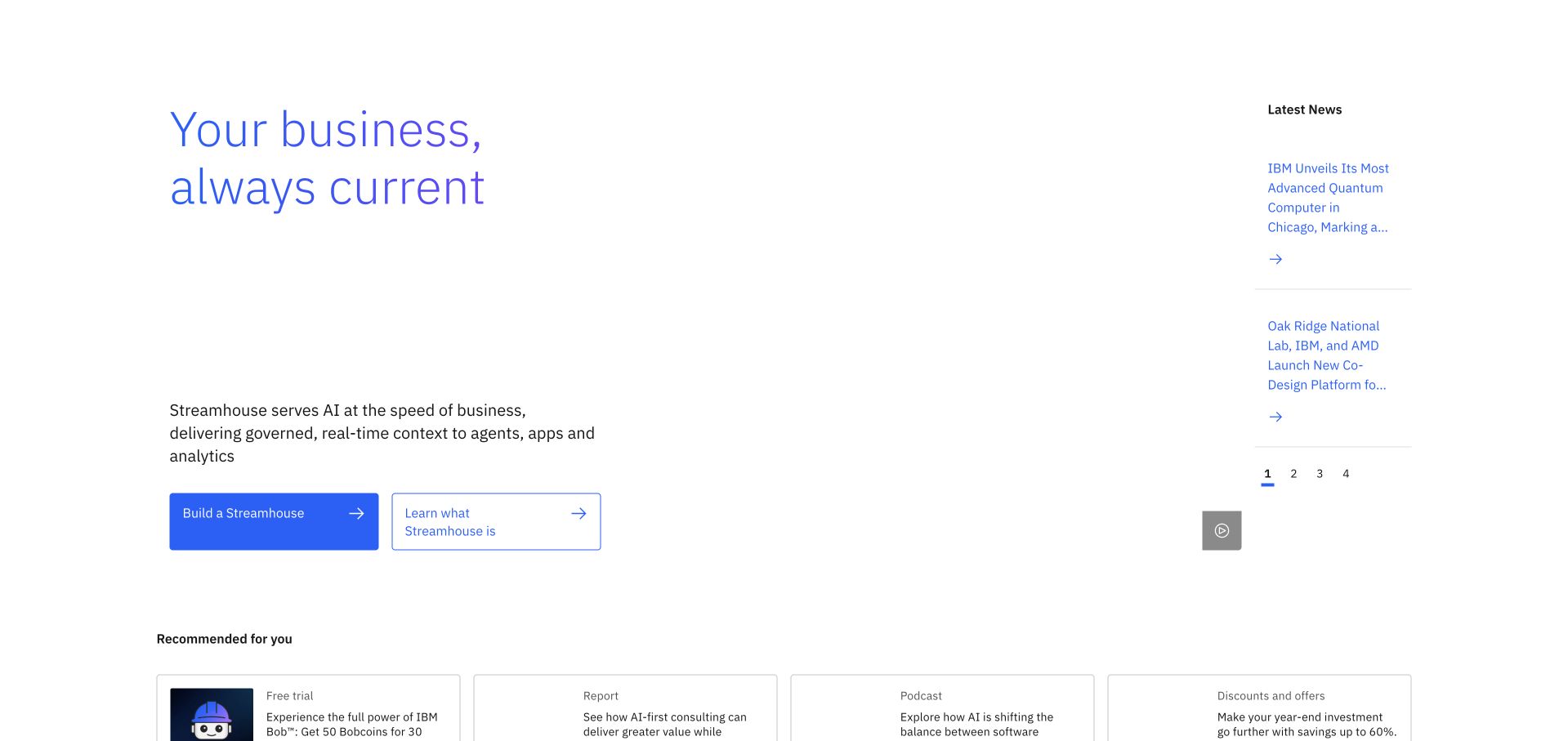
IBM’s captured homepage gives a current business proposition a generous white field, with supporting text and two blue actions below it. A narrow news column creates a secondary route, while recommendation cards begin at the bottom. The restrained composition leaves considerable breathing room around a complex enterprise offering. Airtable names IBM among customers in its December 13, 2021 announcement. The record is historical association evidence only, without a specified IBM workload.
What you can learn
Use hierarchy to distinguish the main proposition, supporting evidence and optional exploration. A broad enterprise portfolio does not require every product in the first screen. For documentary platform associations, preserve the source’s actual specificity: a historical customer name is not a license to invent department-level architecture.
Pros
A narrow secondary-news column provides alternate discovery without competing directly with the primary message.
Paired actions distinguish immediate product exploration from learning more about the offer.
Cons & considerations
Large empty areas can feel uninformative if supporting media is unavailable or overlooked.
A broad business headline needs detailed follow-through before technical buyers can assess suitability.
Platform source: Official product-specific customer case or dated announcement. Airtable names IBM among customers in its December 13, 2021 announcement. The record is historical association evidence only, without a specified IBM workload. This establishes only the stated organization, workload, product family, regional or historical association. It does not prove the pictured public page runtime, reveal its CMS or frontend, establish a complete current stack, or independently verify vendor-reported results. Platform evidence is separate from the direct website screenshot and is not a complete current infrastructure audit.
Kegan has 15+ years of experience working with small businesses, Fortune 500 companies, and everything in between. No development job is too big or too small: he brings the same hands-on attention to a focused improvement, a complete website, or a custom application.
For Airtable projects, he can help with content architecture, custom functionality, system integrations, testing, and maintainable handover. He works directly with clients on scope, design, implementation, testing, and handover, with an emphasis on clear communication and a system that remains practical to maintain after launch.
Show 3 other Airtable developersHide other Airtable developers
Choose one process, such as creative intake or research indexing, and keep its first release deliberately bounded. Use a small vocabulary of statuses and a clear owner for each record. Success means the team can complete the real task without maintaining a parallel tracker. This is often a better starting point than announcing a company-wide platform before one workflow is dependable.
Connected departmental applications
When several teams share core information but work differently, define a common reference layer and purposeful departmental views. Radio France’s case is useful context for studying why one oversized base may not fit every editorial process. Document how data crosses boundaries and who resolves conflicting changes. Connections should reduce duplication without making every team dependent on an undocumented central administrator.
A custom interface with a controlled integration
A public site or specialist interface may need a server-side connection rather than direct access to a working base. Specify exactly which records can be read or changed, validate submissions and keep credentials out of browser code. Plan pagination, retries and reconciliation before promising real-time behavior. The custom interface and Airtable remain separate components with different operating responsibilities.
From references to requirements
Write the operational brief before building views
Describe the present process with real examples
Collect several ordinary requests and at least one awkward exception. Trace where each piece of information originates, who changes it and what confirms completion. Record duplicate entry, missing ownership and delayed approvals without assuming software is the only cause. Agree on the result to improve, such as fewer handoffs or a trustworthy launch calendar, rather than an arbitrary number of automations.
Define migration and data stewardship
Choose the authoritative source for every imported field. Clean duplicate organizations, inconsistent statuses and ambiguous dates before loading them into relationships. Assign someone to maintain reference data and document a correction procedure. Keep an export and a reconciliation report so the team can explain what moved, what was rejected and which historical records intentionally remain outside the new application.
Plan support, change and recovery
Name an operational owner and a technical maintainer, including what happens when either leaves. Test automation failures and permission changes with representative accounts. Keep a record of integration credentials without exposing their values in documentation. Decide how workflow changes are reviewed, how staff learn them and how the team returns to a safe manual process during a service interruption.
A useful handover demonstration
Ask the actual team to carry out its routine job: publish a realistic update, correct a mistake, preview a narrow screen, and identify who owns an integration failure. For a library or frontend framework, also ask who maintains the content source and deployment. A polished screenshot does not answer those operational questions.
Beyond the screenshot
Airtable project checklist
Name the initial workflow and its explicit completion condition.
Identify requesters, reviewers, administrators and external collaborators.
Define record identities and relationships before importing data.
Agree on required fields, statuses and date conventions.
Document the authoritative source for every synchronized field.
Review base permissions and integration scopes separately from interface layout.
Remove secrets and private data from public frontend code.
Test pagination and error handling using representative data volumes.
Make duplicate submissions and repeated updates safe to reconcile.
Require human review for consequential generated classifications or copy.
Assign ownership for exports, recovery and integration maintenance.
Measure the actual workflow after a small, supported launch.
Test with real content, a keyboard, a small screen, slow or failed requests, and the people who will maintain the system. These are planning checks, not an accessibility, security, performance, or search-ranking certification.
Sources & editorial method
How this Airtable collection was reviewed
Public websites were captured in Chrome and visually inspected. Each association was checked against an official Airtable case or dated announcement, with company, department and historical limits retained. Vendor-reported outcomes are not independent benchmarks. The first five are recognizable organizations, not a ranking of implementation quality; design observations concern the actual pictured public page.
Every image is an unmodified capture from the actual website, with its source and capture date. Some captures are reused from our shared catalog; their dates remain the original capture dates. None comes from a vendor gallery or a generated reconstruction. Moving imagery and live content can change.
Technology attribution uses public page assets or metadata, official platform documentation, or a cited first-party project case study. Documentary and framework-relationship evidence is identified where used; it is not a complete current backend inventory. A CMS image CDN alone does not establish a full CMS deployment. A library’s presence does not prove which individual controls use it, and a platform label does not establish AI authorship.
The composition notes, lessons, pros and tradeoffs are original editorial observations. We have not measured conversion, traffic, security, performance or accessibility conformance. Website owners retain their brands and imagery; these examples are not our client portfolio. Written, Edited and Curated are independent records, not dates advanced by a build. See our editorial standards or suggest a correction.
Questions worth asking
Airtable website development FAQs
Does this mean these websites were built with Airtable?
No. The cases establish the particular workflow or customer association stated beside each example. The screenshot documents a public design. Its CMS, frontend, hosting and other private systems require separate evidence.
Should one base contain the whole company?
Not automatically. Start with the relationships and responsibilities in the actual work. A shared reference layer can be useful, but unrelated lifecycles and permissions may justify separate applications or systems rather than one enormous table.
Can a website submit information to Airtable?
Yes, an appropriately designed form or server-side integration can support that workflow. Validate the data, limit access, handle failures and explain submission behavior. Do not publish a credential that grants access to private working records.
Should AI write or classify everything?
Only where the task, source material and review process justify it. Test incorrect and ambiguous outputs, preserve provenance and define a human owner. Generated text is not automatically accurate simply because it appears in a structured record.
What should the first release include?
One complete, useful workflow with real users, clear ownership and a tested exception path. Include training, migration checks and support. Add broader reporting or automation after the team trusts the underlying records and responsibilities.
Borrow a clear interface or useful organizational pattern, then build around your own records, permissions and handoffs. A successful Airtable project makes the work easier to understand and maintain, not merely easier to decorate.