Twenty public properties with explicit S3 object or dependency references, real screenshots and practical lessons for managing website assets responsibly.
A website’s asset inventory extends beyond its hero image. These examples expose public references to fonts, media, downloads, social images and optional third-party scripts without guessing at private infrastructure.
Amazon S3 is an object-storage service. A public S3 URL can identify a particular object reference, but it does not establish who owns the bucket, whether the entire website is hosted there or how private resources are protected. This collection preserves those limits instead of labeling every example an S3-powered application.
Sonos, the University of Chicago, The New Yorker, the V&A and A24 open the collection. Their sampled references range from language and font resources to media assets. Later examples include public downloads and third-party integrations, each described according to the actual resource rather than a broad cloud claim.
Before the examples
What makes good Amazon S3 website development in 2026?
Inventory objects by responsibility
Record the public asset, its role, responsible team and replacement path. Separate owned images from a supplier’s scripts and distinguish public downloads from operational data. An object-storage service supports many uses, so the hostname alone cannot supply the rest of that architecture.
Keep public delivery separate from private storage
AWS documents Block Public Access controls and states that new resources do not allow public access by default. A website project should deliberately define which assets are public and retain appropriate protections for everything else. Do not copy another website’s delivery pattern as an instruction to weaken account or bucket controls.
S3 Versioning can retain multiple object variants, and its documentation describes recovery implications and storage costs. Regardless of the chosen mechanism, a release brief needs to say how an incorrect image, script or download is replaced and how a verified prior asset can be recovered.
The first five properties show different public object references, not equivalent hosting architectures. The full set includes direct media, public metadata, downloadable files, configuration references and third-party scripts; each relationship stays explicit in its source record.
We start with five recognizable brands or organizations: Sonos US storefront, University of Chicago, The New Yorker, Victoria and Albert Museum (V&A), A24. Each attribution applies to the named website property, not every product or website belonging to its organization. This is a curated reading sequence, not a measured ranking.
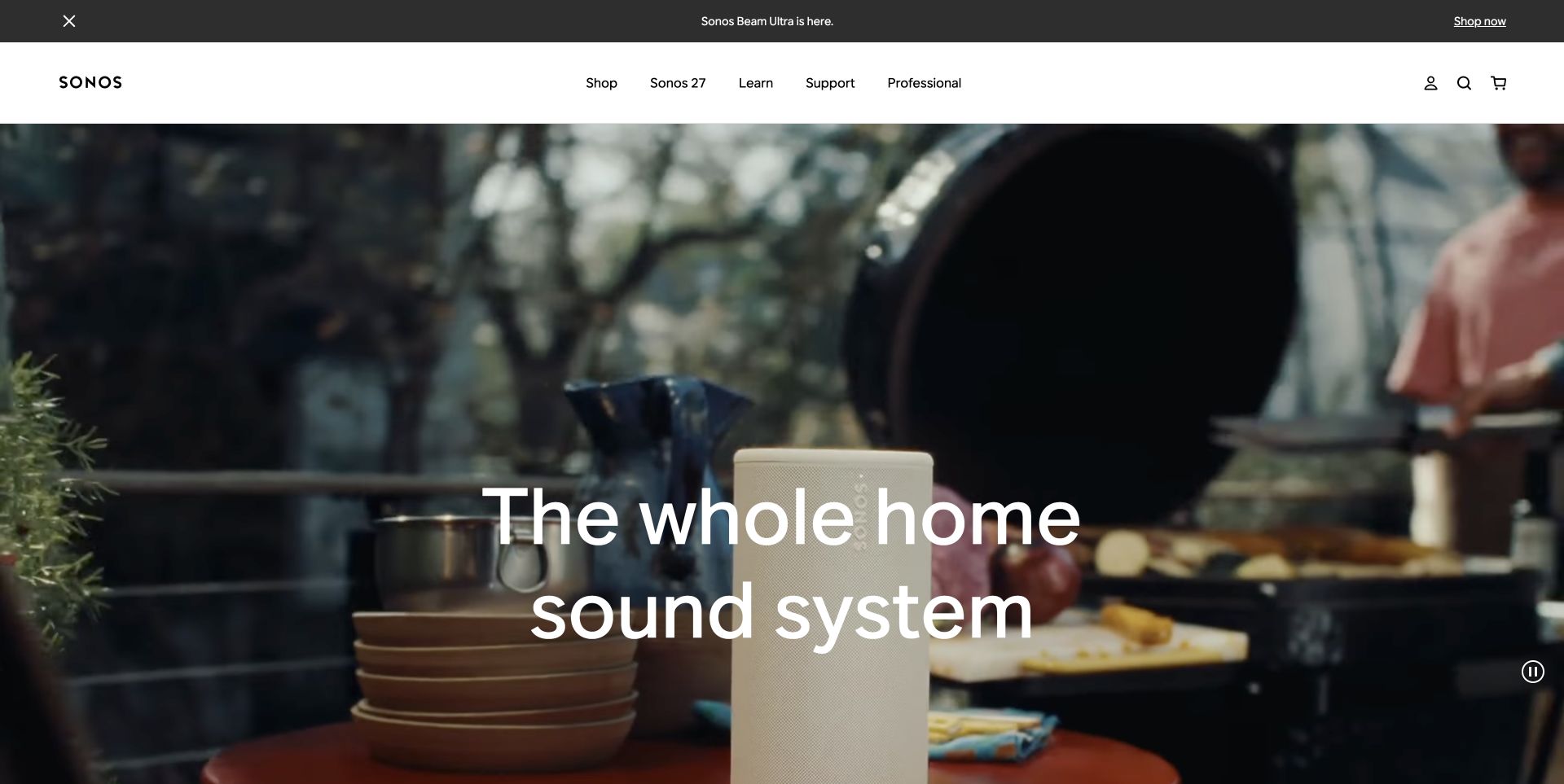
Sonos presents a domestic listening scene beneath a narrow retail header, with a centered whole-home proposition and small commerce controls. The page feels simple to the shopper even though supporting assets can arrive from several independently managed services. The recorded public source contains S3-hosted hyphenation dictionary reference.
What you can learn
Font-adjacent language resources are part of the dependency inventory too; document fallback behavior for hyphenation without claiming where the storefront itself is hosted. The language-resource reference is easy to overlook because it is not the dramatic household photograph. Document it alongside the font and layout rules that determine line breaking. A page can remain visually coherent when an optional dictionary is unavailable, but that fallback should be checked with realistic translated text rather than assumed.
Pros
The solid navigation remains distinct from the changing film.
The product is visible in context instead of being represented only by an abstract claim.
Cons & considerations
A public reference does not establish bucket ownership, storage permissions or the origin of the entire site.
The full-height scene delays a detailed product comparison.
Platform source: Public page or referenced asset source. Public source observed 2026-11-03 contains S3-hosted hyphenation dictionary reference. This establishes a public object reference or dependency, not bucket ownership, origin hosting, private storage or successful execution for every visitor. Platform evidence is separate from the direct website screenshot and is not a complete current infrastructure audit.
The University of Chicago opens with a large research photograph and bold scholarly statement below a structured institutional header. Its typographic identity unifies a diverse collection of audience routes, making font delivery an important part of that visual consistency. The recorded public source contains S3-hosted brand-font stylesheet imports.
What you can learn
Treat brand-font stylesheets as a design-system dependency with tested fallback typography, rather than assuming object storage alone guarantees stable text layout. The institutional header depends on recognizable typography across multiple audience routes. A font stylesheet is therefore part of the delivery inventory even when the hero image receives most attention. Check the fallback at the same widths as the original design, particularly where long university navigation labels could wrap or overlap.
Pros
The action row translates the broad opening into practical applicant and visitor routes.
The navigation distinguishes admissions from general academic information and campus life.
Cons & considerations
A public reference does not establish bucket ownership, storage permissions or the origin of the entire site.
Large menus expose many destinations and require disciplined grouping and keyboard behavior.
Platform source: Public page or referenced asset source. Public source observed 2026-11-03 contains S3-hosted brand-font stylesheet imports. This establishes a public object reference or dependency, not bucket ownership, origin hosting, private storage or successful execution for every visitor. Platform evidence is separate from the direct website screenshot and is not a complete current infrastructure audit.
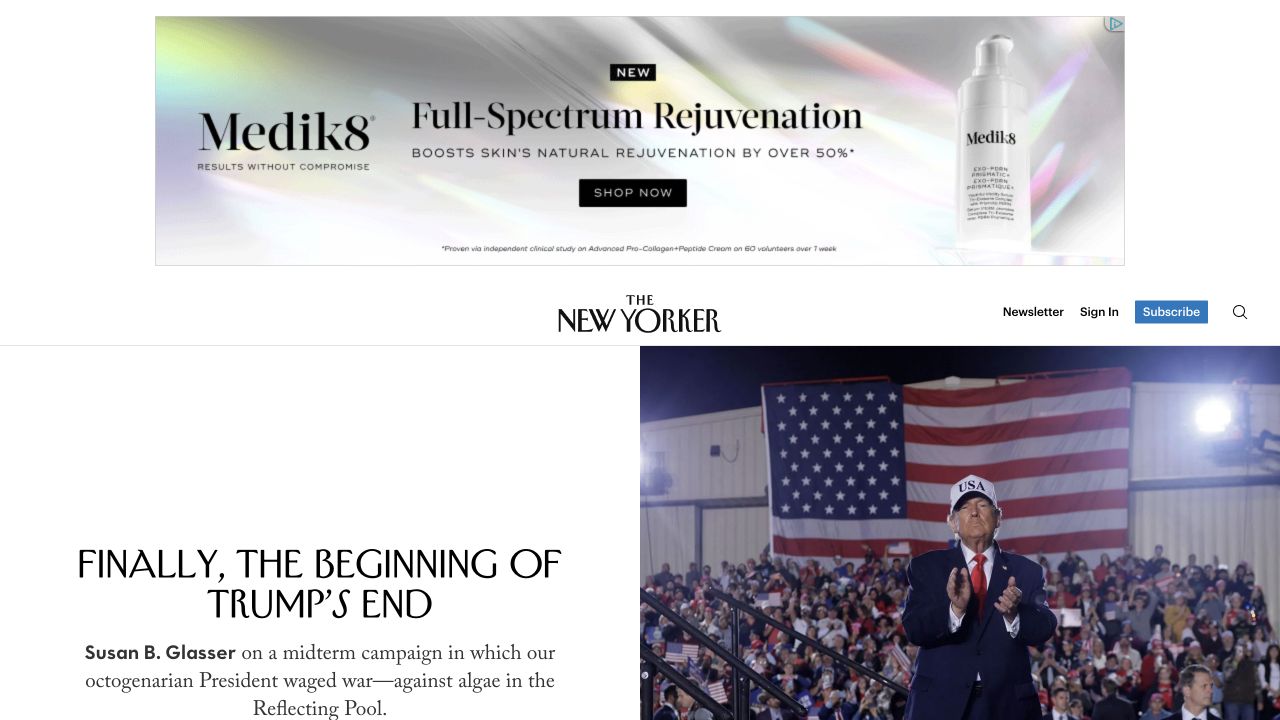
The New Yorker places its distinctive masthead below an advertising strip and pairs a prominent story with an editorial photograph. Its mix of text, promotion and supporting media illustrates why a publication needs asset policies beyond the main article image. The recorded public source contains S3-hosted puzzle-animation URL in public page data.
What you can learn
Inventory auxiliary media such as puzzle animation separately from article photography, and give each public object a responsible publishing owner. A puzzle-animation reference belongs to a different editorial module from the lead article photograph. Keep its purpose and owner explicit rather than treating every media object as one undifferentiated library. An animated auxiliary asset should have a useful alternative and must not delay the reader’s route into a text-heavy story.
Pros
Named editorial sections make the breadth of the publication navigable.
Bylines and summaries provide context beyond a striking headline.
Cons & considerations
A public reference does not establish bucket ownership, storage permissions or the origin of the entire site.
The dense section system requires a carefully prioritized mobile menu.
Platform source: Public page or referenced asset source. Public source observed 2026-11-03 contains S3-hosted puzzle-animation URL in public page data. This establishes a public object reference or dependency, not bucket ownership, origin hosting, private storage or successful execution for every visitor. Platform evidence is separate from the direct website screenshot and is not a complete current infrastructure audit.
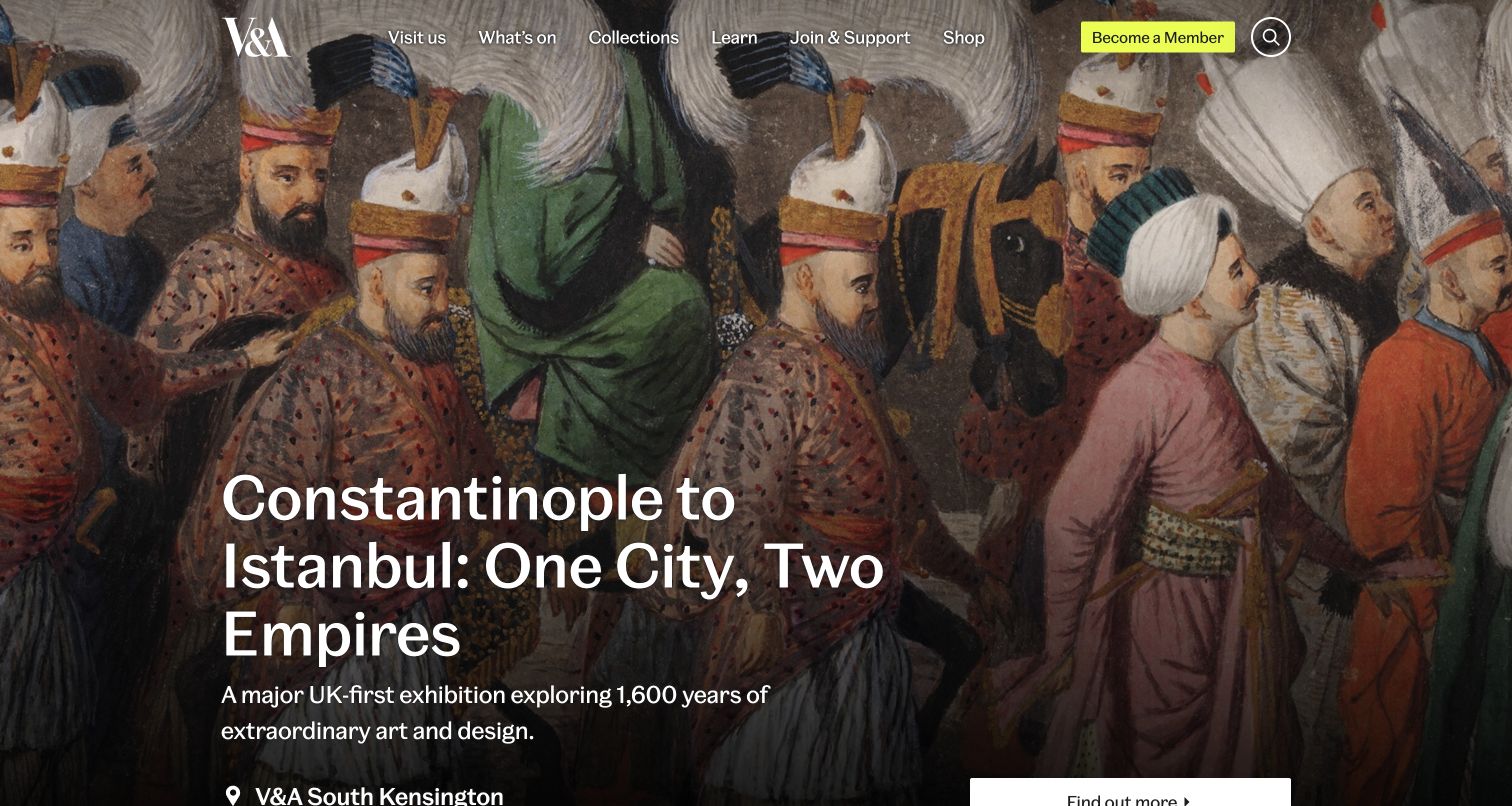
The V&A gives an exhibition artwork most of the first screen, with the title, venue and ticket-related route overlaid. The artwork carries both atmosphere and information, so its responsive delivery needs to respect the composition rather than merely reduce file size. The recorded public source contains S3-hosted gallery image srcset.
What you can learn
Preserve responsive image variants and meaningful alternatives when replacing an exhibition asset, avoiding a single oversized artwork download for every device. The gallery image evidence includes responsive variants, making this a useful reference for a content-specific asset inventory. Record the crop intent and alternative text with the source artwork. A smaller file that removes the important exhibition detail is not a successful optimization merely because it reduces the transferred bytes.
Pros
Venue labels help visitors distinguish programs across the different museums in the family.
Visible availability and price states prevent every exhibition from appearing equally bookable.
Cons & considerations
A public reference does not establish bucket ownership, storage permissions or the origin of the entire site.
A richly illustrated opening can delay the practical distinction between the different locations.
Platform source: Public page or referenced asset source. Public source observed 2026-11-03 contains S3-hosted gallery image srcset. This establishes a public object reference or dependency, not bucket ownership, origin hosting, private storage or successful execution for every visitor. Platform evidence is separate from the direct website screenshot and is not a complete current infrastructure audit.
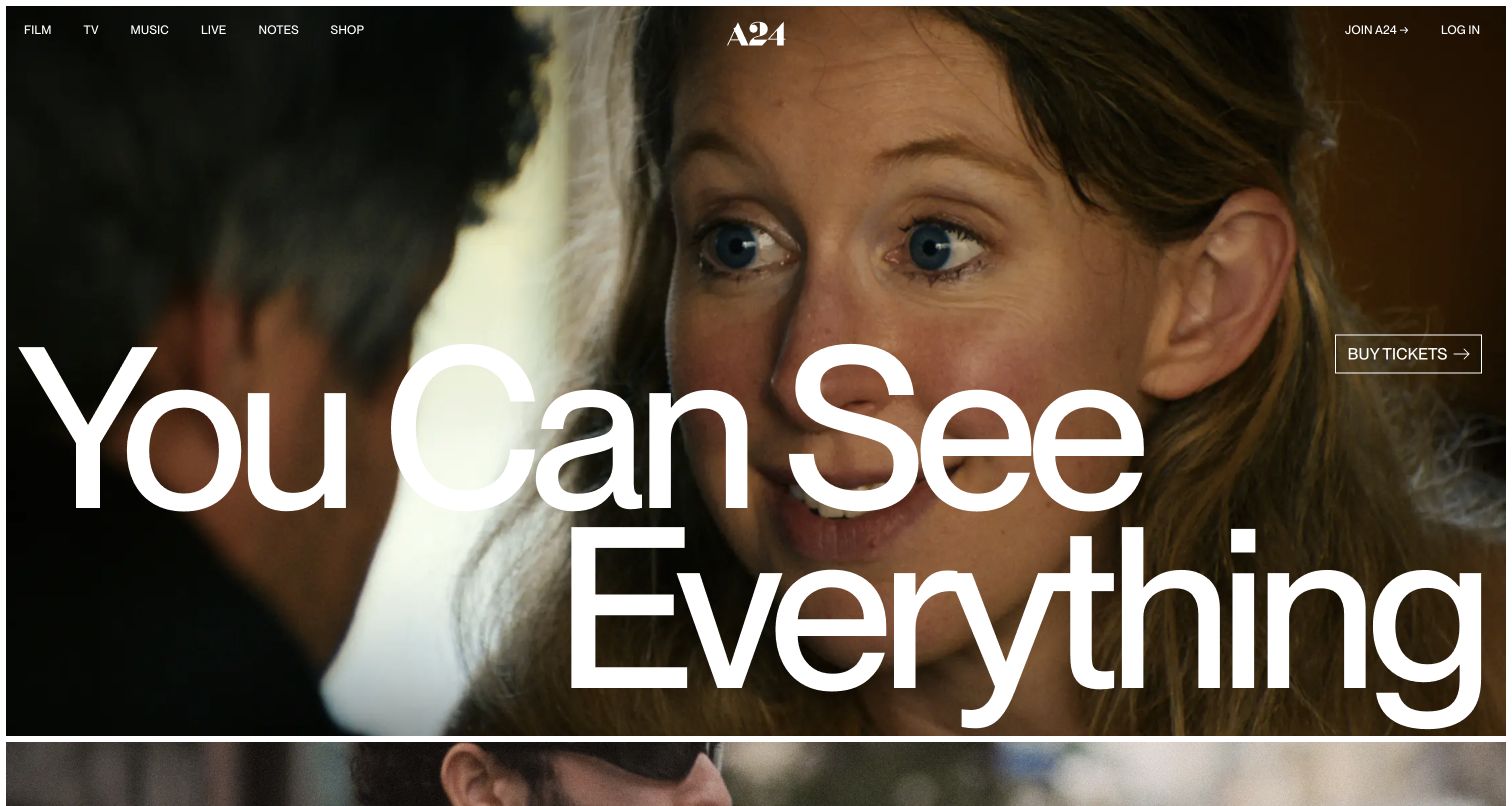
A24 uses a large film still with oversized white editorial typography and a small ticket action. Minimal navigation leaves the campaign visually dominant, while the site still has to manage a changing library of film-specific images behind that presentation. The recorded public source contains S3 image URL in public image metadata.
What you can learn
Keep film-image metadata and replacement assets consistent, while avoiding assumptions about the private content pipeline behind the public image reference. The film campaign changes more frequently than the site’s identity and navigation. Keep the image metadata tied to the corresponding film record so a replacement does not leave an old visual preview attached to new copy. The public metadata establishes a media association, not access to the studio’s private publishing system.
Pros
A single release creates a clear editorial focus instead of presenting the entire catalog at once.
Compact navigation preserves alternative discovery paths for visitors interested in another part of the brand.
Cons & considerations
A public reference does not establish bucket ownership, storage permissions or the origin of the entire site.
Very large titles can cover important parts of the image or wrap awkwardly on mobile.
Platform source: Public page or referenced asset source. Public source observed 2026-11-03 contains S3 image URL in public image metadata. This establishes a public object reference or dependency, not bucket ownership, origin hosting, private storage or successful execution for every visitor. Platform evidence is separate from the direct website screenshot and is not a complete current infrastructure audit.
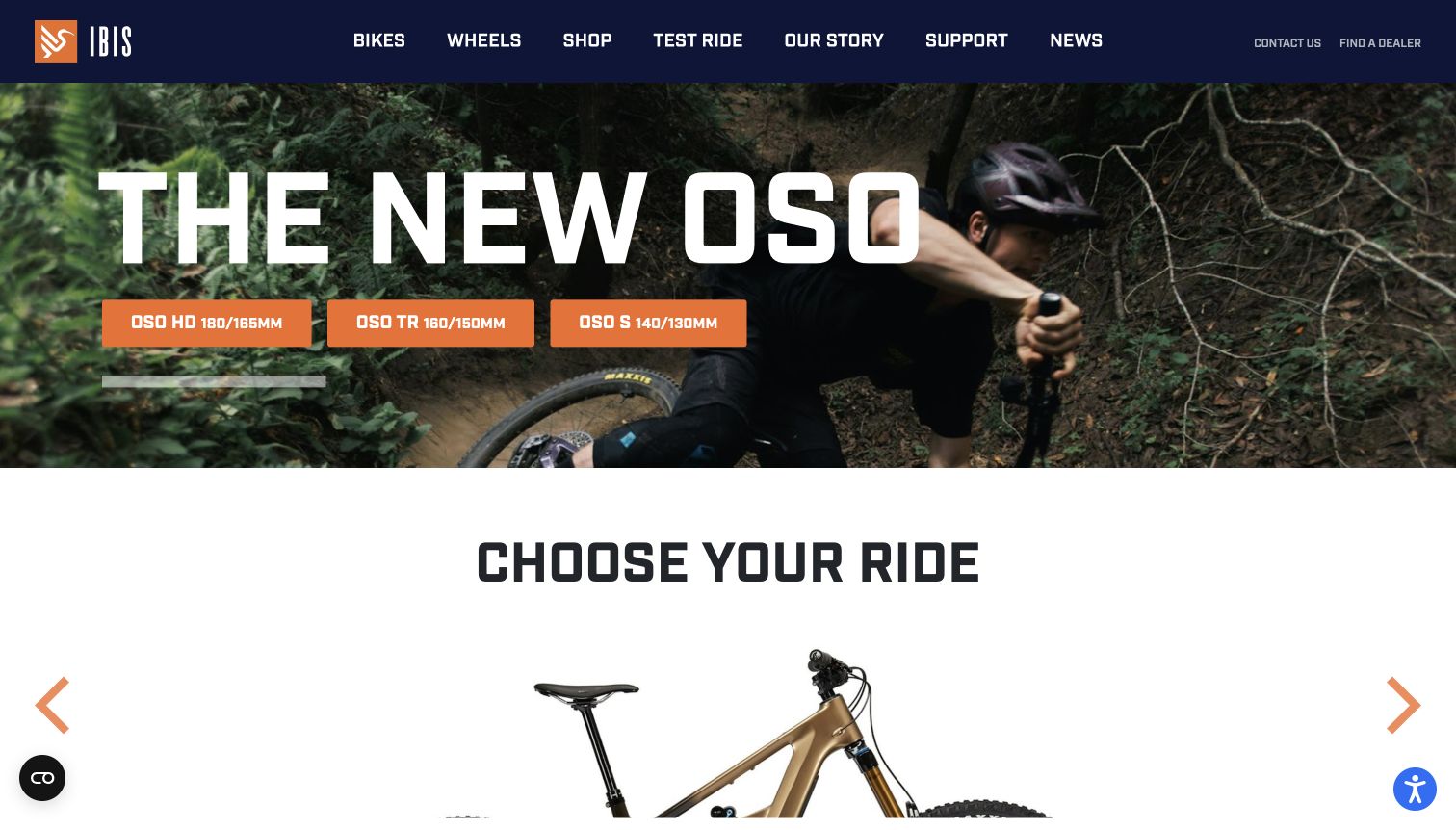
Ibis Cycles combines an outdoor riding image with a large model announcement and bright product actions. A second section begins immediately with a bicycle-selection heading, connecting campaign imagery with a practical route into the catalog. The recorded public source contains S3-hosted editorial badge image.
What you can learn
Give supporting editorial badges the same provenance and replacement discipline as product images, rather than leaving small promotional files unmanaged. The detected editorial badge is a supporting asset rather than the main bicycle photograph. Small files still need accurate attribution and lifecycle decisions when an award or product campaign expires. Do not assume a third-party badge proves the quality of every model, and keep the actual selection route clear without that decoration.
Pros
The three variant actions make the model family’s options visible immediately.
Test Ride and dealer discovery sit alongside the product navigation.
Cons & considerations
A public reference does not establish bucket ownership, storage permissions or the origin of the entire site.
Paired travel numbers assume familiarity with mountain-bike terminology.
Platform source: Public page or referenced asset source. Public source observed 2026-11-04 contains S3-hosted editorial badge image. This establishes a public object reference or dependency, not bucket ownership, origin hosting, private storage or successful execution for every visitor. Platform evidence is separate from the direct website screenshot and is not a complete current infrastructure audit.
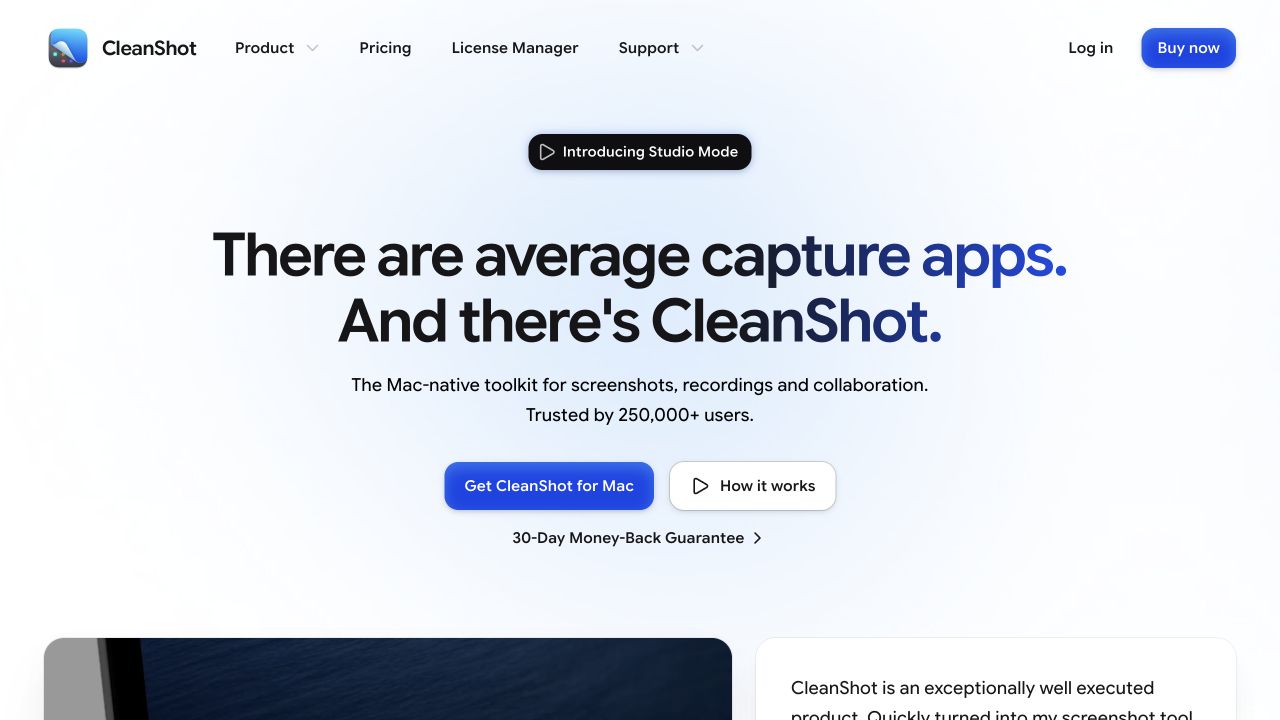
CleanShot X centers a large product proposition above distinct purchase and demonstration actions on a pale background. Product, pricing, license and support navigation are separated, giving both new buyers and existing customers useful routes through the same public site. The recorded public source contains S3-hosted public press-kit download link.
What you can learn
Publish a stable, clearly labeled press-kit link and manage its version intentionally, without exposing private upload directories or treating a download link as proof of application hosting. The press-kit destination is a public publishing artifact rather than part of the product’s private capture storage. Give its archive an intentional owner, version and descriptive link. A journalist should understand what they are downloading without being asked to navigate an application login or infer the file contents from an opaque object name.
Pros
Platform context is stated before the main purchase decision.
License management acknowledges existing customers in the primary navigation.
Cons & considerations
A public reference does not establish bucket ownership, storage permissions or the origin of the entire site.
The spacious hero postpones detailed product evidence below the fold.
Platform source: Public page or referenced asset source. Public source observed 2026-11-03 contains S3-hosted public press-kit download link. This establishes a public object reference or dependency, not bucket ownership, origin hosting, private storage or successful execution for every visitor. Platform evidence is separate from the direct website screenshot and is not a complete current infrastructure audit.
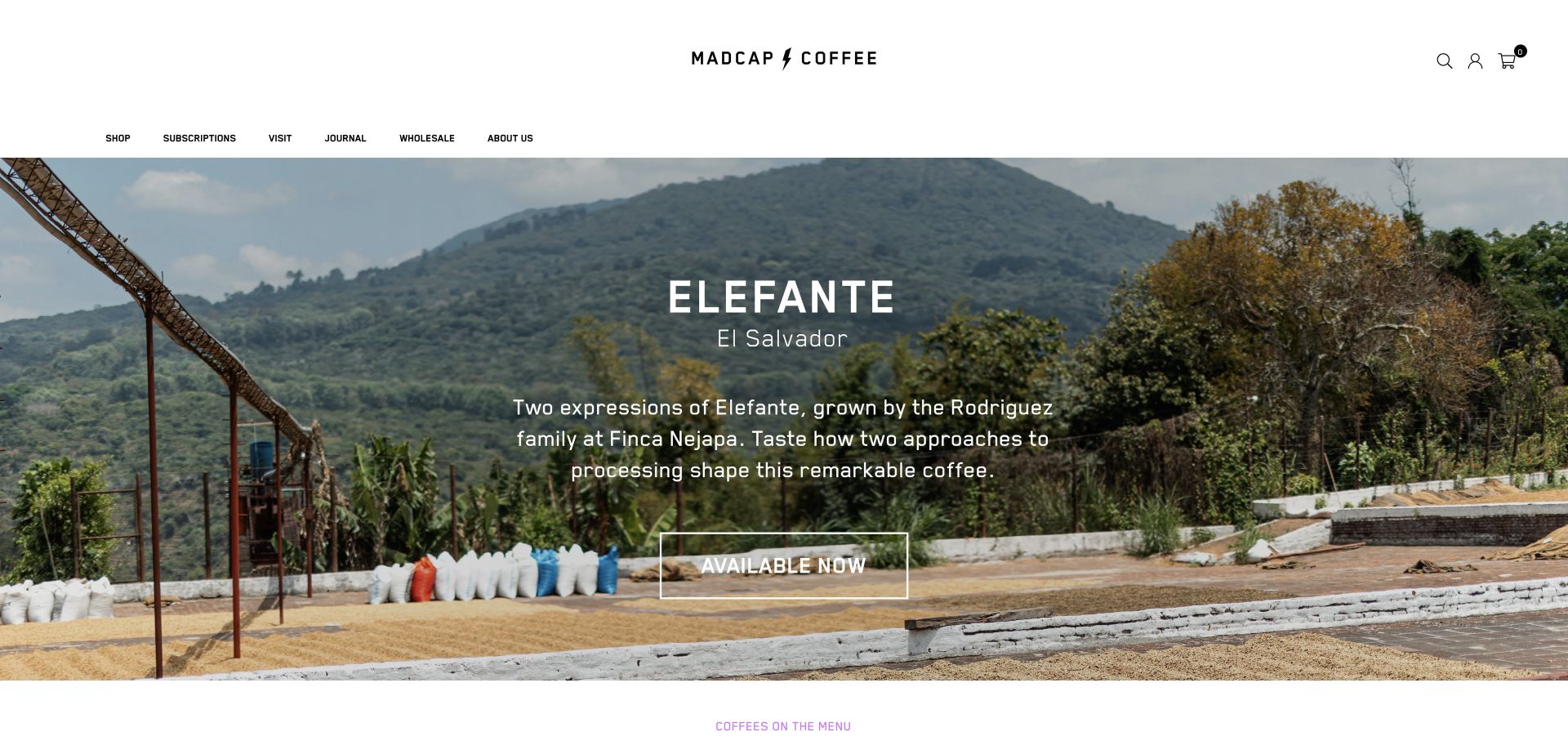
Madcap Coffee gives a named coffee and its growing landscape most of the opening screen. A quiet white masthead keeps navigation legible while the crop, origin and producer story provide a more specific starting point than generic lifestyle photography. The recorded public source contains S3-origin third-party Smart SEO script referenced through Shopify proxy.
What you can learn
Track the proxied third-party prefetch script separately from owned coffee imagery, and test the storefront without assuming that optional enhancement is essential. The observed URL belongs to a prefetched third-party script, not the producer photograph or an inferred coffee database. Keep that distinction visible in the inventory. A coffee buyer should retain normal product and navigation links if the optional optimization is unavailable, and the origin story should remain readable without that enhancement.
Pros
The campaign connects a named release with a landscape and a specific explanation of processing differences.
The journal, visit and wholesale routes remain visible without competing heavily with the main coffee story.
Cons & considerations
A public reference does not establish bucket ownership, storage permissions or the origin of the entire site.
The capture does not establish behavior beyond the visible page state.
Platform source: Public page or referenced asset source. Public source observed 2026-11-03 contains S3-origin third-party Smart SEO script referenced through Shopify proxy. This establishes a public object reference or dependency, not bucket ownership, origin hosting, private storage or successful execution for every visitor. Platform evidence is separate from the direct website screenshot and is not a complete current infrastructure audit.
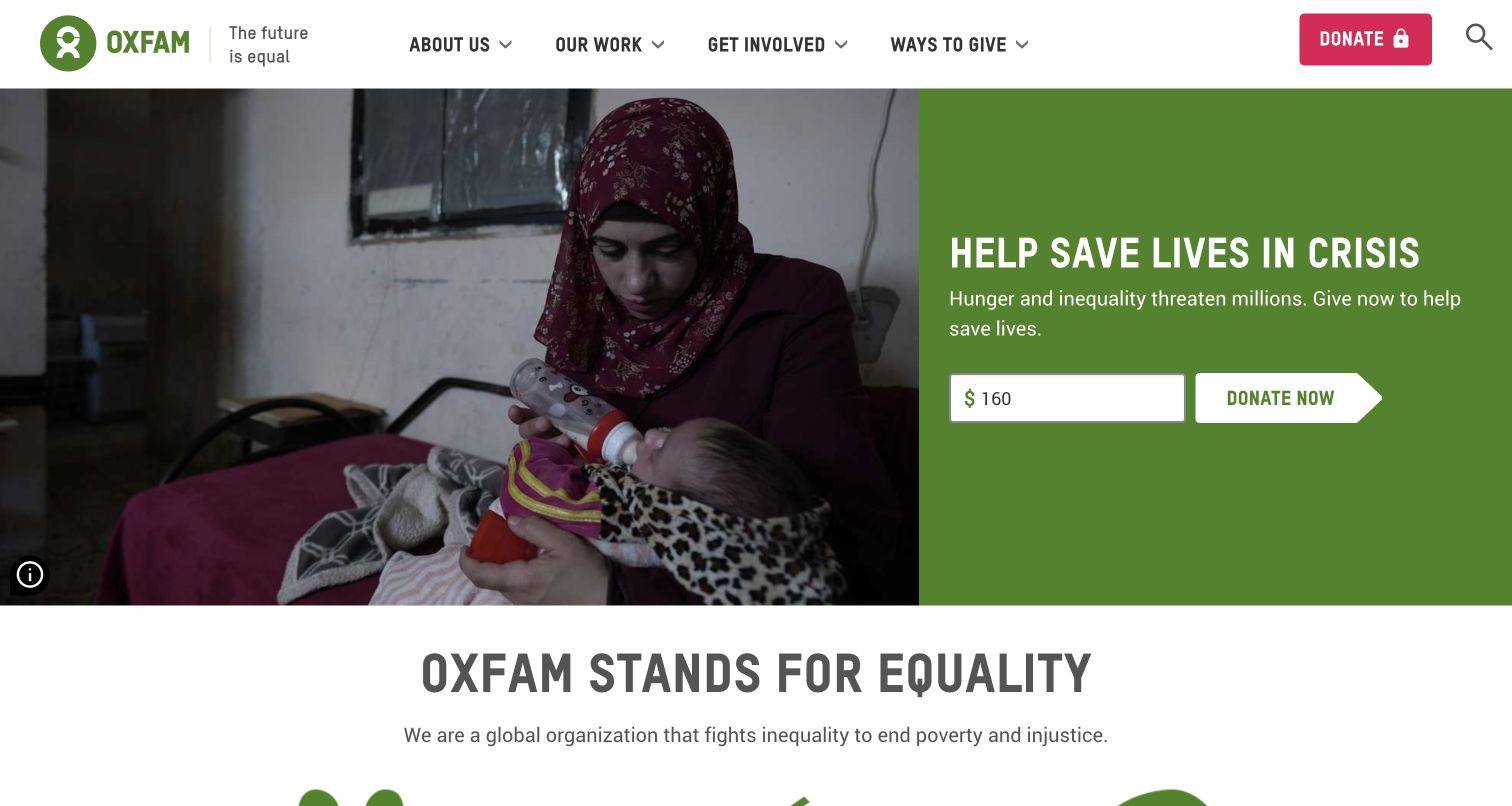
Oxfam America places a donation field and button in a green panel beside a humanitarian photograph. The visible combination of story, amount and action creates a direct path, while the main navigation keeps other forms of engagement available. The recorded public source contains S3-hosted URL-maintenance script and decorative campaign image.
What you can learn
Keep URL-maintenance scripts and decorative donation assets independently replaceable so a campaign update does not threaten the basic donation route. The URL-maintenance script and decorative campaign reference have different responsibilities from the donation form. Record those dependencies separately and preserve the donation destination if either fails. A campaign team should be able to replace the visual treatment without inadvertently changing how a contribution handoff or a shared link behaves.
Pros
The page separates learning, action and giving into recognizable next steps.
Dated stories provide a path into the organization’s analysis beyond the donation panel.
Cons & considerations
A public reference does not establish bucket ownership, storage permissions or the origin of the entire site.
Several supporter requests appear in succession and can make the page feel repetitive.
Platform source: Public page or referenced asset source. Public source observed 2026-11-03 contains S3-hosted URL-maintenance script and decorative campaign image. This establishes a public object reference or dependency, not bucket ownership, origin hosting, private storage or successful execution for every visitor. Platform evidence is separate from the direct website screenshot and is not a complete current infrastructure audit.
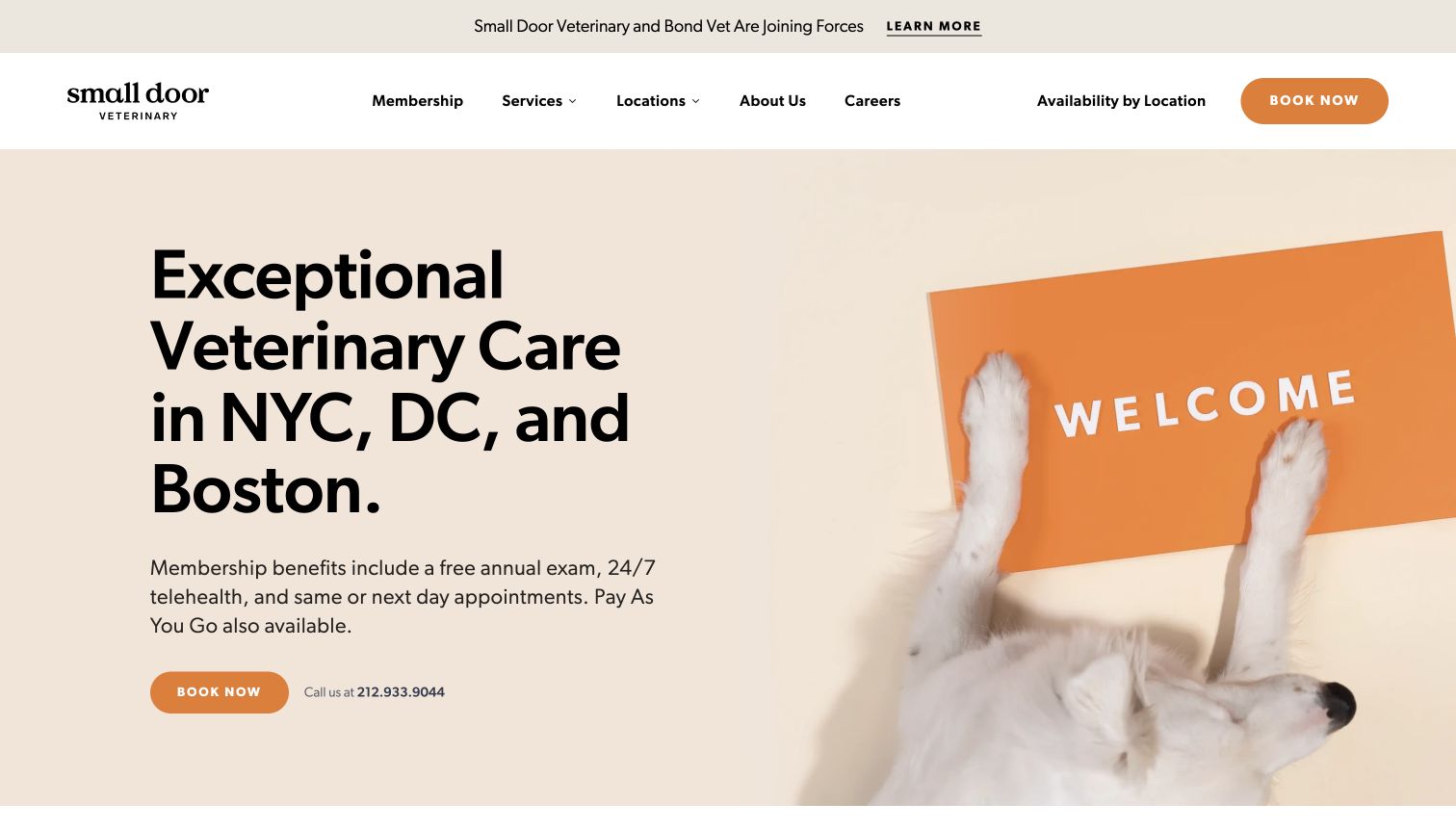
Small Door Veterinary pairs a clear geographic care proposition with a friendly dog photograph on a warm neutral background. Membership information and booking are visible together, giving visitors a concrete service choice rather than only a broad reassurance. The recorded public source contains S3 public availability JSON reference in page script.
What you can learn
Document the public availability-data dependency and its failure behavior without treating a client-side reference as permission to inspect private operational records. The script references an availability-data URL, but the public design review does not need to retrieve operational records from it. Define the dependency and its unavailable state in your own implementation. Geographic care information and ordinary contact options should remain understandable when a live availability enhancement cannot supply a result.
Pros
City names make geographic relevance immediate.
Membership and pay-as-you-go access are both acknowledged.
Cons & considerations
A public reference does not establish bucket ownership, storage permissions or the origin of the entire site.
The large headline leaves limited room for detailed plan explanation.
Platform source: Public page or referenced asset source. Public source observed 2026-11-03 contains S3 public availability JSON reference in page script. This establishes a public object reference or dependency, not bucket ownership, origin hosting, private storage or successful execution for every visitor. Platform evidence is separate from the direct website screenshot and is not a complete current infrastructure audit.
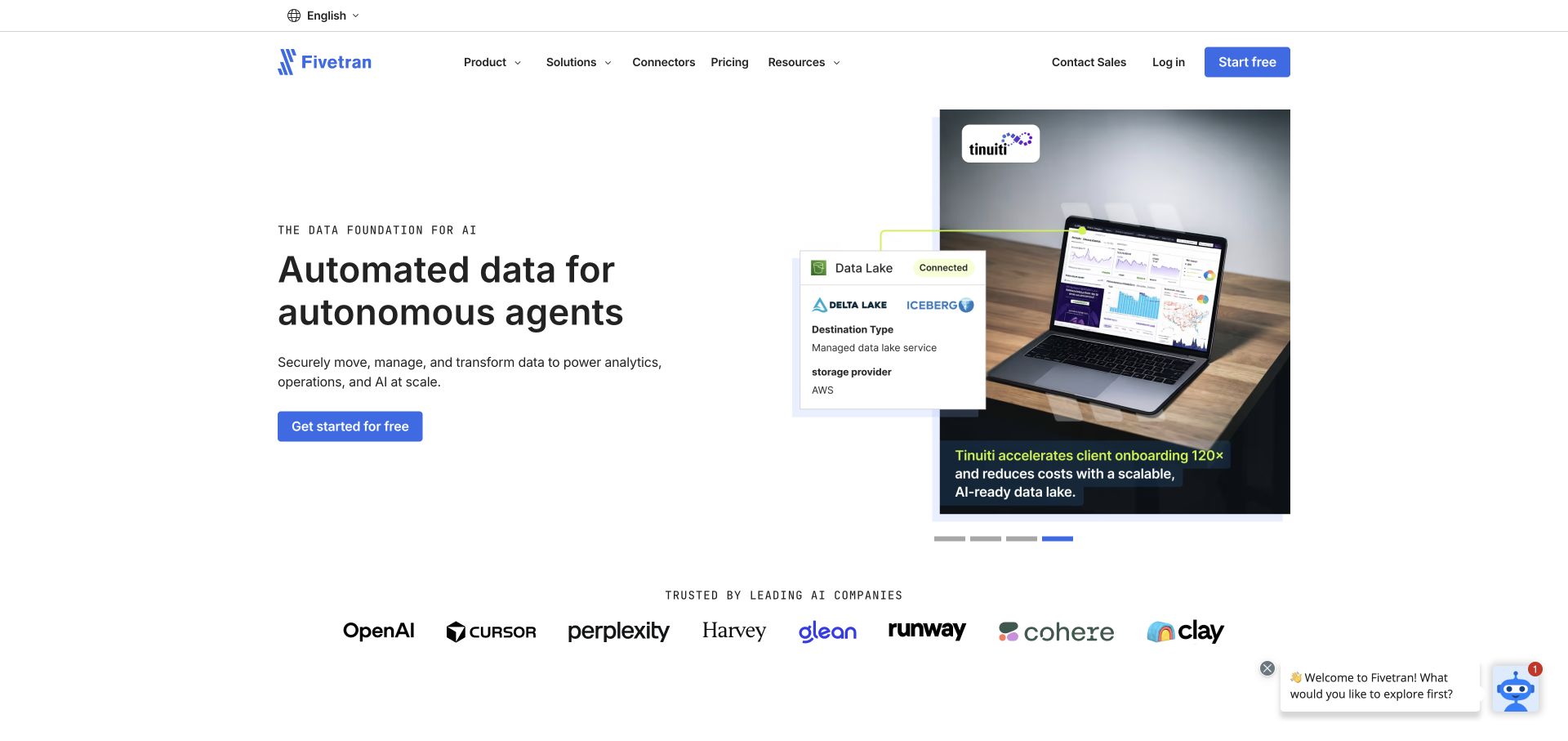
Fivetran separates a left-aligned product proposition and blue action from a visual demonstration on the right. Customer marks below provide additional context without taking over the primary explanation, making the page useful for studying layered product education. The recorded public source contains S3-hosted product-demonstration video source.
What you can learn
Budget the demonstration video independently from the page shell and provide a useful still or explanation when motion is unavailable. The demonstration video supplements a concise written product explanation rather than being the only explanation. Preserve that relationship when choosing playback and loading behavior. A static poster, clear text and reliable action can keep the page useful for someone who declines motion or arrives on a limited connection.
Pros
The two-column layout gives explanation and supporting story distinct roles.
Visible carousel indicators make the presence of additional stories discoverable.
Cons & considerations
A public reference does not establish bucket ownership, storage permissions or the origin of the entire site.
Rotating stories can hide the most relevant example unless an index is also available.
Platform source: Public page or referenced asset source. Public source observed 2026-11-03 contains S3-hosted product-demonstration video source. This establishes a public object reference or dependency, not bucket ownership, origin hosting, private storage or successful execution for every visitor. Platform evidence is separate from the direct website screenshot and is not a complete current infrastructure audit.
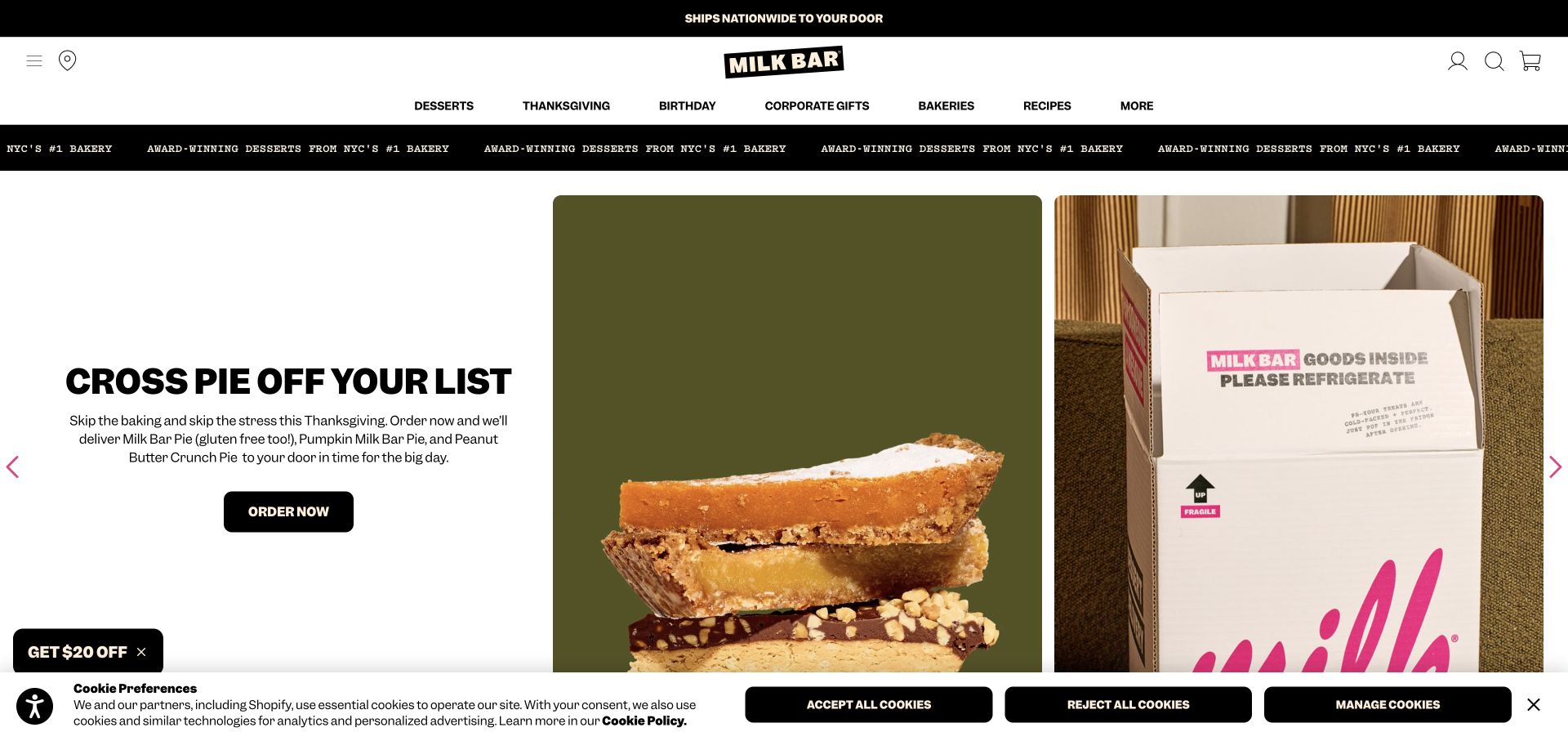
Milk Bar places a pie and branded delivery box beside a direct seasonal proposition and order action. The compact category header and shipping message reinforce the transactional purpose, while consent and promotional overlays compete for limited screen space. The recorded public source contains consent-gated S3 marketing-script URL.
What you can learn
Keep consent-gated marketing scripts separate from essential order controls; a referenced tracking object is not evidence that it ran for every visitor. The tracking reference is explicitly consent-gated in the sampled source. Record that condition instead of assuming it executed during every visit. The pie, delivery information and order route are the shopper’s primary task; optional measurement should not be confused with the assets or interactions needed to understand and order the product.
Pros
Product and shipping-box imagery make the online gift proposition immediately understandable in the hero.
Birthday and corporate gift categories describe customer intentions rather than only bakery production categories.
Cons & considerations
A public reference does not establish bucket ownership, storage permissions or the origin of the entire site.
The initial discount popup occupied the full screen during the review and interrupted browsing.
Platform source: Public page or referenced asset source. Public source observed 2026-11-03 contains consent-gated S3 marketing-script URL. This establishes a public object reference or dependency, not bucket ownership, origin hosting, private storage or successful execution for every visitor. Platform evidence is separate from the direct website screenshot and is not a complete current infrastructure audit.
Clay uses a large plain-language agency statement on a pale canvas beside an abstract visual object. Work, services and contact remain explicit in the navigation, so the visitor does not have to interpret the artwork to understand what the business offers. The recorded public source contains S3-hosted touch-icon link.
What you can learn
Include small identity assets such as touch icons in release checks, since an otherwise polished agency presentation can still expose stale browser branding. The touch icon is a small but persistent representation of the agency when someone saves or revisits its site. Treat that file as an identity asset with its own replacement check. Updating the homepage artwork does not necessarily update every browser-facing mark, so include those less visible surfaces in release review.
Pros
The main text identifies the practice without requiring a video introduction.
Familiar navigation gives services, work, and contact distinct destinations.
Cons & considerations
A public reference does not establish bucket ownership, storage permissions or the origin of the entire site.
A broad design-agency statement still needs specific evidence to become memorable.
Platform source: Public page or referenced asset source. Public source observed 2026-11-03 contains S3-hosted touch-icon link. This establishes a public object reference or dependency, not bucket ownership, origin hosting, private storage or successful execution for every visitor. Platform evidence is separate from the direct website screenshot and is not a complete current infrastructure audit.
Budget Blinds combines a room photograph with location, telephone and consultation controls in a substantial white header. The repeated lead-generation invitation is highly visible, making optional marketing integrations especially important to separate from the core enquiry route. The recorded public source contains third-party Aimtell S3 script-loader path.
What you can learn
Treat the third-party push-marketing script as an optional service with explicit ownership, rather than confusing its asset host with the website origin. The Aimtell reference serves a marketing integration, not the bright room photograph. A consultation-led website should document its optional role and avoid making contact paths depend on it. Review the added interaction alongside existing telephone and location controls rather than evaluating the script in isolation from the crowded lead-generation experience.
Pros
The room photograph shows the product in a setting a homeowner can immediately recognize.
Location and consultation routes connect the national brand story to a practical local next step.
Cons & considerations
A public reference does not establish bucket ownership, storage permissions or the origin of the entire site.
Two navigation rows and several contact options make the header visually demanding.
Platform source: Public page or referenced asset source. Public source observed 2026-11-03 contains third-party Aimtell S3 script-loader path. This establishes a public object reference or dependency, not bucket ownership, origin hosting, private storage or successful execution for every visitor. Platform evidence is separate from the direct website screenshot and is not a complete current infrastructure audit.
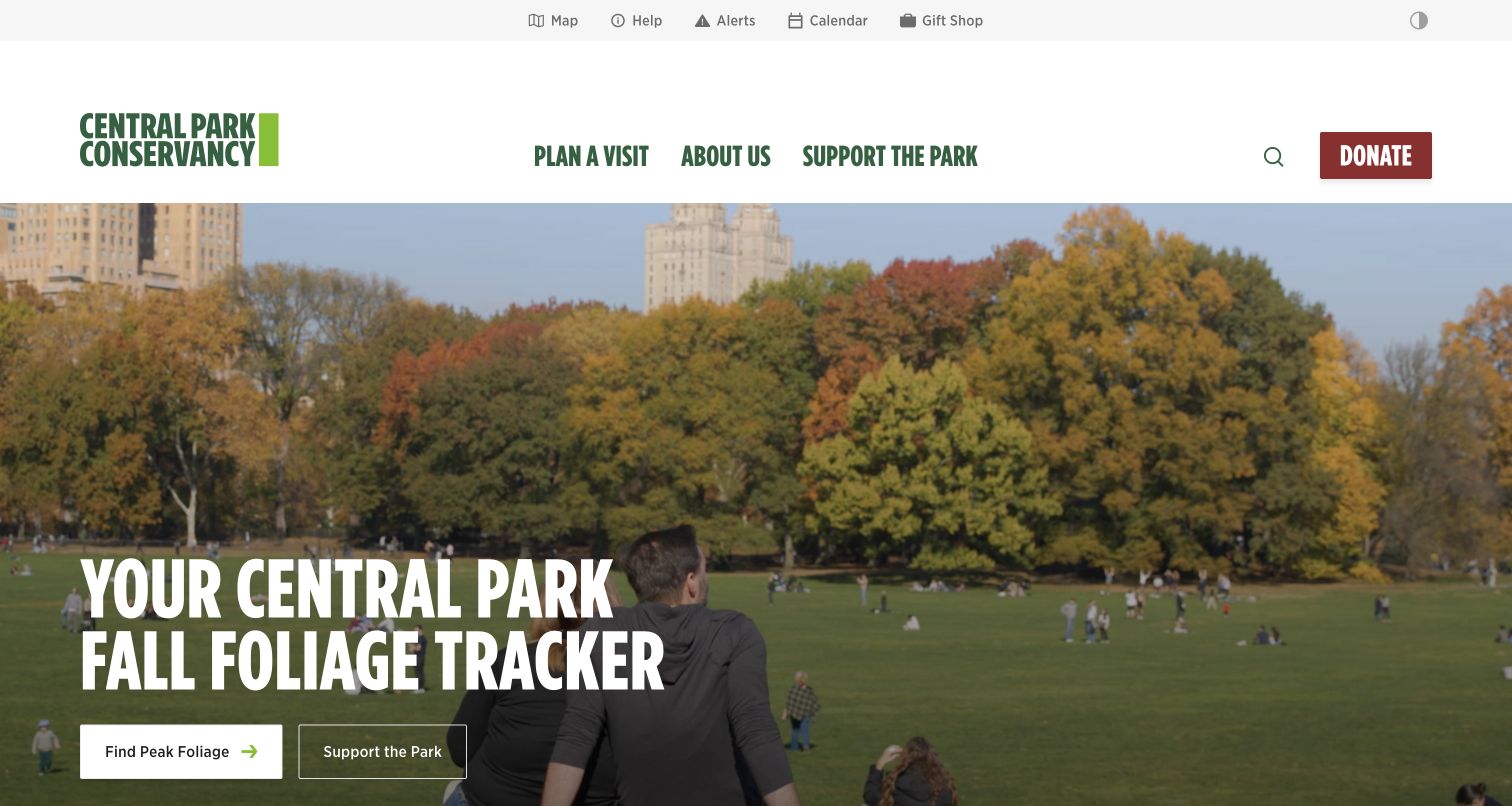
Central Park Conservancy pairs a seasonal landscape with a concrete foliage-tracker invitation. A utility strip and clear visit, work and support routes surround the campaign, balancing a changing visual story with durable public-service tasks. The recorded public source contains S3-hosted seasonal background video source.
What you can learn
Pair seasonal background video with a meaningful reduced-motion still and stable visitor links so the campaign remains useful without playback. The autumn video is tied to a seasonal visitor message. A useful release brief should identify its poster or reduced-motion alternative and the person responsible for replacing it when the season changes. Keep enduring visit information separate so an expired campaign asset does not obscure essential park routes or conditions.
Pros
Practical park utilities remain visible above the changing seasonal feature.
Trip planning and financial support receive distinct, clearly labeled actions.
Cons & considerations
A public reference does not establish bucket ownership, storage permissions or the origin of the entire site.
The large image demands reliable contrast across changing seasonal photographs.
Platform source: Public page or referenced asset source. Public source observed 2026-11-03 contains S3-hosted seasonal background video source. This establishes a public object reference or dependency, not bucket ownership, origin hosting, private storage or successful execution for every visitor. Platform evidence is separate from the direct website screenshot and is not a complete current infrastructure audit.
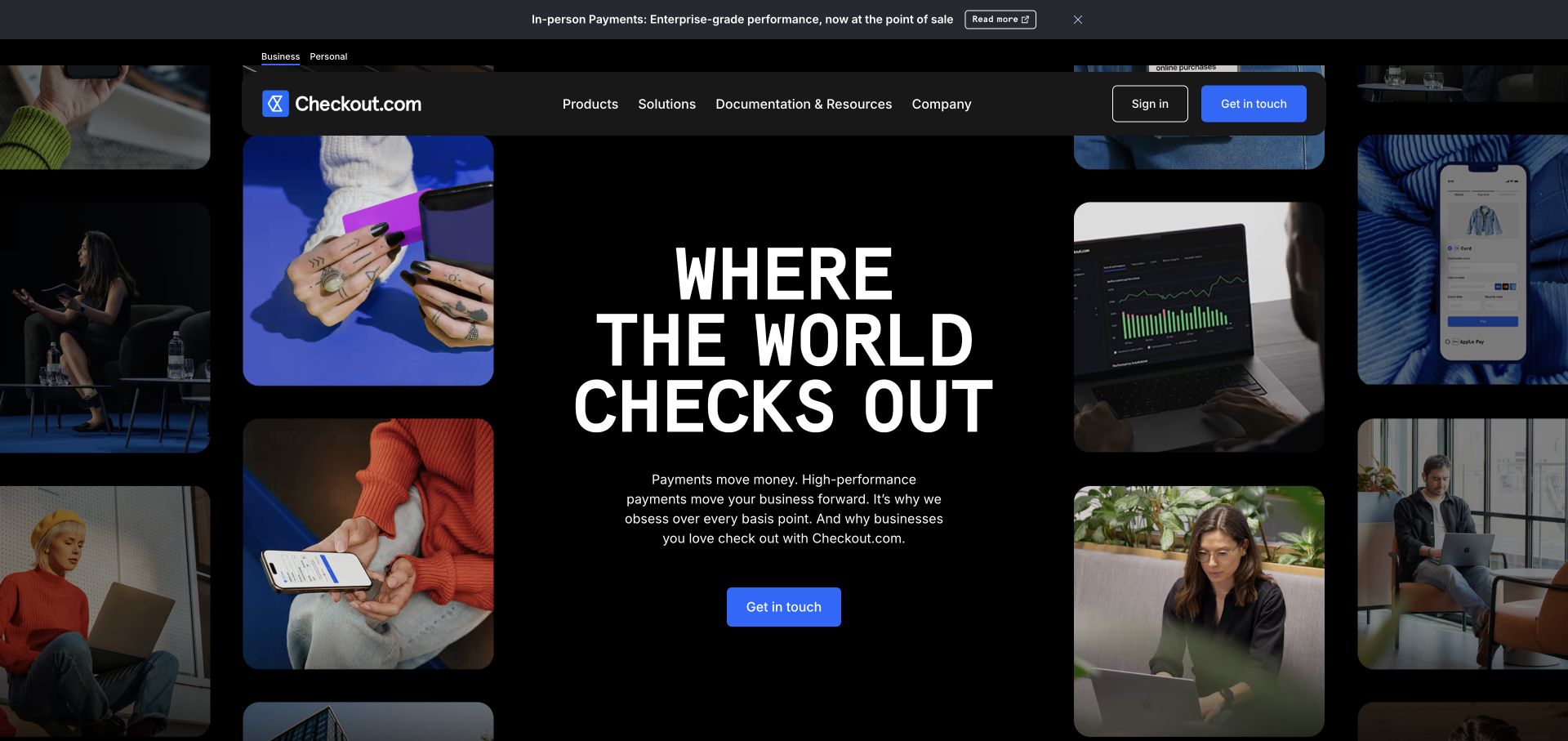
Checkout.com places a central payment proposition within a dark collage of commerce imagery. A blue contact action stands apart from the media, and the navigation preserves product and business routes for readers who need more than the campaign message. The recorded public source contains S3-hosted tracking integration script.
What you can learn
Document the separately hosted tracking integration and verify that contact routes still work when optional analytics resources are unavailable. The tracking script is hosted separately from the visible payment imagery. Give that integration an owner and a failure policy without assuming its storage location describes the payment platform. The public contact and product routes should remain usable if optional measurement is delayed, blocked or deliberately not activated by the visitor.
Pros
The single blue action has a clear place within the dark central composition.
Rounded image frames make several different photographs feel like a coordinated system.
Cons & considerations
A public reference does not establish bucket ownership, storage permissions or the origin of the entire site.
The scattered gallery provides atmosphere more readily than specific product explanation.
Platform source: Public page or referenced asset source. Public source observed 2026-11-03 contains S3-hosted tracking integration script. This establishes a public object reference or dependency, not bucket ownership, origin hosting, private storage or successful execution for every visitor. Platform evidence is separate from the direct website screenshot and is not a complete current infrastructure audit.
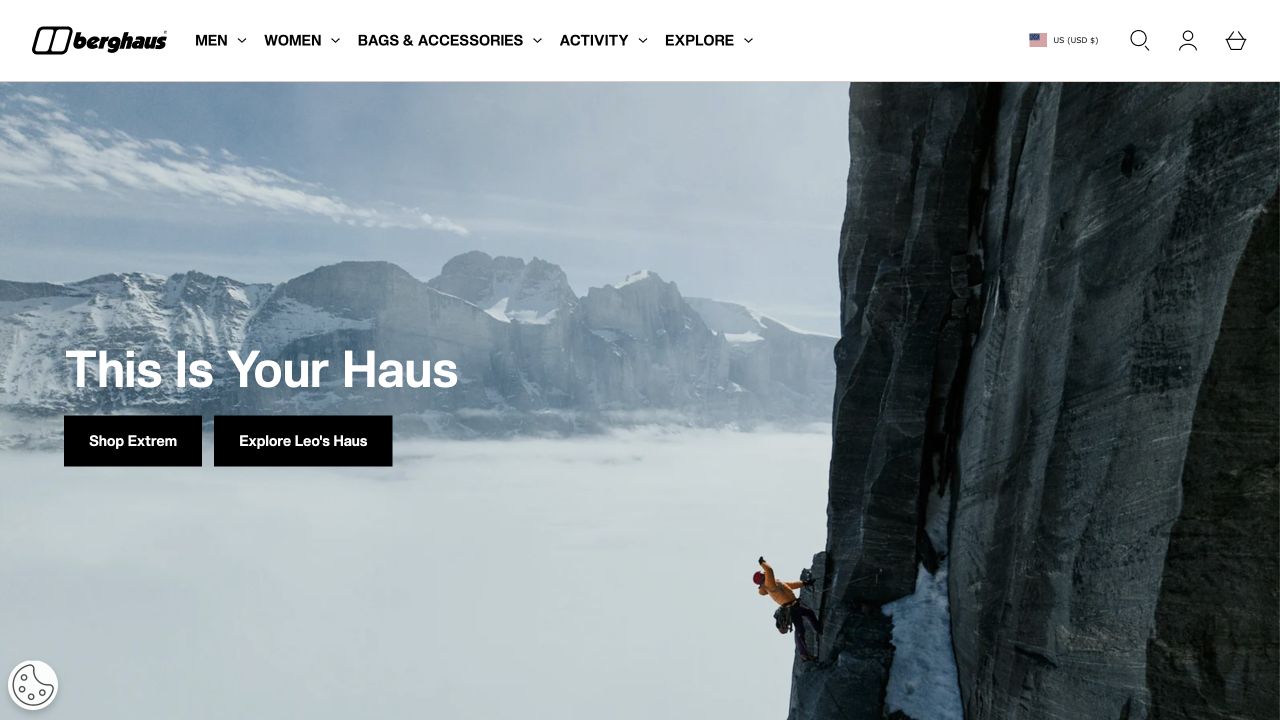
Berghaus uses a mountain photograph and a short outdoor proposition below straightforward clothing and equipment categories. Two campaign links offer different routes into the brand story while keeping the full product navigation available above. The recorded public source contains third-party S3 quiz-loader URL.
What you can learn
Keep the quiz loader optional and give shoppers a direct category route rather than making product discovery depend on an external enhancement. The quiz loader is an optional product-discovery layer rather than proof of where clothing imagery is stored. Keep ordinary category links available for visitors who already know what they want. If the recommendation experience cannot load, explain the limitation without trapping a shopper behind an empty or indefinitely waiting panel.
Pros
Trail and everyday destinations make different intended uses explicit.
Garment construction terms appear within a conventional retail hierarchy.
Cons & considerations
A public reference does not establish bucket ownership, storage permissions or the origin of the entire site.
Broad lifestyle labels can be ambiguous without useful category introductions.
Platform source: Public page or referenced asset source. Public source observed 2026-11-03 contains third-party S3 quiz-loader URL. This establishes a public object reference or dependency, not bucket ownership, origin hosting, private storage or successful execution for every visitor. Platform evidence is separate from the direct website screenshot and is not a complete current infrastructure audit.
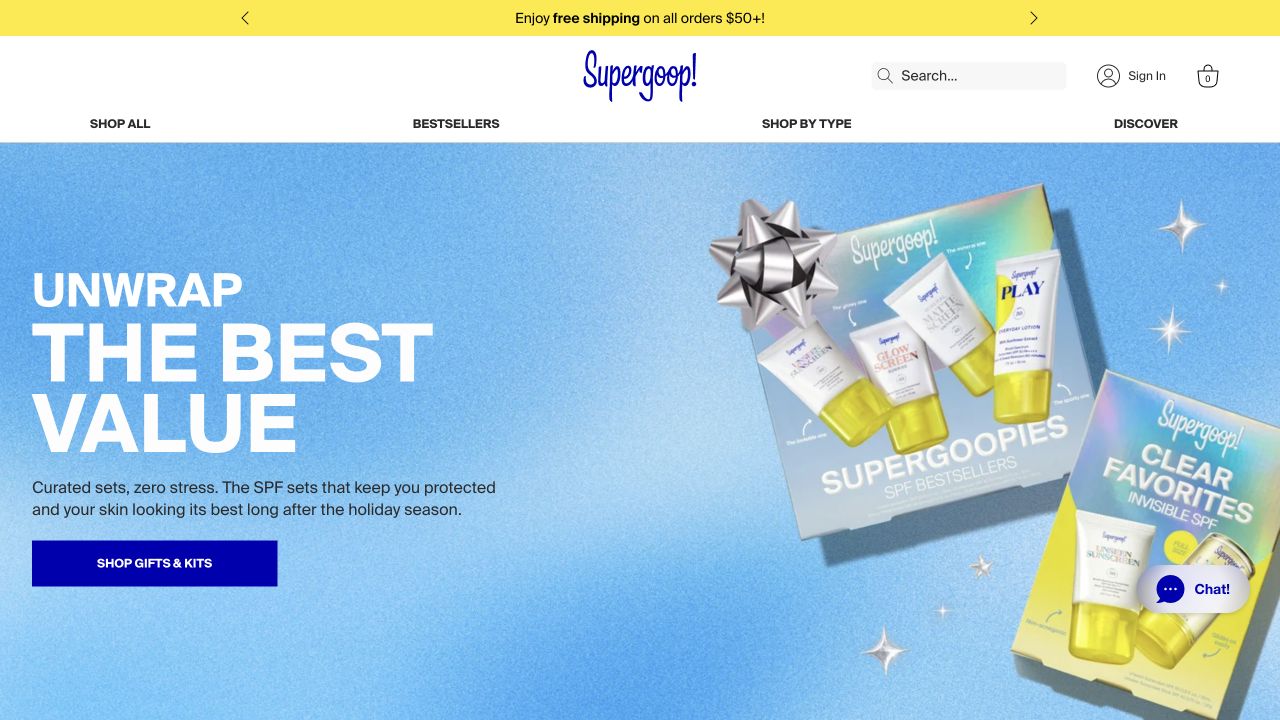
Supergoop uses a bright blue gift campaign with product packaging, a large value-oriented heading and shopping actions. Product-format navigation remains above the promotion, while the vivid seasonal imagery does most of the initial attention work. The recorded public source contains S3 gift-builder loading-image configuration.
What you can learn
Inventory the gift-builder loading image as an application dependency, while keeping ordinary product and cart states intelligible if that asset is missing. The loading graphic belongs to a gift-builder configuration, not a general claim about the whole storefront. Preserve understandable gift selection and cart states even if that small asset fails. A spinner alone is not a recovery strategy, particularly when a seasonal promotion encourages people to assemble several products at once.
Pros
Product-type navigation offers a direct alternative to seasonal merchandising.
Cards expose practical package information alongside branded names.
Cons & considerations
A public reference does not establish bucket ownership, storage permissions or the origin of the entire site.
A strongly promotional first screen can delay the distinctions between similar products.
Platform source: Public page or referenced asset source. Public source observed 2026-11-03 contains S3 gift-builder loading-image configuration. This establishes a public object reference or dependency, not bucket ownership, origin hosting, private storage or successful execution for every visitor. Platform evidence is separate from the direct website screenshot and is not a complete current infrastructure audit.
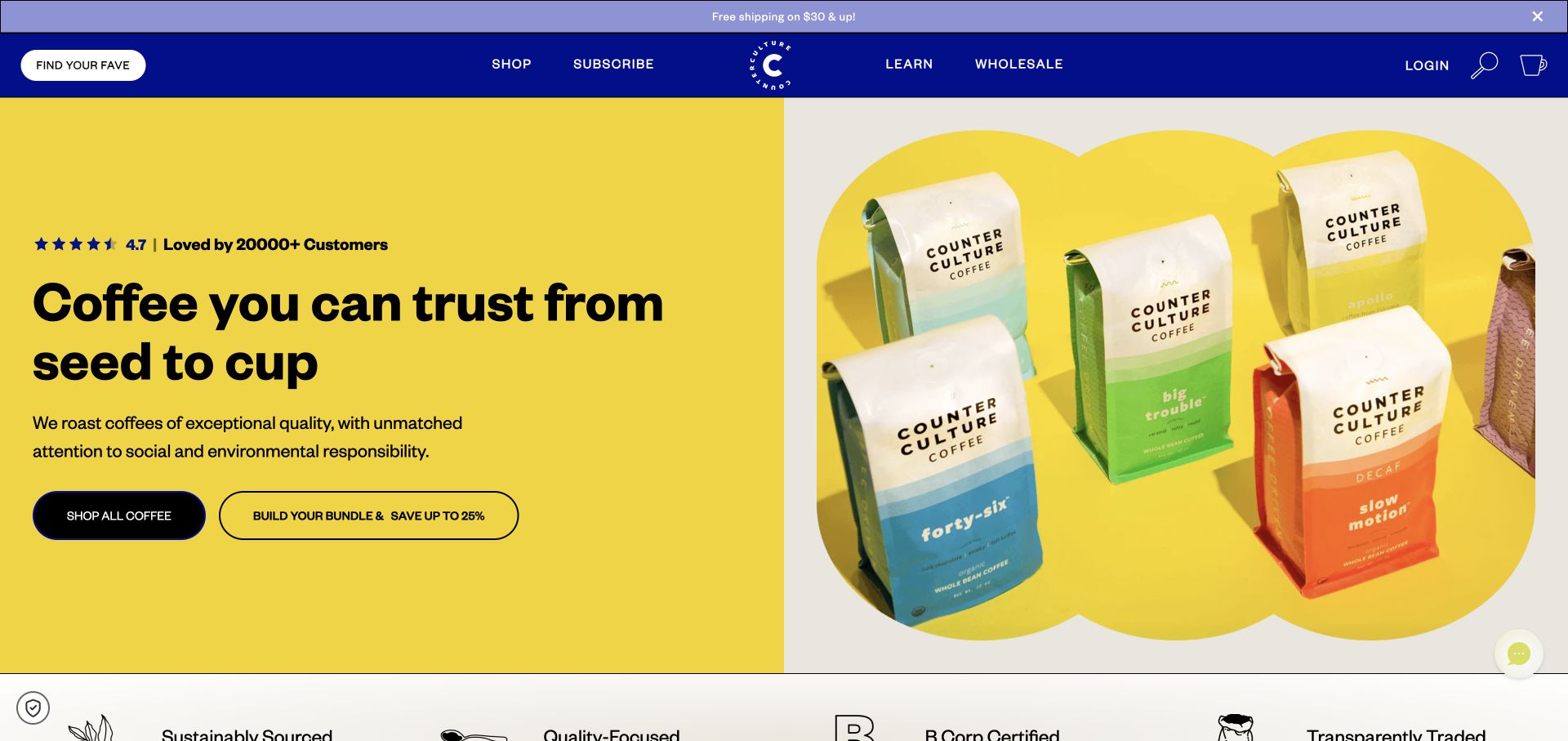
Counter Culture Coffee pairs coffee bags with a clear quality proposition on a yellow campaign panel below a blue header. Review stars and a shopping action support the product introduction, but the visitor can still navigate by ordinary shopping categories. The recorded public source contains third-party S3 quiz-loader URL.
What you can learn
Give the coffee quiz an explicit loading and failure state while preserving direct shopping categories for visitors who do not use recommendations. The quiz can guide someone unfamiliar with the coffee range, but experienced shoppers may prefer direct category navigation. Keep those paths separate. In a comparable implementation, define what happens when recommendations are unavailable and ensure that normal product information does not disappear while an optional third-party script is still loading.
Pros
Strong color blocks make the product photography easy to identify without overwhelming the navigation labels.
Product descriptions provide several concrete ways to distinguish coffees beyond the name printed on each bag.
Cons & considerations
A public reference does not establish bucket ownership, storage permissions or the origin of the entire site.
Multiple routes into the catalog can feel similar unless each explains the kind of help it provides.
Platform source: Public page or referenced asset source. Public source observed 2026-11-03 contains third-party S3 quiz-loader URL. This establishes a public object reference or dependency, not bucket ownership, origin hosting, private storage or successful execution for every visitor. Platform evidence is separate from the direct website screenshot and is not a complete current infrastructure audit.
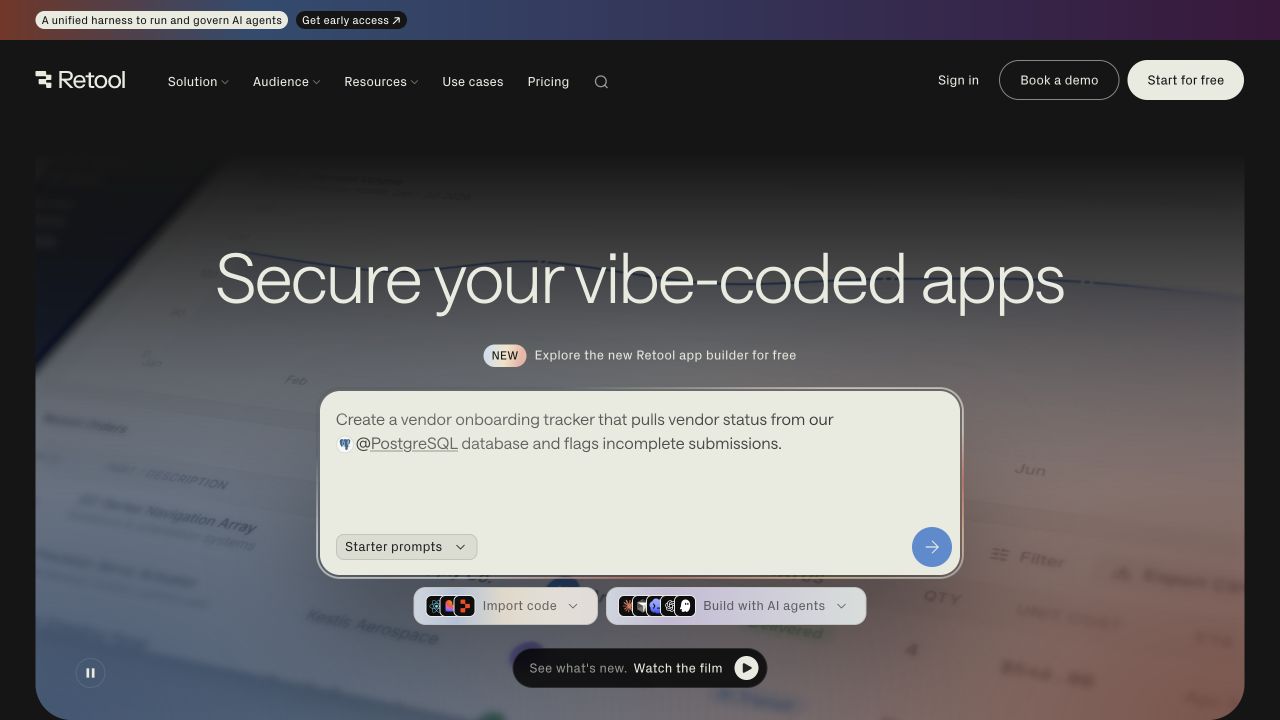
Retool places a large security-focused product proposition over a dark visual background, with a prompt-like demonstration and separate trial and sales actions. Its compressed explanation makes the surrounding navigation important for readers seeking more detailed evaluation material. The recorded public source contains S3-hosted social-preview image metadata.
What you can learn
Manage the social-preview image as a deliberate release asset and validate its dimensions without assuming it describes the application infrastructure. The recorded object is the social-preview image, which may be encountered before someone reaches the interactive demonstration. Keep that preview aligned with the actual product message and review it when the headline changes. Its public S3 address does not reveal how customer applications, prompts or account information are stored.
Pros
The example prompt gives a concrete starting idea instead of an abstract feature claim.
Free-start and demonstration routes acknowledge different evaluation and procurement needs.
Cons & considerations
A public reference does not establish bucket ownership, storage permissions or the origin of the entire site.
The animated background and multiple creation controls introduce several competing visual elements.
Platform source: Public page or referenced asset source. Public source observed 2026-11-03 contains S3-hosted social-preview image metadata. This establishes a public object reference or dependency, not bucket ownership, origin hosting, private storage or successful execution for every visitor. Platform evidence is separate from the direct website screenshot and is not a complete current infrastructure audit.
Kegan has 15+ years of experience working with small businesses, Fortune 500 companies, and everything in between. No development job is too big or too small: he brings the same hands-on attention to a focused improvement, a complete website, or a custom application.
For Amazon S3 projects, he can help with responsive interfaces, reusable components, custom functionality, API connections, and performance-minded implementation. He works directly with clients on scope, design, implementation, testing, and handover, with an emphasis on clear communication and a system that remains practical to maintain after launch.
Show 3 other Amazon S3 developersHide other Amazon S3 developers
Images, fonts, icons and video determine how the page communicates. Record responsive variants, alternatives, capture rights and fallback behavior alongside the file itself.
Public downloads and metadata
Press kits and social images can outlive the page campaign that first introduced them. Give them stable ownership, deliberate versioning and a review step when the associated content changes.
Third-party enhancements
Quiz loaders, tracking scripts and promotional widgets belong in the dependency inventory even when someone else operates the storage. Keep their failure and consent behavior separate from essential navigation.
From references to requirements
Write an asset-delivery brief
Map a reference to a visible need
For every proposed resource, identify what the visitor gains and what happens if it is missing. Avoid carrying forward an integration simply because an old template contains a URL.
Define the release boundary
Keep filenames, page references and cache behavior aligned during replacement. Check both a fresh visit and an already-open page before declaring an asset update complete.
Test safe fallbacks
Verify static alternatives for video, font fallbacks and ordinary navigation without optional scripts in a controlled environment. Never probe private buckets or operational endpoints to imitate a reference website.
A useful handover demonstration
Ask the actual team to carry out its routine job: publish a realistic update, correct a mistake, preview a narrow screen, and identify who owns an integration failure. For a library or frontend framework, also ask who maintains the content source and deployment. A polished screenshot does not answer those operational questions.
Beyond the screenshot
Amazon S3 website asset checklist
Record exact public asset roles rather than infer whole-site hosting.
Distinguish owned resources from third-party dependencies.
Keep private data outside the public publishing package.
Document responsive image and motion alternatives.
Assign ownership to icons, downloads and social images.
Plan cache-aware replacement and recovery.
Check optional-script consent and failure behavior.
Retain provenance and real observation dates in the inventory.
Test with real content, a keyboard, a small screen, slow or failed requests, and the people who will maintain the system. These are planning checks, not an accessibility, security, performance, or search-ranking certification.
Sources & editorial method
How this Amazon S3 collection was reviewed
Twenty distinct public properties were selected from previously documented source pages and existing broad public stack-audit attempts. Each association was checked against an explicit public resource, download, metadata or script reference in cached content; DNS-prefetch-only hints were excluded. Genuine screenshots were visually re-reviewed and retain original capture dates and dimensions. Technology observation dates are preserved separately. Third-party and configuration-only references remain qualified. No bucket enumeration, private-data retrieval, permission testing or origin-hosting inference was performed.
Every image is an unmodified capture from the actual website, with its source and capture date. Some captures are reused from our shared catalog; their dates remain the original capture dates. None comes from a vendor gallery or a generated reconstruction. Moving imagery and live content can change.
Technology attribution uses public page assets or metadata, official platform documentation, or a cited first-party project case study. Documentary and framework-relationship evidence is identified where used; it is not a complete current backend inventory. A CMS image CDN alone does not establish a full CMS deployment. A library’s presence does not prove which individual controls use it, and a platform label does not establish AI authorship.
The composition notes, lessons, pros and tradeoffs are original editorial observations. We have not measured conversion, traffic, security, performance or accessibility conformance. Website owners retain their brands and imagery; these examples are not our client portfolio. Written, Edited and Curated are independent records, not dates advanced by a build. See our editorial standards or suggest a correction.
Questions worth asking
Amazon S3 website development FAQs
Are these websites hosted entirely on S3?
That is not established. The examples identify specific public asset or dependency references and do not describe complete hosting architectures.
Does a public object URL reveal who owns the bucket?
Not by itself. Names and public references are insufficient to prove account ownership or internal operating arrangements.
Was every referenced script observed executing?
No. A page can contain consent-gated or conditional references. The evidence records the public reference and its visible context rather than asserting execution for every visitor.
Should all website files be made public?
No. Determine which assets must be publicly delivered and preserve appropriate access controls for private resources. These examples are not permission or security-configuration instructions.