Best NetSuite Websites of 2026 (20 Real-World Examples)
Public design examples with documented NetSuite finance, inventory, order and enterprise-planning associations.
Explore twenty organizations with official NetSuite customer evidence, then plan a project around accurate records and operational handoffs. The customer’s finance or inventory platform is not automatically its public storefront or CMS.
NetSuite projects often sit behind the most visible part of a business. A customer may see a polished product page, while staff coordinate purchasing, stock, fulfillment, revenue and financial close in a separate environment. This collection examines the public design and the documented operational association independently, without claiming that one explains the other’s entire technology stack.
The examples include old finance migrations, regional implementations, a spinout establishing its own operations and more recent reporting or AI-connected workflows. Keep those dates and boundaries intact. A plan to add international subsidiaries is not a completed global rollout. A vendor case published with a historical showroom count should not become a present-day company profile. Use the workflow as a starting question, not as a guaranteed result.
Before the examples
What makes good NetSuite website development in 2026?
Agree on authoritative business records
Define which system owns products, customers, vendors, orders, inventory and financial transactions. These objects may share identifiers while following different lifecycles. Decide which changes originate in NetSuite and which arrive through an approved integration. A storefront edit should not silently overwrite an accounting value, and a retry should not create a second sales order.
Integration convenience is not a reason to grant broad administrative access. Work with the account administrator to define the relevant role and permitted operations. Separate reading a product catalog from changing an invoice, payment or journal. Review the actual transaction path and its audit record, especially when a person approves an action through another application.
A successful checkout is only one point in the process. Include cancellation, partial shipment, backorder, return and correction in the brief. Define when inventory is reserved, when fulfillment is confirmed and how staff investigate discrepancies. A visually simple customer experience is easier to maintain when the operational exceptions are explicit rather than hidden in manual workarounds.
Actual public-page captures are paired with official NetSuite cases and their public, vendor-served case data. Company identity, region and historical context are preserved. The first five are recognizable organizations, not claims about superior implementation quality or website performance.
We start with five recognizable brands or organizations: Reddit, Zendesk, Crumbl, Jollibee Foods, Therabody. Each attribution applies to the named website property, not every product or website belonging to its organization. This is a curated reading sequence, not a measured ranking.
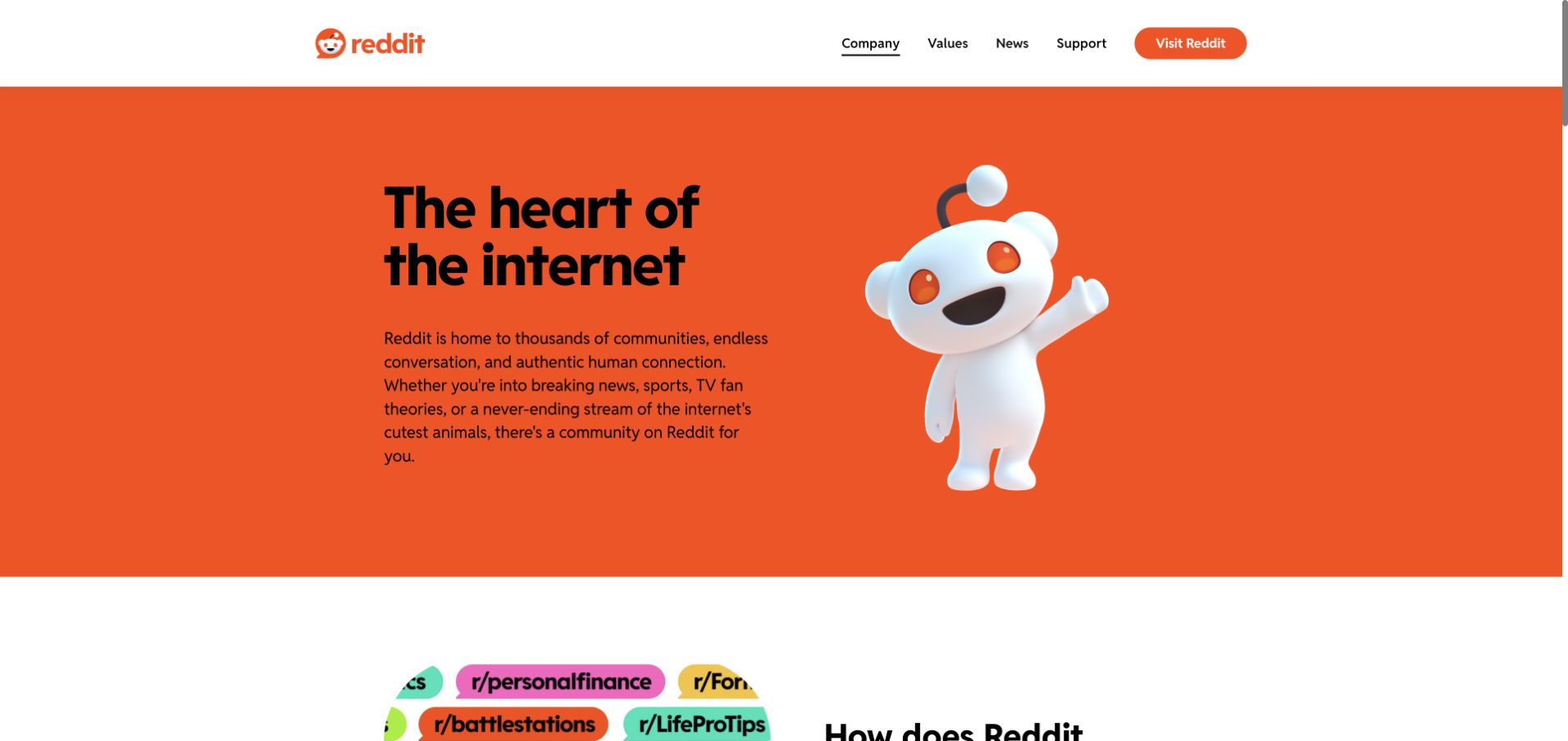
Reddit’s corporate page uses an orange field, a large platform statement and its three-dimensional character to establish identity. A compact header offers company, values, news and support routes, with a distinct link to the consumer service. Community imagery begins below, connecting the corporate introduction to the people and topics behind the platform. Reddit’s case describes NetSuite implementation in 2018, OneWorld financial consolidation and controls supporting its March 2024 IPO; not Reddit’s discussion platform runtime.
What you can learn
A corporate property should explain what an organization is while preserving an obvious route to its actual product. ERP work similarly needs a precise boundary between corporate finance and consumer operations. Financial controls supporting an IPO do not identify the software that renders communities or serves their discussions.
Pros
The character and orange palette provide recognition without requiring a familiar consumer-feed layout.
A separate consumer-service link helps distinguish corporate information from everyday product use.
Cons & considerations
A broad community proposition needs specific examples and governance information on deeper pages.
Character-led presentation should not displace clear factual content for investor or media audiences.
Platform source: Official NetSuite customer case with publicly loaded case content. Reddit’s case describes NetSuite implementation in 2018, OneWorld financial consolidation and controls supporting its March 2024 IPO; not Reddit’s discussion platform runtime. This establishes only the stated organization, workload, product family, regional or historical association. It does not prove the pictured public page runtime, reveal its CMS or frontend, establish a complete current stack, or independently verify vendor-reported results. Platform evidence is separate from the direct website screenshot and is not a complete current infrastructure audit.
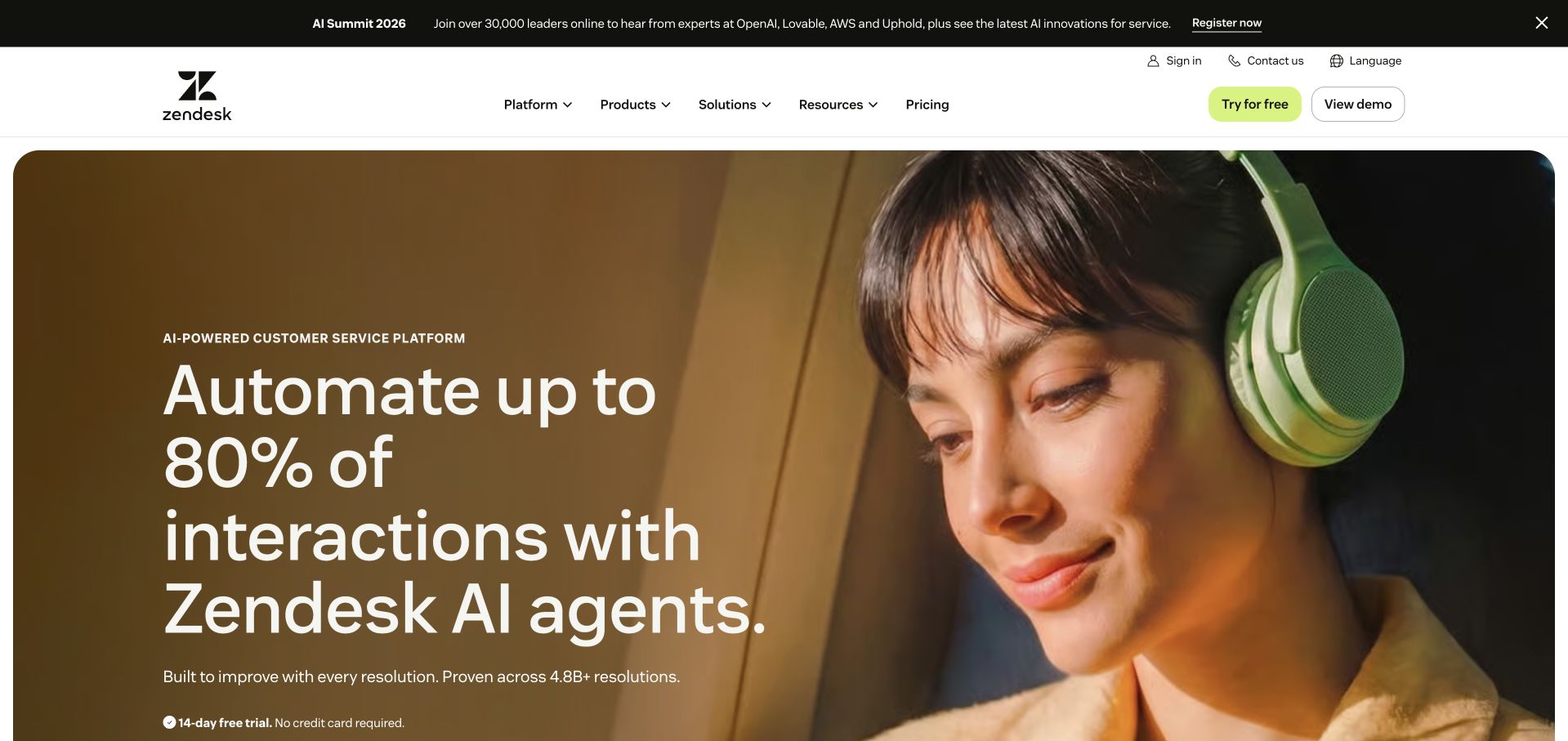
Zendesk’s current homepage pairs a large automation proposition with a close portrait of a person wearing headphones. A pale header and restrained trial and demo actions keep the opening organized, while a narrow event strip supplies a secondary message. The photograph grounds the service offer without showing an overwhelming support dashboard. The historical case describes Zendesk’s 2012 move to NetSuite OneWorld and 2014 IPO-era financial consolidation. Its then-public-company description is not presented as current ownership status.
What you can learn
Use a human setting to introduce an enterprise capability, then explain the workflow and its limits. For finance systems, preserve the original implementation period and ownership context. A historical customer story can establish past consolidation work without proving the current public site, support product or corporate structure uses the same architecture.
Pros
The portrait gives an abstract automation offer a concrete customer-service context.
Distinct trial and demonstration routes support both self-directed exploration and assisted evaluation.
Cons & considerations
Large percentage claims need clear methodology and limitations beyond the introductory campaign.
Several promotional layers can compete with the durable product and documentation routes.
Platform source: Official NetSuite customer case with publicly loaded case content. The historical case describes Zendesk’s 2012 move to NetSuite OneWorld and 2014 IPO-era financial consolidation. Its then-public-company description is not presented as current ownership status. This establishes only the stated organization, workload, product family, regional or historical association. It does not prove the pictured public page runtime, reveal its CMS or frontend, establish a complete current stack, or independently verify vendor-reported results. Platform evidence is separate from the direct website screenshot and is not a complete current infrastructure audit.
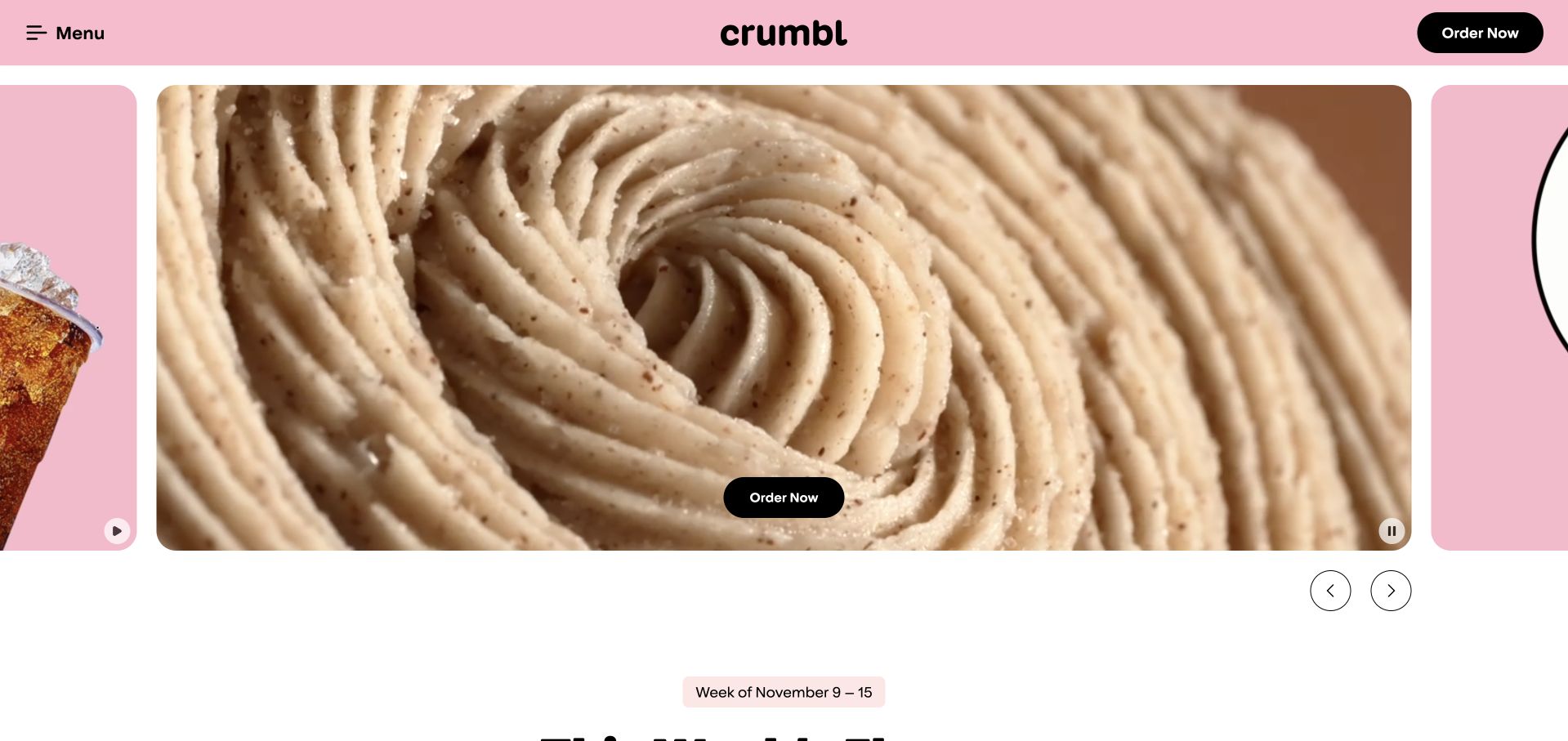
Crumbl’s pink header frames a large carousel showing close-up dessert imagery and a compact ordering action. A menu control and persistent order button keep the basic journey simple, while the current week appears below. The page treats the food’s texture and visual appeal as the main introduction rather than leading with a company history. An undated growth-stage case describes Crumbl financial and inventory visibility. Canadian expansion and additional OneWorld deployment are future plans in that source, not confirmed current coverage.
What you can learn
A frequently changing menu needs a reliable relationship between promotion, location, availability and order details. Design the attractive front end around dependable records and clear handoffs. Keep a historical ERP growth story separate from the current store count, international rollout and technology behind the public ordering experience.
Pros
Close product photography communicates texture and variety with very little explanatory text.
A persistent order action remains available even while the carousel changes its featured item.
Cons & considerations
A carousel can conceal the full current menu or move before readers finish viewing it.
Promotional food imagery still needs clear allergen, availability and ordering information elsewhere in the journey.
Platform source: Official NetSuite customer case with publicly loaded case content. An undated growth-stage case describes Crumbl financial and inventory visibility. Canadian expansion and additional OneWorld deployment are future plans in that source, not confirmed current coverage. This establishes only the stated organization, workload, product family, regional or historical association. It does not prove the pictured public page runtime, reveal its CMS or frontend, establish a complete current stack, or independently verify vendor-reported results. Platform evidence is separate from the direct website screenshot and is not a complete current infrastructure audit.
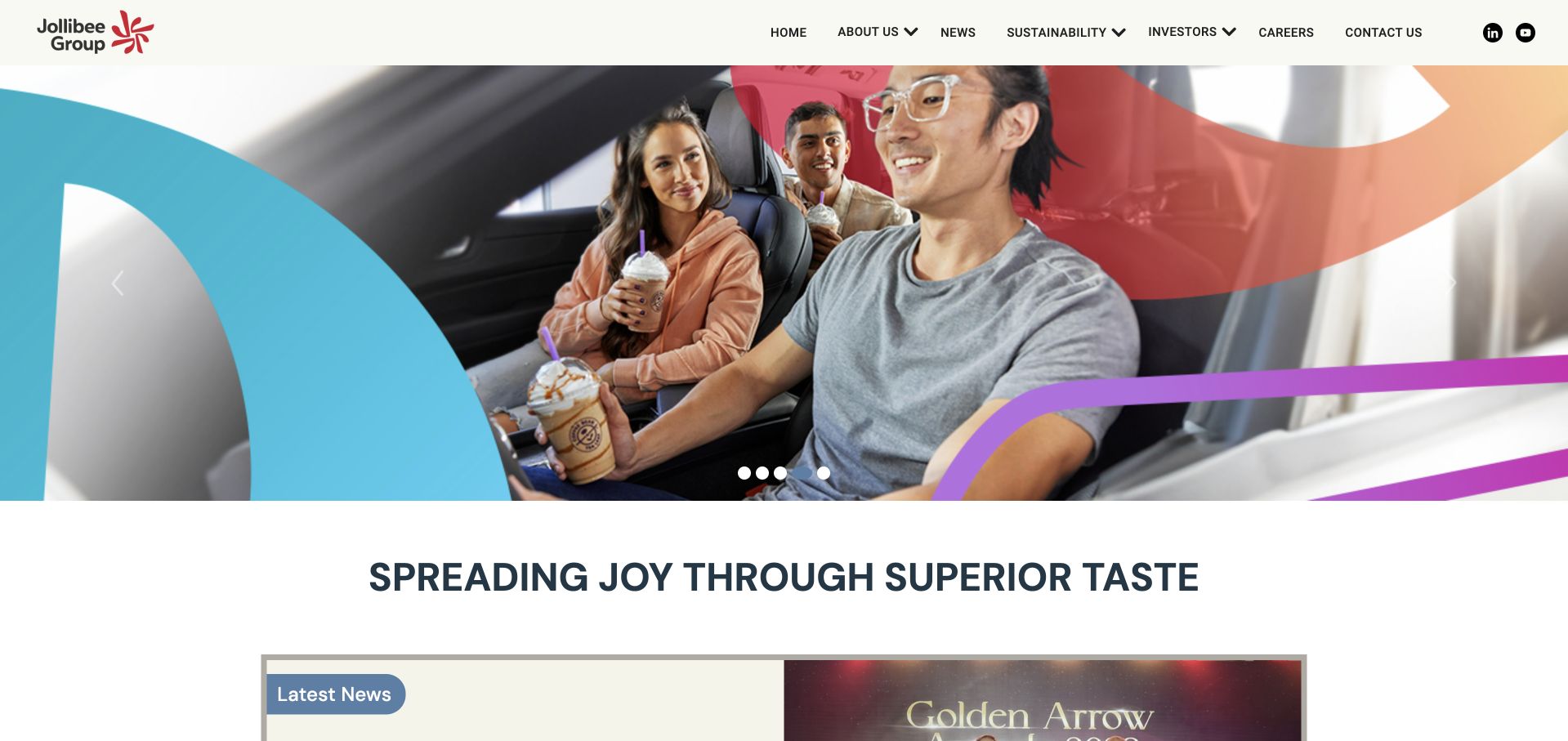
Jollibee Group’s public page combines a large family-oriented photograph with colorful ribbon-like shapes and a short taste-related statement. A restrained corporate header includes sustainability, investors and careers, with latest news beginning below. The page introduces the parent organization rather than attempting to serve as an ordering interface for every restaurant brand. The undated historical Jollibee case concerns NetSuite OneWorld for China and Vietnam operations, separate from headquarters ERP; it does not establish group-wide current adoption.
What you can learn
A multi-brand group needs clear organizational and regional boundaries. Use the shared visual story to establish context, then provide specific routes into brands and markets. A regional finance implementation should not silently become a claim about headquarters ERP, every franchise or the current global commerce experience.
Pros
The family photograph makes a large restaurant group feel connected to a recognizable customer setting.
Corporate navigation clearly distinguishes the page from a local restaurant menu or delivery checkout.
Cons & considerations
A broad taste proposition needs more concrete portfolio information before the group structure becomes clear.
A rotating hero can delay practical brand and market choices for task-focused visitors.
Platform source: Official NetSuite customer case with publicly loaded case content. The undated historical Jollibee case concerns NetSuite OneWorld for China and Vietnam operations, separate from headquarters ERP; it does not establish group-wide current adoption. This establishes only the stated organization, workload, product family, regional or historical association. It does not prove the pictured public page runtime, reveal its CMS or frontend, establish a complete current stack, or independently verify vendor-reported results. Platform evidence is separate from the direct website screenshot and is not a complete current infrastructure audit.
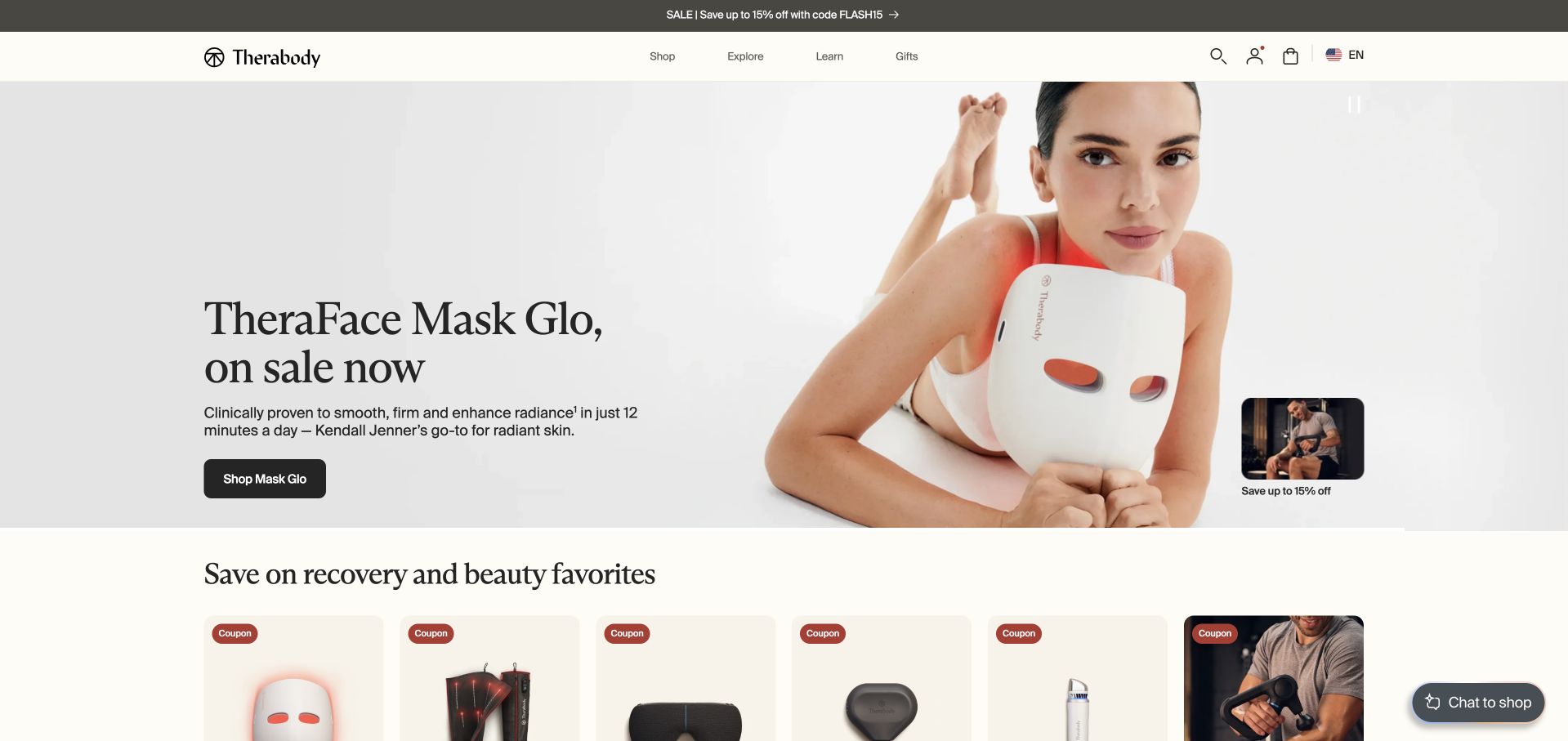
Therabody places a beauty device beside a person using it, with a concise product message and a dark shopping action. Smaller product cards begin below the feature, while a restrained header groups shopping, exploration and learning. The composition explains the featured object through scale and use rather than an isolated technical rendering. Therabody’s case describes procurement, inventory, fulfillment, order and revenue processes moved to NetSuite after its 2022 investment; additional international subsidiary rollout remains a plan.
What you can learn
For a device business, connect inspiration to clear specifications, appropriate evidence and accurate availability. Behind the page, map procurement, fulfillment and revenue ownership before integrating systems. A vendor case about operational consolidation does not establish the current commerce frontend or independently verify health and cosmetic outcomes.
Pros
The usage photograph gives a clear sense of the device’s scale and intended handling.
A nearby product-card section offers alternatives beyond the main campaign item.
Cons & considerations
Performance and clinical language need careful supporting evidence beyond a celebrity-led photograph.
Promotional savings and multiple product lines can obscure the practical differences between devices.
Platform source: Official NetSuite customer case with publicly loaded case content. Therabody’s case describes procurement, inventory, fulfillment, order and revenue processes moved to NetSuite after its 2022 investment; additional international subsidiary rollout remains a plan. This establishes only the stated organization, workload, product family, regional or historical association. It does not prove the pictured public page runtime, reveal its CMS or frontend, establish a complete current stack, or independently verify vendor-reported results. Platform evidence is separate from the direct website screenshot and is not a complete current infrastructure audit.
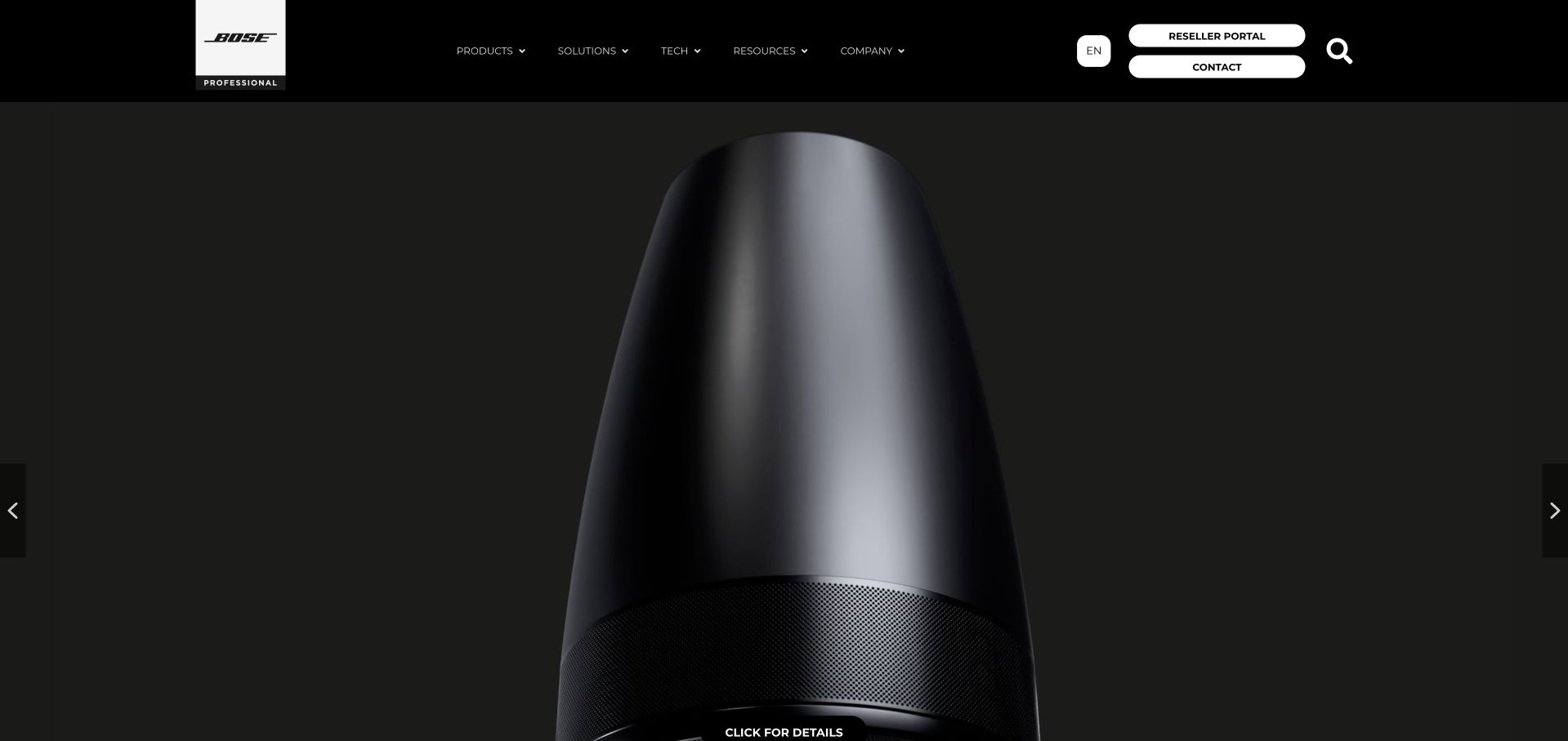
Bose Professional’s page uses a large dark speaker image beneath a black product-and-solutions header. The equipment fills most of the opening, with a small detail prompt near its base. The visual is restrained and product-focused, clearly presenting commercial audio equipment rather than relying on the consumer Bose brand’s familiar lifestyle settings. Bose Professional, independent of Bose Corporation after its 2023 spinout, began a NetSuite project in June 2023, launched the first region in February 2024 and expanded to four more regions.
What you can learn
A specialist product can deserve visual space, but technical buyers still need specifications and application context. Establish the correct company identity before attaching an ERP case: a spinout’s operational platform is not automatically the former parent’s system. Keep implementation stages and regional rollout dates intact.
Pros
The close product view makes the equipment’s physical design the clear subject of the page.
A compact specialist navigation distinguishes products, solutions and technical resources.
Cons & considerations
The very dark first screen provides limited immediate explanation of the featured equipment.
A tiny detail prompt can be less discoverable than a clearly labeled technical-information action.
Platform source: Official NetSuite customer case with publicly loaded case content. Bose Professional, independent of Bose Corporation after its 2023 spinout, began a NetSuite project in June 2023, launched the first region in February 2024 and expanded to four more regions. This establishes only the stated organization, workload, product family, regional or historical association. It does not prove the pictured public page runtime, reveal its CMS or frontend, establish a complete current stack, or independently verify vendor-reported results. Platform evidence is separate from the direct website screenshot and is not a complete current infrastructure audit.
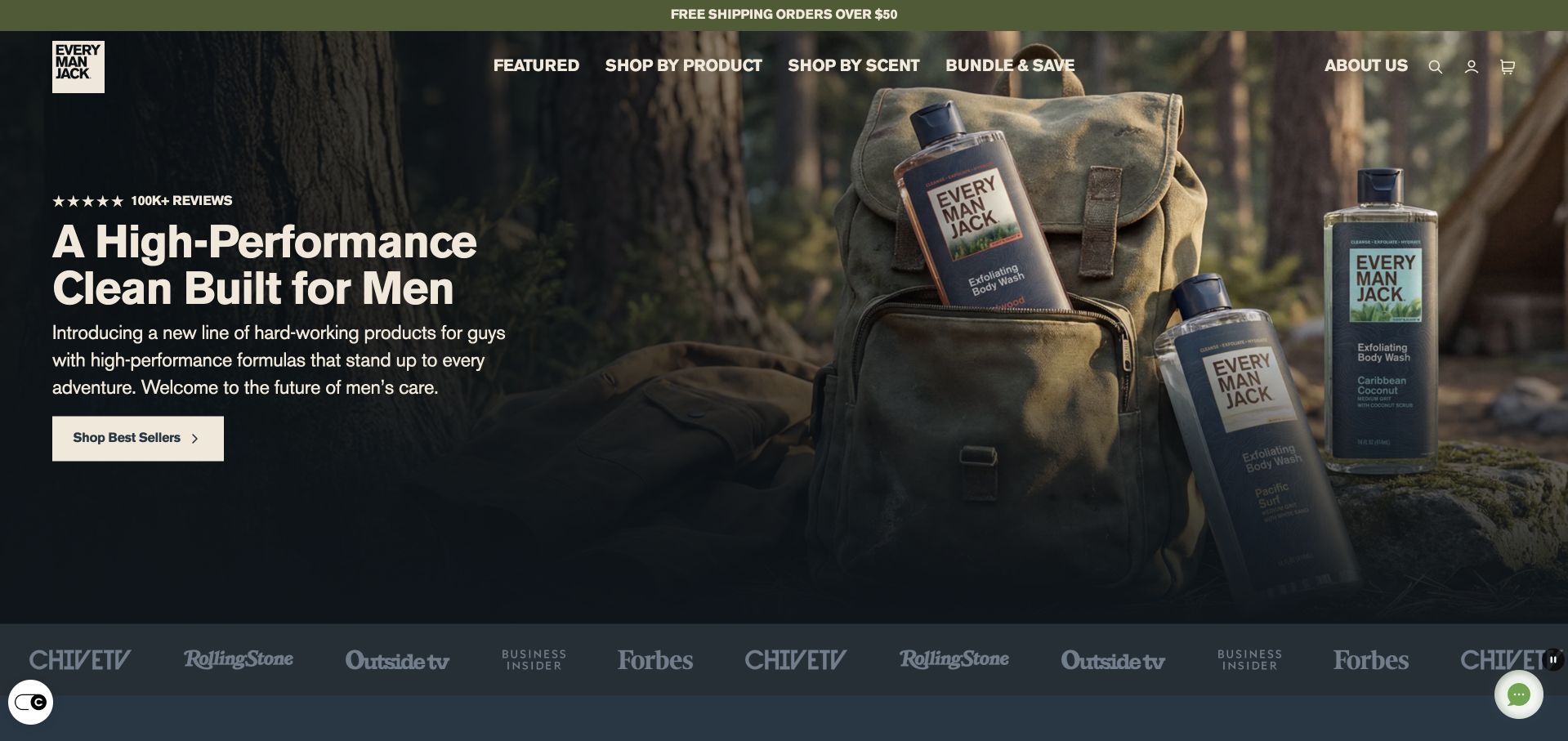
Every Man Jack’s homepage groups several grooming products around outdoor gear in a wooded setting. Bold white copy and a pale shopping button sit at the left, with product, scent and bundle navigation above. A publication-logo strip follows, giving the opening a familiar progression from brand proposition to external recognition. The Every Man Jack case describes a 2026 ERP and EDI modernization plus AI Connector Service workflows. Estimated future time and cost savings are not independently measured outcomes.
What you can learn
An effective catalog can share one visual world while preserving useful product categories. Match the public promise to dependable sample, inventory and order records behind the scenes. When discussing AI-connected operations, distinguish demonstrated workflows from estimated future savings and retain review controls for consequential transactions.
Pros
The outdoor setting and grouped packaging create a consistent identity across several product types.
Product and scent navigation supports browsing preferences beyond the featured campaign.
Cons & considerations
Large review and performance claims need transparent context and accessible supporting information.
A strong lifestyle scene can delay ingredient, suitability and product-comparison details.
Platform source: Official NetSuite customer case with publicly loaded case content. The Every Man Jack case describes a 2026 ERP and EDI modernization plus AI Connector Service workflows. Estimated future time and cost savings are not independently measured outcomes. This establishes only the stated organization, workload, product family, regional or historical association. It does not prove the pictured public page runtime, reveal its CMS or frontend, establish a complete current stack, or independently verify vendor-reported results. Platform evidence is separate from the direct website screenshot and is not a complete current infrastructure audit.
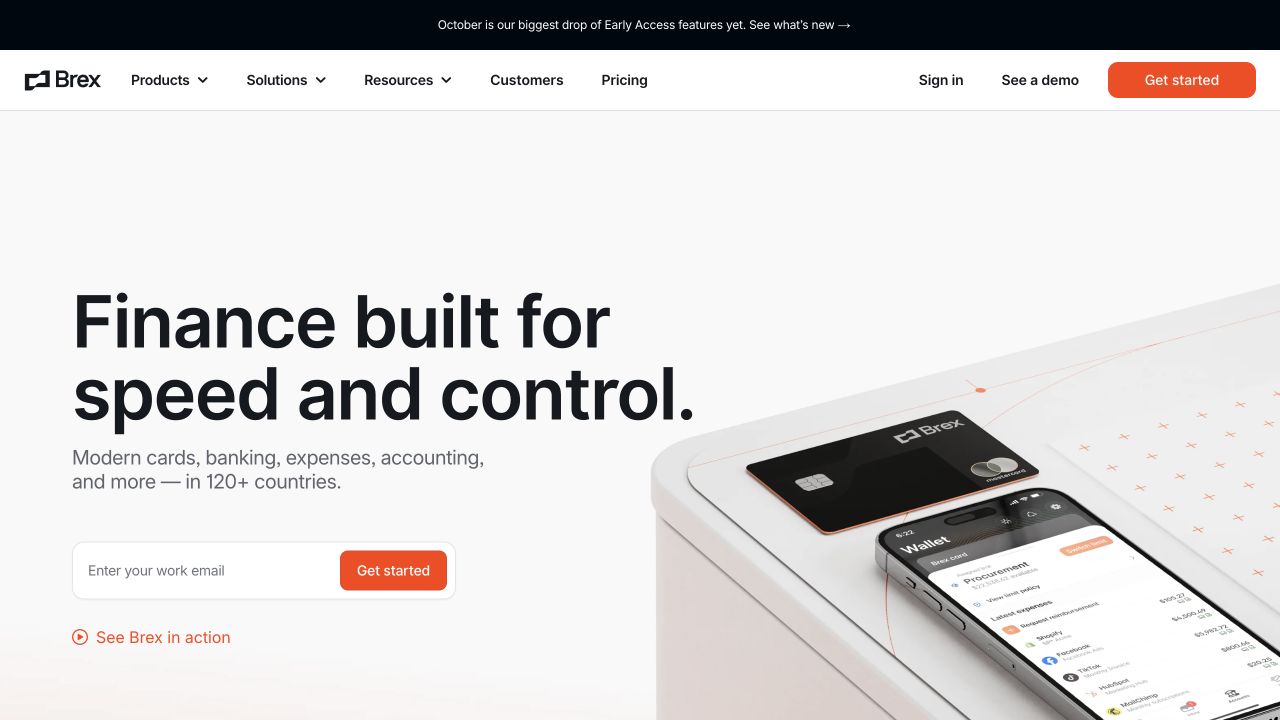
Brex uses a white layout, a large speed-and-control headline and an angled product preview at the right. An empty work-email field and orange action provide a direct starting point, while a compact header preserves product, solution and resource routes. The visual is businesslike without resembling an accounting table or bank application. The historical early-growth Brex case documents OneWorld financial management replacing QuickBooks across multiple units; old funding and headcount figures are not current claims.
What you can learn
Explain the job a financial platform supports before introducing its full feature set. A simple entry form still needs clear submission and information-handling behavior. The company’s own ERP history is separate from the product it sells, and early-growth case figures should not be presented as current organizational facts.
Pros
A concise headline and restrained interface preview make the opening comparatively easy to scan.
Product, resource and sales routes remain visible for visitors not ready to enter an email.
Cons & considerations
Broad speed-and-control language needs specific workflow evidence on the linked product pages.
Financial-product terms and eligibility require their own clear explanations beyond a marketing preview.
Platform source: Official NetSuite customer case with publicly loaded case content. The historical early-growth Brex case documents OneWorld financial management replacing QuickBooks across multiple units; old funding and headcount figures are not current claims. This establishes only the stated organization, workload, product family, regional or historical association. It does not prove the pictured public page runtime, reveal its CMS or frontend, establish a complete current stack, or independently verify vendor-reported results. Platform evidence is separate from the direct website screenshot and is not a complete current infrastructure audit.
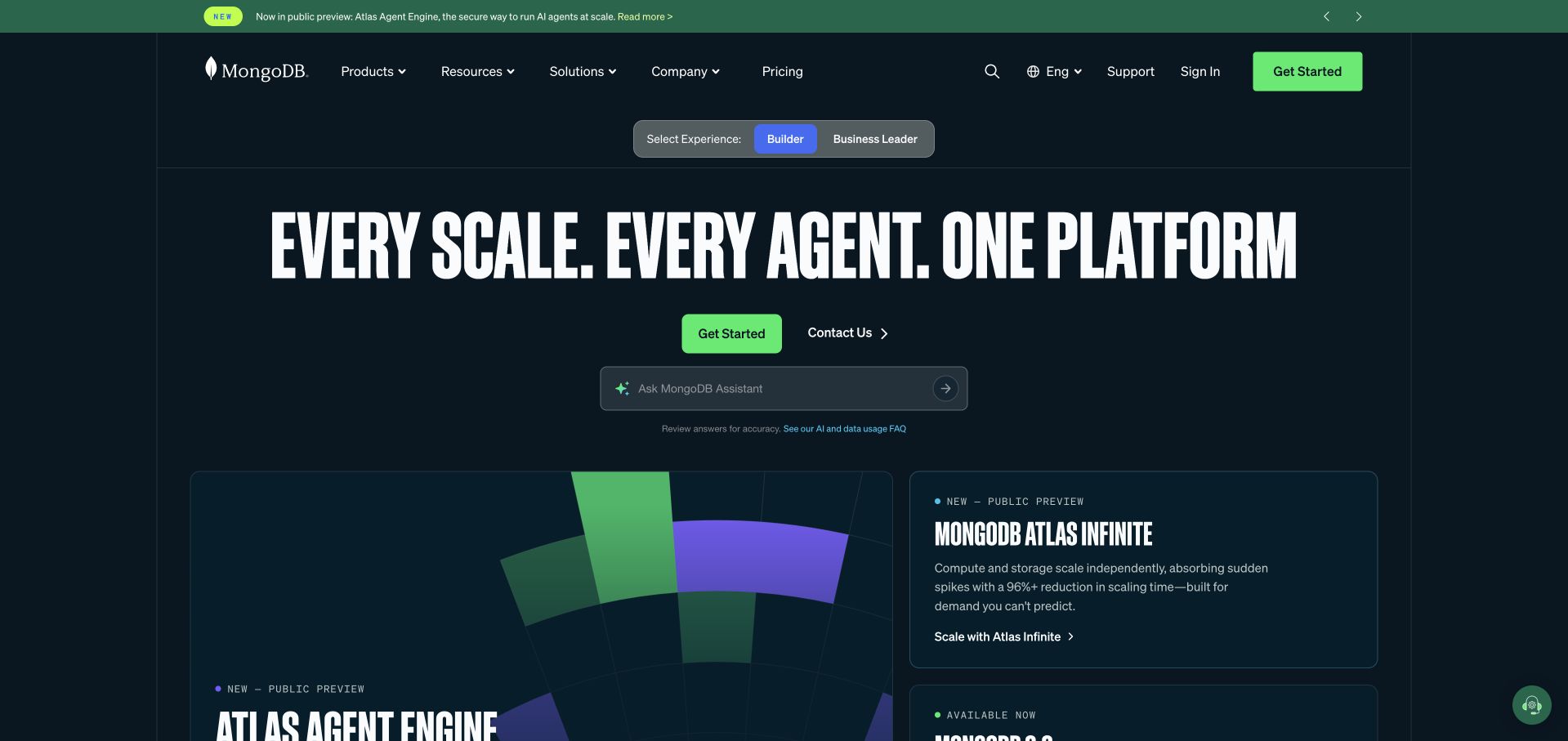
MongoDB’s current homepage uses a dark green field, a large platform headline and a small builder-versus-business-leader selector. Bright green actions and product cards make the hierarchy clear, while a compact header preserves support and product routes. The visible assistant input is empty and was not used during the capture. MongoDB replaced Intacct with NetSuite OneWorld in September 2014 for finance, billing and consolidation, with professional-services automation. The pre-IPO framing is historical, not current.
What you can learn
A technical platform can acknowledge different evaluator roles without creating separate brands. Give each role the appropriate depth and evidence, then keep internal business systems distinct from the product being marketed. A historical finance implementation is not evidence that an ERP stores customer databases or serves the public developer platform.
Pros
The role selector recognizes that technical and commercial evaluators need different kinds of detail.
A limited green palette makes actions and product availability labels easy to distinguish.
Cons & considerations
A broad multi-capability headline needs supporting examples before a specific deployment can be evaluated.
Dense technical naming and preview labels can overwhelm readers unfamiliar with the product family.
Platform source: Official NetSuite customer case with publicly loaded case content. MongoDB replaced Intacct with NetSuite OneWorld in September 2014 for finance, billing and consolidation, with professional-services automation. The pre-IPO framing is historical, not current. This establishes only the stated organization, workload, product family, regional or historical association. It does not prove the pictured public page runtime, reveal its CMS or frontend, establish a complete current stack, or independently verify vendor-reported results. Platform evidence is separate from the direct website screenshot and is not a complete current infrastructure audit.
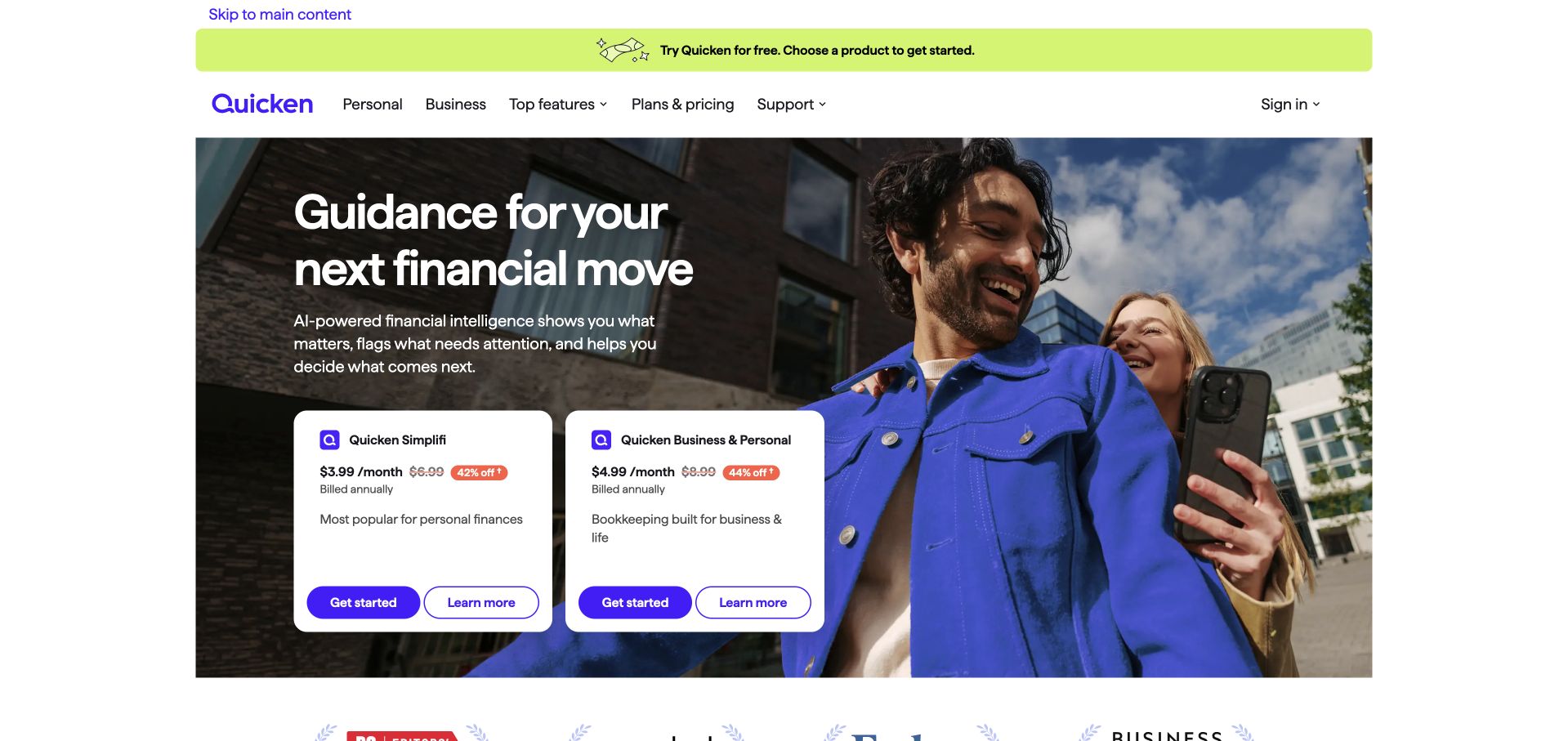
Quicken places two compact product cards over a lifestyle photograph, with a large guidance-oriented headline above them. Each card has its own starting and learning actions, making the portfolio visible within the opening rather than hiding the comparison behind a general signup. Purple accents connect the cards to the wider brand identity. Quicken’s case follows the March 2016 Intuit divestiture and a five-month OneWorld implementation by October 1. Quicken is not QuickBooks.
What you can learn
When products serve different needs, make the choice explicit and explain what the visitor is comparing. Behind the scenes, distinguish subscription and accounting records from the consumer financial tools themselves. Preserve the divestiture-era context of the ERP case instead of confusing Quicken with its former parent or QuickBooks.
Pros
Side-by-side product cards expose a meaningful choice without requiring a second page first.
Learning actions offer a lower-pressure route alongside the direct starting buttons.
Cons & considerations
Promotional prices and product names need clear renewal and feature explanations for an informed choice.
Text and cards over a detailed photograph require careful mobile contrast and reading-order checks.
Platform source: Official NetSuite customer case with publicly loaded case content. Quicken’s case follows the March 2016 Intuit divestiture and a five-month OneWorld implementation by October 1. Quicken is not QuickBooks. This establishes only the stated organization, workload, product family, regional or historical association. It does not prove the pictured public page runtime, reveal its CMS or frontend, establish a complete current stack, or independently verify vendor-reported results. Platform evidence is separate from the direct website screenshot and is not a complete current infrastructure audit.
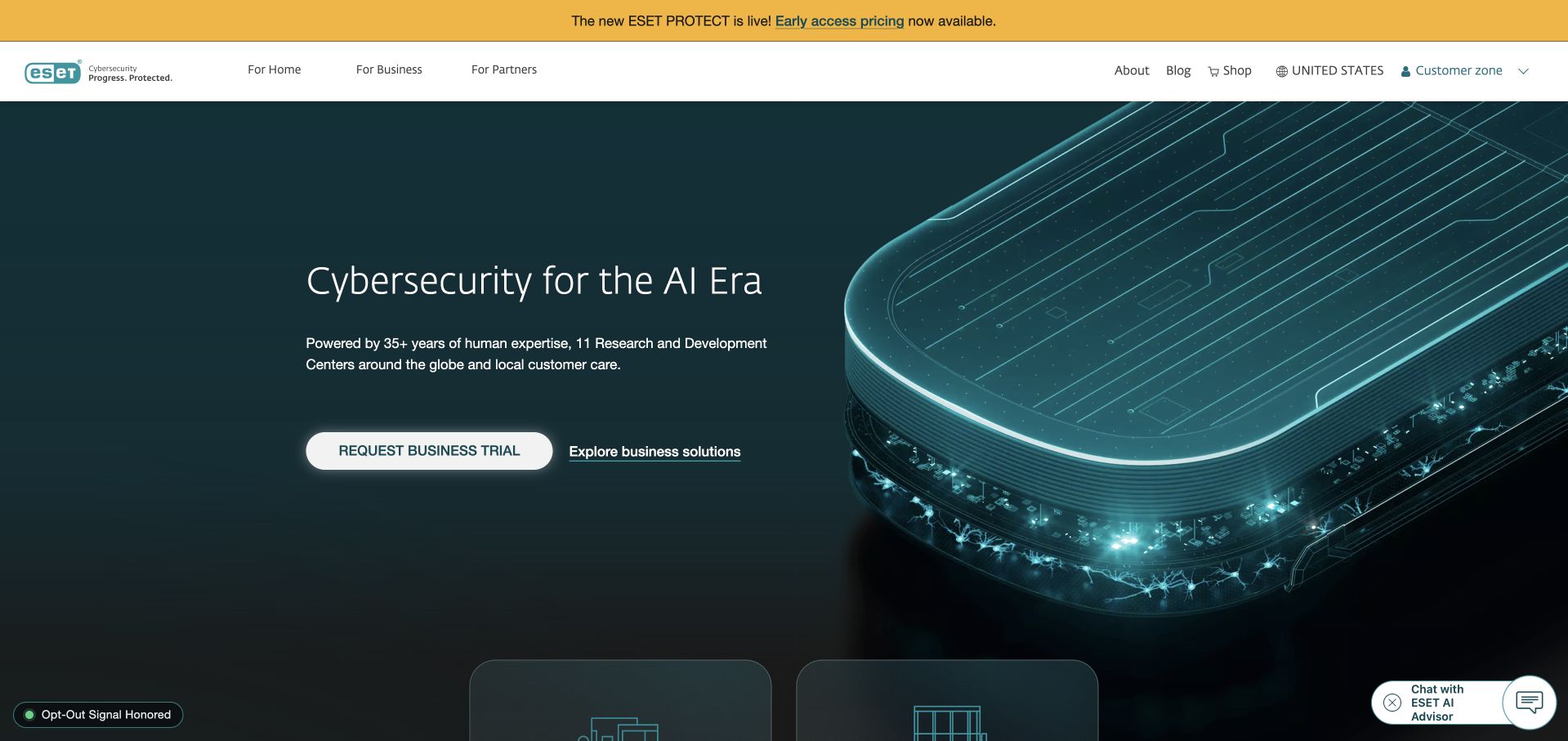
ESET’s US page uses a deep teal background, a chip-like technical illustration and a short cybersecurity proposition. A light request action and a quieter business-solutions link give the opening two levels of commitment. Home, business and partner routes remain visible in the header, with a narrow announcement strip above. The undated historical ESET LLC case describes integrated financials, CRM, support and NetSuite ecommerce at the US business; it does not verify current global website rendering.
What you can learn
A security product should explain its intended audience and evaluation route without depending on dramatic threat imagery. Keep customer support, commerce and finance claims tied to the actual legal entity and period. A historical integrated ecommerce case does not prove the renderer or security properties of today’s global public pages.
Pros
The restrained technical image supports the proposition without making the page visually alarmist.
Home, business and partner routes acknowledge distinct audiences before deeper product exploration.
Cons & considerations
Security effectiveness cannot be assessed from visual polish or a broad AI-era headline.
Promotional strips and chat utilities can compete with product-comparison and support tasks.
Visible tech stack
Earlier / documented evidence
NetSuite
Platform source: Official NetSuite customer case with publicly loaded case content. The undated historical ESET LLC case describes integrated financials, CRM, support and NetSuite ecommerce at the US business; it does not verify current global website rendering. This establishes only the stated organization, workload, product family, regional or historical association. It does not prove the pictured public page runtime, reveal its CMS or frontend, establish a complete current stack, or independently verify vendor-reported results. Platform evidence is separate from the direct website screenshot and is not a complete current infrastructure audit.
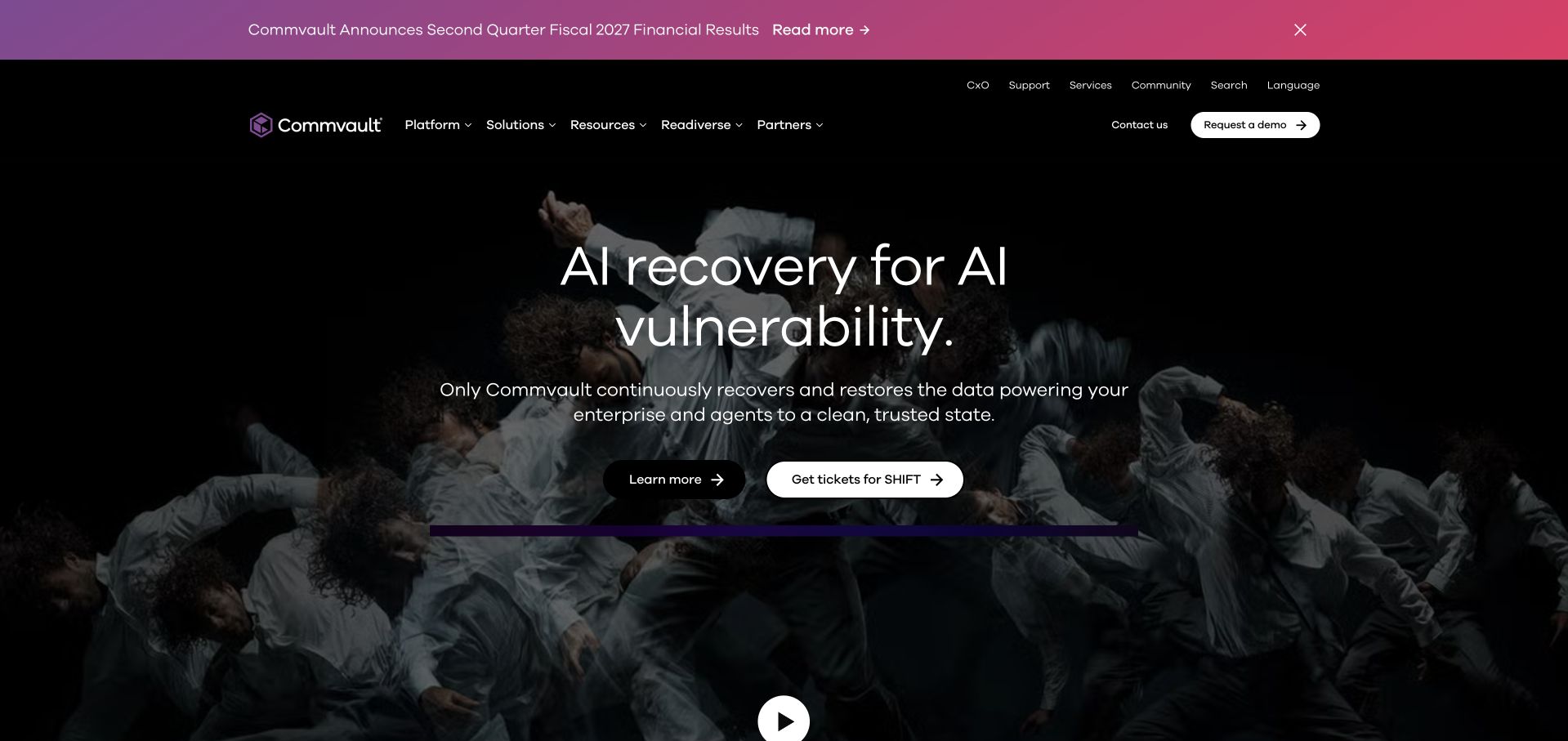
Commvault’s opening pairs a black background, a textured technical visual and a centered recovery-oriented headline. Two light actions distinguish product learning from an event destination, with a narrow results announcement above the header. The composition is dramatic, but the small amount of introductory text keeps the first reading sequence relatively simple. The undated Commvault case documents OneWorld consolidation, billing and revenue processes plus SuiteCloud integrations; historic subsidiary counts are not treated as current.
What you can learn
Specialist infrastructure messaging needs a concrete explanation of what is recovered, for whom and under which conditions. Use campaign visuals as an entry, not as a substitute for architecture or recovery evidence. Internal finance modernization remains a separate claim from backup-product runtime or customer-data protection.
Pros
The limited palette creates a strong focal point around the main recovery proposition.
Two clearly separated actions provide distinct learning and event-oriented destinations.
Cons & considerations
Abstract technical imagery can be difficult to interpret without deeper explanatory material.
Recovery and protection claims need detailed scope, testing and operational evidence beyond a campaign headline.
Platform source: Official NetSuite customer case with publicly loaded case content. The undated Commvault case documents OneWorld consolidation, billing and revenue processes plus SuiteCloud integrations; historic subsidiary counts are not treated as current. This establishes only the stated organization, workload, product family, regional or historical association. It does not prove the pictured public page runtime, reveal its CMS or frontend, establish a complete current stack, or independently verify vendor-reported results. Platform evidence is separate from the direct website screenshot and is not a complete current infrastructure audit.
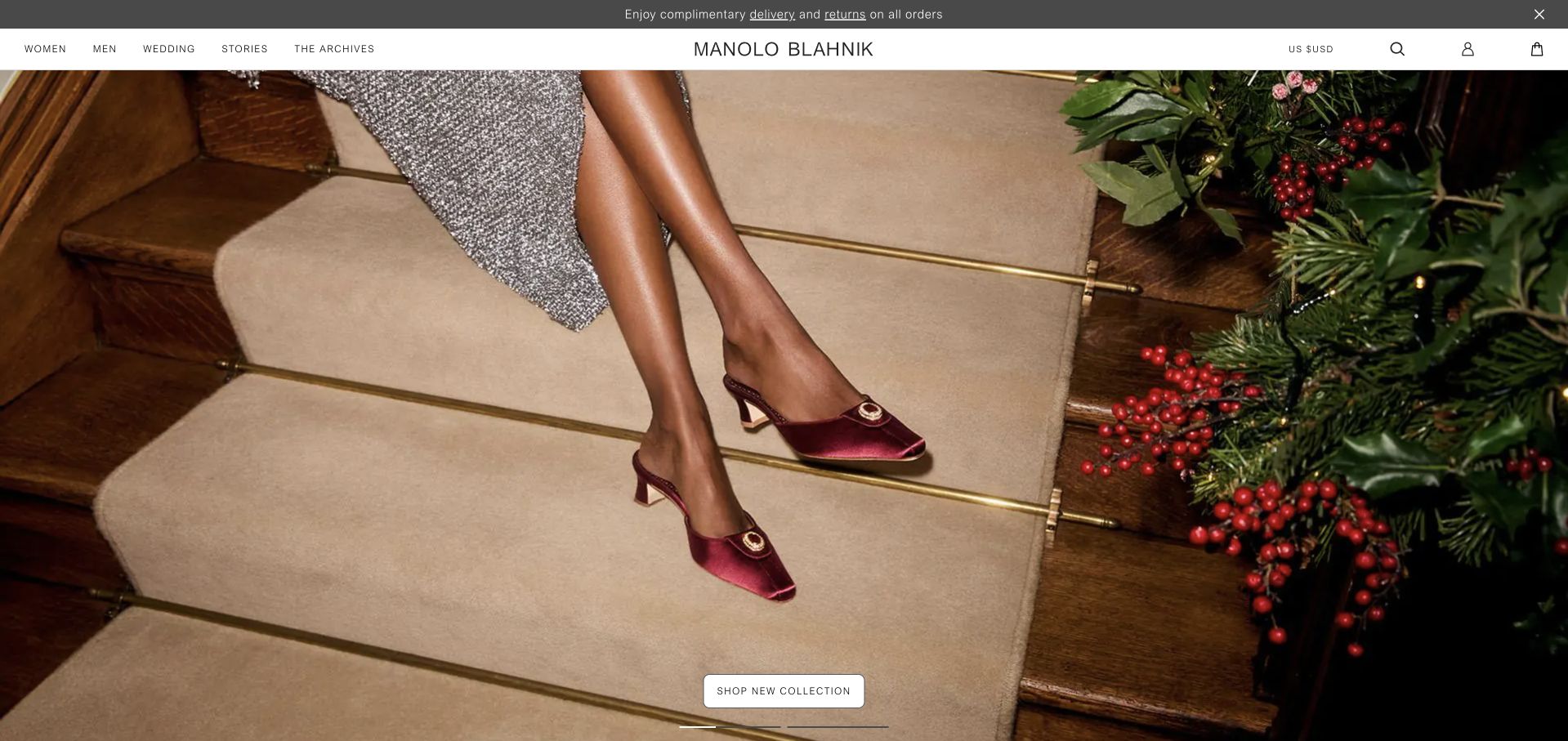
Manolo Blahnik’s storefront uses an overhead seasonal scene containing shoes, furniture and floral details beneath a narrow category header. A small collection action sits within the image rather than competing with several promotional panels. The restrained typography lets the products and styling carry the opening’s luxury positioning. Manolo Blahnik’s case describes connected financials, seasonal product data, supply-chain visibility and warehouse management, not proof of the current storefront frontend.
What you can learn
A restrained storefront still depends on precise seasonal product data, stock and fulfillment records. Preserve the relationship between a style, season and available variant rather than treating every image as a standalone campaign. An ERP warehouse case does not establish the technology rendering the current commerce page.
Pros
The overhead composition shows product material and context without a crowded catalog grid.
A limited set of navigation categories preserves the visual focus of the collection feature.
Cons & considerations
A small collection action may be difficult to notice against a detailed scene.
Editorial imagery should not delay size, availability, delivery and return information needed before purchasing.
Visible tech stack
Earlier / documented evidence
NetSuite
Platform source: Official NetSuite customer case with publicly loaded case content. Manolo Blahnik’s case describes connected financials, seasonal product data, supply-chain visibility and warehouse management, not proof of the current storefront frontend. This establishes only the stated organization, workload, product family, regional or historical association. It does not prove the pictured public page runtime, reveal its CMS or frontend, establish a complete current stack, or independently verify vendor-reported results. Platform evidence is separate from the direct website screenshot and is not a complete current infrastructure audit.
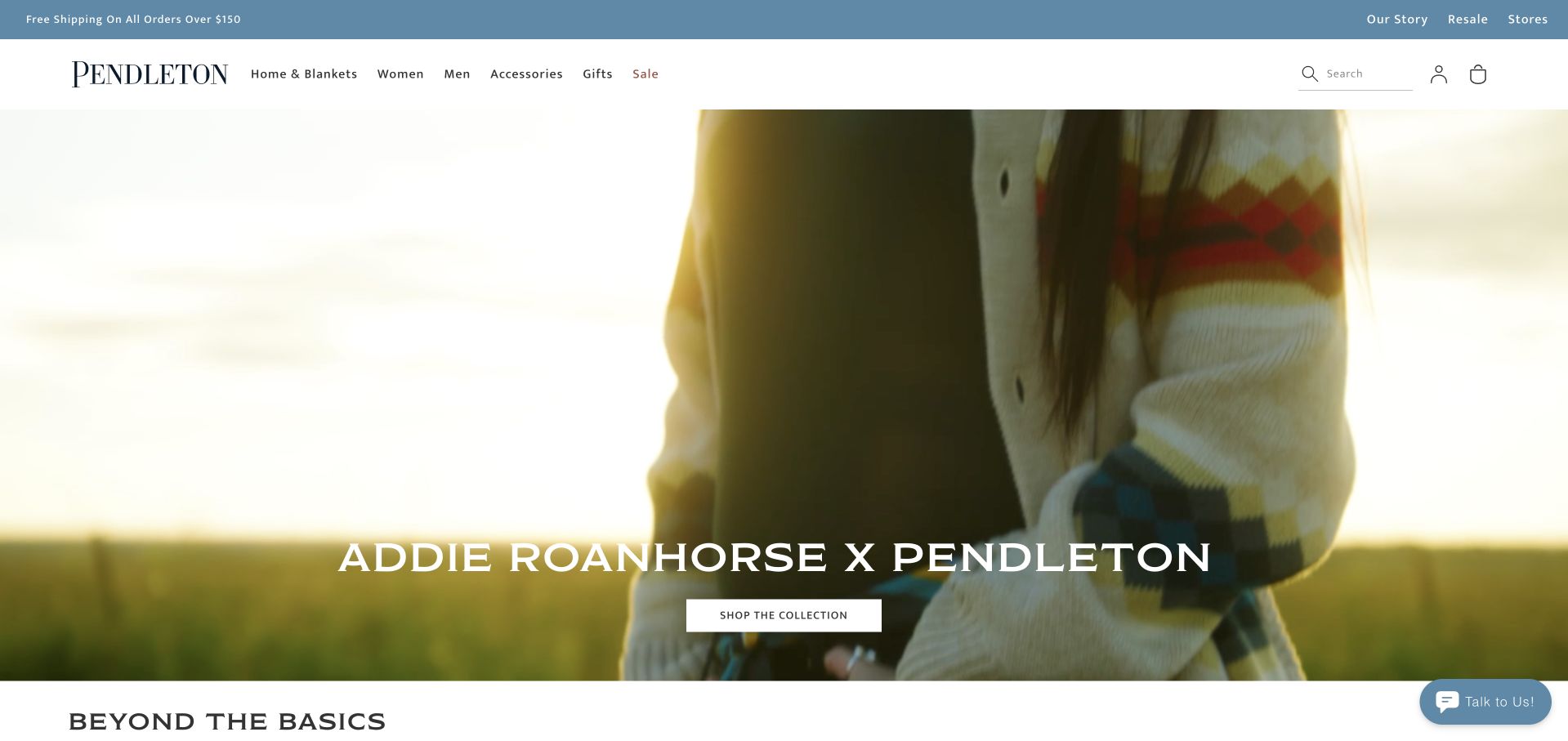
Pendleton’s storefront opens with a large outdoor photograph emphasizing a patterned garment, a collaboration title and a compact collection action. A white header keeps home, clothing, accessories and gifts visible. The scene uses light and material detail to establish the collection rather than presenting the first screen as a dense product grid. Pendleton’s case documents ERP information combined through NetSuite Data Intelligence across B2B and B2C channels. Additional AI predictive planning is described as planned.
What you can learn
A heritage brand can promote a collaboration while retaining stable catalog categories and clear product information. Behind the scenes, reconcile channel data and inventory definitions before adding forecasting. Distinguish already deployed reporting from proposed AI analysis, and do not assume one analytics layer replaced every ERP involved.
Pros
The close material-focused image gives the collaboration a concrete visual character.
Stable shopping categories remain accessible above the current collection feature.
Cons & considerations
The large campaign image postpones direct comparisons between individual products.
Collaboration and heritage claims need appropriate credits and context beyond a headline.
Platform source: Official NetSuite customer case with publicly loaded case content. Pendleton’s case documents ERP information combined through NetSuite Data Intelligence across B2B and B2C channels. Additional AI predictive planning is described as planned. This establishes only the stated organization, workload, product family, regional or historical association. It does not prove the pictured public page runtime, reveal its CMS or frontend, establish a complete current stack, or independently verify vendor-reported results. Platform evidence is separate from the direct website screenshot and is not a complete current infrastructure audit.
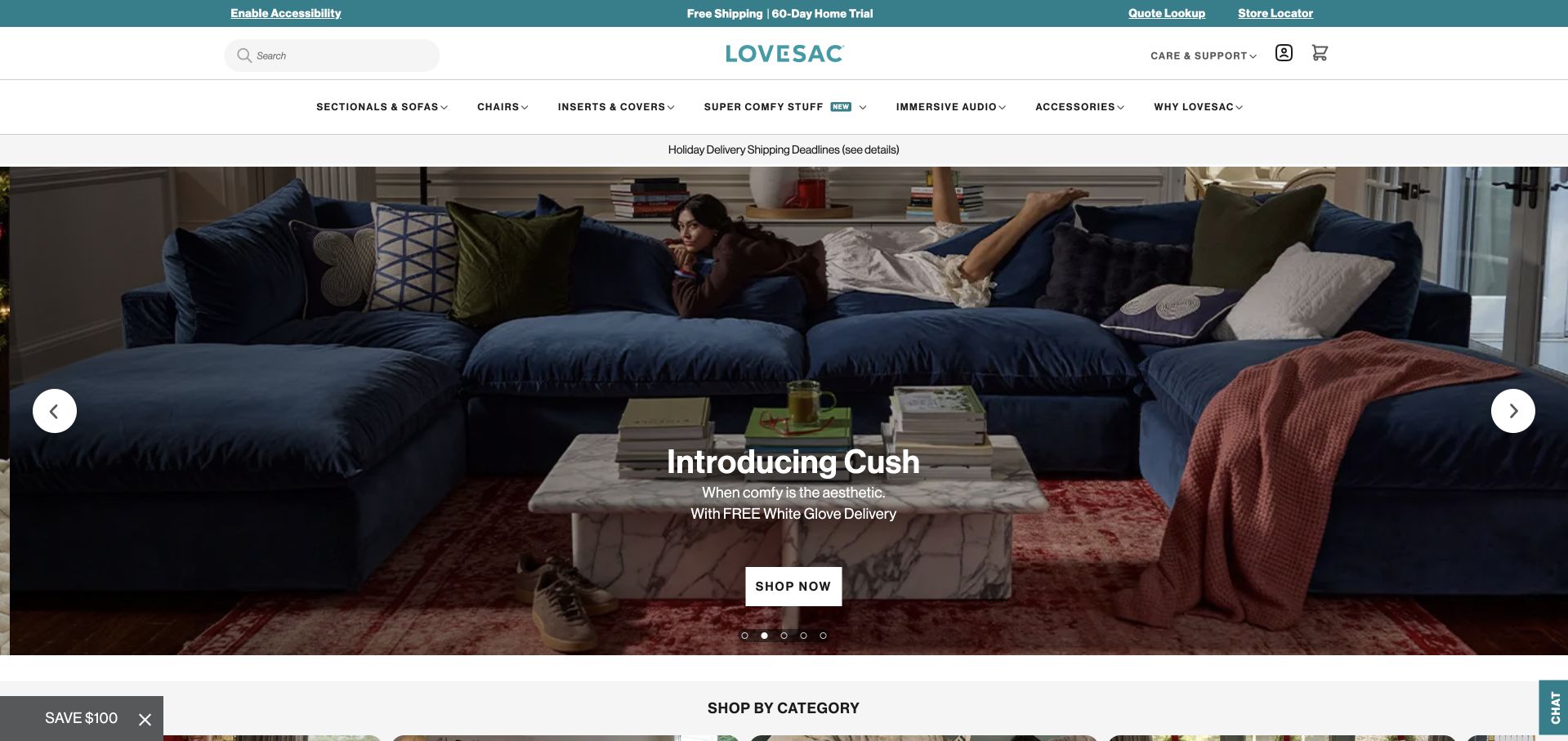
Lovesac’s homepage places a large sofa within a richly styled room, with a short product-family label and a central shopping action. Several navigation and promotional rows preserve practical catalog routes above the image. The scene helps visitors imagine scale, color and use, while the beginning of a category section signals more structured exploration below. The undated historical Lovesac case describes NetSuite ERP, CRM and order/inventory visibility across sales channels; its then-showroom count is not current.
What you can learn
Large configurable products need inspiration and dependable operational detail. Connect the room image to understandable configuration, fabric and delivery choices, with accurate order and inventory records behind them. A historical omnichannel ERP case is not proof of today’s storefront renderer or current showroom footprint.
Pros
The room photograph gives a modular furniture system a recognizable domestic scale.
Visible category navigation offers a route beyond the featured product family.
Cons & considerations
Multiple promotional and utility rows can crowd the opening before the product appears.
A lifestyle scene cannot replace clear configuration, measurement, fabric and fulfillment information.
Platform source: Official NetSuite customer case with publicly loaded case content. The undated historical Lovesac case describes NetSuite ERP, CRM and order/inventory visibility across sales channels; its then-showroom count is not current. This establishes only the stated organization, workload, product family, regional or historical association. It does not prove the pictured public page runtime, reveal its CMS or frontend, establish a complete current stack, or independently verify vendor-reported results. Platform evidence is separate from the direct website screenshot and is not a complete current infrastructure audit.
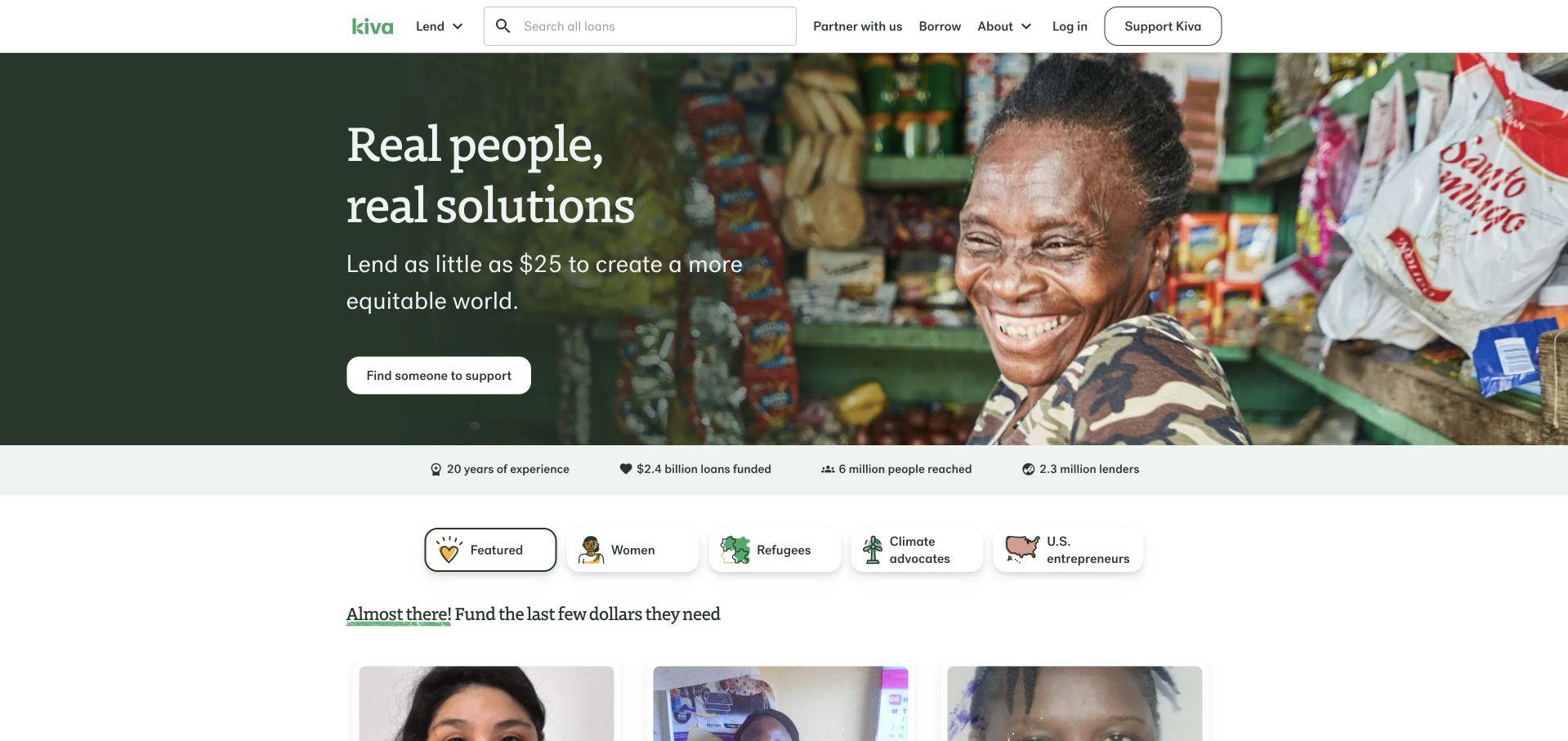
Kiva pairs a dark green introductory panel with a portrait of a small-business owner, followed by compact impact figures and category filters. A clear action leads into the browsing experience, while the header separates lending, borrowing, partnership and organizational information. The page feels human without abandoning practical choices. Kiva’s historical case includes a SuiteWorld 2012 award and documents donated NetSuite finance, expense, payables, reporting and multicurrency tools; not borrower underwriting or loan-platform runtime.
What you can learn
Mission-driven organizations need a clear distinction between storytelling, participation and financial risk information. Study the audience routes and category structure, not implied loan suitability or repayment outcomes. Back-office accounting support is a different association from the systems evaluating borrowers or processing the public lending experience.
Pros
The portrait gives an abstract financial-access mission a specific human subject.
Category filters provide a practical discovery route beyond the introductory story.
Cons & considerations
Impact totals need clear dates and definitions to avoid implying unsupported current scale.
Lending-related actions require prominent risk information and informed decisions beyond persuasive design.
Platform source: Official NetSuite customer case with publicly loaded case content. Kiva’s historical case includes a SuiteWorld 2012 award and documents donated NetSuite finance, expense, payables, reporting and multicurrency tools; not borrower underwriting or loan-platform runtime. This establishes only the stated organization, workload, product family, regional or historical association. It does not prove the pictured public page runtime, reveal its CMS or frontend, establish a complete current stack, or independently verify vendor-reported results. Platform evidence is separate from the direct website screenshot and is not a complete current infrastructure audit.
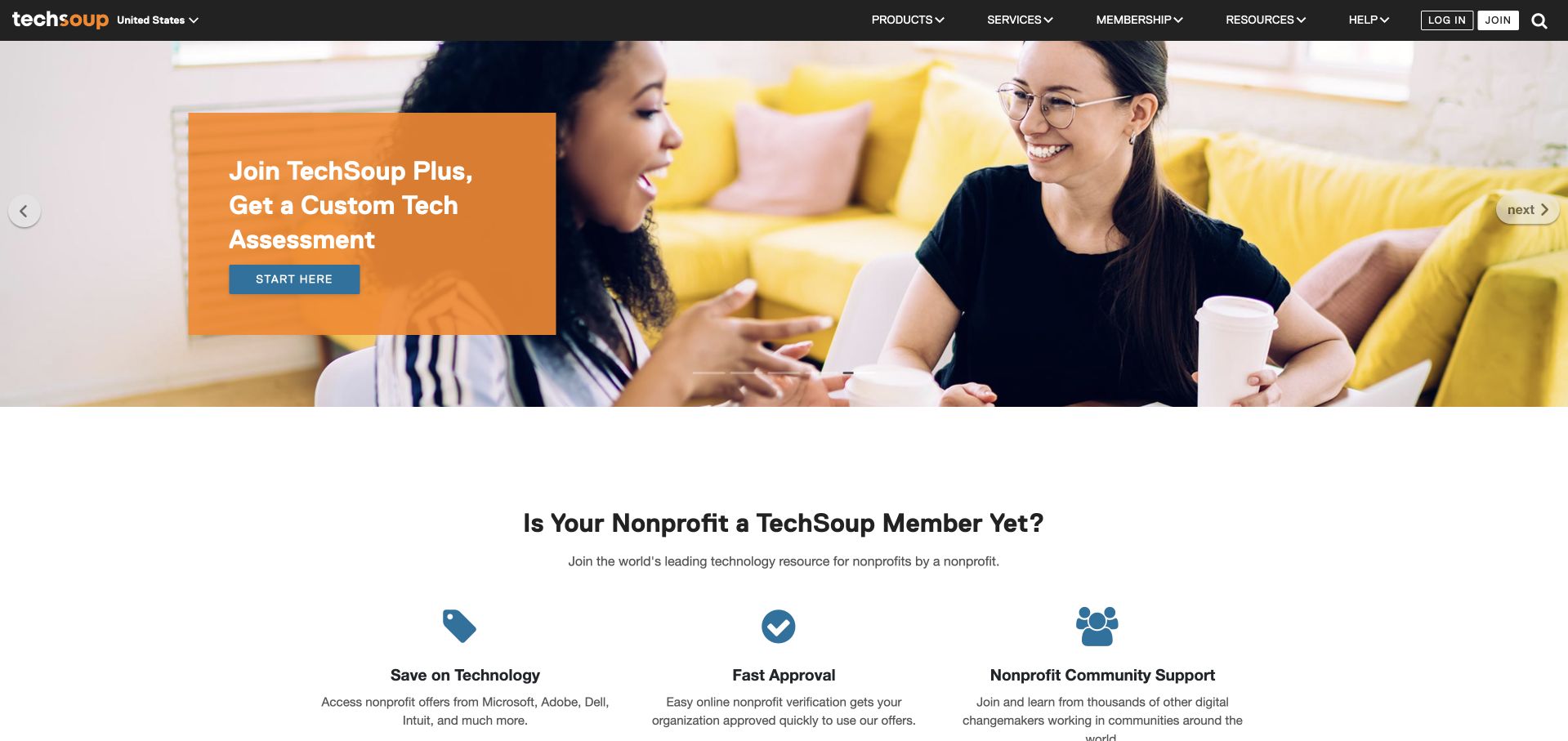
TechSoup’s page opens with a nonprofit technology-assessment feature over a human-centered photograph. A benefits section follows with simple icons for savings, approval and organizational support. A compact black header preserves product, service, membership and help routes, giving the mission-led offer a recognizable practical structure. TechSoup’s case dates its OneWorld go-live to 2013 and describes finance, project/time/expense and opportunity tracking. Historic distribution totals are not current totals.
What you can learn
A nonprofit platform should explain eligibility and the next useful action before presenting a large catalog. Preserve the distinction between the organization’s finance tools and the public services it offers. Historical program distribution and workforce figures belong to their original case context rather than becoming current impact claims.
Pros
A concrete assessment action makes the opening more useful than a generic technology-for-good slogan.
The short benefits row translates membership into several understandable visitor advantages.
Cons & considerations
Eligibility and approval language needs clear criteria and expectations on the next page.
A broad product-and-service catalog can become difficult to navigate without strong audience grouping.
Platform source: Official NetSuite customer case with publicly loaded case content. TechSoup’s case dates its OneWorld go-live to 2013 and describes finance, project/time/expense and opportunity tracking. Historic distribution totals are not current totals. This establishes only the stated organization, workload, product family, regional or historical association. It does not prove the pictured public page runtime, reveal its CMS or frontend, establish a complete current stack, or independently verify vendor-reported results. Platform evidence is separate from the direct website screenshot and is not a complete current infrastructure audit.
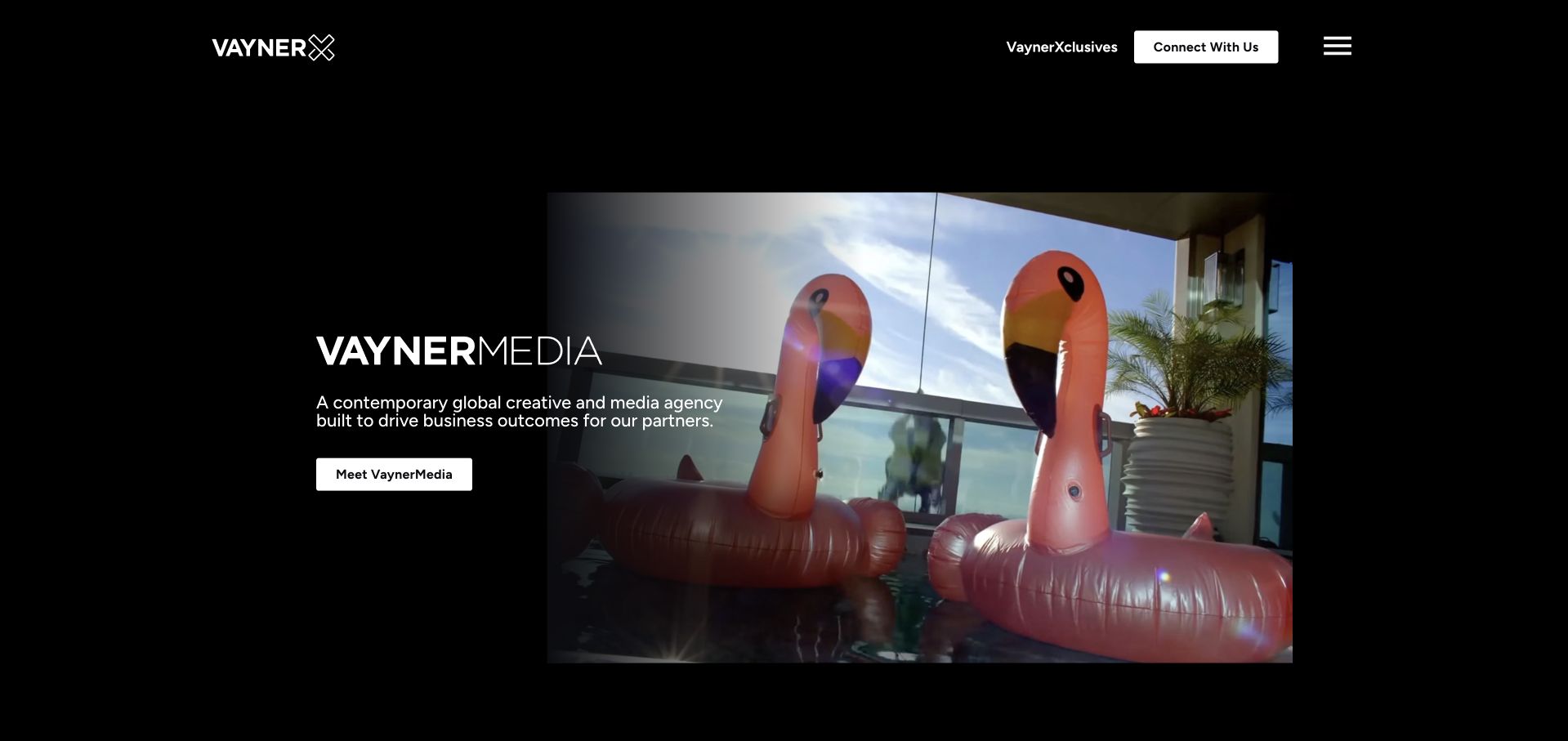
The accepted VaynerX capture shows its public company-family section: a black background, a VaynerMedia description, a pale action and a playful office photograph. The fixed header retains the parent identity and contact route. This content-rich section was chosen after the opening animation and a promotional layer proved unsuitable for a clear reference image. VaynerX’s case documents OneWorld consolidation and Planning and Budgeting financial scenarios across subsidiaries. An apparent vendor typo about office counts is deliberately not repeated.
What you can learn
A portfolio organization should show how its companies differ while preserving the parent relationship. Use a concise description and concrete visual for each, then maintain legal-entity and currency boundaries in financial planning. A consolidated back office is not evidence that every subsidiary’s public site shares one stack.
Pros
A specific company description and image make the parent’s portfolio more concrete.
A consistent section pattern can support comparison across otherwise very different businesses.
Cons & considerations
A long animated opening can delay access to the useful organizational explanation.
Large image-led sections may require substantial scrolling before the full company family becomes apparent.
Platform source: Official NetSuite customer case with publicly loaded case content. VaynerX’s case documents OneWorld consolidation and Planning and Budgeting financial scenarios across subsidiaries. An apparent vendor typo about office counts is deliberately not repeated. This establishes only the stated organization, workload, product family, regional or historical association. It does not prove the pictured public page runtime, reveal its CMS or frontend, establish a complete current stack, or independently verify vendor-reported results. Platform evidence is separate from the direct website screenshot and is not a complete current infrastructure audit.
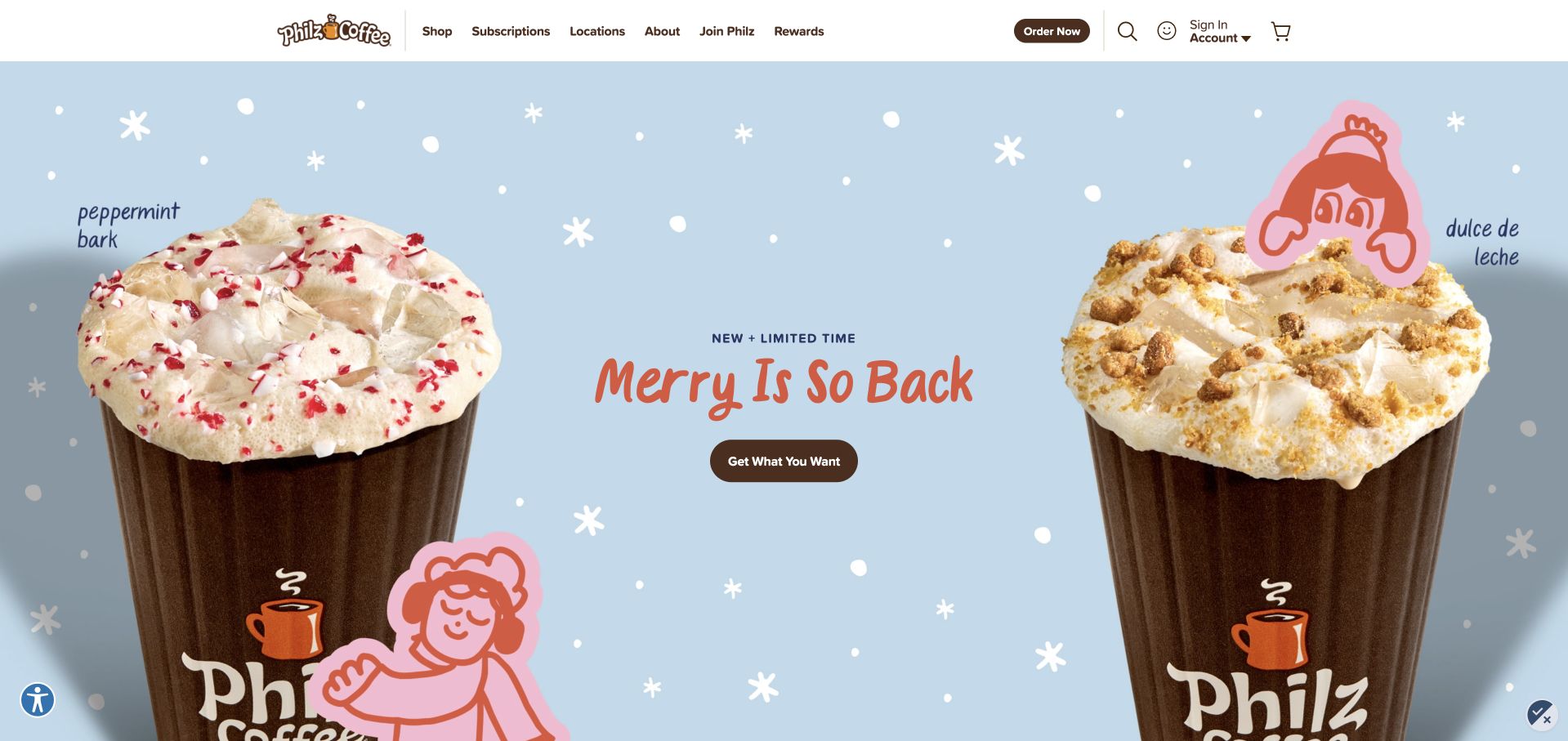
Philz Coffee uses a pale blue seasonal scene, illustrated characters and two large drinks to frame a short promotional line. A restrained white header keeps shopping, subscriptions, locations and rewards visible, with ordering separately emphasized. The visual is playful, but the main routes acknowledge both nearby café customers and packaged-coffee shoppers. Philz Coffee’s historical case dates NetSuite implementation to May 2010 for finance, inventory, warehouse, orders and ecommerce; old store counts and expansion plans remain historical.
What you can learn
A business serving stores, subscriptions and wholesale needs clear journey boundaries as well as a recognizable brand. Keep the seasonal campaign connected to current availability and accurate stock information. A historical ERP ecommerce case should not be treated as a current audit of the mobile app, café ordering or public shop.
Pros
The seasonal illustration and drink photography create a coherent campaign without a dense text block.
Location, subscription and ordering routes support several distinct customer intentions.
Cons & considerations
Short promotional copy needs clear product, allergen and availability detail on deeper pages.
Past implementation dates and old store counts must remain separate from today’s brand presentation.
Platform source: Official NetSuite customer case with publicly loaded case content. Philz Coffee’s historical case dates NetSuite implementation to May 2010 for finance, inventory, warehouse, orders and ecommerce; old store counts and expansion plans remain historical. This establishes only the stated organization, workload, product family, regional or historical association. It does not prove the pictured public page runtime, reveal its CMS or frontend, establish a complete current stack, or independently verify vendor-reported results. Platform evidence is separate from the direct website screenshot and is not a complete current infrastructure audit.
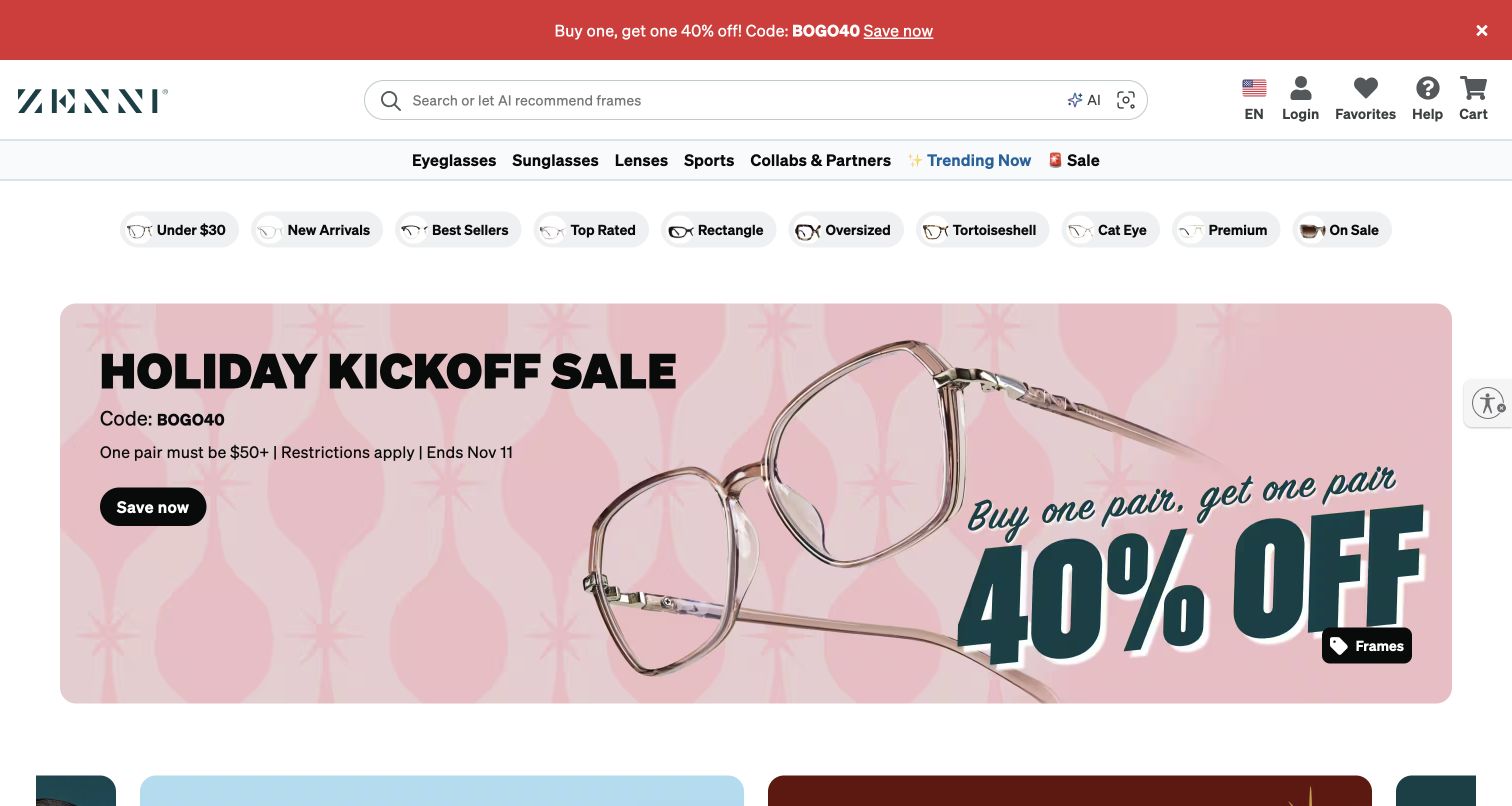
Zenni’s storefront combines a large search field, product-category navigation and small shape filters above a broad pink seasonal promotion. Eyeglass photography supports the offer without hiding the price-oriented action. The opening is recognizably a catalog gateway, with several practical ways to bypass the campaign and find a particular kind of frame. Zenni Optical’s case describes OneWorld financial consolidation, multicurrency reporting and fixed assets. Warehouse-management rollout described as in progress is not asserted complete.
What you can learn
A large configurable catalog needs useful filters and accurate product records before decorative polish. Separate public style discovery from prescription handling, stock, manufacturing and corporate finance. A documented accounting rollout and a planned warehouse phase do not establish the present-day renderer or completion of every operational project.
Pros
Shape and product filters provide direct alternatives to the seasonal promotion.
A prominent search field supports shoppers who arrive with a specific frame or product in mind.
Cons & considerations
Several navigation and promotional rows can feel crowded on shorter displays.
Prescription, fit and lens decisions require clear specialist information beyond the campaign’s price emphasis.
Platform source: Official NetSuite customer case with publicly loaded case content. Zenni Optical’s case describes OneWorld financial consolidation, multicurrency reporting and fixed assets. Warehouse-management rollout described as in progress is not asserted complete. This establishes only the stated organization, workload, product family, regional or historical association. It does not prove the pictured public page runtime, reveal its CMS or frontend, establish a complete current stack, or independently verify vendor-reported results. Platform evidence is separate from the direct website screenshot and is not a complete current infrastructure audit.
Kegan has 15+ years of experience working with small businesses, Fortune 500 companies, and everything in between. No development job is too big or too small: he brings the same hands-on attention to a focused improvement, a complete website, or a custom application.
For NetSuite projects, he can help with content architecture, custom functionality, system integrations, testing, and maintainable handover. He works directly with clients on scope, design, implementation, testing, and handover, with an emphasis on clear communication and a system that remains practical to maintain after launch.
Show 3 other NetSuite developersHide other NetSuite developers
An existing NetSuite customer may need a better report, role, workflow or integration rather than a replacement platform. Identify the bottleneck with the people doing the work and measure its current cost. Start with one controlled improvement and reconcile the result against authoritative records before expanding it into a broader transformation program.
A commerce or service integration
A public store or customer portal can remain a separate application while exchanging selected records with NetSuite. Define the exact handoff, allowed fields and expected timing. Give staff a useful view of failed or pending transactions. Customers should not receive a definitive promise about stock, fulfillment or a refund until the responsible system has accepted the relevant action.
A staged ERP transition
A larger migration needs a process inventory, data owners and an explicit cutover plan. Decide whether finance, subsidiaries, warehouses or product lines move together or in stages. Preserve historical reporting and define reconciliation evidence for the transition. Do not infer that another customer’s short implementation timeline is appropriate for a business with different data, controls and operating complexity.
From references to requirements
Write an operationally complete NetSuite brief
Describe the company and transaction model
List the legal entities, currencies, sales channels, warehouses and product types actually in scope. Trace a representative order through finance and fulfillment, including a partial return. Separate current requirements from future markets or acquisitions. This prevents a proposal from promising global standardization when the approved work only covers one regional operating company.
Plan data migration with reconciliation
Assign an owner to each imported dataset and agree on identifiers, statuses, units and effective dates. Clean duplicates before mapping relationships. Reconcile representative transactions and balances with the appropriate finance and operations teams. Record excluded history and open items explicitly so staff understand what remains in an old system and what must be handled during cutover.
Specify integration and support behavior
Inventory existing connectors and their supported interfaces before designing new ones. Document credentials, permissions, dependencies and the process for rotating access. Test duplicate delivery, unavailable systems and rejected records. Name the people responsible for monitoring and recovery, and check current vendor interface guidance rather than copying an old SOAP implementation simply because a historical case mentions it.
A useful handover demonstration
Ask the actual team to carry out its routine job: publish a realistic update, correct a mistake, preview a narrow screen, and identify who owns an integration failure. For a library or frontend framework, also ask who maintains the content source and deployment. A polished screenshot does not answer those operational questions.
Beyond the screenshot
NetSuite project checklist
Identify the exact operating entities and regions in scope.
List currencies, warehouses, channels and product variations.
Assign ownership of customer, product and transaction records.
Map order, fulfillment, cancellation and return lifecycles.
Separate financial approval from convenient interface access.
Review integration roles with the account administrator.
Confirm current supported interfaces for each connector.
Keep secrets in approved server-side credential storage.
Make retries and duplicate deliveries safe to reconcile.
Reconcile migration samples, balances and open transactions.
Document cutover, recovery, monitoring and support ownership.
Train staff on exceptions before expanding the deployment.
Test with real content, a keyboard, a small screen, slow or failed requests, and the people who will maintain the system. These are planning checks, not an accessibility, security, performance, or search-ranking certification.
Sources & editorial method
How this NetSuite collection was reviewed
All public images were inspected after direct Chrome capture or exact-page reuse with original dates retained. Official NetSuite case pages and their publicly loaded case-content records establish the stated associations. Historical dates, subsidiary limits and future plans are retained; vendor claims are not independent benchmarks or evidence of every current component.
Every image is an unmodified capture from the actual website, with its source and capture date. Some captures are reused from our shared catalog; their dates remain the original capture dates. None comes from a vendor gallery or a generated reconstruction. Moving imagery and live content can change.
Technology attribution uses public page assets or metadata, official platform documentation, or a cited first-party project case study. Documentary and framework-relationship evidence is identified where used; it is not a complete current backend inventory. A CMS image CDN alone does not establish a full CMS deployment. A library’s presence does not prove which individual controls use it, and a platform label does not establish AI authorship.
The composition notes, lessons, pros and tradeoffs are original editorial observations. We have not measured conversion, traffic, security, performance or accessibility conformance. Website owners retain their brands and imagery; these examples are not our client portfolio. Written, Edited and Curated are independent records, not dates advanced by a build. See our editorial standards or suggest a correction.
Questions worth asking
NetSuite website development FAQs
Do these screenshots show NetSuite storefronts?
Not necessarily. Most cases describe back-office finance, stock or planning. Even a historical ecommerce case does not prove the current public frontend. The screenshot and the documented operational association are deliberately evaluated separately.
Should the public store and ERP be one application?
That depends on the business, product requirements and existing systems. Define authoritative records and handoffs first. A separate storefront can be appropriate when the integration, permissions and operational support are designed deliberately.
Can we use a historical customer case as a current recommendation?
Use it as evidence of the stated implementation at that time, not as a current architecture audit or a promise of similar results. Recheck product availability, interfaces and the customer’s present circumstances before making a new decision.
Where do integrations usually become difficult?
Ambiguous record ownership and exception handling create more trouble than the initial happy-path request. Specify partial fulfillment, corrections, duplicate events and failed updates, then test how finance and operations staff investigate and recover.
What should an ERP proposal make explicit?
Entities, processes, data, integrations, permissions, acceptance tests, migration reconciliation and ongoing ownership. Distinguish confirmed scope from optional future phases and describe the evidence required before each transition is accepted.
Use the public examples to sharpen the customer experience, then plan the operational records and controls that support it. A dependable ERP project makes the whole transaction understandable, including the parts customers never see.