Best Django Websites of 2026 (20 Real-World Examples)
Django-backed publishing properties through Wagtail, with frontend boundaries preserved
Twenty real websites illustrate Django-based publishing through Wagtail. The collection covers the documented CMS or content-backend layer of each named property; headless frontends, phased migrations, private records, and linked transactions remain separate.
Django is an application framework, not a visual theme. These examples share a specific publishing relationship: Wagtail is built on Django, and official platform or implementation sources associate it with the named public property. That gives the collection a concrete content-application scope without pretending a screenshot exposes the whole server architecture.
NASA JPL, the NHS website for England, blog.google, Firefox.com, and Peace Corps open the collection. JPL and M+ have explicitly documented headless implementations, and Firefox’s case study describes a phased combination of CMS-driven and legacy static pages. Those distinctions are retained because a Django content backend does not imply a Django-only browser interface, and a named publication is not an organization-wide technology inventory.
Before the examples
What makes good Django website development in 2026?
Model the records behind the page
Missions, services, exhibitions, statistical releases, campaigns, and articles have different relationships and lifecycles. Define those records before designing flexible page blocks. Django models should preserve the facts that remain useful when a featured homepage story changes.
Separate editorial control from application authority
Publishing an explanation is different from changing a patient record, accepting an application, or processing a complaint. Keep content permissions, account authorization, and consequential service workflows explicit; a shared visual identity does not prove they belong to one system.
Make version, locale, and status understandable
Firefox’s localized publishing, museum opening dates, and hospital operational messages need more than a title and image. Model effective dates, audience, location, translation state, and ownership where they determine how someone should interpret or use the content.
The collection · 20 examples
20 Django website examples worth studying
The examples are independently pictured public properties with original design commentary. Django is evidenced through a documented Wagtail publishing association or an explicit implementation source, not inferred from a corporate logo or a hidden backend. Backend, frontend, and connected-service scope remain qualified.
We start with five recognizable brands or organizations: NASA Jet Propulsion Laboratory, NHS website for England, News from Google, Firefox.com, Peace Corps. Each attribution applies to the named website property, not every product or website belonging to its organization. This is a curated reading sequence, not a measured ranking.
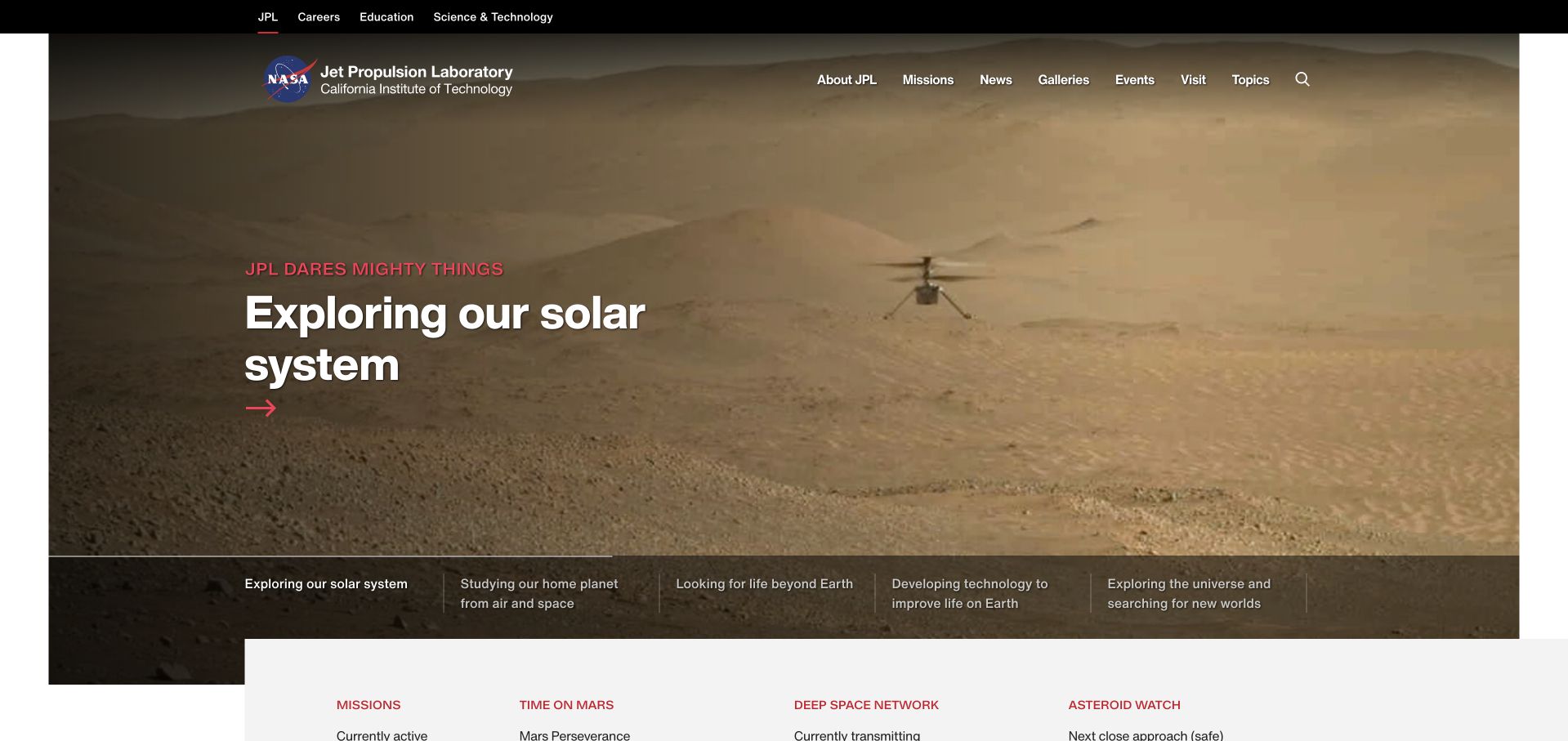
JPL’s homepage gives a large mission image the opening, with topic links and a compact institutional header around it. A row of scientific subjects provides a route beyond the featured story, and practical mission resources begin underneath. The documented Django relationship is Wagtail’s content layer: the implementation case study separately identifies a headless Nuxt frontend. It is not a claim that NASA’s entire public web estate uses Django.
What you can learn
Model missions, news, images, and related scientific subjects as connected records before designing a reusable CMS page. A Django-backed content API needs a clear contract with the frontend so historic material keeps its relationships, credits, and useful URLs through redesigns.
Pros
The topic routes make the large featured image part of a broader science publication rather than a dead-end promotional splash screen.
Mission-oriented links appear close to the opening, serving visitors who arrive with a particular spacecraft or scientific subject already in mind.
Cons & considerations
A changing media-led hero needs legible text and a useful nonmoving state, especially when the image is not immediately available.
Headless publishing adds preview and deployment coordination; a visually coherent page cannot establish how reliably those behind-the-scenes workflows are maintained.
Platform source: Official property-level publishing implementation. The implementation partner documents jpl.nasa.gov using a headless Wagtail content backend, with a separate Nuxt frontend. Wagtail is built on Django; this association concerns the documented publishing layer, not every visible frontend component, linked service, or private organizational system. Platform evidence is separate from the direct website screenshot and is not a complete current infrastructure audit.
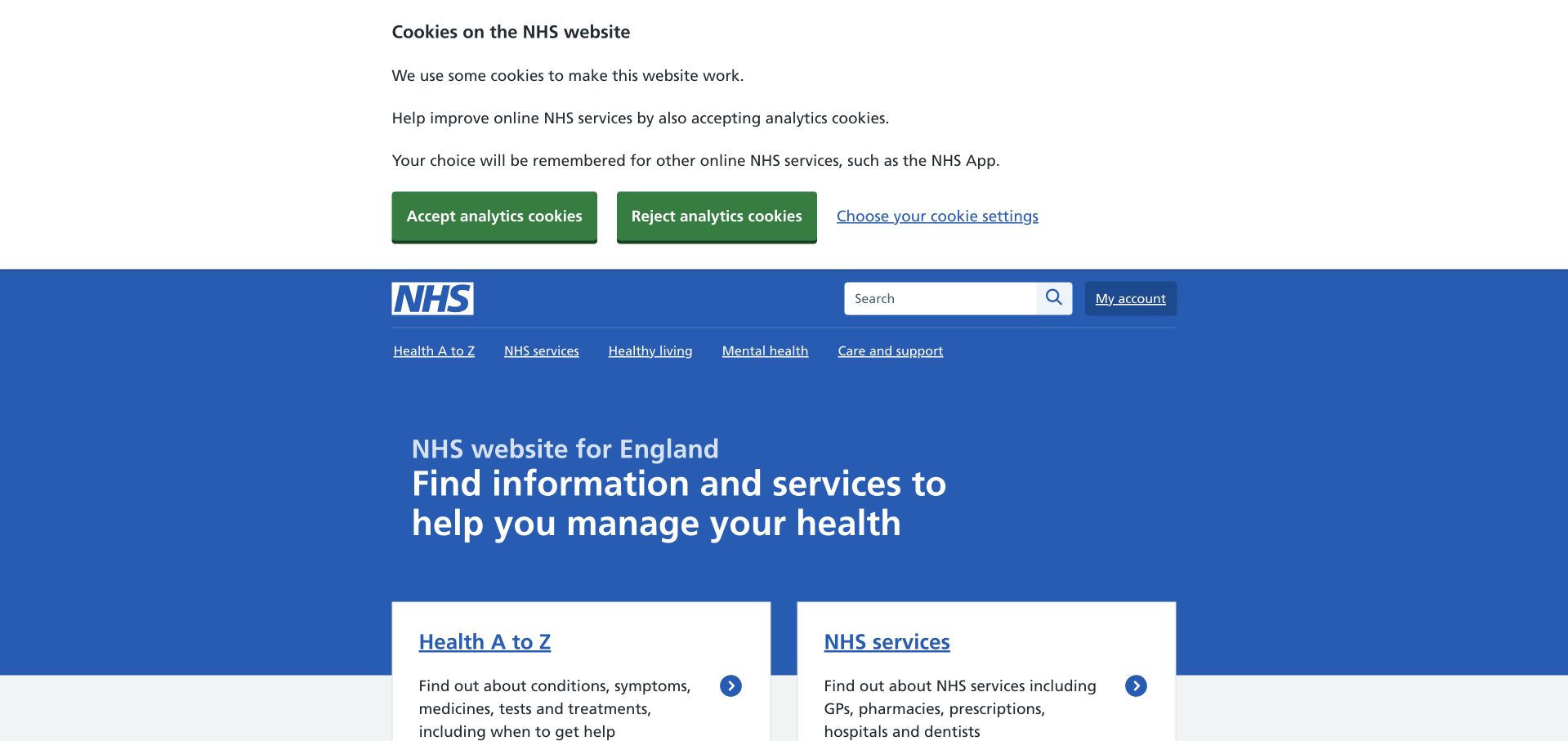
The NHS homepage introduces its geographic scope and the practical purpose of the website before presenting health information and service-finding routes. Blue institutional branding frames a restrained page with clear search and a small set of top-level subjects. Account access remains distinct from public information. Wagtail’s official showcase documents the Django-based publishing association for this NHS property, not every NHS organization, private clinical system, or linked service.
What you can learn
Design the content model around the questions people actually bring. A Django CMS can separate information pages, service directories, and authenticated tasks, but the interface must explain those boundaries without forcing users to understand the organization’s internal departmental structure.
Pros
The page identifies England explicitly, establishing a geographic boundary before a visitor follows service-related guidance.
Search and task categories support both specific phrases and broader subject-based exploration through a substantial information collection.
Cons & considerations
A prominent cookie notice can occupy much of the first screen, so the underlying essential navigation needs to remain clear and usable.
Visual clarity does not establish the completeness or clinical correctness of linked information; those require separate specialist editorial and governance processes.
Visible tech stack
Earlier / documented evidence
Django
Wagtail
Platform source: Official property-level publishing implementation. The official Wagtail showcase or case study names NHS website for England as a Wagtail public publishing property. Wagtail is built on Django; this association concerns the documented publishing layer, not every visible frontend component, linked service, or private organizational system. Platform evidence is separate from the direct website screenshot and is not a complete current infrastructure audit.
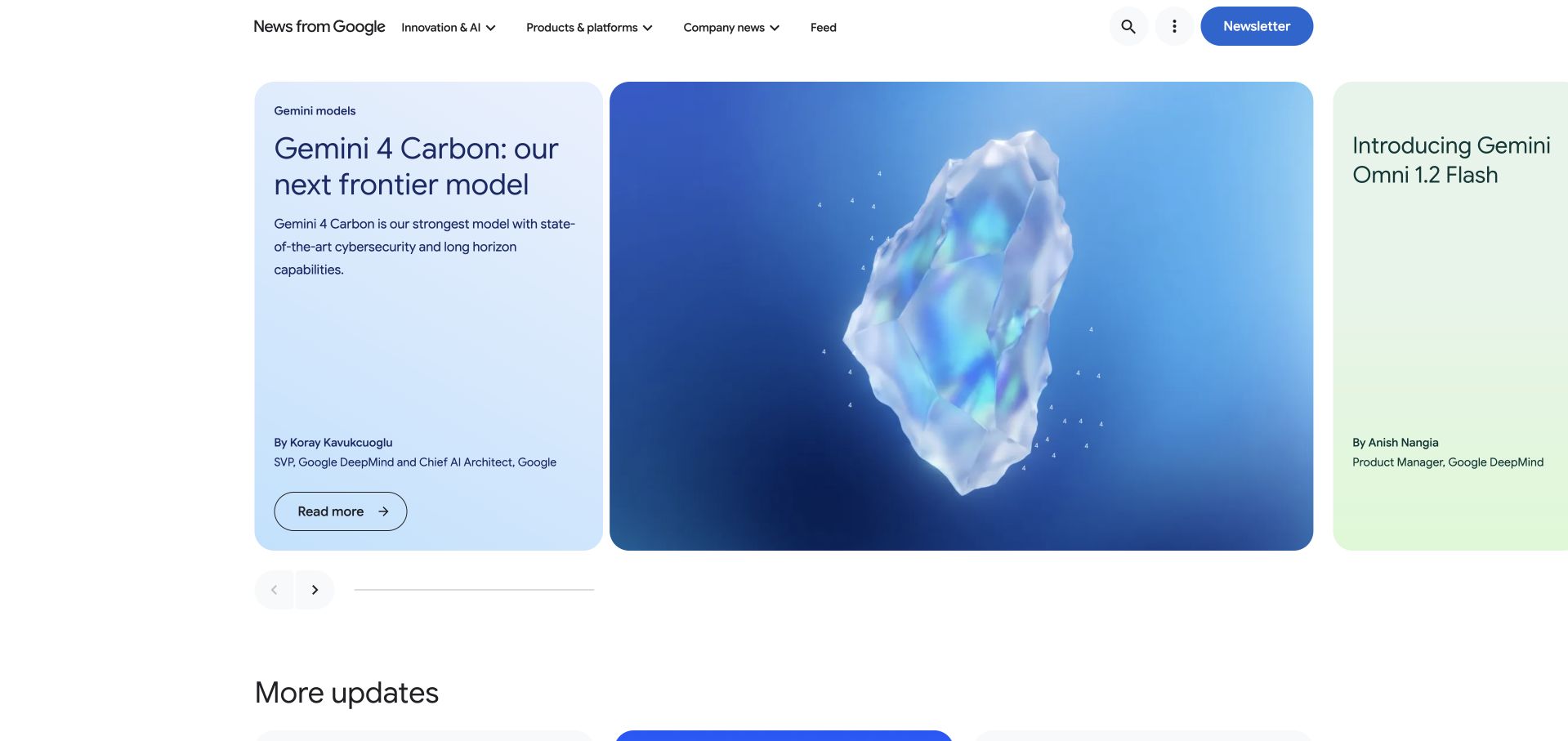
News from Google gives its opening to a large featured article with adjacent preview material, author attribution, and a direct reading route. The header separates innovation, product subjects, and company news, while feed and newsletter actions support repeat readership. Rounded panels and generous image areas make the publication feel distinct from a technical documentation archive. The Django association is the Wagtail-backed blog.google publication, not Google Search, its consumer applications, or every Google-owned website.
What you can learn
Keep editorial taxonomy distinct from the company’s changing product catalogue. A Django-backed publication should model authors, topics, dates, and related stories consistently, while allowing the design to feature a current article without making the archive depend on that temporary campaign structure.
Pros
Author and subject information give the featured story editorial context before readers open a product announcement.
Feed and newsletter routes acknowledge recurring readership instead of treating every visit as a first company introduction.
Cons & considerations
Rotating features need dependable search and archives so a recently seen article remains easy to recover.
Product announcements require dates and attribution; polished presentation cannot establish that every release claim remains current.
Platform source: Official property-level publishing implementation. The official Wagtail showcase or case study names News from Google as a Wagtail public publishing property. Wagtail is built on Django; this association concerns the documented publishing layer, not every visible frontend component, linked service, or private organizational system. Platform evidence is separate from the direct website screenshot and is not a complete current infrastructure audit.
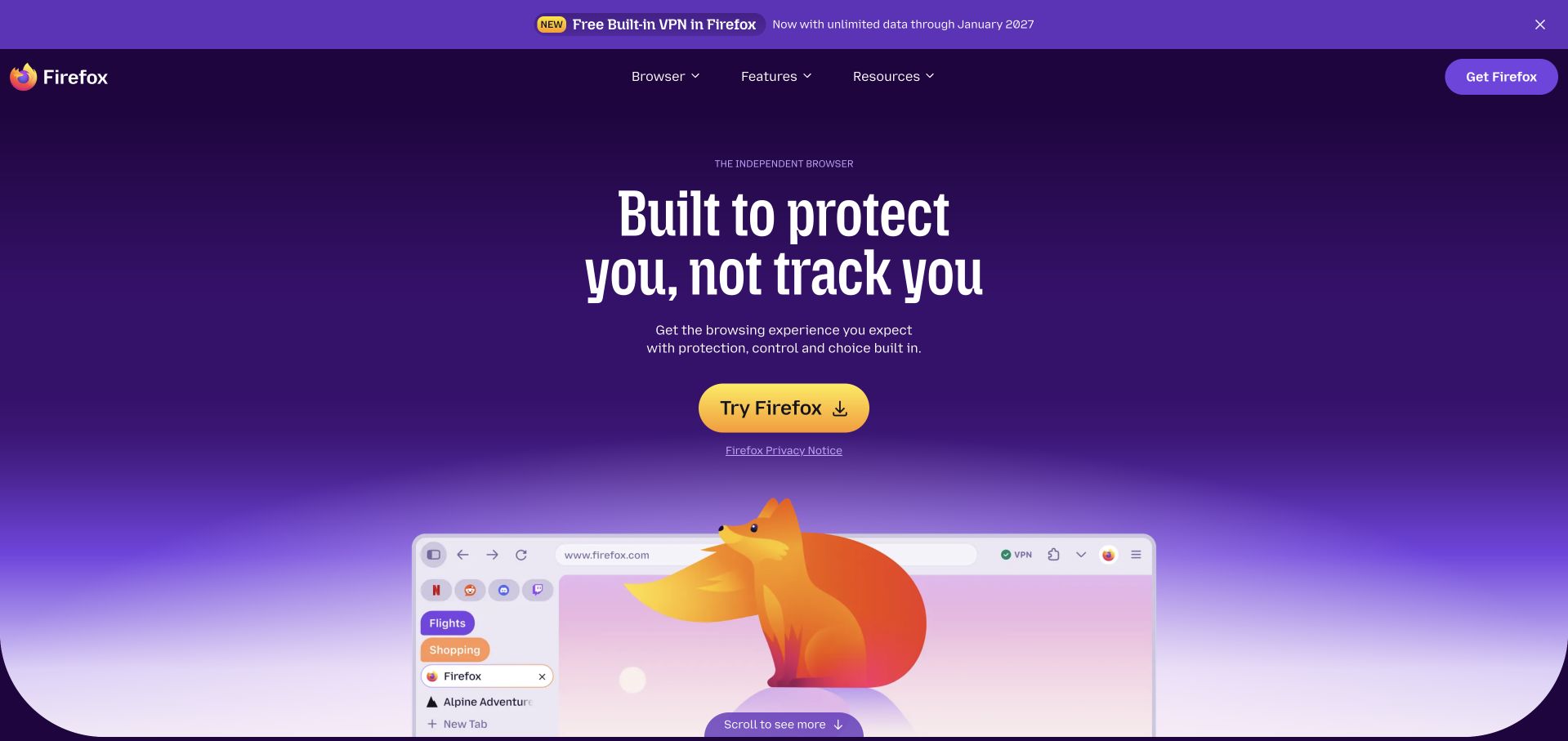
Firefox.com uses a purple hero, a brief privacy-focused proposition, and a conspicuous download route above a browser illustration. Navigation stays compact while deeper sections explain protection, focus, choice, and independence. The implementation partner explicitly documents Django and Wagtail for this publishing property, including a phased mix of CMS-driven and legacy static pages. That qualification matters: the evidence does not say the Firefox browser itself is a Django application.
What you can learn
Plan content and platform variation together. A Django publishing model may need language, operating-system, and release-specific rules, but editors still require components that make the intended audience and fallback behavior understandable before a page is published.
Pros
The distinct download action keeps the central task recognizable within the strong product identity and compact navigation.
Nearby privacy information gives readers a way to inspect the proposition beyond the promotional headline itself.
Cons & considerations
A single browser visit cannot verify platform-aware downloads or the behavior of every localized page and fallback.
Phased migration needs consistent components so neighboring legacy and CMS-driven pages do not contradict one another.
Platform source: Official property-level publishing implementation. The implementation partner explicitly lists Django and Wagtail for Firefox.com, describing a phased combination of CMS-driven and legacy static pages. Wagtail is built on Django; this association concerns the documented publishing layer, not every visible frontend component, linked service, or private organizational system. Platform evidence is separate from the direct website screenshot and is not a complete current infrastructure audit.
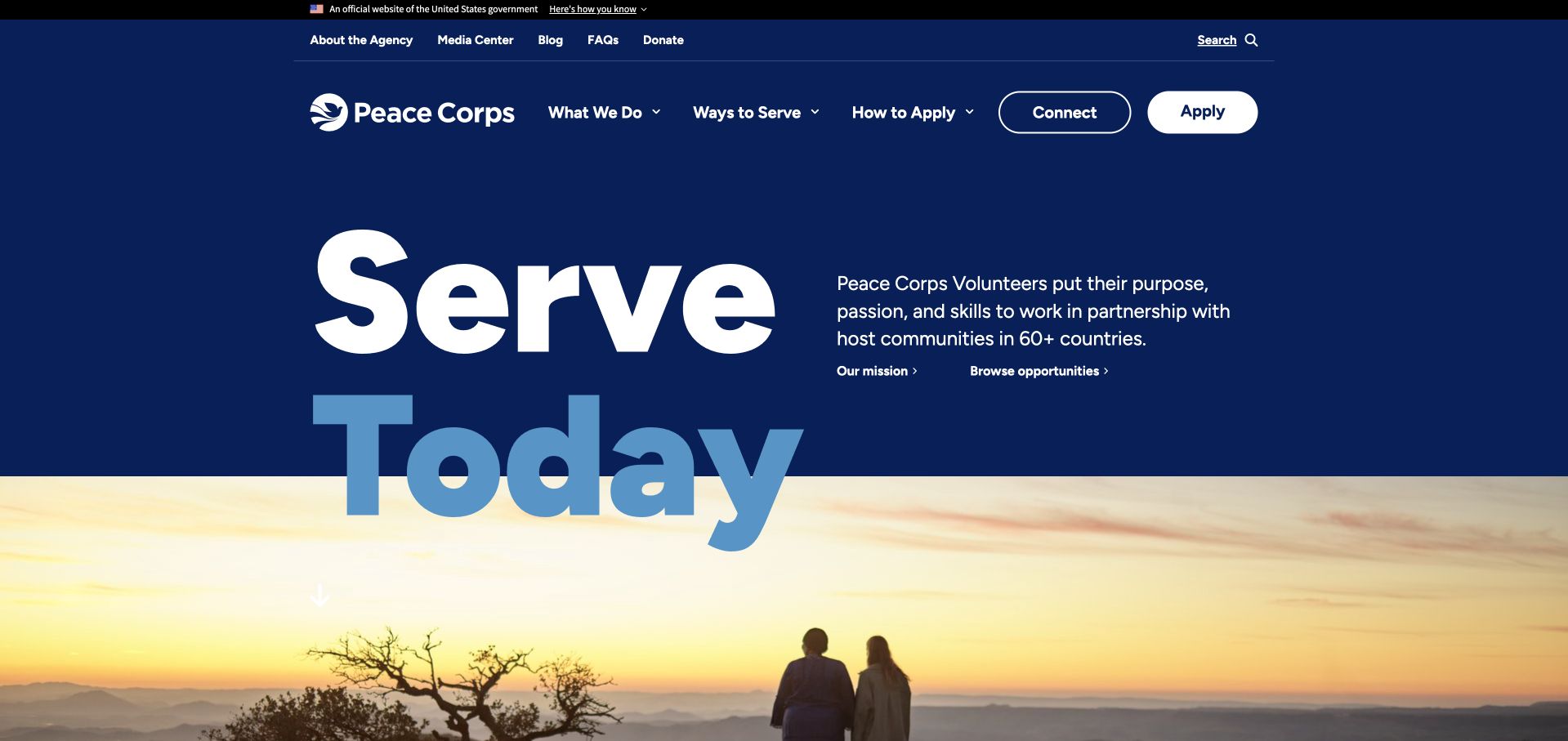
Peace Corps pairs a very large service-oriented headline with a concise explanation of volunteering and a photographic human context. The header separates what the organization does, ways to serve, and the application process, while opportunities and mission routes sit in the opening. The Django connection is Wagtail’s documented publishing layer for the agency website. It does not establish the implementation or authorization model of private applicant records or every downstream application system.
What you can learn
Separate inspiration, eligibility information, and a formal application workflow in the content model. A Django-backed public site should make those stages easy to understand without allowing a marketing component to imply that the visitor has completed or qualified for a later step.
Pros
Opportunity browsing sits beside the mission explanation, connecting inspiration with an identifiable and practical next task.
Navigation distinguishes initial exploration from the application process, supporting people at several stages of considering service.
Cons & considerations
The photographic opening still needs practical context so evaluating a commitment does not depend entirely on aspirational language.
Applicant privacy and eligibility workflows require separate authorization and testing; a public homepage review cannot verify them.
Visible tech stack
Earlier / documented evidence
Django
Wagtail
Platform source: Official property-level publishing implementation. The official Wagtail showcase or case study names Peace Corps as a Wagtail public publishing property. Wagtail is built on Django; this association concerns the documented publishing layer, not every visible frontend component, linked service, or private organizational system. Platform evidence is separate from the direct website screenshot and is not a complete current infrastructure audit.
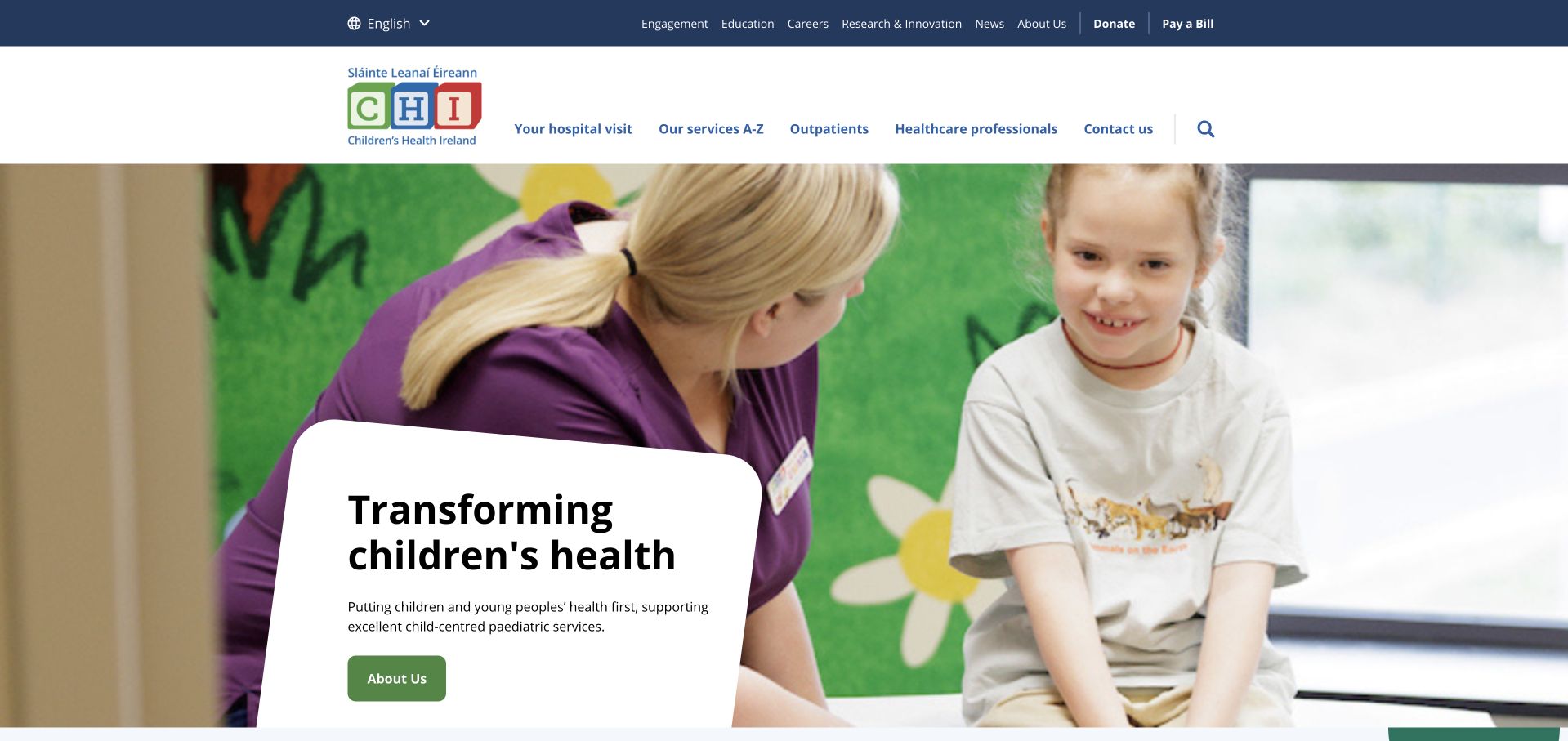
Children’s Health Ireland combines a family-oriented image and institutional introduction with navigation for visits, services, outpatients, healthcare professionals, and contact information. A second navigation layer accommodates research, education, careers, and organizational material. The official Wagtail showcase connects this consolidated public website to Django through its CMS. The association does not extend to clinical systems, billing records, or the different organizations behind externally linked services and donation destinations.
What you can learn
A Django CMS consolidation should preserve the distinction between a hospital location, a service, and the audience for a page. Build reusable records and redirects around those concepts so a common visual identity does not erase essential practical context.
Pros
Patient and family tasks lead the navigation rather than every institutional department competing equally for initial attention.
A separate professional and organizational layer helps preserve the prominence of recurring public-service information and practical tasks.
Cons & considerations
Two navigation layers need keyboard and narrow-screen testing, particularly when long menus or search interfaces are opened.
Location, appointment, and service records need individual owners and review dates; a unified identity cannot establish consistency.
Platform source: Official property-level publishing implementation. The official Wagtail showcase or case study names Children’s Health Ireland as a Wagtail public publishing property. Wagtail is built on Django; this association concerns the documented publishing layer, not every visible frontend component, linked service, or private organizational system. Platform evidence is separate from the direct website screenshot and is not a complete current infrastructure audit.
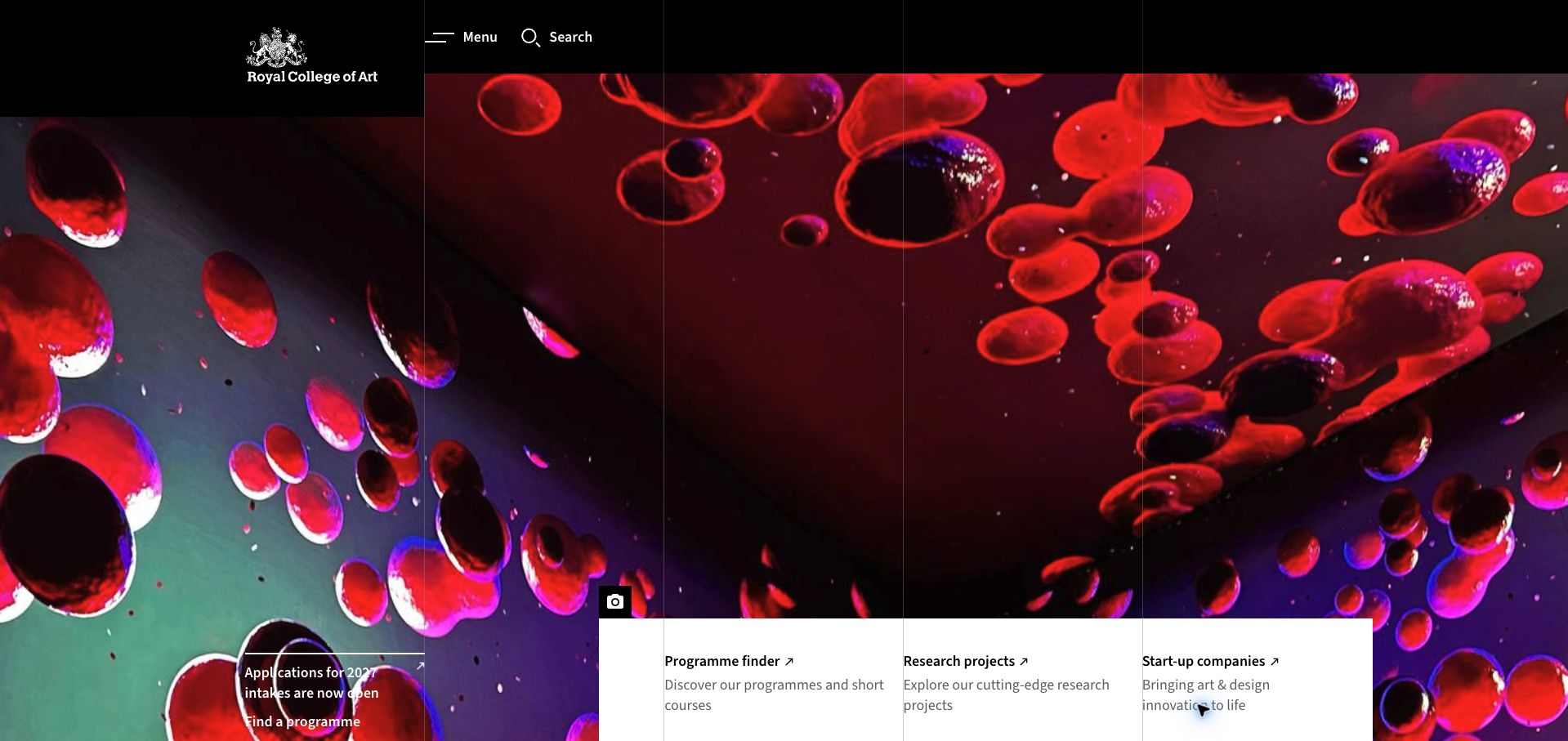
The Royal College of Art gives the opening to striking creative imagery, while a minimal dark header keeps menu and search controls visible. A panel at the bottom of the hero separates programme finding, research projects, and start-up activity. The work itself supplies the visual identity rather than a generic campus photograph. Wagtail’s official showcase documents this site’s Django-based CMS association; the evidence concerns public publishing, not all academic administration or student systems.
What you can learn
Separate programmes, research projects, events, and creative works as related content types. A Django CMS should let an editor feature work prominently while keeping applicant tasks and structured institutional records available without reproducing the same information across unrelated pages.
Pros
Creative imagery communicates the institution’s subject more specifically than an abstract assertion of academic excellence or quality.
Programme, research, and enterprise routes recognize different audiences without forcing everyone through one general institutional narrative.
Cons & considerations
A full-screen visual needs clear labels so practical applicant information remains apparent without extensive exploration or guessing.
Artwork still needs attribution and accessible descriptions; strong imagery does not remove basic publishing and maintenance responsibilities.
Visible tech stack
Earlier / documented evidence
Django
Wagtail
Platform source: Official property-level publishing implementation. The official Wagtail showcase or case study names Royal College of Art as a Wagtail public publishing property. Wagtail is built on Django; this association concerns the documented publishing layer, not every visible frontend component, linked service, or private organizational system. Platform evidence is separate from the direct website screenshot and is not a complete current infrastructure audit.
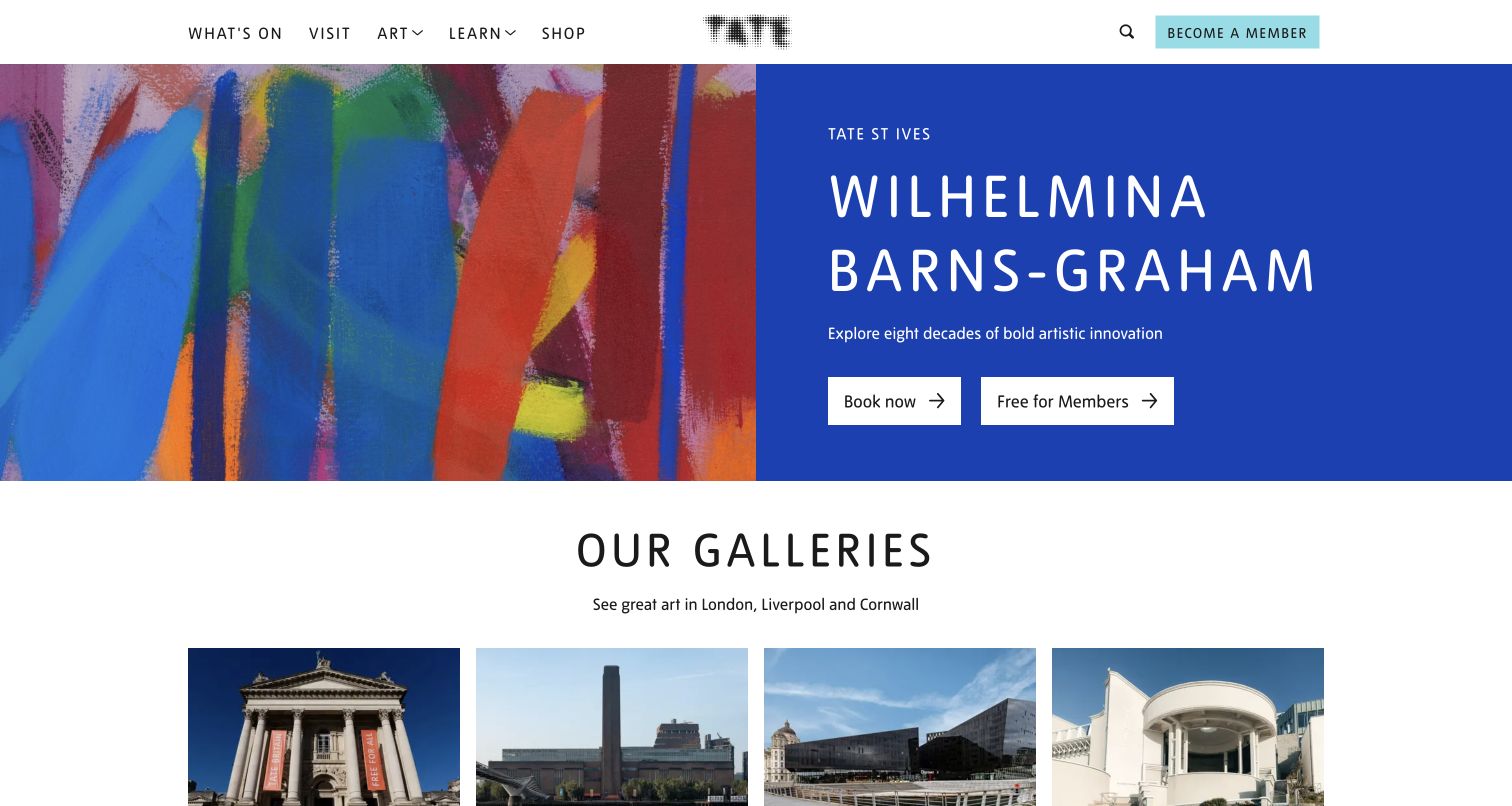
Tate pairs exhibition artwork with an adjacent information panel and distinct booking routes, then introduces its galleries below. The header separates what is on, visits, art, learning, and shopping, with membership given a recognizable place. The page treats cultural content and practical participation as connected but different tasks. The documented Django relationship is Wagtail’s CMS association for Tate’s public website, not an inference about ticketing, retail, or every internal museum system.
What you can learn
A Django museum content model should connect exhibitions, locations, dates, tickets, and editorial material without collapsing them into one promotional page. Preserve those relationships when a featured exhibition closes so useful artwork and historical programme information remain discoverable.
Pros
Practical actions sit beside exhibition artwork, connecting cultural interest with booking information and a concrete next step.
The gallery section makes the multi-location organization explicit instead of assuming an exhibition name identifies its venue.
Cons & considerations
One featured exhibition can overshadow other programmes unless location and date-based discovery remain prominent and dependable.
External booking and retail journeys have separate accounts and behavior; this CMS review does not verify their transactions.
Platform source: Official property-level publishing implementation. The official Wagtail showcase or case study names Tate as a Wagtail public publishing property. Wagtail is built on Django; this association concerns the documented publishing layer, not every visible frontend component, linked service, or private organizational system. Platform evidence is separate from the direct website screenshot and is not a complete current infrastructure audit.
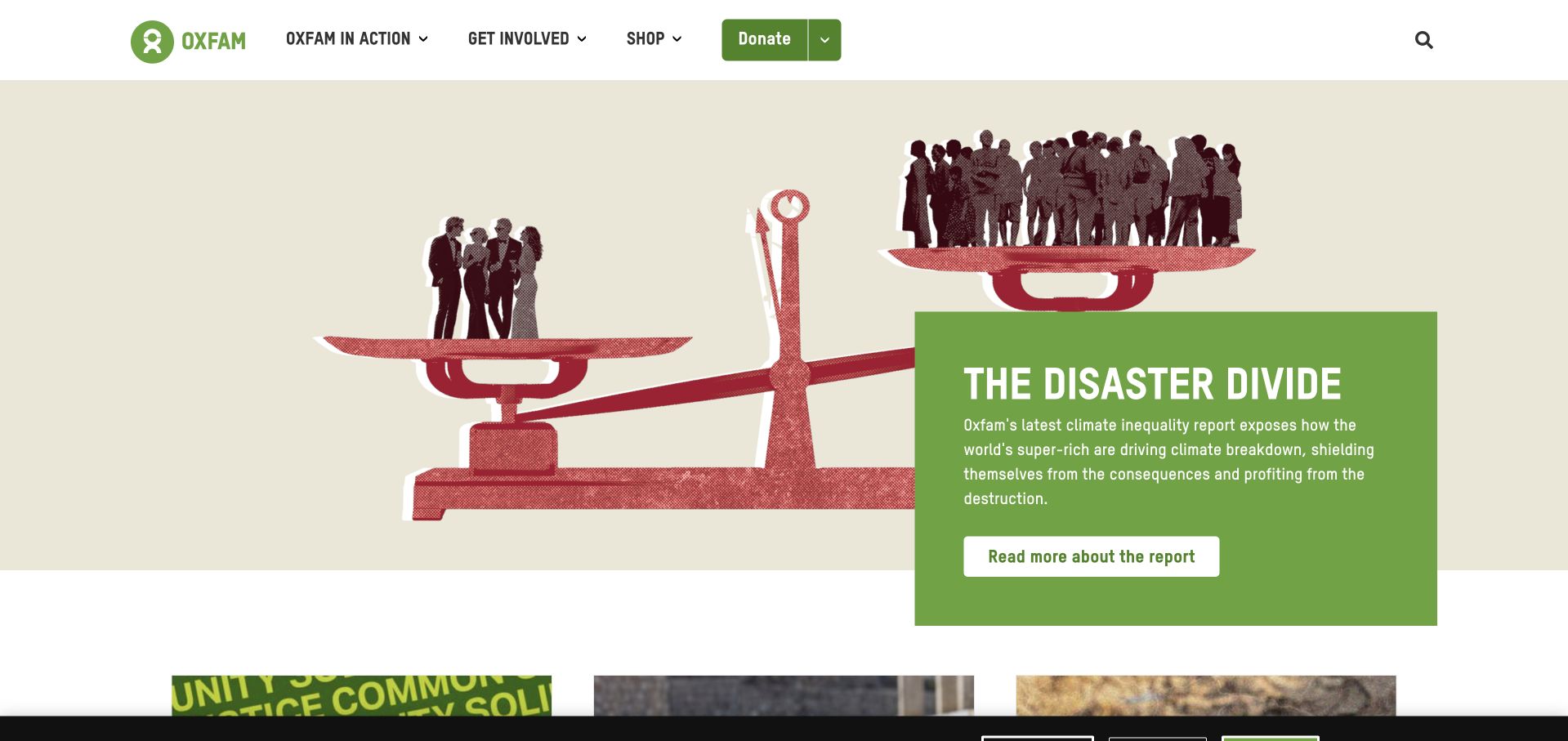
Oxfam GB places a current report in a large illustrated feature, with a compact reading panel and direct source route. The main navigation distinguishes the organization’s work, participation, shopping, and donations rather than presenting them as one undifferentiated appeal. Supporting cards continue below the feature. Wagtail documents the public Oxfam publishing association, which supplies the Django link here; it does not attribute every national Oxfam organization or third-party donation and retail system.
What you can learn
Model campaigns, reports, emergency appeals, and donation journeys separately in a Django CMS. Shared components can support a consistent identity, but their owners need different expiry, attribution, approval, and linking rules to prevent old urgent material from becoming misleading.
Pros
A report-reading action lets visitors inspect supporting material before deciding whether to take another campaign or donation step.
Distinct participation and shopping routes acknowledge different forms of engagement rather than prescribing one universal financial action.
Cons & considerations
A prominent campaign still needs dependable neighboring routes to everyday information outside the current featured editorial priority.
Appeals require date and ownership context; reusable templates cannot establish that urgent needs or campaign claims remain current.
Platform source: Official property-level publishing implementation. The official Wagtail showcase or case study names Oxfam Great Britain as a Wagtail public publishing property. Wagtail is built on Django; this association concerns the documented publishing layer, not every visible frontend component, linked service, or private organizational system. Platform evidence is separate from the direct website screenshot and is not a complete current infrastructure audit.
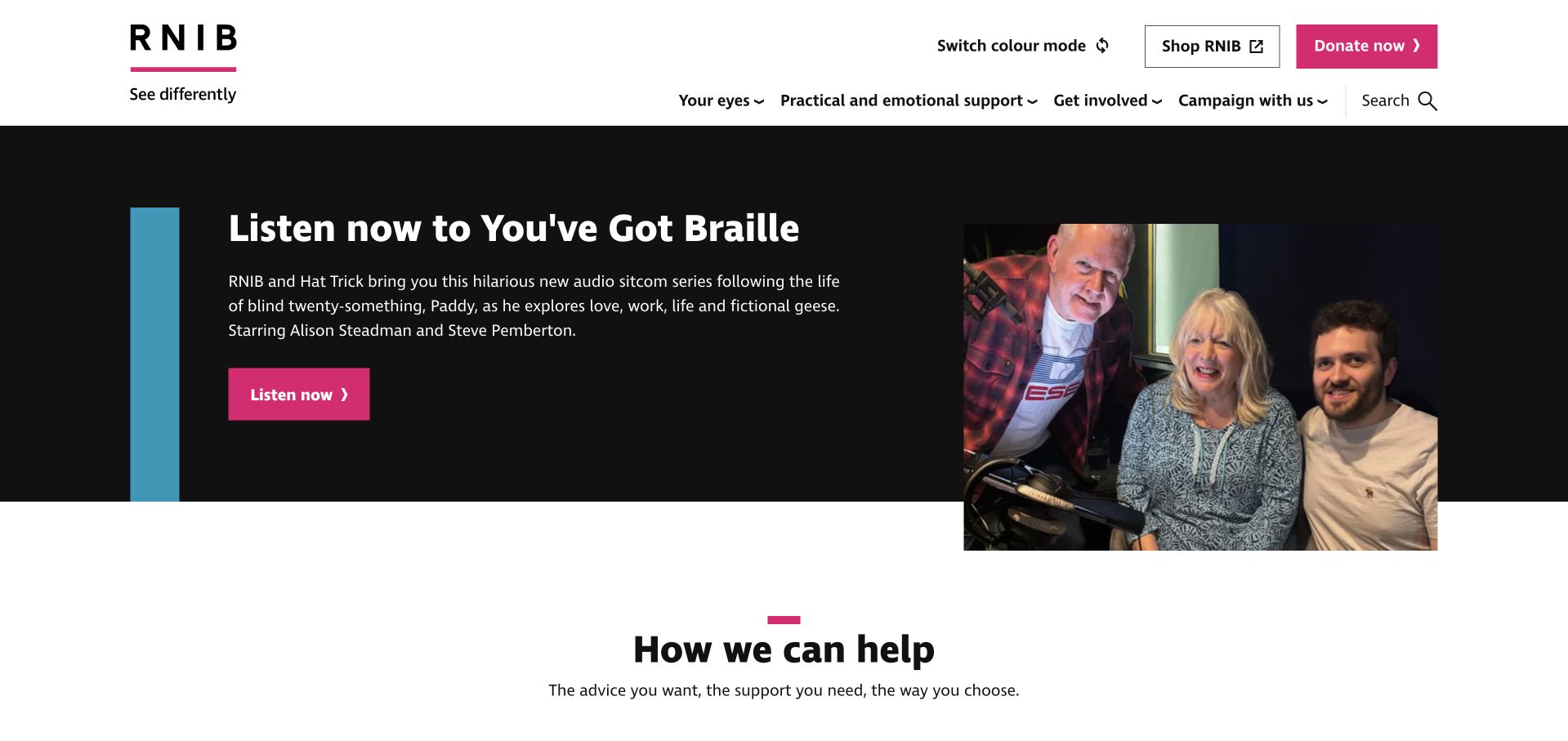
RNIB’s homepage combines a strongly contrasted feature for an audio production with direct routes to eye-related information, practical and emotional support, involvement, and campaigns. A visible colour-mode control and separate shop and donation routes are part of the header. The opening is followed by a help-oriented section. The Django association is the documented Wagtail publishing property; public appearance does not verify every accessibility behavior, private support record, or linked commercial service.
What you can learn
Give accessibility and support-content maintenance a place in the Django publishing model. Editors need components with understandable constraints, meaningful headings, and clear alternative media, while technical testing must evaluate the actual output rather than relying on institutional reputation or visual controls.
Pros
Practical and emotional support has a named destination beside campaigns, fundraising, and other institutional communication routes.
The audio feature broadens the community portrayal while practical help remains available through recognizable nearby navigation choices.
Cons & considerations
A colour-mode control does not establish comprehensive accessibility; representative keyboard, assistive-technology, media, and reading tests remain necessary.
Cultural promotion needs balanced hierarchy so someone seeking everyday support can find it without interpreting the featured campaign.
Platform source: Official property-level publishing implementation. The official Wagtail showcase or case study names Royal National Institute of Blind People as a Wagtail public publishing property. Wagtail is built on Django; this association concerns the documented publishing layer, not every visible frontend component, linked service, or private organizational system. Platform evidence is separate from the direct website screenshot and is not a complete current infrastructure audit.
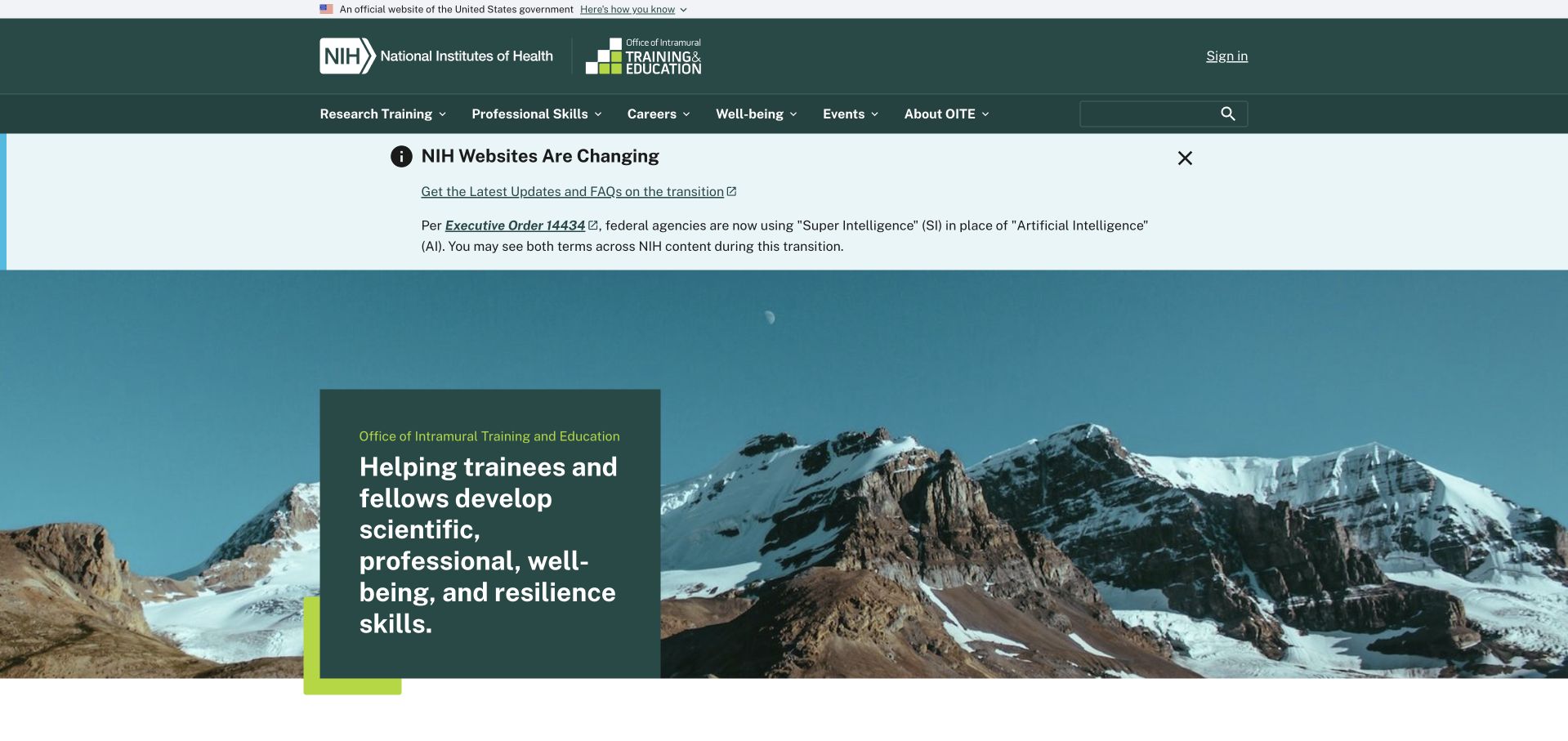
OITE’s public site combines an institutional identity with navigation for research training, professional skills, careers, well-being, and events. A wide photographic feature introduces the office’s purpose, while a prominent site-transition notice sits separately above it. Sign-in is a distinct utility route rather than the main homepage task. Wagtail’s showcase identifies the Django-backed publishing association for this training property, not all NIH websites, research systems, or private trainee information.
What you can learn
Use a Django content model that distinguishes programmes, events, resources, and audience stages. Important institutional notices should have explicit placement and expiry rules, rather than being inserted into whichever promotional component happens to be available during a transition.
Pros
Professional-development categories help trainees approach the resources without first learning the office’s internal departmental or administrative structure.
The transition notice is separate from the introduction, distinguishing temporary operational communication from the site’s lasting purpose.
Cons & considerations
A large notice and hero delay detailed resources, so search and task navigation must remain easy to reach.
Restricted resources and account workflows need separate access and privacy review; the public CMS evidence does not verify them.
Visible tech stack
Earlier / documented evidence
Django
Wagtail
Platform source: Official property-level publishing implementation. The official Wagtail showcase or case study names NIH Office of Intramural Training & Education as a Wagtail public publishing property. Wagtail is built on Django; this association concerns the documented publishing layer, not every visible frontend component, linked service, or private organizational system. Platform evidence is separate from the direct website screenshot and is not a complete current infrastructure audit.
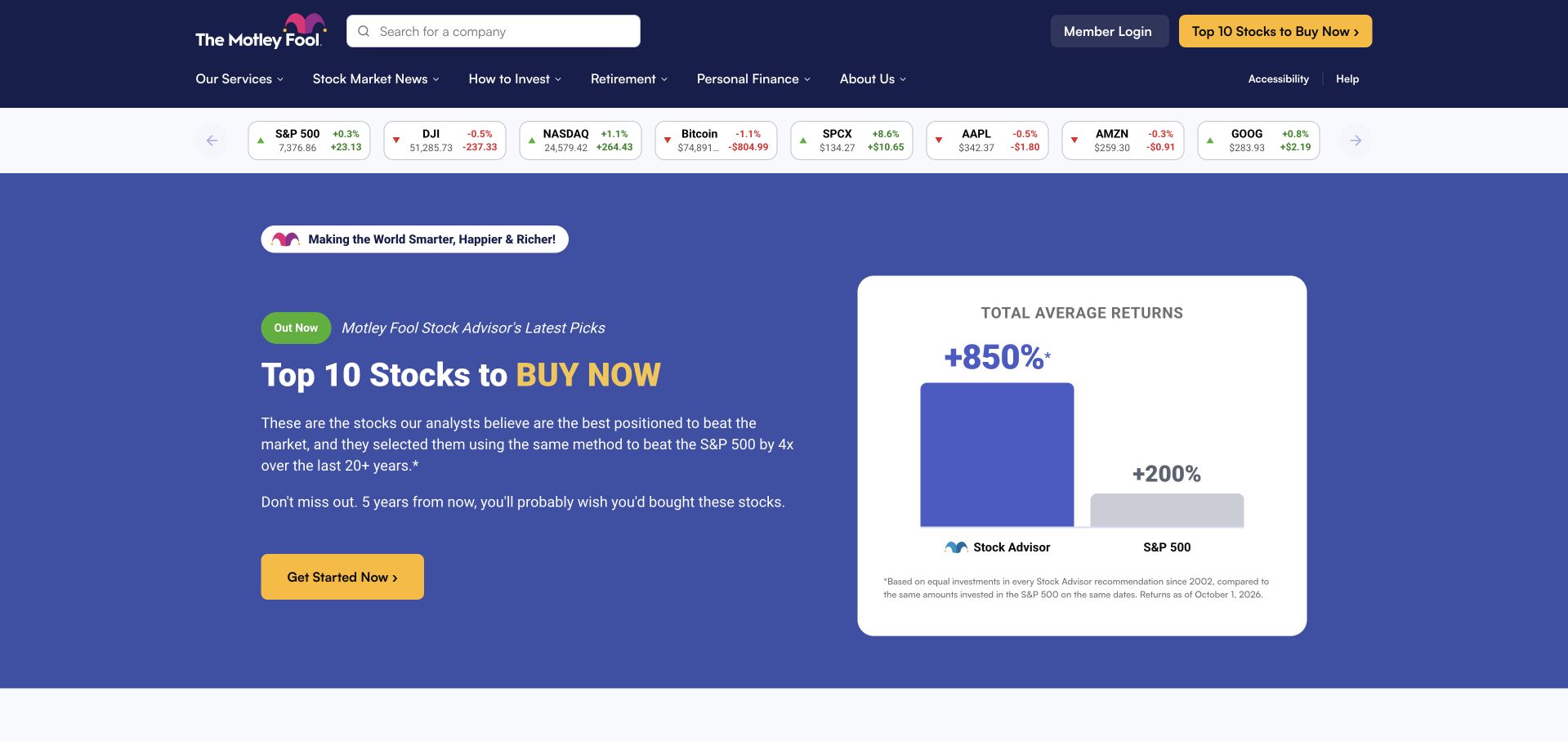
The Motley Fool’s homepage combines company search, a market ticker, a broad editorial menu, and a prominent paid-service proposition. The blue feature area contrasts its main action with a supporting chart illustration, while member login remains in the header. This collection includes the documented Wagtail publishing layer and its Django relationship, not a claim about every current frontend component, subscription service, brokerage connection, or private financial system.
What you can learn
A Django publishing architecture should distinguish editorial articles, instrument pages, subscription promotions, and member-only experiences. Preserve source, date, and commercial context in the content model so a reusable component does not blur the boundary between information and a product offer.
Pros
Company search and subject navigation support readers arriving with either a particular instrument or a broader investing question.
Membership has a recognizable commercial treatment, distinguishing product evaluation from general reading and subject-based information discovery routes.
Cons & considerations
The ticker and promotional chart create a busy opening; disclosures and context must remain readable beside stronger visual claims.
This review does not assess financial advice, investment suitability, future performance, or the quality of paid research offerings.
Visible tech stack
Earlier / documented evidence
Django
Wagtail
Platform source: Official property-level publishing implementation. The official Wagtail showcase or case study names The Motley Fool as a Wagtail public publishing property. Wagtail is built on Django; this association concerns the documented publishing layer, not every visible frontend component, linked service, or private organizational system. Platform evidence is separate from the direct website screenshot and is not a complete current infrastructure audit.
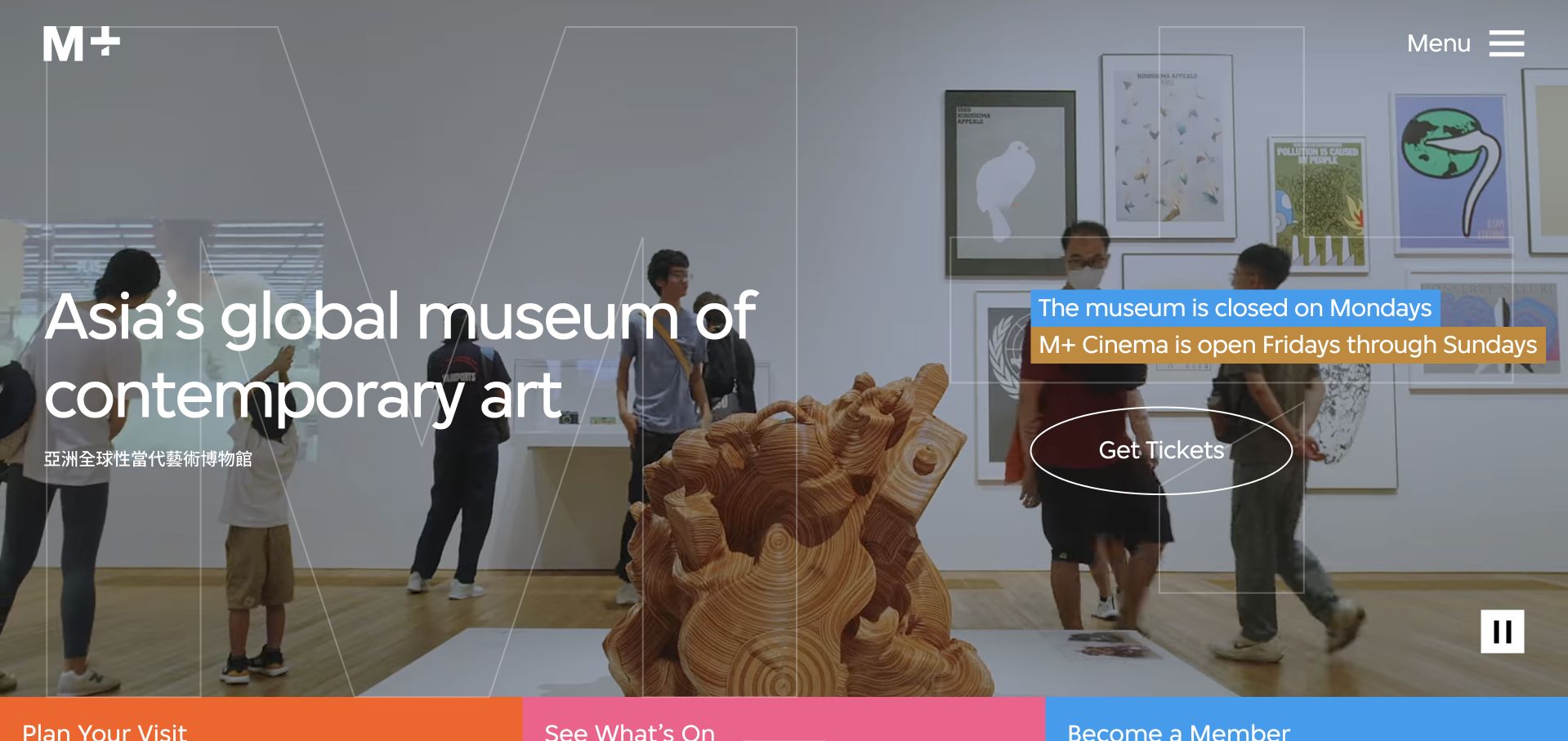
M+ uses a large visual opening and concise museum introduction, with practical routes for tickets, visits, current programmes, and membership. A compact menu leaves space for imagery while later sections separate exhibitions, events, and magazine material. Its official case study describes a headless Wagtail architecture with multilingual content and integrations. Django therefore belongs to the documented content backend, not a claim that the visible frontend or every connected museum service is implemented in Django.
What you can learn
Plan multilingual records and integration boundaries before making flexible page blocks. A Django CMS can supply several frontends, but translations, ticket references, collection identifiers, preview states, and expired programme dates need defined ownership and validation rules of their own.
Pros
Visit routes accompany the visual presentation, keeping practical tasks available within an expressive and editorially rich museum identity.
Separate exhibitions, events, and magazine sections recognize different visitor intentions instead of making all content one interchangeable feed.
Cons & considerations
Announcements and consent notices can obscure the opening, making usable dismissal controls and a meaningful underlying frame essential.
Headless publishing and connected ticketing introduce failure boundaries that a homepage or architecture description cannot fully verify.
Platform source: Official property-level publishing implementation. The official Wagtail case study names the M+ website and documents its headless Wagtail content backend. Wagtail is built on Django; this association concerns the documented publishing layer, not every visible frontend component, linked service, or private organizational system. Platform evidence is separate from the direct website screenshot and is not a complete current infrastructure audit.
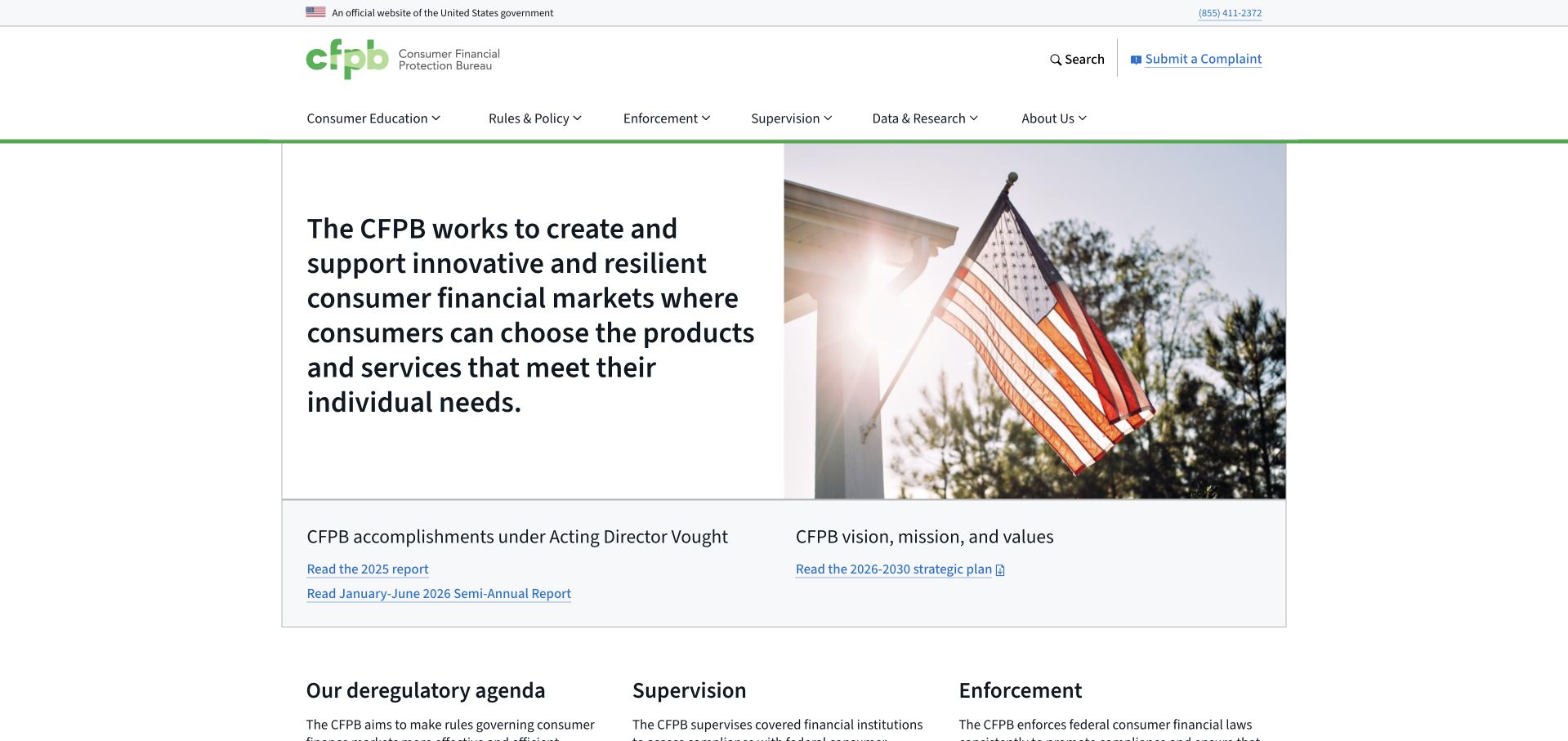
The CFPB homepage uses a restrained institutional header and a large statement of its public remit beside a photograph. Consumer education, rules, enforcement, supervision, and research have distinct navigation routes, while complaint submission is a separate utility action. Supporting links sit directly below the introduction. Wagtail’s official showcase establishes the Django-based public publishing association; it does not reveal private complaint processing, enforcement records, or the technology of every linked agency service.
What you can learn
Treat public guidance, formal rules, research, and transactional services as distinct Django content domains. Their records require different review, effective-date, and ownership rules, even when they share typography, navigation, and a recognizable institutional identity.
Pros
Consumer and professional subjects have distinct navigation routes, helping audiences choose a useful starting point before reading a detailed document.
Complaint submission is visibly distinct from ordinary information browsing, acknowledging a different process and potential private-data requirements.
Cons & considerations
A broad mission statement needs nearby search and concrete tasks for visitors arriving with specific immediate questions.
Public appearance cannot verify complaint-data security or a regulated process; those responsibilities require separate appropriately scoped testing.
Platform source: Official property-level publishing implementation. The official Wagtail showcase or case study names Consumer Financial Protection Bureau as a Wagtail public publishing property. Wagtail is built on Django; this association concerns the documented publishing layer, not every visible frontend component, linked service, or private organizational system. Platform evidence is separate from the direct website screenshot and is not a complete current infrastructure audit.
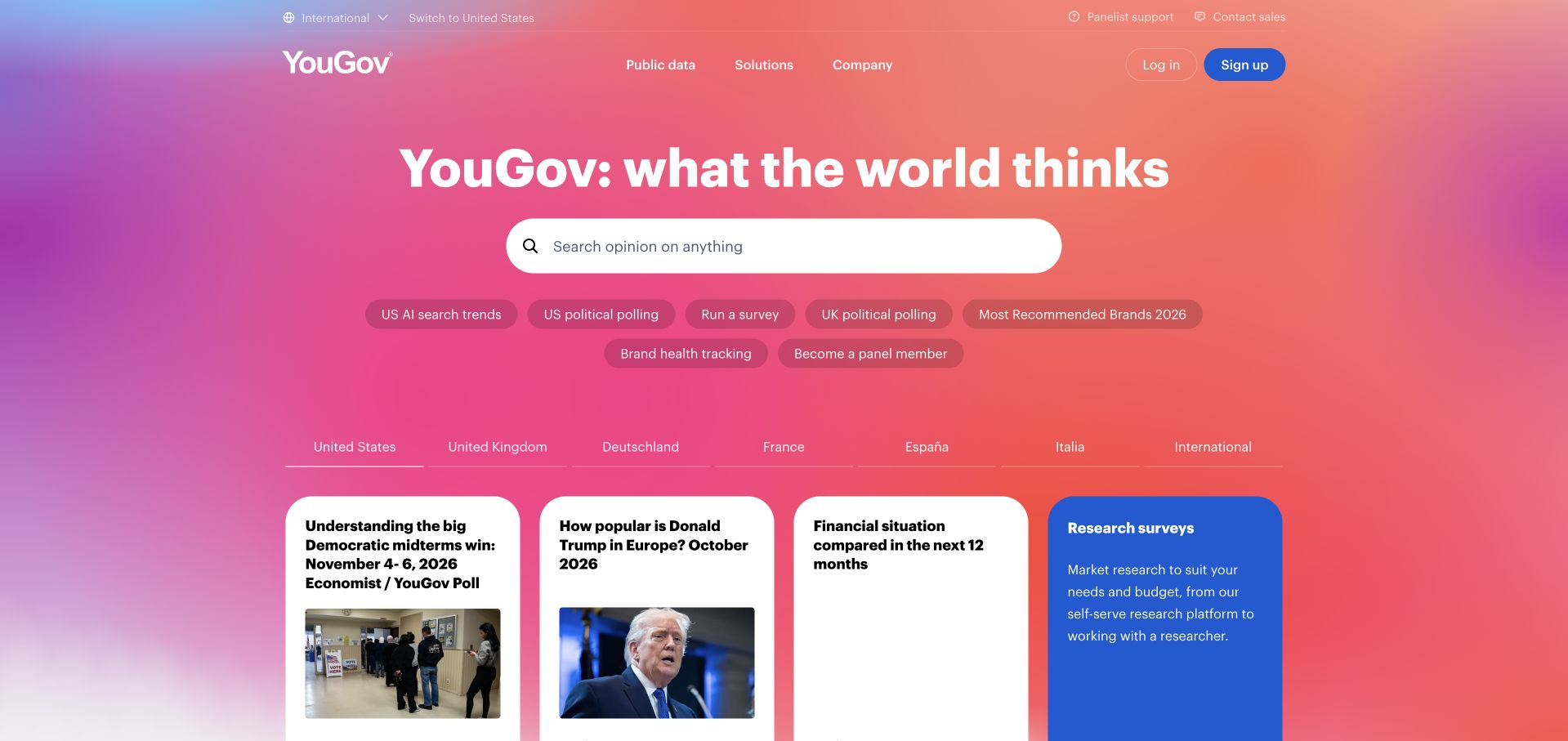
YouGov centers a large search field inside a bright gradient opening, with suggested topics and country destinations nearby. Editorial cards appear below, while research commissioning and panel membership remain identifiable actions rather than being confused with reading public findings. Navigation separates public data, solutions, and the organization. The official Wagtail case study describes a headless content consolidation; Django is associated with that publishing backend, not all research operations or every private data product.
What you can learn
Separate public articles, research products, geographic editions, and participant accounts in a Django content architecture. Consistent identifiers and locale rules matter when content moves across several public properties, while each audience still needs an understandable route through the interface.
Pros
Search and suggested topics provide direct discovery without requiring prior knowledge of the research publisher’s taxonomy or products.
Country, membership, and commissioning routes recognize different audiences while leaving public findings available without a sales or registration journey.
Cons & considerations
The cookie dialog can obscure discovery, so optional choices need clear controls and a predictable return to content.
Brand familiarity cannot explain sampling or methodology; individual findings and services still need their own qualifications and context.
Platform source: Official property-level publishing implementation. The official Wagtail showcase or case study names YouGov as a Wagtail public publishing property. Wagtail is built on Django; this association concerns the documented publishing layer, not every visible frontend component, linked service, or private organizational system. Platform evidence is separate from the direct website screenshot and is not a complete current infrastructure audit.
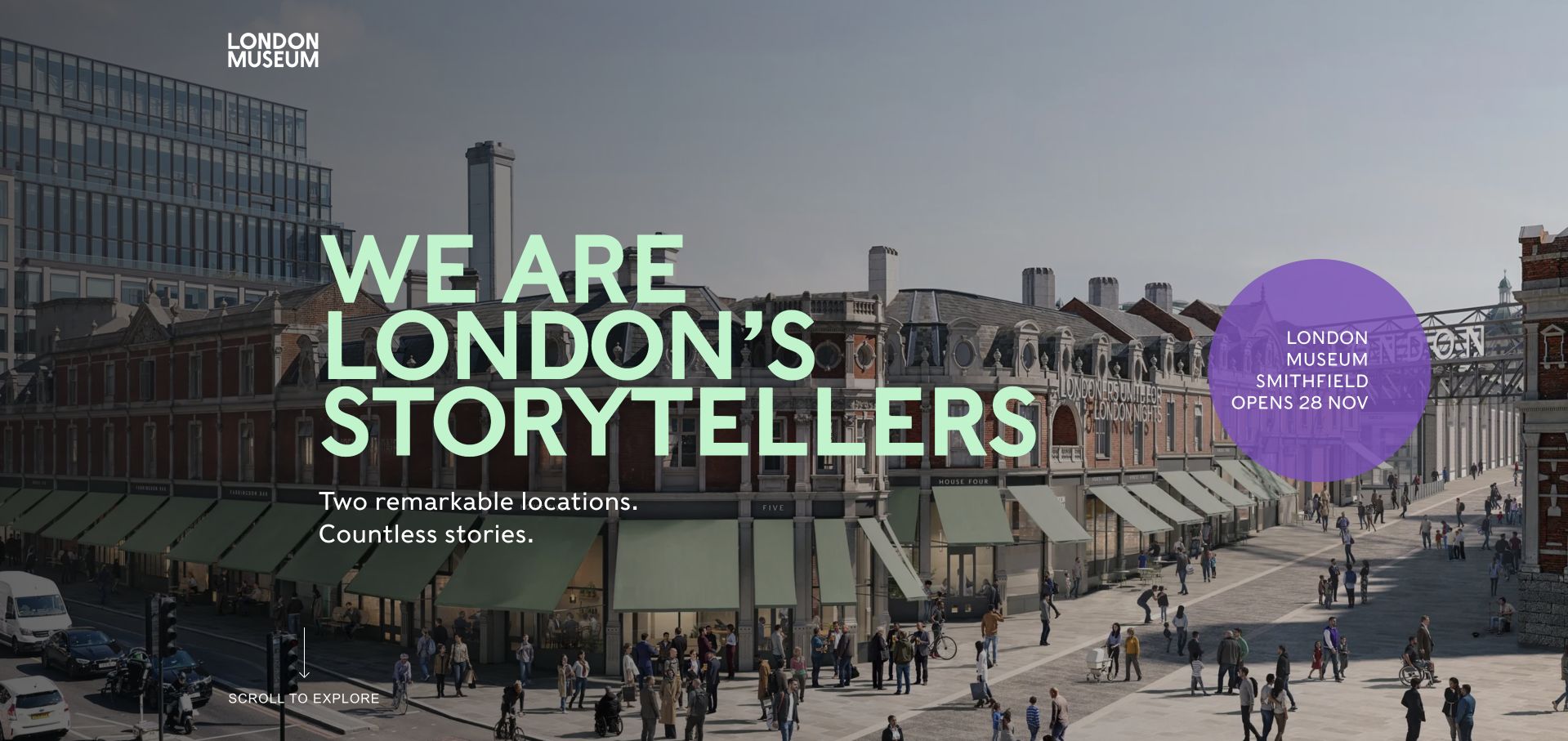
London Museum gives its opening to a large place-based image and an assertive statement about storytelling. A visible new-site opening message sits above navigation for visits, programmes, objects and stories, schools, and support. The page connects an evolving institution to recognizable public tasks. Its Wagtail association documents a Django-backed publishing implementation, not an attribution of every shop, account, admission, or collections system linked from the museum’s public website.
What you can learn
A Django museum site needs explicit location and lifecycle fields, especially during a major move or opening. Keep venue information, programme dates, booking links, and editorial stories connected without allowing a temporary launch campaign to overwrite permanent practical guidance.
Pros
The opening date distinguishes a forthcoming location from an available visit without depending solely on a separate news article.
Objects and stories have a named destination, supporting remote readers alongside prospective visitors planning an in-person museum experience.
Cons & considerations
Typography over imagery needs reliable contrast and responsive placement so dates and practical details remain readable on smaller screens.
Opening campaigns need structured venue, admission, and programme records; repeatedly copying practical details creates avoidable maintenance and consistency risks.
Platform source: Official property-level publishing implementation. The official Wagtail showcase or case study names London Museum as a Wagtail public publishing property. Wagtail is built on Django; this association concerns the documented publishing layer, not every visible frontend component, linked service, or private organizational system. Platform evidence is separate from the direct website screenshot and is not a complete current infrastructure audit.
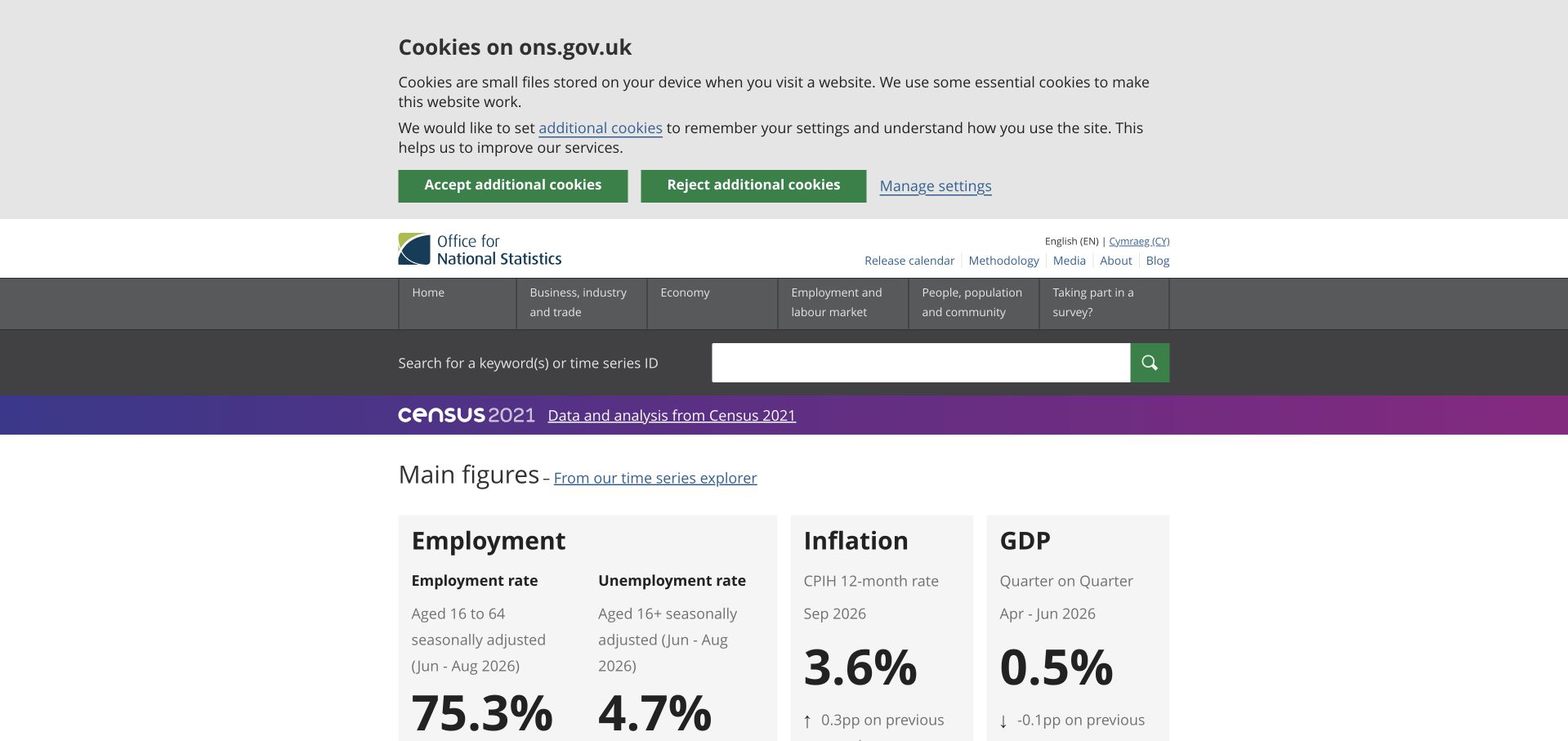
The ONS homepage combines an institutional header, search, subject navigation, and a set of headline statistical indicators. Release-calendar and methodology links acknowledge that users may need publication timing and interpretation as much as a current number. The official Wagtail showcase documents the site’s Django-based publishing association, with the organization’s own platform-transition material providing further context. This is not evidence that every statistical service or internal data pipeline uses the same application architecture.
What you can learn
In a Django data publication, model releases, datasets, statistical concepts, and revisions separately. A headline card should connect to the exact source series and publication context, while an update changes the relevant record without silently erasing the history behind it.
Pros
Headline indicators answer common questions while retaining routes toward the publication context and source material behind each figure.
Prominent methodology and release-calendar routes recognize that timing and collection methods are essential parts of understanding statistical information.
Cons & considerations
Numbers need units, period, revisions, and source links; prominent cards do not establish that readers understand those qualifications.
The taxonomy and cookie banner crowd the opening, making keyboard, reading-order, and enlarged-text testing important with realistic content.
Visible tech stack
Earlier / documented evidence
Django
Wagtail
Platform source: Official property-level publishing implementation. The official Wagtail showcase or case study names Office for National Statistics as a Wagtail public publishing property. Wagtail is built on Django; this association concerns the documented publishing layer, not every visible frontend component, linked service, or private organizational system. Platform evidence is separate from the direct website screenshot and is not a complete current infrastructure audit.
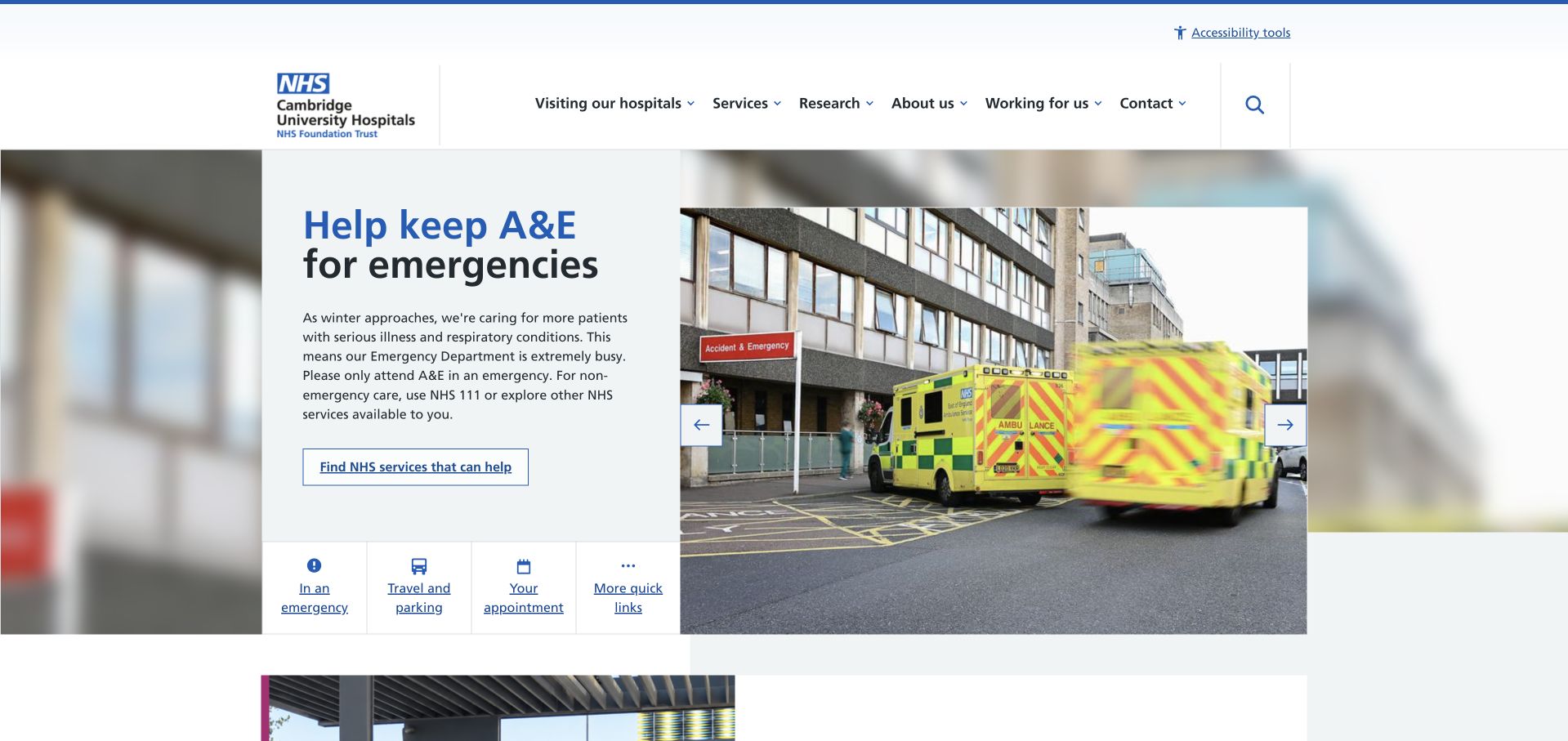
Cambridge University Hospitals pairs a practical current-service message with a hospital image and a row of quick links for visits, travel, appointments, and other recurring tasks. The main navigation separates services, research, organizational information, careers, and contact routes. The documented Wagtail multisite association supplies the Django connection for this public website. It does not identify the implementation of private patient records, appointment systems, or every linked NHS service.
What you can learn
Give operational notices a structured role in a Django CMS. Their priority, audience, dates, and related service links should be maintained separately from ordinary promotional features, with clear ownership so an urgent public message does not linger after circumstances change.
Pros
Quick links expose recurring practical tasks below the main message without requiring exploration of the entire institutional structure first.
A separate text panel provides a predictable reading surface while retaining photographic context for the hospital and its location.
Cons & considerations
A rotating message needs usable controls; people should not wait through unrelated slides to recover an important practical link.
Public guidance and private care are different responsibilities; browsing the homepage does not complete an appointment or clinical task.
Platform source: Official property-level publishing implementation. The official Wagtail showcase or case study names Cambridge University Hospitals as a Wagtail public publishing property. Wagtail is built on Django; this association concerns the documented publishing layer, not every visible frontend component, linked service, or private organizational system. Platform evidence is separate from the direct website screenshot and is not a complete current infrastructure audit.
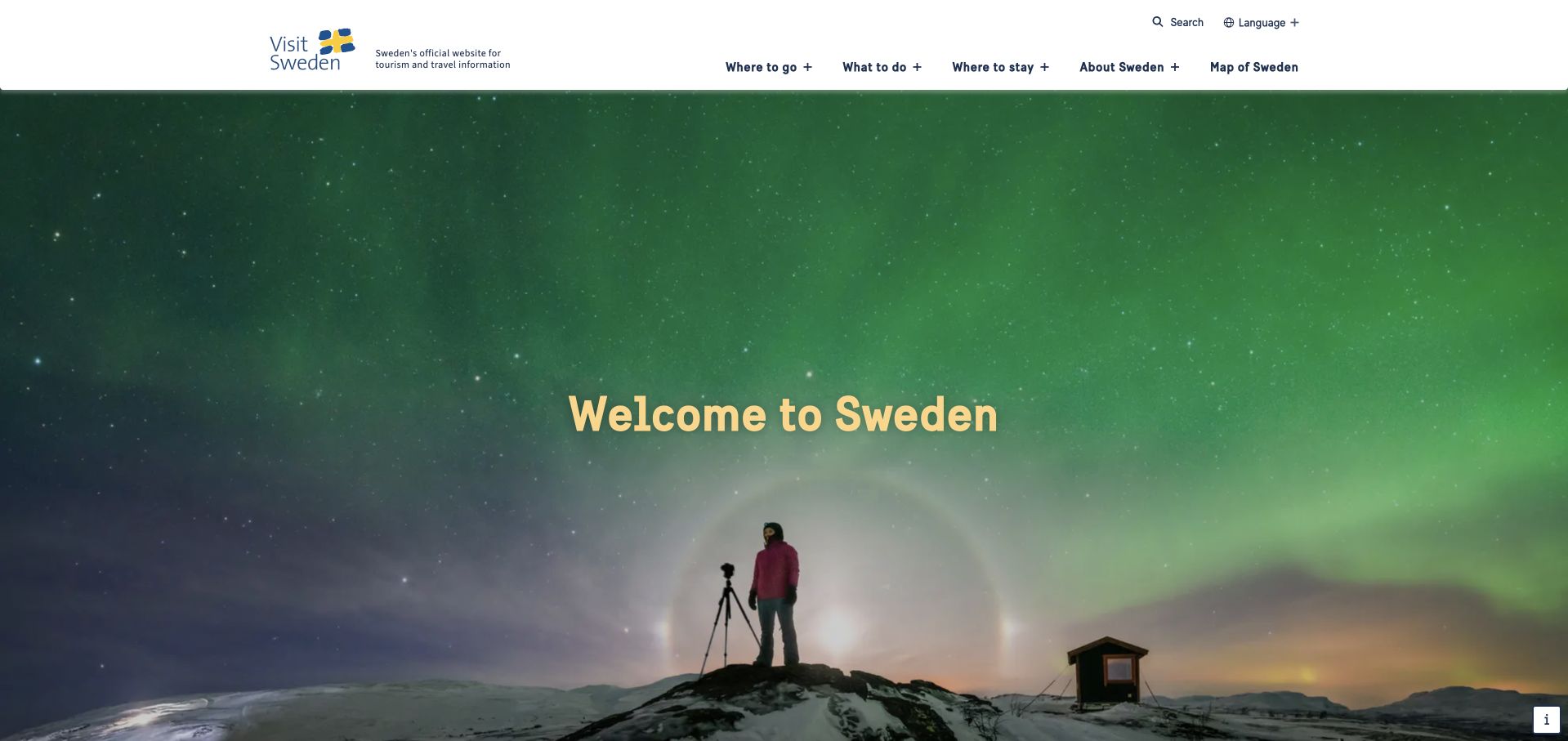
Visit Sweden uses a full-width northern-lights image with a short welcome and a compact institutional header. Navigation distinguishes where to go, things to do, accommodation, and broader country information, while a map offers another way to explore. Image credit remains available rather than disappearing into the visual treatment. The Wagtail showcase documents this tourism publication’s Django-backed CMS relationship, not every destination provider, accommodation booking service, or linked travel operation.
What you can learn
Model regions, destinations, activities, seasons, and editorial stories as related Django content types. An inspiring page should connect to useful planning records without requiring editors to reproduce practical facts separately every time the same destination appears in another story.
Pros
Familiar planning categories balance the scenic opening for visitors arriving with a specific part of a trip to organize.
The image-information control preserves credit and context, making photography part of a content system rather than anonymous decoration.
Cons & considerations
Scenic imagery needs straightforward neighboring routes to practical location, seasonal, access, and accommodation details relevant to a trip.
External providers change independently; an attractive destination page cannot verify current availability, booking conditions, or travel-service quality.
Platform source: Official property-level publishing implementation. The official Wagtail showcase or case study names Visit Sweden as a Wagtail public publishing property. Wagtail is built on Django; this association concerns the documented publishing layer, not every visible frontend component, linked service, or private organizational system. Platform evidence is separate from the direct website screenshot and is not a complete current infrastructure audit.
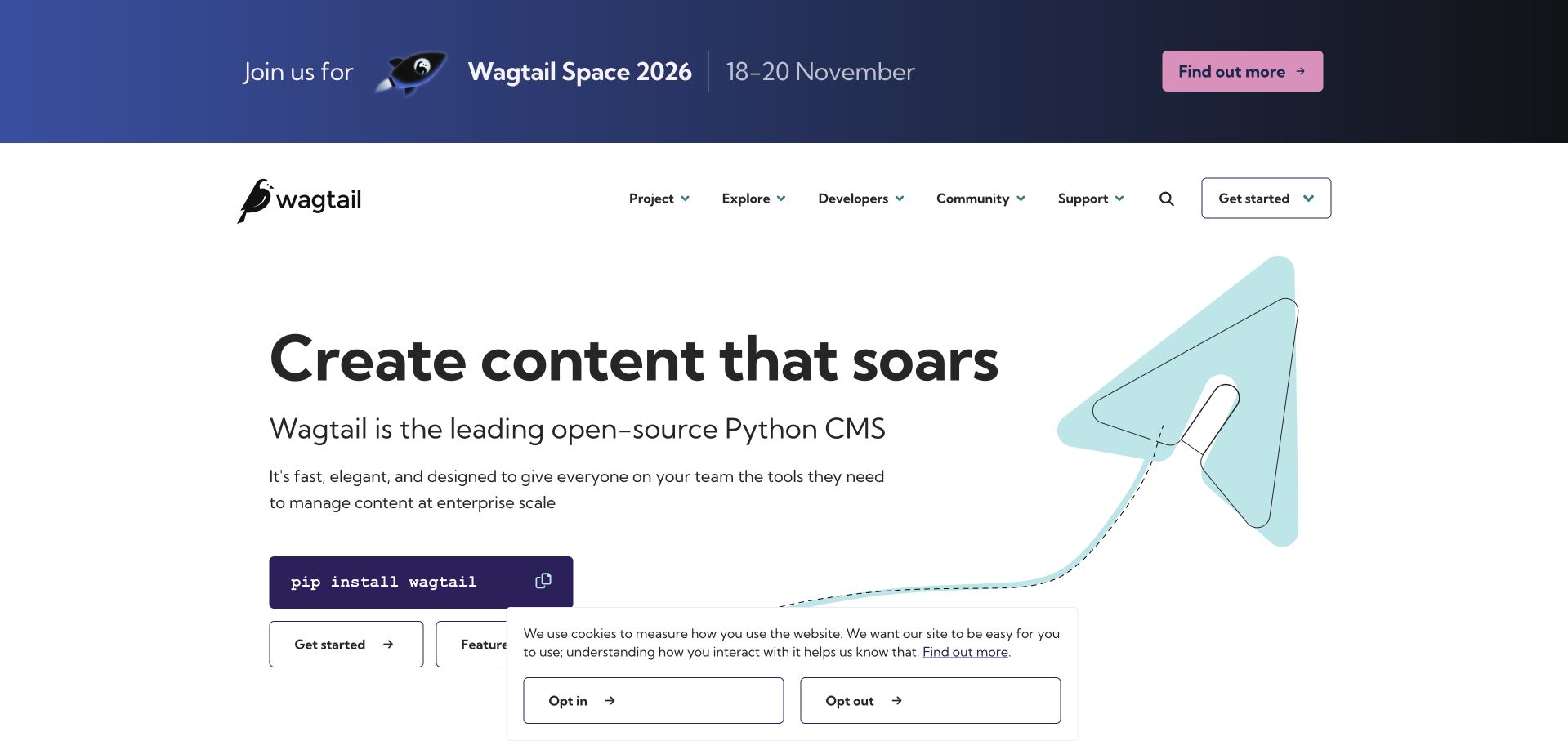
Wagtail’s own website introduces its editorial purpose, gives developers an installation command, and offers separate feature and getting-started routes. Project, showcase, developer, community, and support navigation share a restrained header, while current events and organization examples appear below. The official project organization identifies the marketing-site repository, and Wagtail documents its Django foundation. This is a concrete publishing-property association, not a claim that every linked community or demonstration has the same complete stack.
What you can learn
A Django CMS product site needs to explain authoring and implementation without confusing them. Keep editorial capabilities, technical references, support options, and demonstration environments distinct so a visitor understands what they are evaluating before following a setup command or opening another service.
Pros
The installation command sits beside a plain-language purpose statement, giving developers and editors different but equally useful entry points.
Showcase and documentation routes distinguish evidence of use from the instructions a reader needs to implement a system themselves.
Cons & considerations
Vendor examples document associations, not complete independent audits of customer runtimes, private configuration, accessibility, or operational performance.
Events, releases, and product claims need separate ownership and dates; deployment success is not a universal editorial review.
Platform source: Official property-level publishing implementation. The official Wagtail organization identifies wagtail.org as its marketing website repository. Wagtail is built on Django; this association concerns the documented publishing layer, not every visible frontend component, linked service, or private organizational system. Platform evidence is separate from the direct website screenshot and is not a complete current infrastructure audit.
Kegan has 15+ years of experience working with small businesses, Fortune 500 companies, and everything in between. No development job is too big or too small: he brings the same hands-on attention to a focused improvement, a complete website, or a custom application.
For Django projects, he can help with content architecture, custom functionality, system integrations, testing, and maintainable handover. He works directly with clients on scope, design, implementation, testing, and handover, with an emphasis on clear communication and a system that remains practical to maintain after launch.
Show 3 other Django developersHide other Django developers
Choose the Django publishing architecture around the real editing task
Use a conventional Django and Wagtail publication
A server-rendered content site can keep templates, models, editorial controls, and previews close together. Begin with a small set of meaningful page and record types; do not make every field an unrestricted rich-text block simply to avoid decisions about structure.
Use a headless content backend deliberately
JPL and M+ show documented content-backend separation, not a universal requirement. Define API contracts, preview behavior, content validation, and release ownership before introducing another frontend build and deployment boundary.
Integrate with specialized services through explicit boundaries
Tickets, donations, commerce, accounts, and clinical or research systems may require separate services. Keep stable identifiers and understandable links, verify authorization at the responsible service, and provide useful failure states without implying the CMS controls everything.
From references to requirements
Plan migration, governance, and maintenance before building page templates
Inventory content and relationships
Map important records, their owners, dependencies, and existing addresses. Preserve credits, attachments, dates, and links during migration. Test an old exhibition or research item as carefully as a current homepage feature.
Define editorial and technical permissions
Specify who may edit content, approve publication, change templates, manage users, or modify integrated records. These are different capabilities. Test appropriate roles in an authorized environment without inferring access from the public page.
Validate public data at the right layer
Use constraints and validation for required dates, locations, references, and relationships. Treat rich text, uploaded media, and any public form input according to their actual risk; a CMS component is not a substitute for server-side checks.
Budget for operational ownership
Plan dependency updates, backups, media storage, search, scheduled publication, and previews. Assign maintenance rules to time-sensitive content separately from infrastructure updates so a deployment does not silently renew editorial claims or dates.
A useful handover demonstration
Ask the actual team to carry out its routine job: publish a realistic update, correct a mistake, preview a narrow screen, and identify who owns an integration failure. For a library or frontend framework, also ask who maintains the content source and deployment. A polished screenshot does not answer those operational questions.
Beyond the screenshot
Django publishing project checklist
Name the precise public property and backend scope.
Define durable content records and relationships.
Separate CMS authority from private-service authorization.
Choose templates versus headless delivery deliberately.
Specify preview and API contracts for separated frontends.
Record locale, audience, status, and effective dates.
Preserve old URLs, credits, attachments, and source references.
Validate required content relationships on the server.
Test keyboard access, media alternatives, and narrow screens.
Assign owners for campaigns, notices, and operational guidance.
Plan backups, storage, dependency updates, and search.
Review linked transactions separately from public information.
Test with real content, a keyboard, a small screen, slow or failed requests, and the people who will maintain the system. These are planning checks, not an accessibility, security, performance, or search-ranking certification.
Sources & editorial method
How this Django collection was reviewed
Twenty distinct public website properties have direct browser captures and original Django-focused reviews. Eighteen captures are new; Tate and Royal College of Art reuse their existing same-source captures with original dates intact. Five explicitly selected recognizable organizations open the guide. Primary platform showcases, implementation-partner case studies, and official Wagtail project material establish the property-level Django-based CMS association. Documentary implementation evidence is not a live inventory of hidden servers. Headless frontends, phased static/CMS migration, and linked private or transaction services retain explicit scope. Capture, review, and technology-observation dates are independent. The publisher performs the separate broad public-stack audit; no private accounts or consequential workflows were inspected.
Every image is an unmodified capture from the actual website, with its source and capture date. Some captures are reused from our shared catalog; their dates remain the original capture dates. None comes from a vendor gallery or a generated reconstruction. Moving imagery and live content can change.
Technology attribution uses public page assets or metadata, official platform documentation, or a cited first-party project case study. Documentary and framework-relationship evidence is identified where used; it is not a complete current backend inventory. A CMS image CDN alone does not establish a full CMS deployment. A library’s presence does not prove which individual controls use it, and a platform label does not establish AI authorship.
The composition notes, lessons, pros and tradeoffs are original editorial observations. We have not measured conversion, traffic, security, performance or accessibility conformance. Website owners retain their brands and imagery; these examples are not our client portfolio. Written, Edited and Curated are independent records, not dates advanced by a build. See our editorial standards or suggest a correction.
Questions worth asking
Django website development FAQs
Why are these Django examples associated through Wagtail?
Wagtail is built on Django. Each example has an official platform or implementation source for the named public property, so the guide can discuss a real publishing application without guessing a hidden backend from its appearance.
Does a Django content backend mean the frontend is also Django?
No. JPL and M+ have explicitly documented headless implementations. Their content layer and browser presentation are separate responsibilities, and the guide does not collapse those into one stack claim.
Should a new Django publishing site be headless?
Only when requirements justify the separation. Consider frontend ownership, API stability, editorial preview, localization, and deployment coordination. Conventional server-rendered publishing may meet the task with fewer boundaries to maintain.
Can a public CMS review verify private service workflows?
No. Patient information, applications, complaints, payments, and restricted records require separate authorization, privacy, and operational review. Public branding and navigation are not evidence that those systems share the CMS.
What should be planned before a CMS migration?
Inventory record types, relationships, ownership, URLs, media credits, dates, and dependencies. Test historical deep links and representative content, not just the new homepage and a single recently published article.
Start with the records, permissions, and editorial responsibilities behind the page. Use Django’s application structure to keep those boundaries understandable as the publication and its connected services evolve.