Best Klaviyo Websites of 2026 (20 Real-World Examples)
How to connect storefront content, customer expectations, and dependable marketing integrations without turning every visit into an assumed subscriber.
Good Klaviyo integration starts with a clear reason to communicate. Define the relationship between product data, a stated signup purpose, and the messages the business is actually prepared to maintain.
These twenty public websites referenced Klaviyo during the source audit. The screenshots show their retail and editorial presentation, not their private audience definitions, flow settings, message content, or business results. A visible integration is not proof that a specific subscriber journey has been implemented well.
Study how each brand explains products, occasions, locations, and recurring services. Those distinctions should survive the move into a message. A gift request, an order update, a product-interest signup, and a general newsletter are different relationships even when they share one storefront and one marketing account.
Before the examples
What makes good Klaviyo website development in 2026?
Describe the communication before designing the signup
State what someone is choosing to receive, which brand or publication is responsible, and how to change that choice. Keep an ordinary purchase or service inquiry distinct from a marketing invitation. Have the appropriate business and privacy reviewers approve the implementation rather than treating a form’s attractive appearance as permission to use every supplied detail.
Separate identity, preference, and messaging state
An identifiable profile, a catalog interest, a list record, and a channel subscription are not interchangeable design concepts. Klaviyo’s documentation describes subscription and suppression operations separately. Document the intended states and transitions, including withdrawal and an integration being unavailable, before wiring a custom form into a production account.
Use stable product identifiers and maintained price, variant, regional, and availability information. An attractive seasonal image may remain useful after the featured item is unavailable, but its purchase link and message copy still need review. Give every promotion an owner and an end-state instead of assuming that a connected platform will supply the editorial discipline automatically.
The collection · 20 examples
20 Klaviyo website examples worth studying
Compare how different assortments and occasions produce different communication needs: collector releases, regional outdoor retail, shipped food, coffee subscriptions, sporting communities, and longer-consideration materials.
We start with five recognizable brands or organizations: Mattel Creations storefront, Kylie Cosmetics storefront, Rab, Milk Bar, Intelligentsia Coffee. Each attribution applies to the named website property, not every product or website belonging to its organization. This is a curated reading sequence, not a measured ranking.
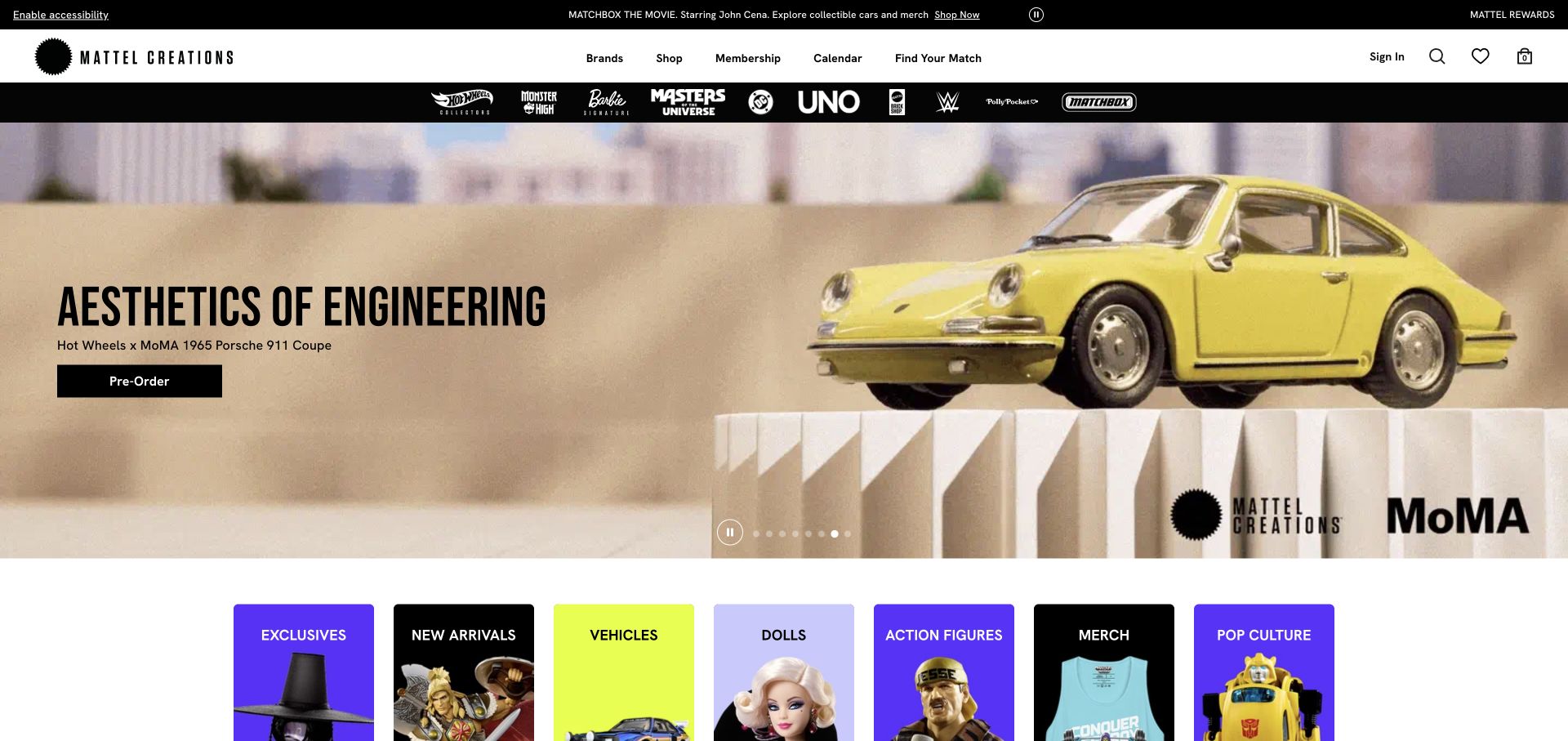
Mattel Creations combines a black-and-white commerce header with a separate row of franchise identities. The captured campaign places a collectible model and collaboration beside a preorder action, while colored category tiles begin below. Calendar and membership routes add tasks beyond ordinary shopping. A Klaviyo reference was observed on this storefront; it does not reveal allocation rules, customer segments, message schedules, or actual release performance.
What you can learn
Model product, franchise, and release identifiers before creating collector communications. A calendar reminder and a general newsletter request have different purposes and should not be silently merged. Keep preorder dates and eligibility under the merchant's review, and test the intended signup confirmation with fictional contacts. Decide who retires an announcement when the release ends, including messages that may already be queued in a separate marketing system.
Pros
Franchise navigation offers a useful alternative to the current collectible campaign.
Release calendar and membership have visible, distinct destinations.
Cons & considerations
Timed product availability requires precise ownership across storefront and messaging.
The calendar, preorder, and membership destinations need clear explanations of their different commitments.
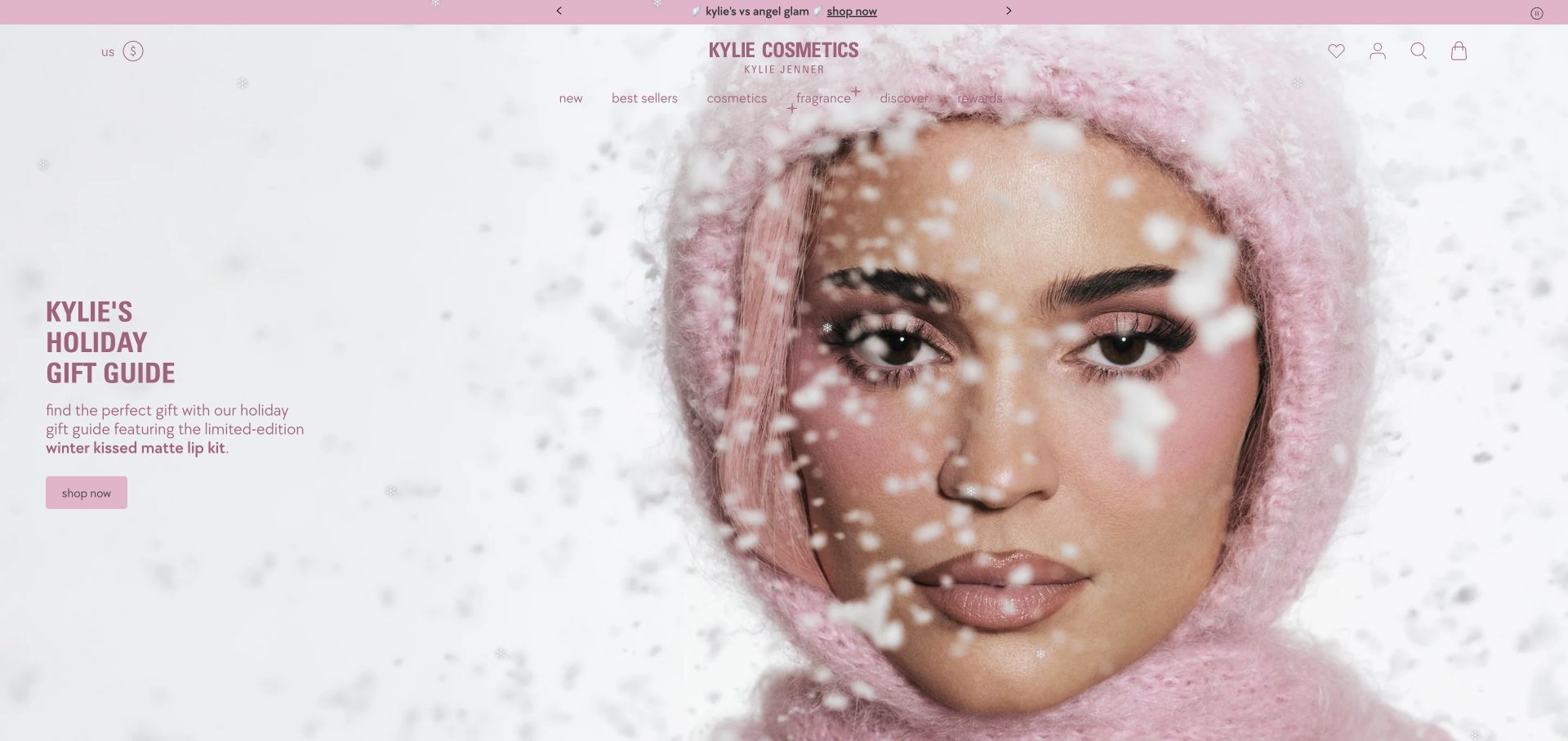
Kylie Cosmetics presents a pale winter portrait with pink campaign text and a short gift-guide introduction. The centered identity, fine utility icons, and announcement strip share a controlled palette. A compact shopping action links the story to the assortment. The sampled page referenced Klaviyo, but that reference does not verify product effectiveness, customer preferences, marketing consent, or any particular automated message flow.
What you can learn
Keep a gift campaign's dates, product selections, and message assets together in an editorial brief. Distinguish a visitor asking for campaign updates from a buyer needing order information. Test what happens when a featured product is unavailable before a queued message is sent. The visual system can be consistent across channels without pretending that a beautiful campaign photograph supplies substantiation for beauty claims or permission to contact every visitor.
Pros
The gift-guide action connects the seasonal image to a specific shopping purpose.
A consistent palette ties utilities and campaign material together.
Cons & considerations
Seasonal creative becomes stale unless storefront and messaging updates are coordinated.
The seasonal gift story still needs product-selection and delivery context beyond the campaign portrait.
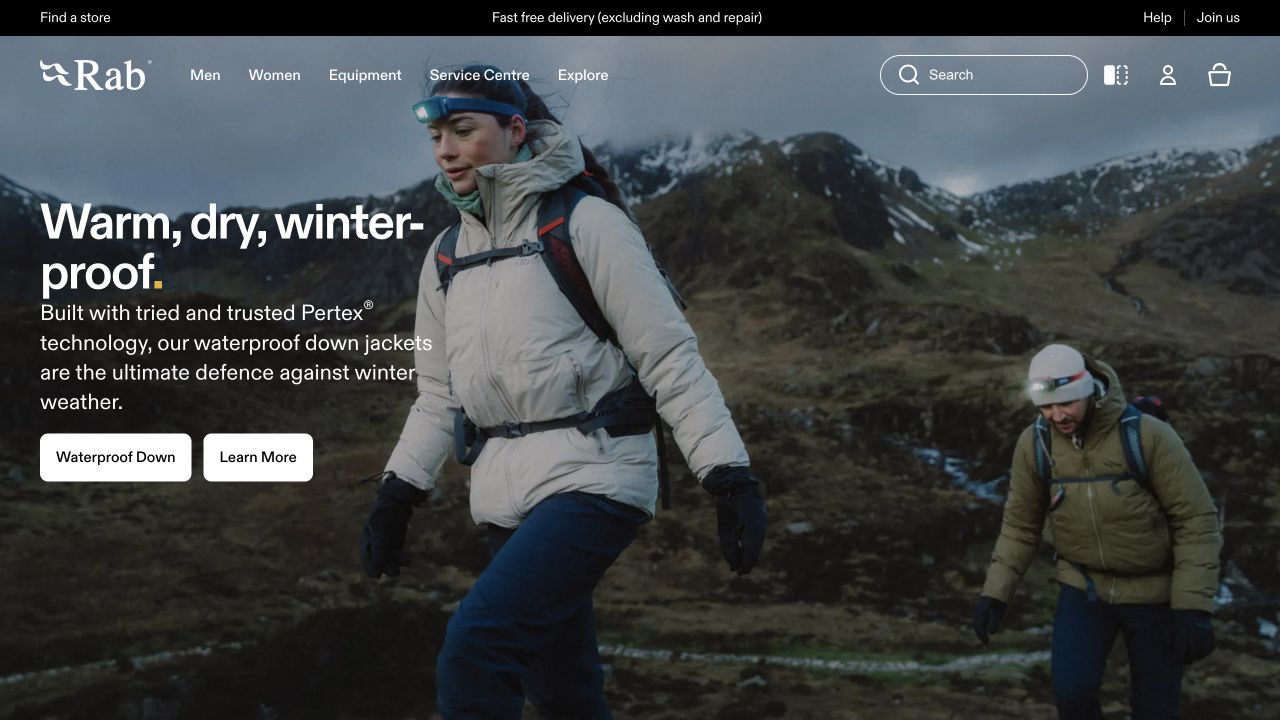
Rab's opening shows people in mountain conditions, using the setting to explain the clothing's intended context. A light header separates men, women, equipment, services, and exploration. The campaign offers a category entrance and a further-information route rather than only one immediate purchase action. Klaviyo was referenced on the public property; the screenshot does not validate technical performance claims or reveal the brand's marketing audiences.
What you can learn
Separate practical product education, service information, and seasonal promotions in the communications plan. Interest in a care guide should not be treated automatically as a request for every sales campaign. Keep product specifications and claim approvals attached to the actual item record, and test localized campaign links. Account for an unavailable size or region before sending a product-specific message rather than assuming the visual campaign and inventory remain synchronized.
Pros
The outdoor setting provides a concrete context for the product category.
Shopping and learning have different visible entrances.
Cons & considerations
Environmental product claims need supporting detail beyond the image.
Technical product information must remain easy to find after the image-led winter introduction.
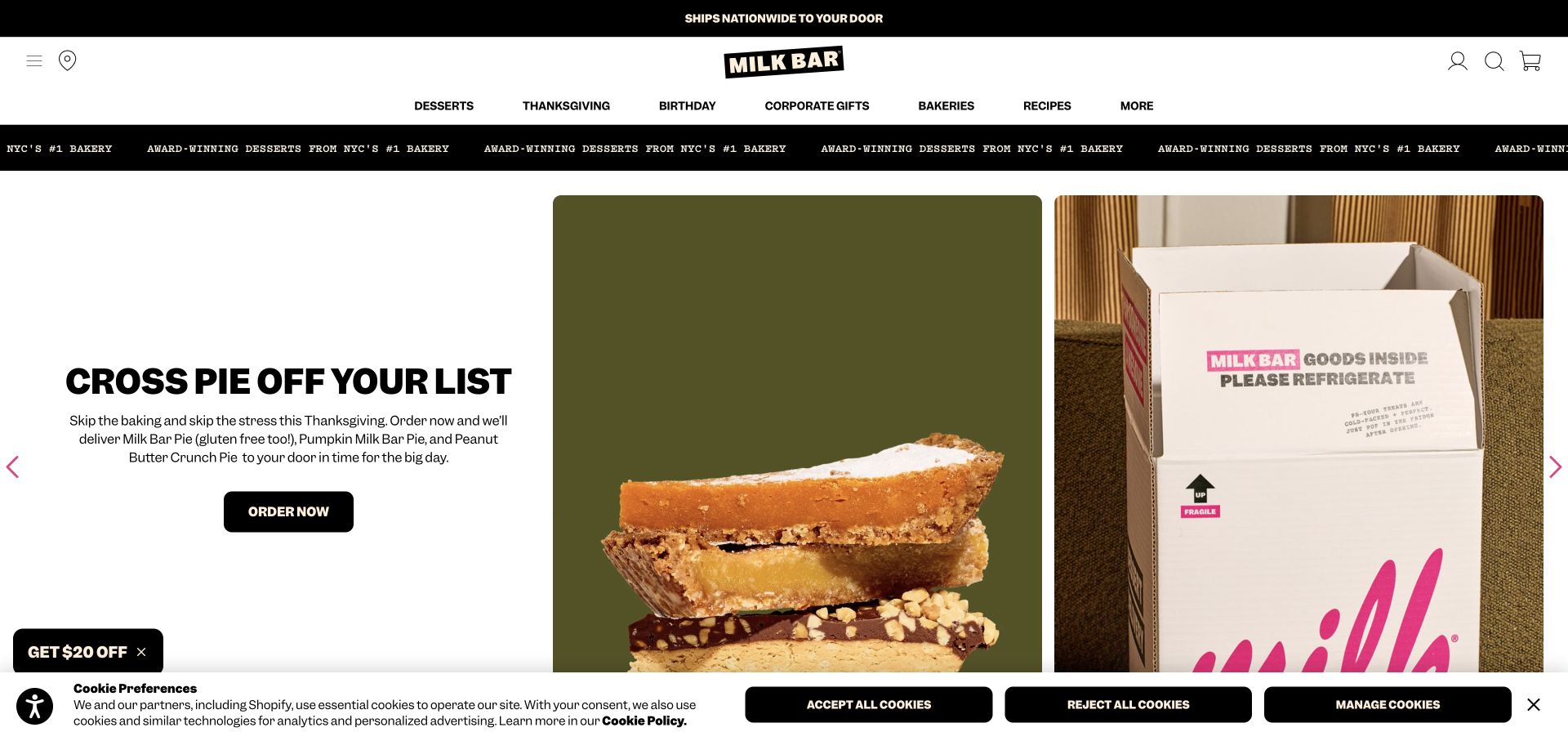
Milk Bar pairs bright dessert imagery with short black-and-white campaign copy. Pie slices appear beside a branded shipping box, making delivery part of the visual product explanation. Desserts, holidays, birthdays, business gifts, and bakeries have distinct routes. The Klaviyo reference establishes a public integration signal only; it does not verify shipping promises, personal occasion data, or the behavior of a particular customer-message program.
What you can learn
Plan occasion-based communications with the fulfillment team rather than from a design calendar alone. A holiday cutoff, a local pickup option, and a business gift order need different information. Keep those distinctions in both the catalog and the message brief, and test links for destinations that cannot receive a perishable item. Use fictional contacts to review confirmations without putting real birthday or order details into development fixtures.
Pros
The package photograph connects the dessert to its arrival experience.
Occasion and location routes recognize several different reasons to shop.
Cons & considerations
Delivery-sensitive promotions need current regional and cutoff information.
Birthday, holiday, business-gift, and local bakery orders need clearly different fulfillment expectations.
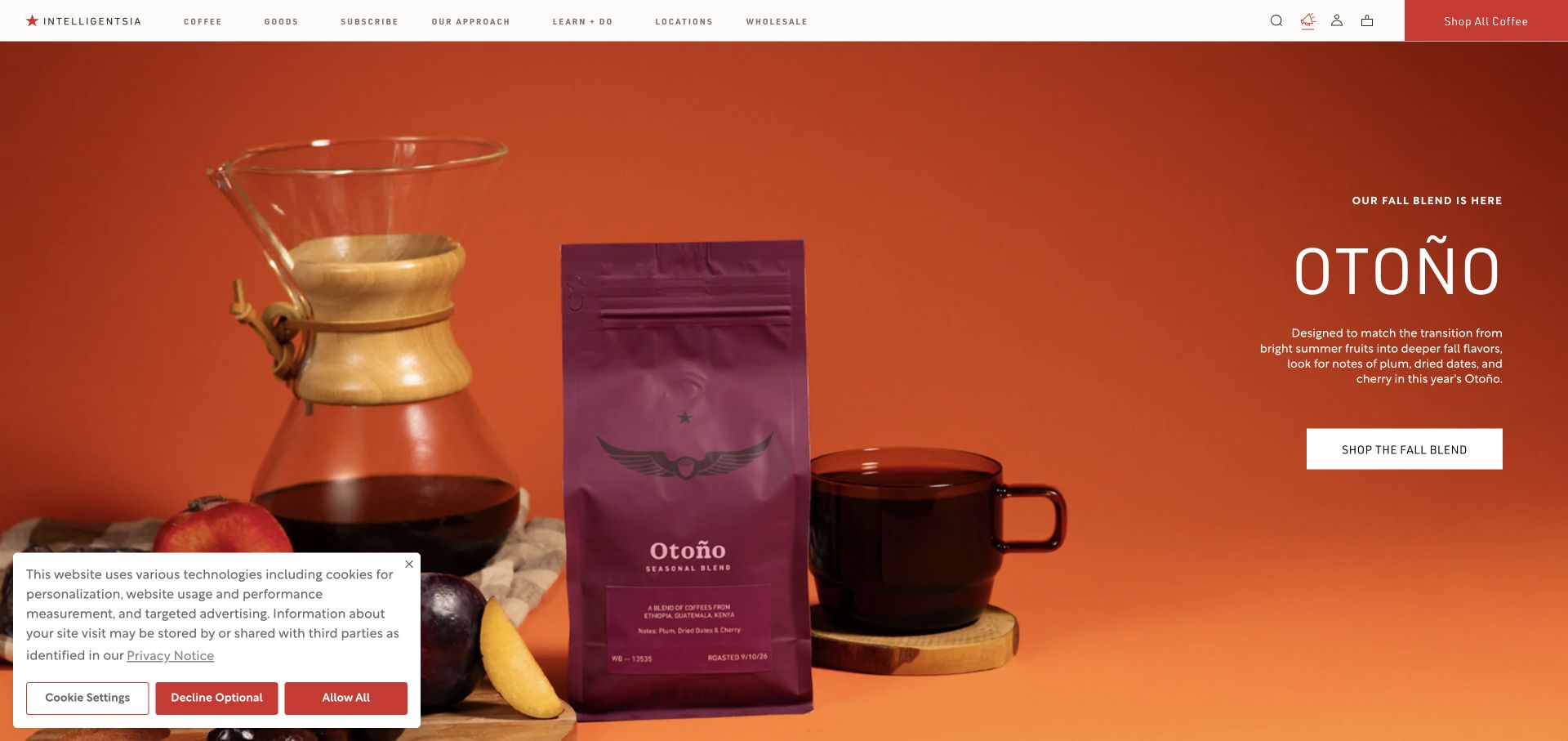
Intelligentsia presents its seasonal blend in an orange composition with brewing equipment, fruit, and a contrasting bag. The white header keeps coffee, goods, subscriptions, locations, and learning distinct. Supporting content describes a repeat service rather than leaving it as a decorative subscription badge. A Klaviyo reference was observed on the public page, not the actual settings or results of its retention and customer-message systems.
What you can learn
Keep a one-time seasonal release separate from recurring-order expectations. A customer should understand quantity, timing, and management before joining a repeat service, while a newsletter has its own purpose. Test a discontinued blend and a changed delivery interval in the relevant message previews. Give someone ownership of the connection between catalog availability and any queued campaign so an attractive launch does not continue advertising an unavailable product.
Pros
The seasonal scene makes the product feel specific rather than interchangeable.
Subscription and learning routes remain separate from ordinary catalog browsing.
Cons & considerations
Seasonal products need an end-of-availability plan across channels.
A recurring subscription and a one-time seasonal release need visibly different terms and next steps.
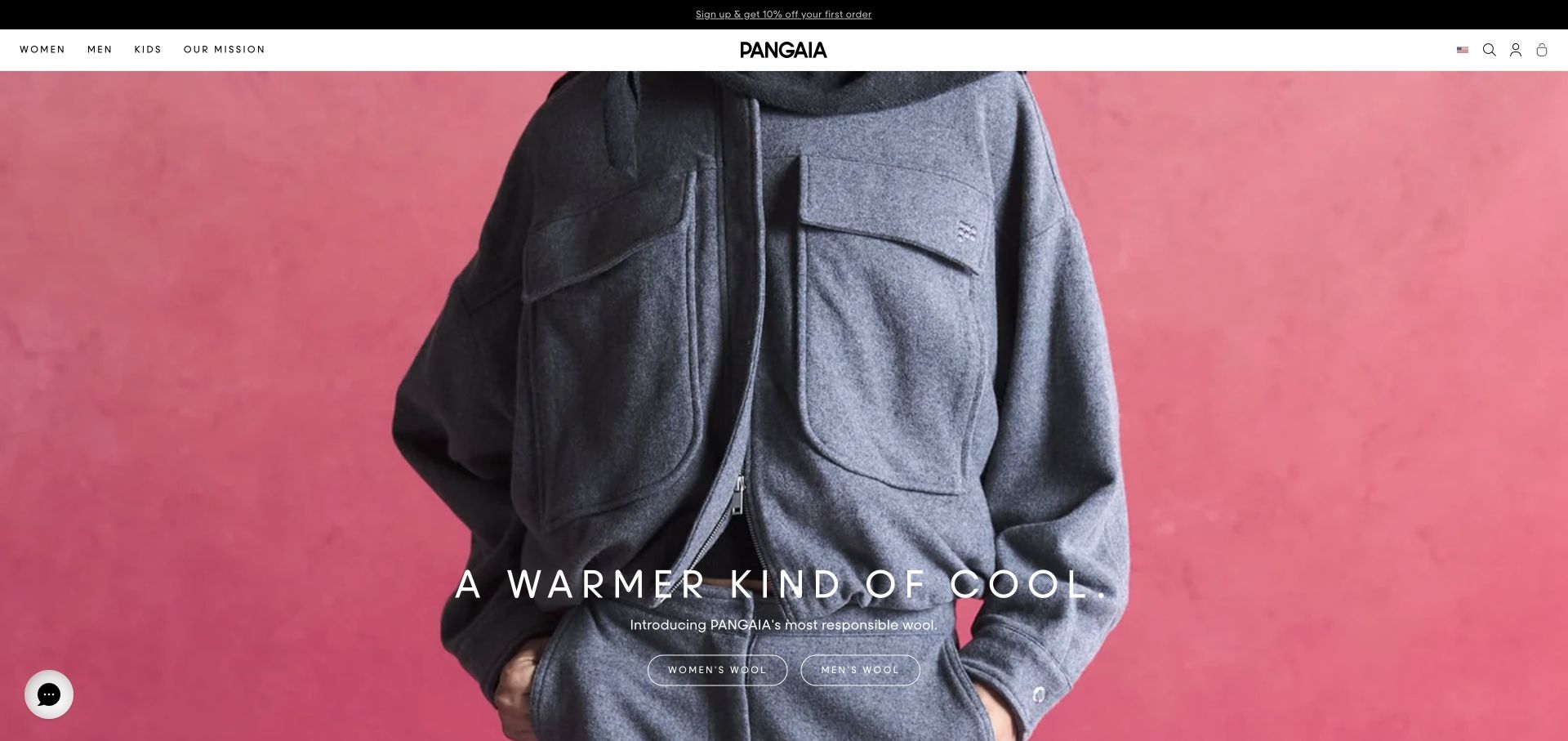
PANGAIA uses a saturated pink backdrop and garment detail with widely spaced white campaign lettering. The narrow masthead centers the identity and separates audience categories from a mission route. A promotional strip sits outside the main photograph. Klaviyo was referenced on this public storefront, but neither the integration nor the image verifies sourcing, environmental claims, customer segments, or the content of any subsequent messages.
What you can learn
Treat material and responsibility language as reviewed product content, not automatically reusable promotional decoration. Link a campaign to the explanation that supports its claims and maintain that relationship when the assortment changes. Distinguish general brand-news interest from a request about a particular product. Rehearse an expired collection and an unavailable regional item before publishing a message, keeping the storefront and campaign definitions aligned without assuming the integration supplies that discipline.
Pros
The close-up gives the garment's texture a central visual role.
Audience shopping and mission content are recognizable, different destinations.
Cons & considerations
Small white overlay lettering needs contrast and mobile review.
The broad material story needs useful product facts rather than depending entirely on a mission label.
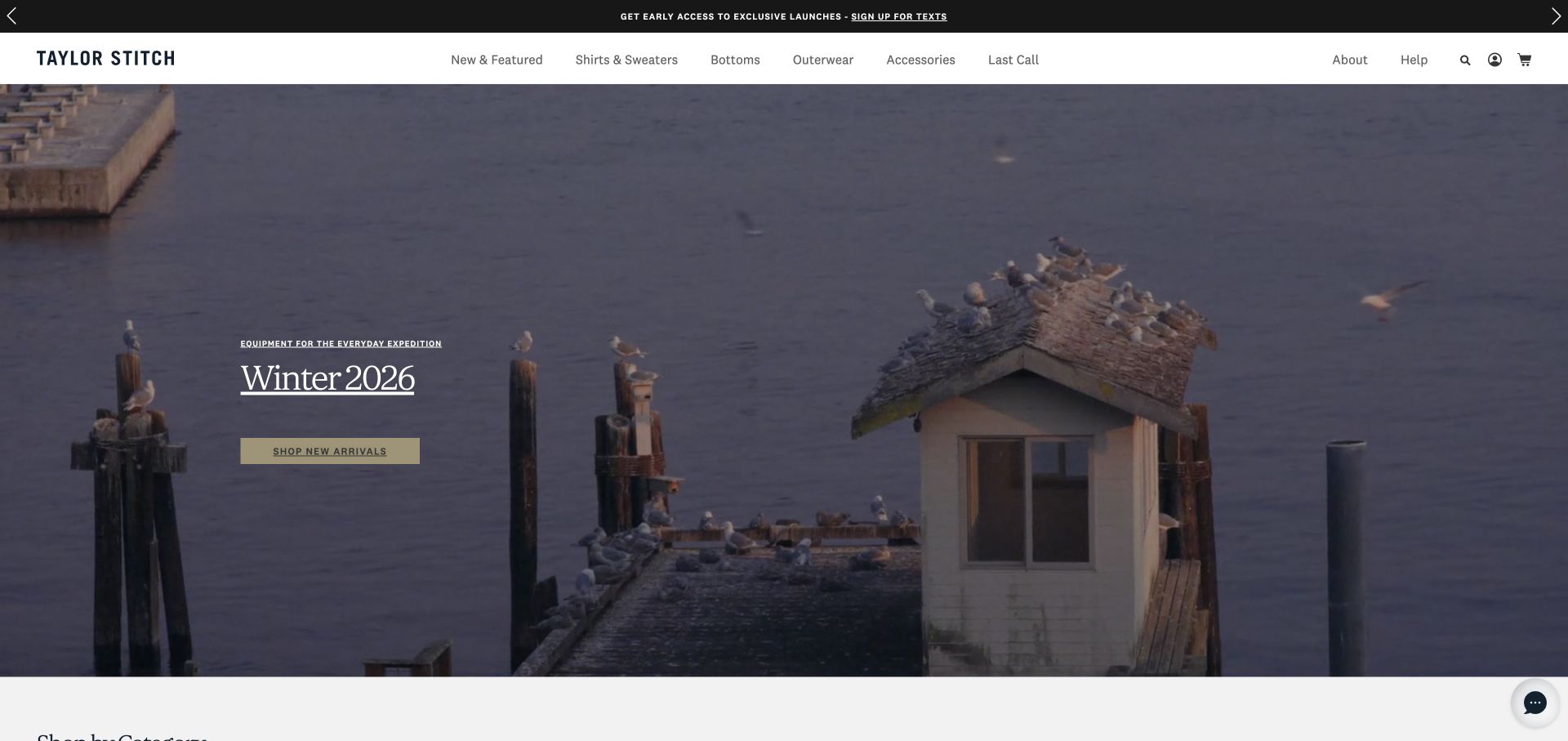
Taylor Stitch introduces a seasonal collection through a harbor scene, small white copy, and a muted shopping control. The solid header retains recognizable clothing and accessory categories, while an announcement strip remains visually separate. The page referenced Klaviyo in the public sample. That is not evidence about message frequency, subscriber preferences, individual customer behavior, or the full retail service configuration.
What you can learn
Give a campaign a stable identifier and an explicit end date, while keeping category links useful after the editorial scene changes. The message plan should explain whether it is introducing a collection, an individual release, or a recurring brand publication. Test a long product name and an unavailable size before reusing storefront content in email. Maintain a plain explanation of what someone is subscribing to rather than relying on an atmospheric image to set expectations.
Pros
Familiar categories remain usable around the quieter lifestyle campaign.
The announcement strip does not have to be embedded into the main photograph.
Cons & considerations
Subtle text and controls require careful reading conditions.
The quiet lifestyle feature needs a prompt transition to concrete garment, fit, and availability information.
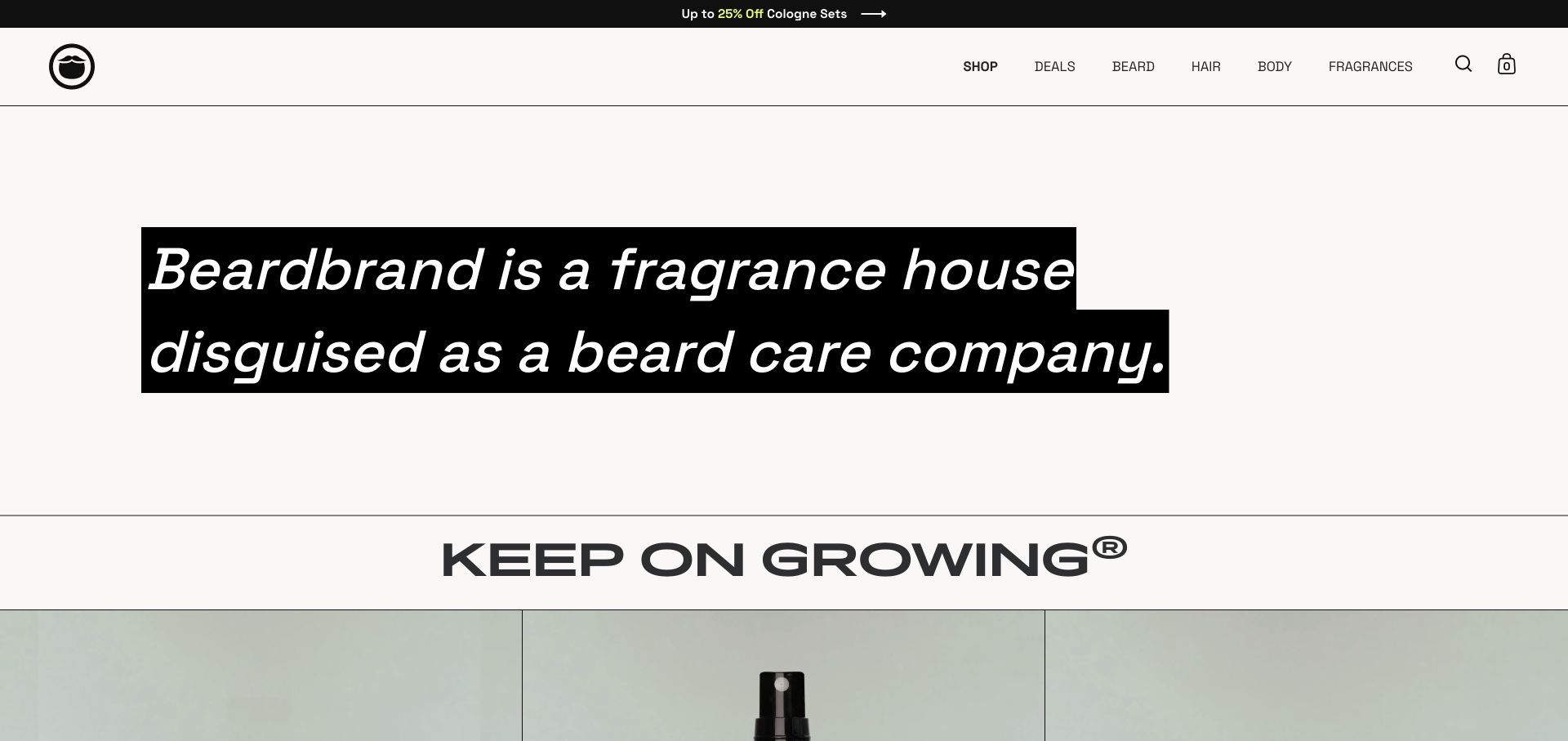
Beardbrand's captured section emphasizes a large italic statement on black text bands rather than a conventional lifestyle hero. The copy reframes the brand around fragrance, while practical categories still cover beard, hair, body, and scent products. The public page referenced Klaviyo. It does not demonstrate whether customers interpret the new positioning as intended or how existing audiences are divided in the marketing account.
What you can learn
When a brand changes its explanation, preserve recognizable product and service language for returning customers. Review message templates and signup descriptions alongside the website rather than changing only the largest headline. Separate an editorial repositioning campaign from essential order communications. Test whether a subscriber arriving through an older product-focused link still finds the expected category, and keep preferences understandable without assuming a new slogan authorizes a different kind of contact.
Pros
The typographic treatment makes the positioning explicit rather than implicit in imagery.
Practical product categories remain available around the broader statement.
Cons & considerations
A sharp positioning shift can confuse people who know the older assortment.
Fragrance-led positioning should still help returning customers find the practical beard and hair products they recognize.
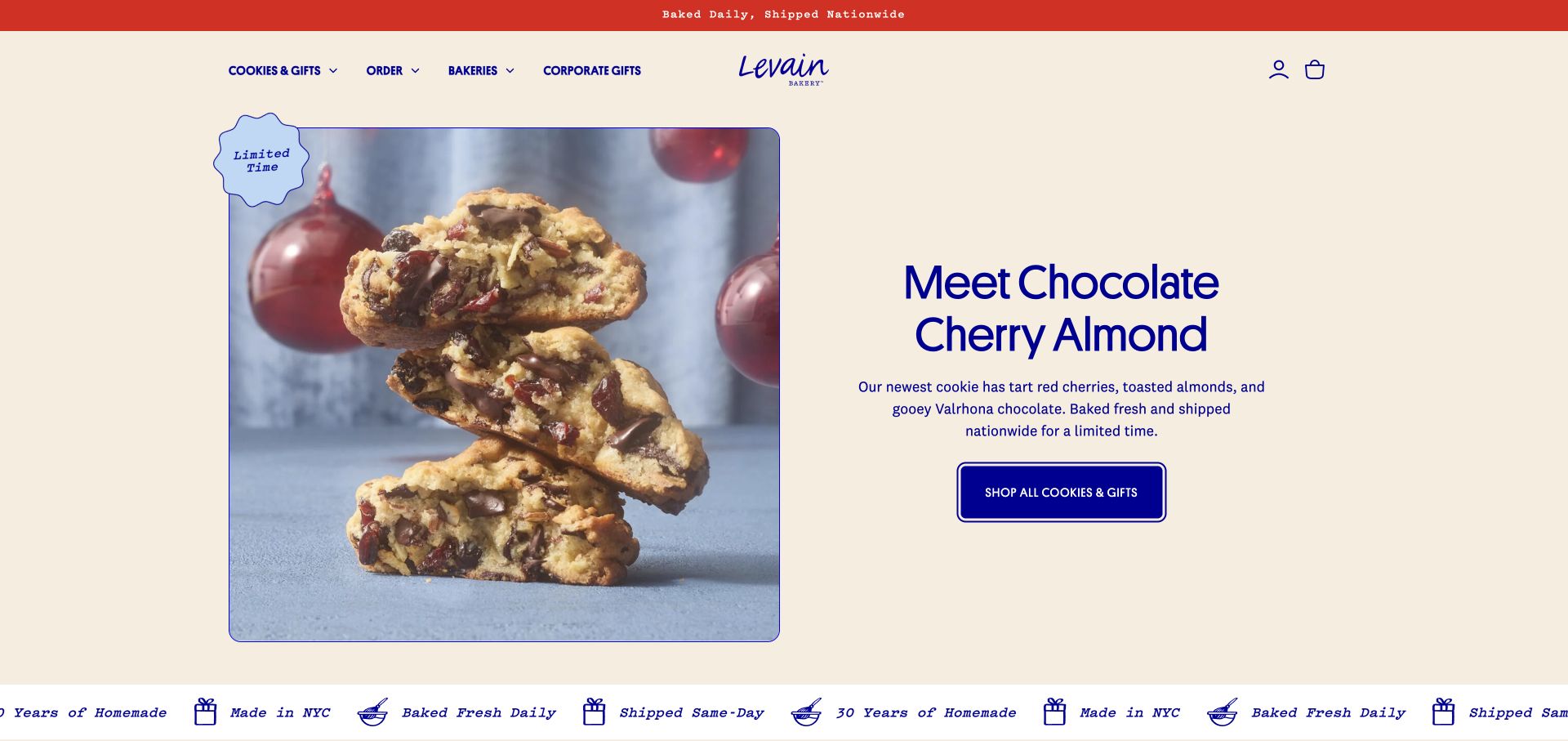
Levain pairs a large seasonal-cookie close-up with a short description and one clear shopping action. Cream surfaces and blue lettering extend the package identity into the website. Navigation distinguishes cookies, orders, bakeries, and business gifts, with pickup and event information continuing below. A Klaviyo signal was observed, not the actual availability, delivery performance, or configuration of messages for those different ordering occasions.
What you can learn
Keep local pickup, national shipping, and business gifting as distinct customer tasks in the campaign plan. A subscriber should not receive a geographically irrelevant pickup promise because every occasion shares the same signature product. Test seasonal expiry and shipping cutoffs with the merchant before sending. Reuse the clear product imagery while preserving the practical ordering conditions that turn a visual treat into an understandable purchase decision.
Pros
The product close-up and concise action form a focused introduction.
The navigation recognizes both a local visit and a larger gifting order.
Cons & considerations
Seasonal promotions need current availability and delivery context.
The same signature cookie needs different practical context for pickup, shipping, and larger corporate orders.
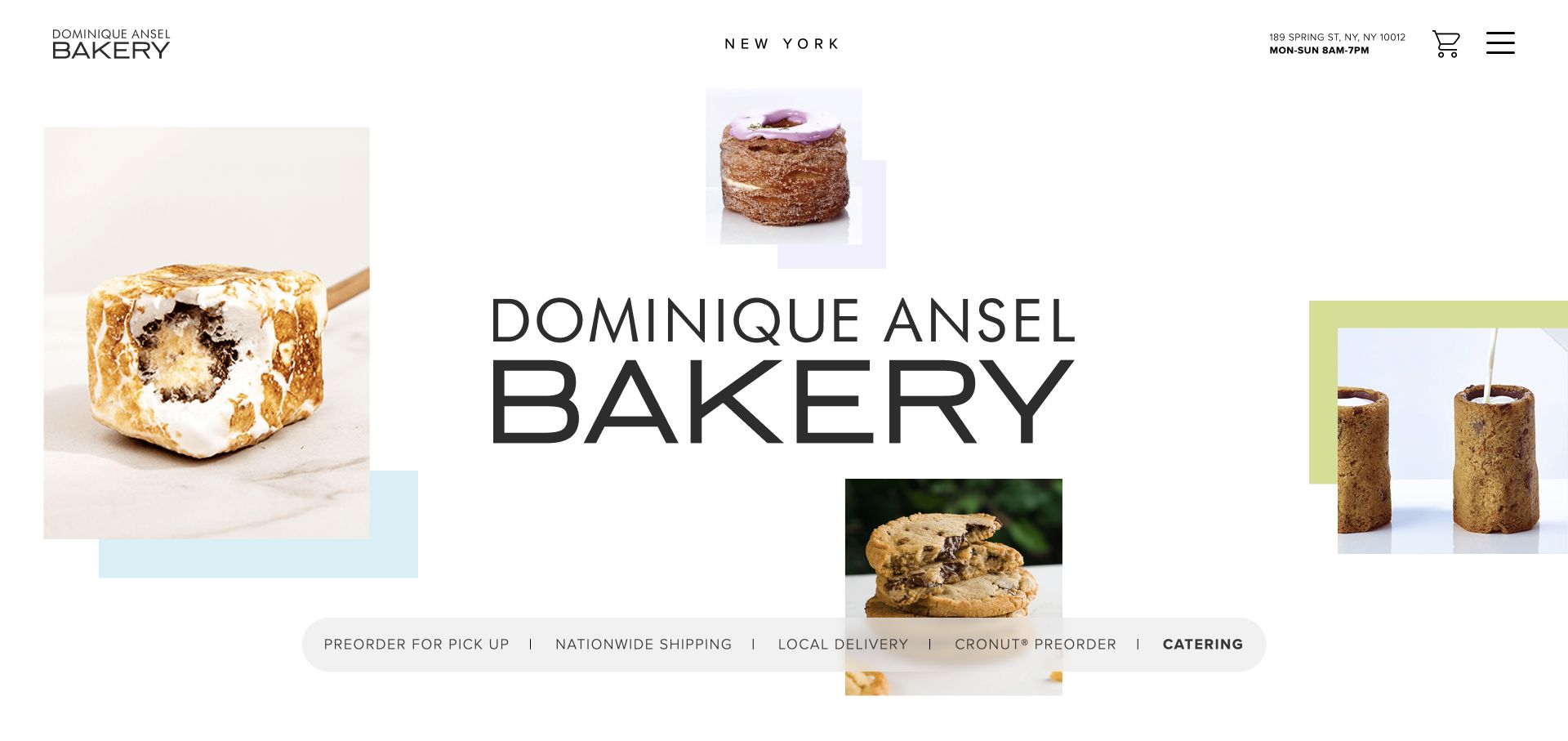
Dominique Ansel's New York site sets isolated pastries around an oversized wordmark and small pastel fields. Address and opening information remain close to the header. A horizontal strip distinguishes pickup, shipping, local delivery, preorders, and catering. Klaviyo was referenced on the public page. The capture does not demonstrate stock allocation, preorder timing, or the functioning of any message sent after a customer expresses interest.
What you can learn
Model each ordering route and limited-release date before building campaigns around an attractive pastry photograph. A preorder reminder and a general bakery update have different expectations. Check destination, fulfillment area, and availability together in message previews, and retire old release links intentionally. Keep the practical ordering strip readable on mobile so promotional overlays do not replace the very information a returning customer needs to choose the right transaction.
Pros
Several fulfillment modes are named explicitly rather than grouped under one vague order action.
The asymmetrical product composition gives individual creations visual identity.
Cons & considerations
A dense ordering strip requires careful small-screen prioritization.
Limited preorders and ordinary bakery visits need current, clearly separated dates and ordering conditions.
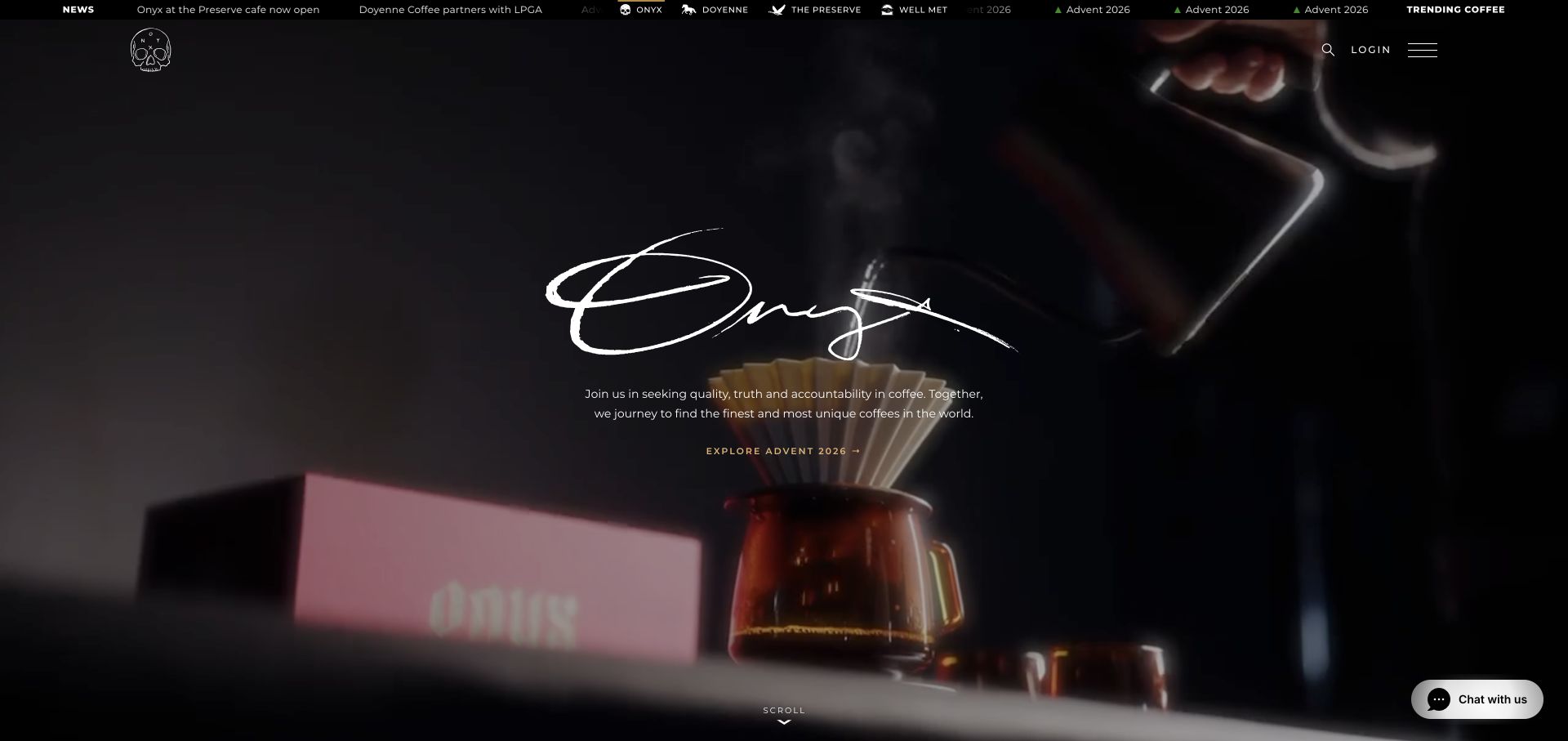
Onyx opens with a dark brewing scene and a large signature wordmark. A specific release receives an action within the atmosphere, while a compact menu holds a wider range of coffee, tea, goods, and related projects. A Klaviyo reference was observed on the public property. It does not reveal campaign timing, audience definitions, or whether the same integration manages the brand's other experiences.
What you can learn
Maintain a release record that connects the campaign image, product destination, availability period, and message owner. Keep that record distinct from the evergreen introduction to the brand. Test a sold-out release and an old campaign URL before using the scene in another channel. The breadth of the retail world also makes signup expectations important: describe which publication or product interest a visitor is choosing rather than silently combining unrelated projects.
Pros
The release action gives the cinematic scene a concrete destination.
The compact menu leaves the visual identity room without pretending the catalog is small.
Cons & considerations
Atmospheric media can delay practical assortment information.
The compact menu needs to make the substantial coffee, tea, goods, and related-project range discoverable.
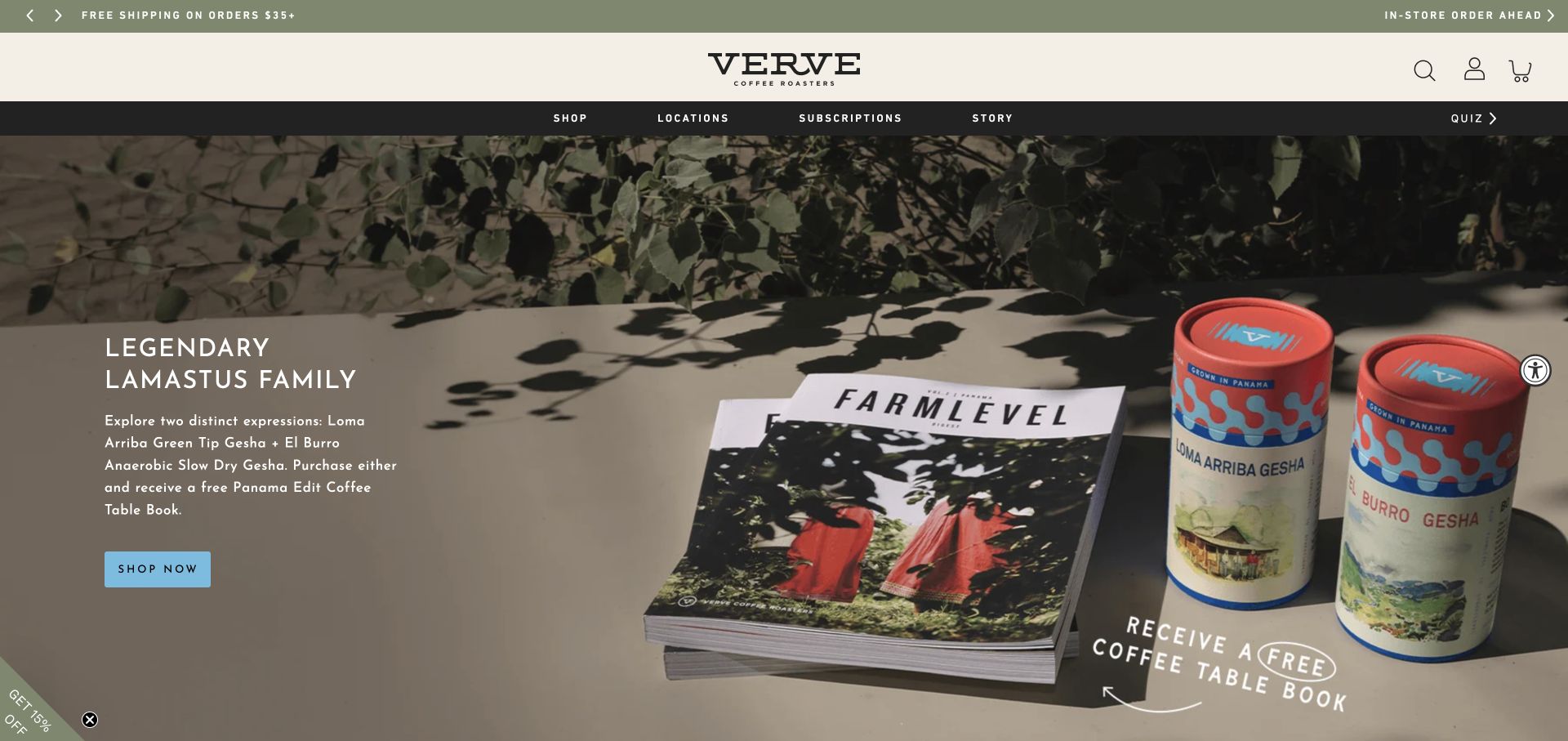
Verve frames a special coffee release through packaging and a related book, set against a quiet cream-and-green masthead. A blue action stands apart from the scene, while shopping, locations, subscriptions, and a quiz remain available. Product cards later supply details such as size, grind, tasting notes, and price. The Klaviyo signal is public integration evidence, not a verified personalization or campaign-performance result.
What you can learn
Keep the limited story connected to stable product data before adapting it for messaging. A visitor should not receive an attractive release announcement whose price, grind options, or destination no longer match the store. Distinguish a quiz response from permission for unrelated contact and review any data-sharing behavior. Test stock changes and a discontinued edition with the people maintaining the catalog, not only with the person designing the email.
Pros
The special release has a distinct visual and a clear action.
Concrete product details continue beyond the carefully styled campaign.
Cons & considerations
Limited editions need an intentional post-release destination.
The release image must lead to usable bag, grind, and availability details rather than remain an editorial poster.
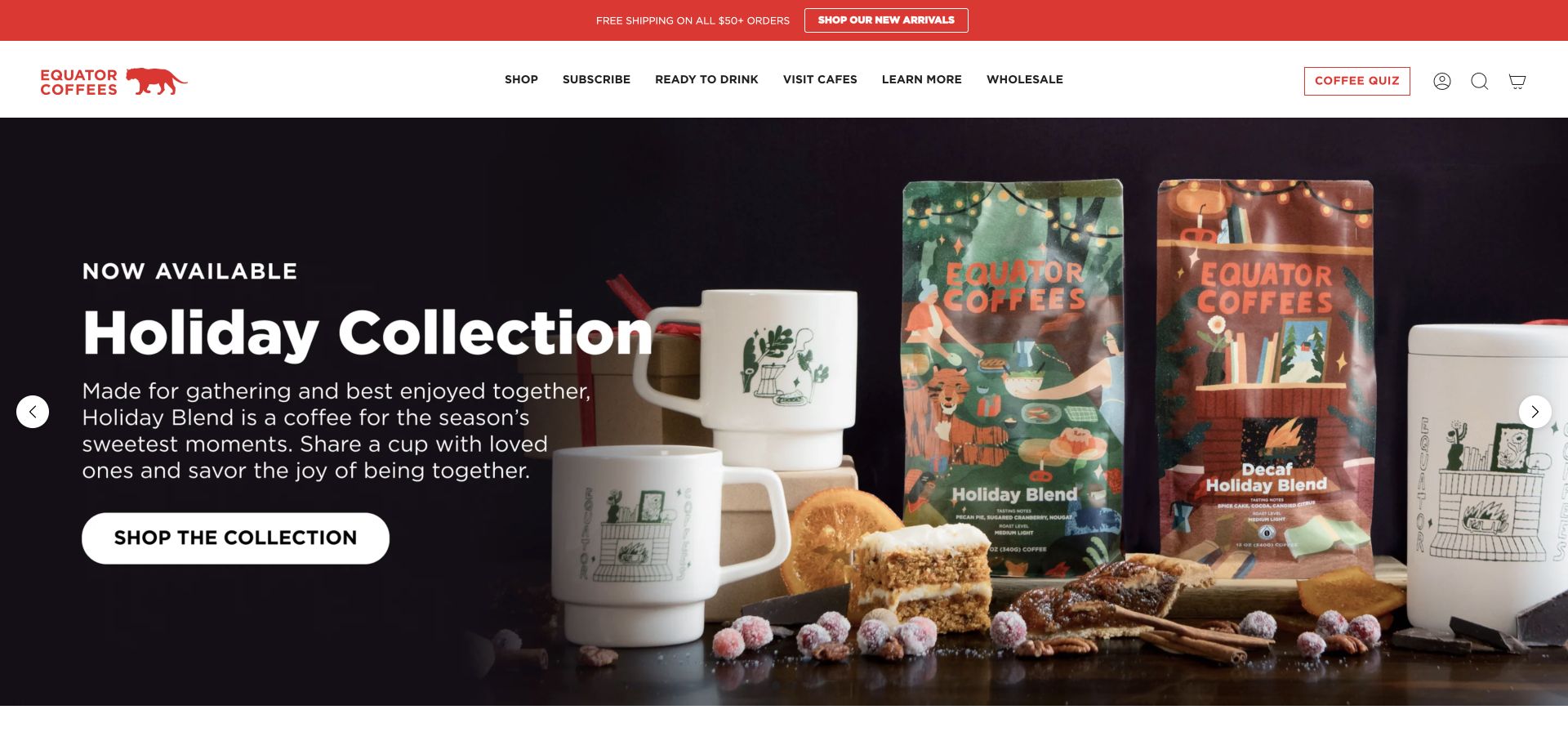
Equator uses its red tiger identity alongside navigation for shopping, subscriptions, ready-to-drink products, cafés, and learning. Illustrated bags carry the seasonal feature against a dark background. Collections, collaborations, and a quiz provide further catalog entrances. Klaviyo was observed on the sampled page, but the screenshot does not establish segmentation, café-system integration, or the content and timing of actual subscriber communications.
What you can learn
Define which product and location interests matter before creating a collection of marketing lists. Café news, wholesale information, a subscription, and an online product launch may serve overlapping but different audiences. Keep the purpose of each signup understandable and use stable catalog identifiers in message content. Review seasonal availability and regional relevance before release, while making the plain store and café routes usable without completing an interactive quiz.
Pros
The recognizable packaging system gives a broad assortment a coherent frame.
Coffee shopping and physical café discovery have distinct navigation paths.
Cons & considerations
Many optional discovery tools can obscure the simplest catalog route.
Café discovery and online shopping need different useful continuations beneath the shared package-led campaign.
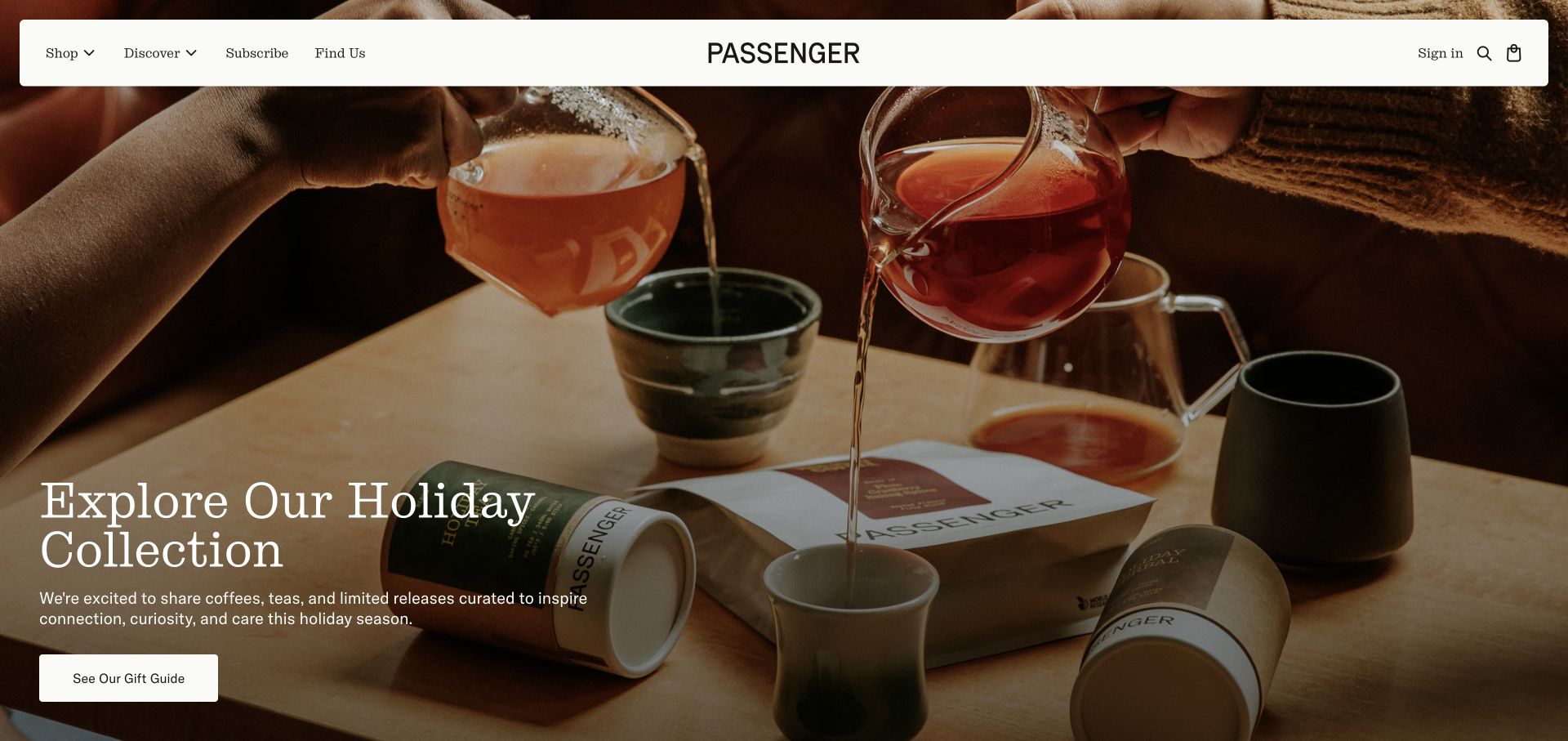
Passenger places coffee and tea within a warm tabletop scene and a seasonal gift-guide introduction. A rounded floating navigation provides the permanent frame. The continuing catalog includes origin, processing, tasting, and pricing detail, connecting the approachable opening to more specialist decisions. The public sample referenced Klaviyo; it did not reveal individual subscriber knowledge, interest scoring, or any automated gifting sequence.
What you can learn
Keep approachable campaign language and precise product data connected without assuming every reader has the same expertise. A tasting-set announcement, an origin story, and a routine subscription notice need different useful content. Test unavailable products and changed destination links before reusing them in a message. Make any preference question understandable on its own, and avoid collecting more personal information merely because the marketing integration offers additional fields.
Pros
The shared-occasion scene makes specialty products approachable.
Origin and processing detail give interested shoppers useful depth beyond the campaign.
Cons & considerations
Seasonal gifting needs a maintained expiry and stock plan.
The gift-guide scene needs an understandable route into the more specialist origin and processing information.
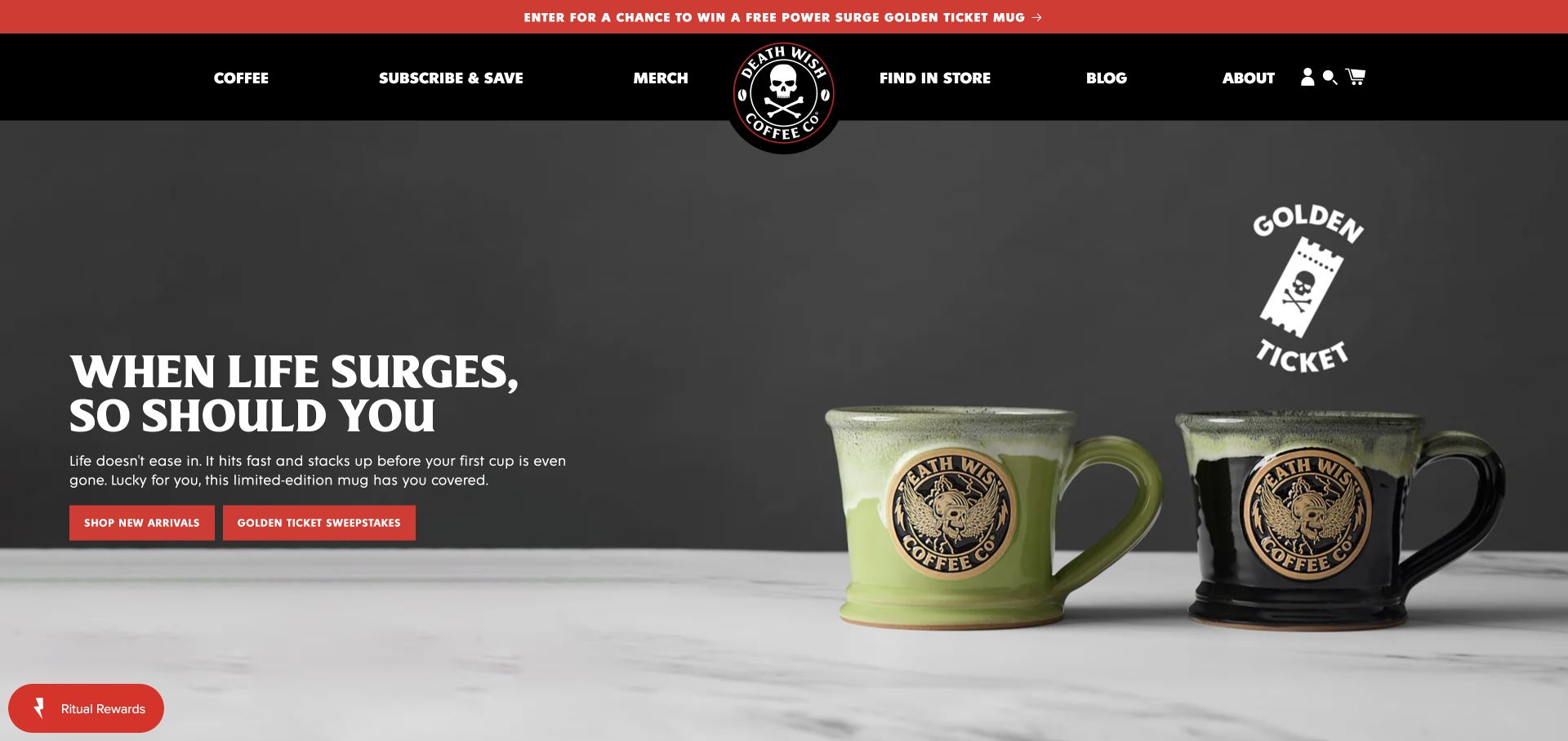
Death Wish extends its black, red, and skull identity across coffee and branded goods. The captured campaign features illustrated mugs, with other releases represented in the wider page. Coffee, subscriptions, merchandise, and store finding remain distinct navigation choices. A Klaviyo reference was observed, but the visual coherence does not establish that coffee, merchandise, and recurring orders are correctly differentiated in the brand's actual message configuration.
What you can learn
Give beans, pods, merchandise, and subscriptions explicit product types in the campaign brief. A buyer interested in a mug should not be assumed to have selected a recurring coffee service. Review fulfillment and availability separately when a message combines formats. Keep the simple category routes available around promotions, and test a changed item or sold-out campaign so strong visual consistency does not conceal practical differences in what is being offered.
Pros
A consistent identity connects product categories without making them visually anonymous.
The navigation distinguishes recurring coffee from ordinary merchandise.
Cons & considerations
Energetic promotion can make product-format differences less obvious.
Coffee formats, subscriptions, and merchandise need clear distinctions despite their shared visual identity.
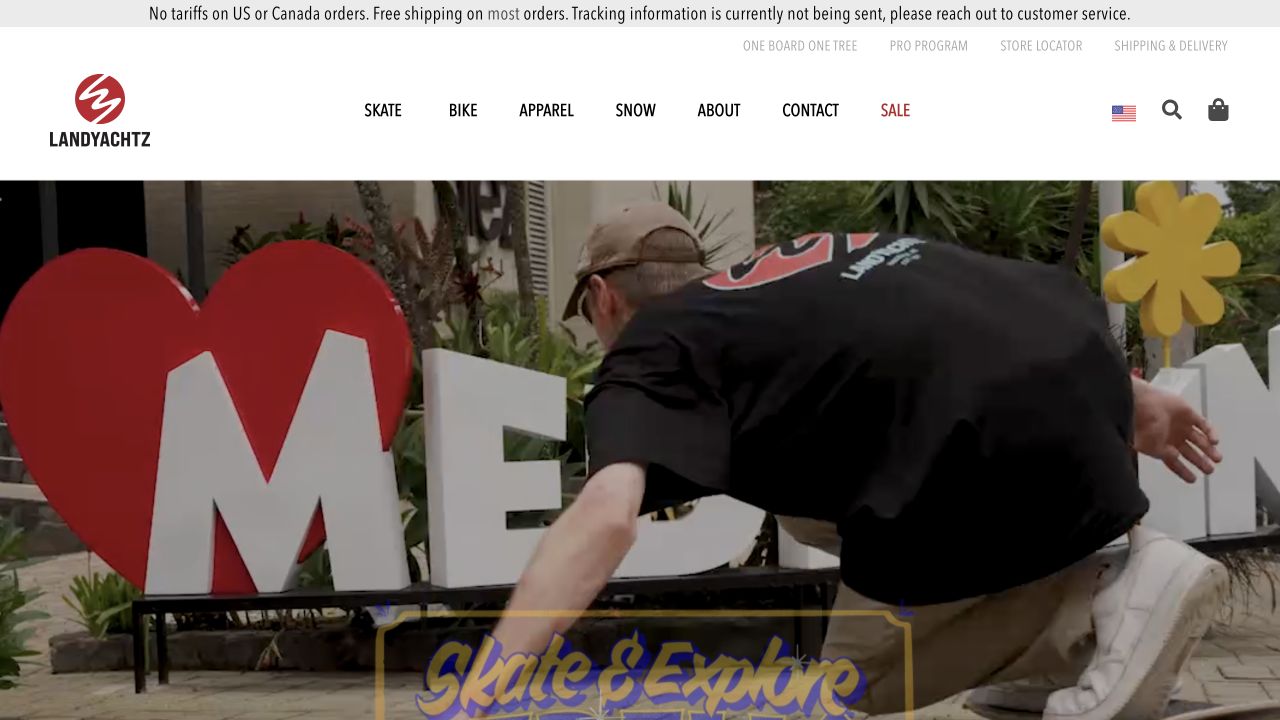
Landyachtz frames a rider-led campaign with a practical white navigation for skate, bike, apparel, snow, and sale. A shipping notice and utilities remain above it, while search and cart keep conventional roles. The activity and community form the visual introduction. Klaviyo was referenced publicly, not demonstrated as a complete explanation of customer communications, community participation, or how the different sporting categories share audience data.
What you can learn
Plan communications around actual activity interests without turning a single browsing action into an assumed customer identity. A community event, equipment release, and service notice require different context. Maintain regional shipping details and test the links in a mixed-category campaign before sending. Preserve a plain route to the store and practical information so an optional promotion or signup panel does not obstruct someone who already knows what equipment they need.
Pros
The lifestyle photograph connects the equipment to a recognizable activity.
The header keeps several distinct sporting categories understandable.
Cons & considerations
A full-width campaign can postpone the product detail a comparison shopper needs.
The wide sporting taxonomy needs useful product comparisons once a shopper moves beyond the rider-led scene.
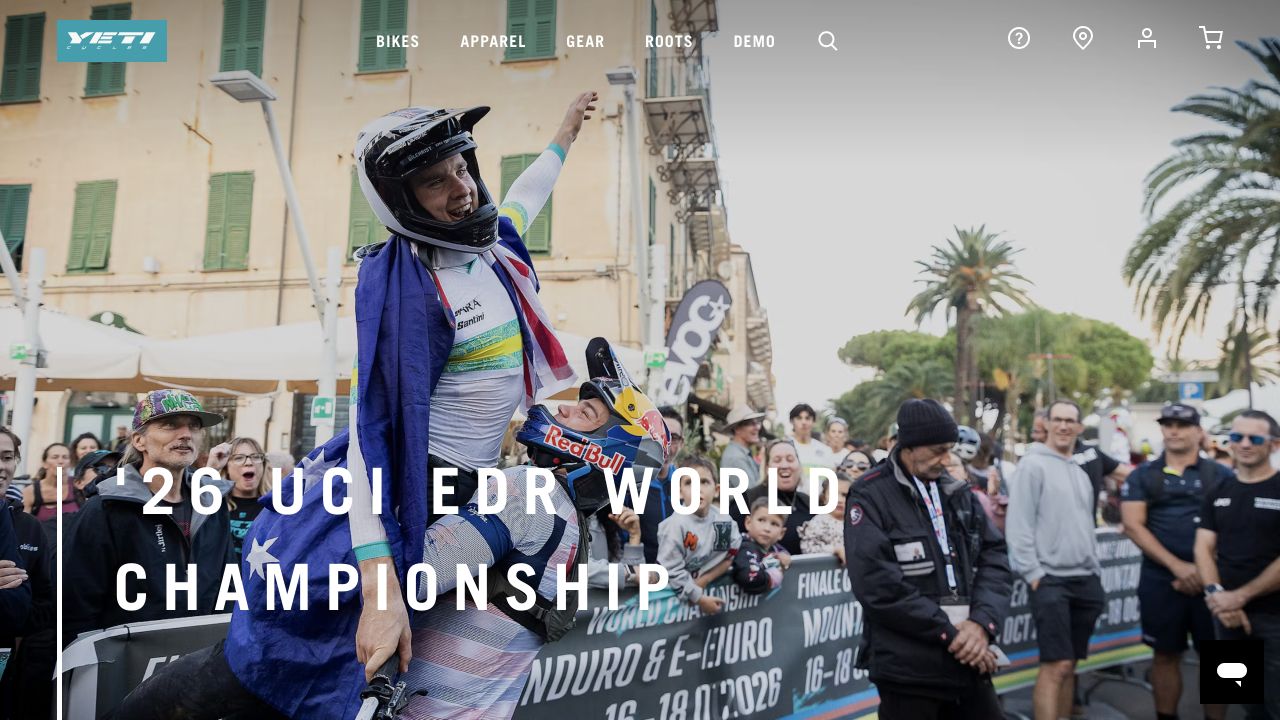
Yeti Cycles leads with a championship photograph and a compact turquoise identity. Bikes, apparel, gear, brand history, and demo routes surround the event-led feature, with utilities visible over the darkened scene. This is an editorial entrance to the product range rather than a specification comparison. The Klaviyo reference does not demonstrate event attribution, audience preferences, or the implementation of any demo-booking communication.
What you can learn
Separate a racing story, a bicycle release, and a demo request in the communication plan. A memorable athlete image should lead to context rather than an unrelated product blast. Keep model, size, region, and event dates attached to their actual records when building a campaign. Test an expired race feature and an unavailable demo destination, and make technical product information easy to reach without first subscribing to brand updates.
Pros
The event photograph gives the brand a concrete community context.
Demo and product categories offer useful alternatives to reading the feature.
Cons & considerations
A community-led opening needs a clear transition into product evaluation.
The championship feature needs a clear transition into model, size, and demo information for an equipment buyer.
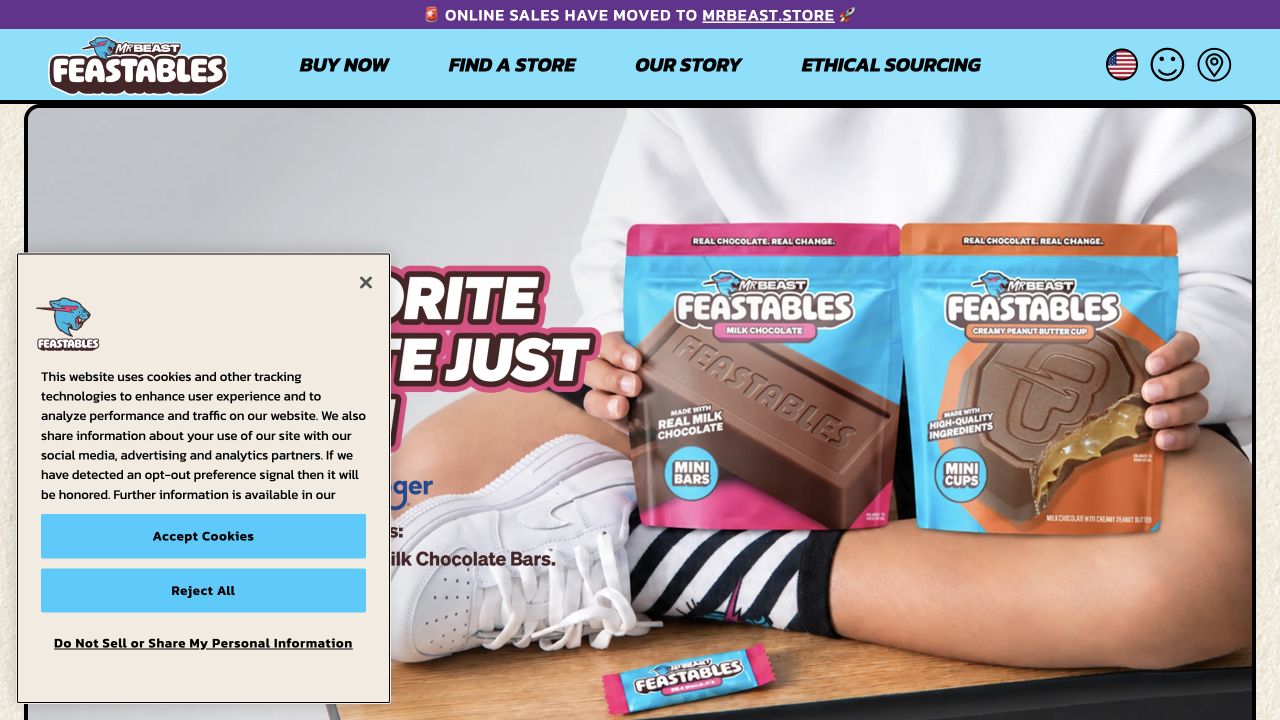
Feastables uses a cyan navigation and bright packaging around a large lifestyle photograph. Buying, store finding, brand story, and sourcing remain simple top-level choices. A purple announcement states that online sales have moved to another store. Klaviyo was referenced on this public property; the separate merchant was not tested, so the page does not establish where orders, subscriber records, or automated retail messages are ultimately managed.
What you can learn
Treat a merchant move as both a website and a communications migration. Update campaign links, explain the destination, and check whether old purchase messages still send visitors to the retired store. Keep order-related communication separate from general brand updates, with the appropriate merchant responsible for each. Review a message on a phone with consent overlays and the new handoff present rather than testing only the unobstructed creative artwork.
Pros
The announcement makes the commerce handoff explicit instead of hiding a redirect.
The strong package palette gives the product campaign a recognizable identity.
Cons & considerations
An overlay can obscure an important part of the opening message.
The moved-store notice needs a reliable destination and enough context to make the merchant handoff understandable.
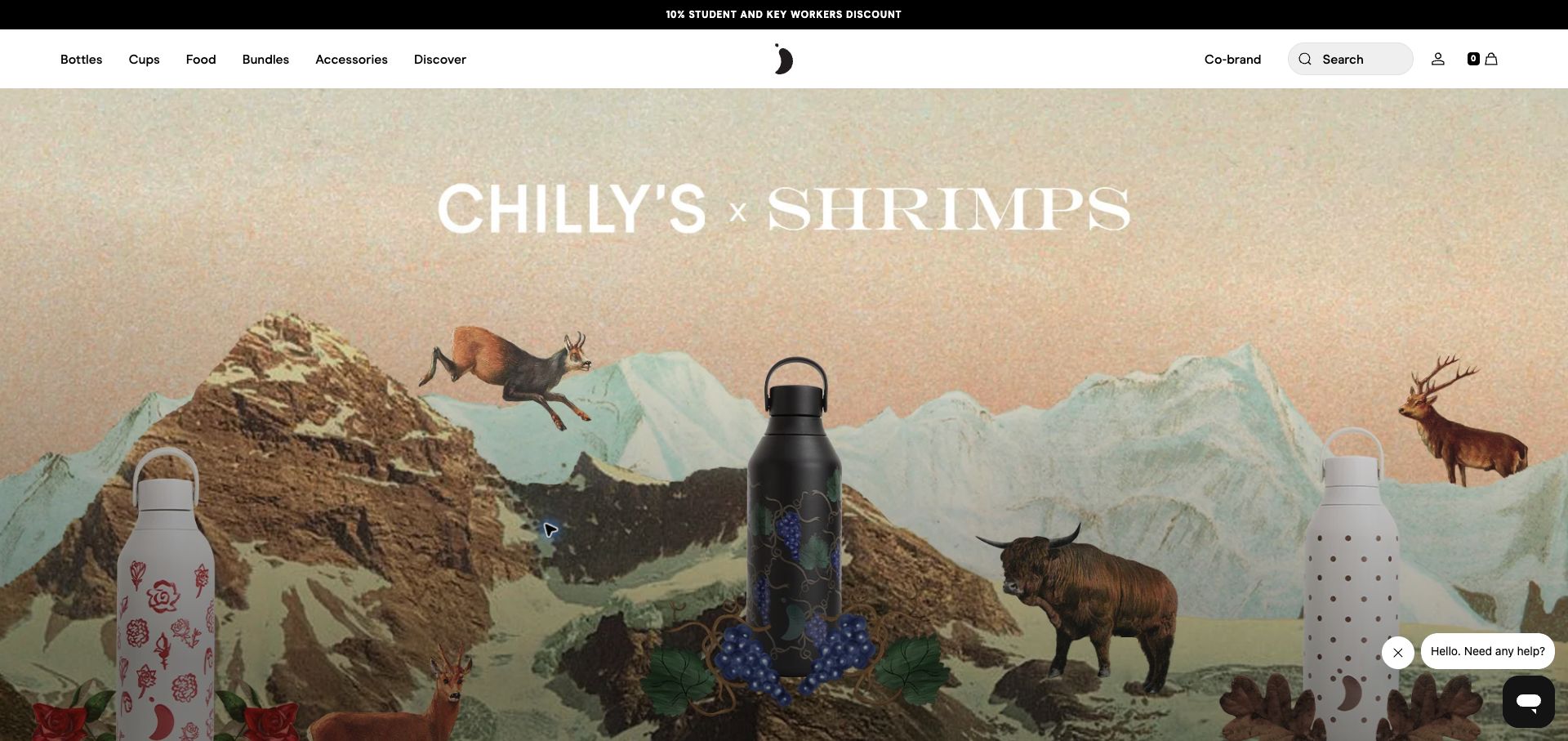
Chilly's presents a collaboration through an illustrated mountain scene with recognizable patterned bottles. A large title gives the feature the character of a poster, while bottles, cups, food, bundles, and accessories stay in the white header. The captured route resolved to a regional storefront. Klaviyo was referenced publicly, not demonstrated as a source of stock availability, regional message preferences, or the collaboration's commercial results.
What you can learn
Give a collaboration an explicit edition and regional context before reusing its artwork in messages. Check whether the linked item is available in the recipient's intended store, and retire an ended edition without losing its brand story. Keep reusable product information distinct from temporary illustration assets. A colorful campaign can remain consistent across channels while still requiring separate ownership for stock, message content, and the meaning of any signup invitation.
Pros
The illustration gives the collaboration a clear visual identity.
Practical categories remain recognizable beside the more expressive seasonal scene.
Cons & considerations
Regional storefront selection adds a state that campaign links must respect.
A collaboration edition needs a useful destination after featured products or regional stock are no longer available.
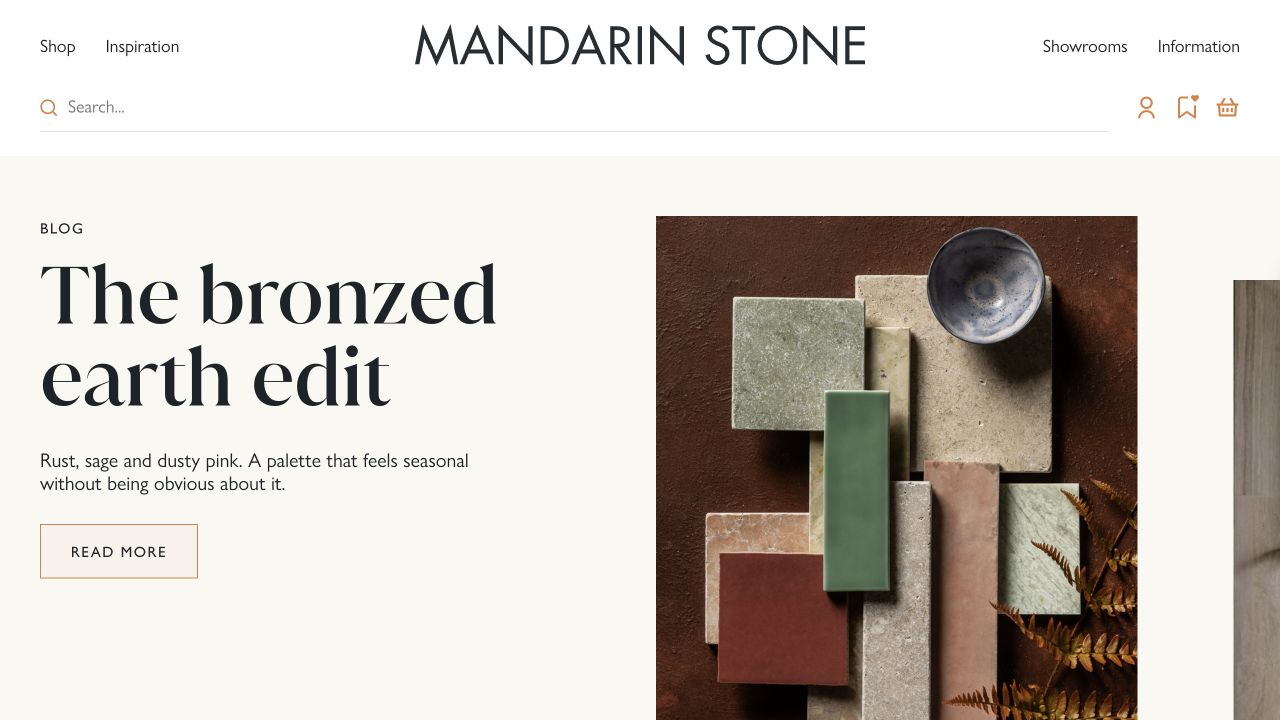
Mandarin Stone pairs a large editorial title with a carefully arranged palette of tile and stone samples. Fine outlines, a pale surface, and generous spacing let texture carry the image. Shopping and inspiration coexist with showrooms, information, search, and saved-product utilities. The sampled Klaviyo reference does not establish whether the brand's messages distinguish a casual reader, sample requester, showroom visitor, or committed project customer.
What you can learn
Define those stages before collecting interest data or automating follow-up. A saved tile, a request for a sample, and a showroom inquiry have different practical next steps. Keep material codes and product destinations stable when an editorial palette changes, and test discontinued samples before sending an older campaign. Explain a signup's purpose clearly rather than using a long-consideration purchase as a reason to add every visitor to the same sequence.
Pros
The material arrangement connects inspiration to tangible product choices.
Showroom and online-discovery routes recognize different ways to evaluate a purchase.
Cons & considerations
Editorial campaigns still need precise material and availability information nearby.
Sample requests, showroom visits, and online purchases need visibly different explanations beneath the shared editorial material palette.
Choose a native integration, a focused form, or a custom data connection
Start with the supported commerce relationship
Document the exact store and required data before adding another connector. Inventory which system owns catalog, orders, fulfillment, preferences, and customer support. Check for duplicate integrations and decide how conflicting records are resolved. A public Klaviyo script reveals none of those private operating decisions.
Keep a focused signup understandable
A small form should explain its purpose and provide real error and confirmation behavior. Test an invalid address, an existing record, a withdrawn preference, and an unavailable provider with fictional contacts. Avoid claiming success just because a button was clicked, and do not expose a private credential in browser-delivered configuration.
Build a custom integration only around a named need
For a custom storefront or service, write an event and field contract before implementing calls. Keep private operations on the appropriate protected side of the system and minimize data that has no defined purpose. Klaviyo’s JavaScript guide describes public-page identification and tracking; use the current API documentation for the actual implementation rather than copying an old snippet unquestioningly.
Plan messages as part of the complete retail experience
Map one relationship from beginning to end
Choose a genuine first use case, such as an explicitly requested product announcement. Write the on-site invitation, state recorded, confirmation, message, destination, and change-of-preference route. Have the merchant review the sequence before broadening it into several overlapping journeys. Keep transactional support needs separate from promotional experimentation.
Rehearse catalog and campaign changes
Test an unavailable variant, an expired offer, a discontinued item, and a visitor entering a different regional store. Check links and content in real message previews, not only the website’s opening artwork. Decide what happens to queued communication when the merchant changes a campaign, and who has authority to stop an inappropriate send.
Keep test contacts and diagnostics controlled
Use a clearly separated development workflow and approved fictional records. Avoid sending genuine customer information, private preferences, or order details into test fixtures, public repositories, or unrestricted logs. Retain enough bounded diagnostic information to reconcile a failed request without making the entire customer relationship visible to every person maintaining the frontend.
A useful handover demonstration
Ask the actual team to carry out its routine job: publish a realistic update, correct a mistake, preview a narrow screen, and identify who owns an integration failure. For a library or frontend framework, also ask who maintains the content source and deployment. A polished screenshot does not answer those operational questions.
Beyond the screenshot
Storefront-to-marketing integration checklist
Write a specific purpose and responsible owner for each signup invitation.
Map subscription, preference, and suppression states against current platform documentation.
Keep private credentials outside public JavaScript, assets, and repositories.
Test failure, existing-record, withdrawn-preference, and confirmation states with fictional contacts.
Verify product identifiers, regional destinations, and unavailable-item behavior.
Review queued messages when an offer, price, or release date changes.
Keep order and service communication distinct from promotional messaging.
Record who approves campaigns, handles corrections, and responds to integration failures.
Test with real content, a keyboard, a small screen, slow or failed requests, and the people who will maintain the system. These are planning checks, not an accessibility, security, performance, or search-ranking certification.
Sources & editorial method
How this Klaviyo collection was reviewed
Each named property had a public Klaviyo resource reference in the source audit. The collection begins with five recognizable retail and specialist consumer brands, followed by different assortments and customer tasks. We did not access private marketing accounts, send campaigns, inspect customer records, or measure sales and engagement. Screenshot dates retain their original capture dates.
Every image is an unmodified capture from the actual website, with its source and capture date. Some captures are reused from our shared catalog; their dates remain the original capture dates. None comes from a vendor gallery or a generated reconstruction. Moving imagery and live content can change.
Technology attribution uses public page assets or metadata, official platform documentation, or a cited first-party project case study. Documentary and framework-relationship evidence is identified where used; it is not a complete current backend inventory. A CMS image CDN alone does not establish a full CMS deployment. A library’s presence does not prove which individual controls use it, and a platform label does not establish AI authorship.
The composition notes, lessons, pros and tradeoffs are original editorial observations. We have not measured conversion, traffic, security, performance or accessibility conformance. Website owners retain their brands and imagery; these examples are not our client portfolio. Written, Edited and Curated are independent records, not dates advanced by a build. See our editorial standards or suggest a correction.
Questions worth asking
Klaviyo website development FAQs
Does a Klaviyo script prove that a particular email flow is active?
No. It identifies a public integration reference. The account’s flows, filters, permissions, message schedule, and actual recipient experience require their own approved inspection and testing. Do not attribute a retailer’s results to a flow that was not observed.
Should every website visitor become a contact?
Start with a defined purpose, an appropriate information-handling plan, and the right review for the business. A visitor, a submitted profile, an expressed preference, and a marketing subscription are different states. The integration should reflect that distinction rather than hide it.
Can the same campaign serve every store region?
Only when the products, availability, language, terms, and destinations genuinely apply. Treat regional context as maintained data. Test the route and current assortment rather than assuming that a shared global brand makes every offer relevant everywhere.
What should be built first?
Choose one clearly requested relationship and test its full lifecycle, including error and preference-change behavior. A small understandable integration is a better starting point than several unreviewed automated journeys copied from an unrelated brand’s campaign.
Borrow the clarity of a good product story. Carry its practical conditions and the customer’s stated expectations into the communication, rather than treating a marketing integration as a reason to send more.