Contentful is a content platform, not a visual style or proof of a particular frontend. The useful design question is how a content model becomes understandable pages across a real publishing workflow.
These examples rely on documented platform associations and property-specific public evidence. An image delivered through a Contentful CDN is not, by itself, proof that the entire site uses Contentful as its CMS.
Study the content relationships and visitor paths alongside the visual presentation. The frontend, integrations, preview, and operating model must be designed as deliberately as the content types.
Before the examples
What makes good Contentful website development in 2026?
Model durable content rather than today’s page screenshot
Identify reusable entities, fields, and references before constructing a large library of layout fragments. Contentful’s model separates content types and entries; your team still needs clear names, useful validation, and a manageable editorial vocabulary.
Editors need to see a draft in its actual frontend context. Configure and test the preview journey rather than assuming a headless CMS supplies the rendered website automatically. Keep preview access and tokens out of public links.
Check long titles, optional media, linked entries, missing translations, and stale references. A polished layout with one ideal record is not evidence that the model works across a growing library.
The collection · 20 examples
20 Contentful website examples worth studying
The first five properties provide recognizable brand context. Read each attribution carefully: a documented content or marketing deployment does not establish the stack of a brand’s application, ordering system, or every regional site.
We start with five recognizable brands or organizations: Notion marketing website, Docusign eSignature marketing, Heinz US, KFC Australia, Vodafone UK. Each attribution applies to the named website property, not every product or website belonging to its organization. This is a curated reading sequence, not a measured ranking.
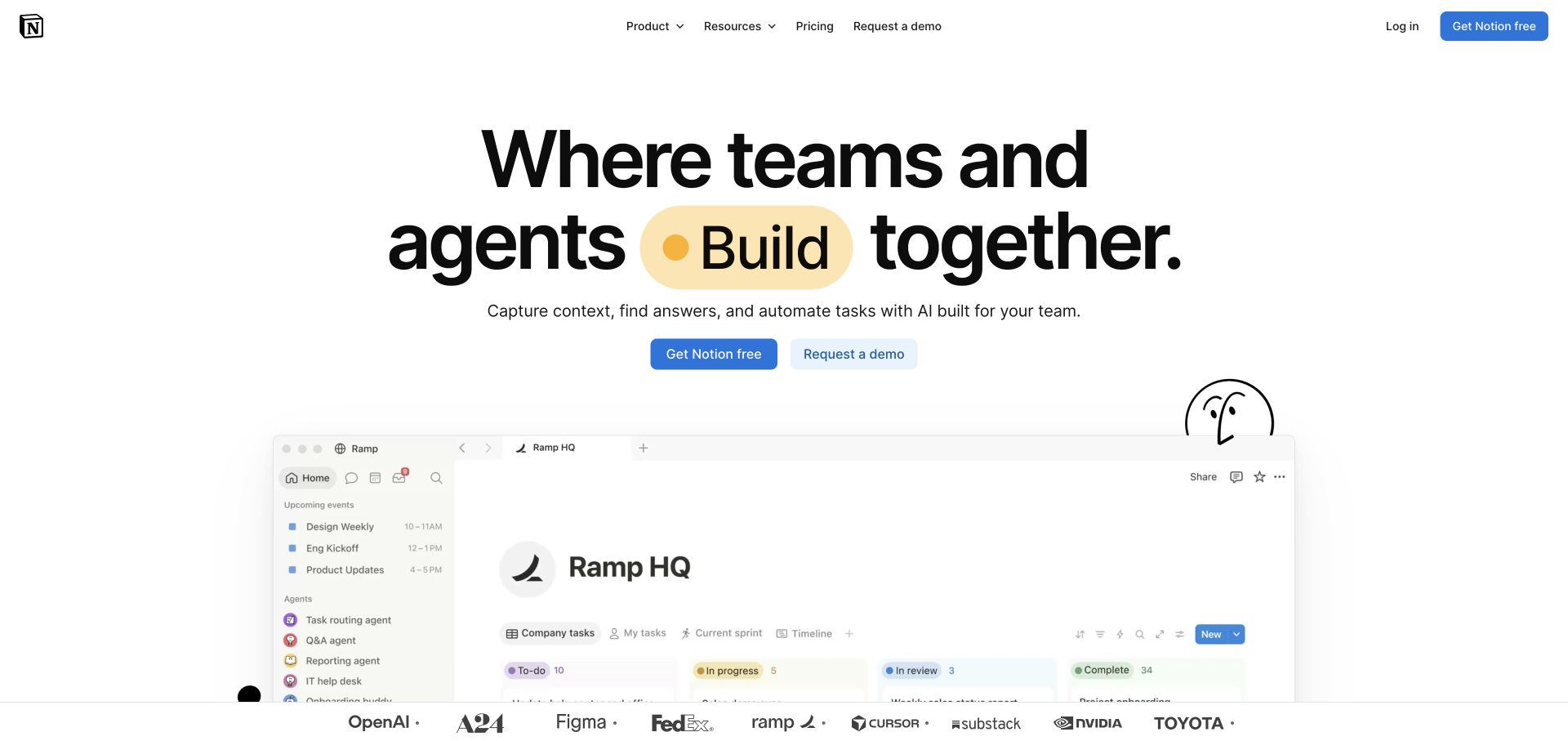
Notion’s public homepage combines a centered headline, small illustrated details, paired conversion routes, and a bounded product demonstration. The white canvas gives the interface example space to explain the product rather than filling the hero with decorative cards. Contentful’s official case study documents the marketing and educational content layer; it does not describe the workspace application as a Contentful product.
What you can learn
Keep product marketing, help material, and the actual application conceptually separate. A headless CMS can provide reusable descriptions, customer stories, and educational modules while developers control their presentation. Decide which content should be shared across page types and which needs product-specific approval before building a flexible block library.
Pros
The bounded demonstration gives the abstract workspace message a concrete visual reference.
Two clear entry routes accommodate visitors ready to try the product and those seeking more explanation.
Cons & considerations
The broad introductory claim needs specific product evidence further down the page.
Interface demonstrations require maintenance whenever the product changes, regardless of the CMS chosen.
Public source checked November 3, 2026. References may be embedded or legacy—not a complete backend inventory.
Platform source: Official Contentful case study — property-scoped evidence. Contentful’s case study documents Notion’s marketing, education, knowledge-base, and customer-story content. It does not establish the backend of the Notion workspace application. This is official documentary evidence for the named public property, not an image-CDN-only inference or an independent inventory of every current backend component. Platform evidence is separate from the direct website screenshot and is not a complete current infrastructure audit.
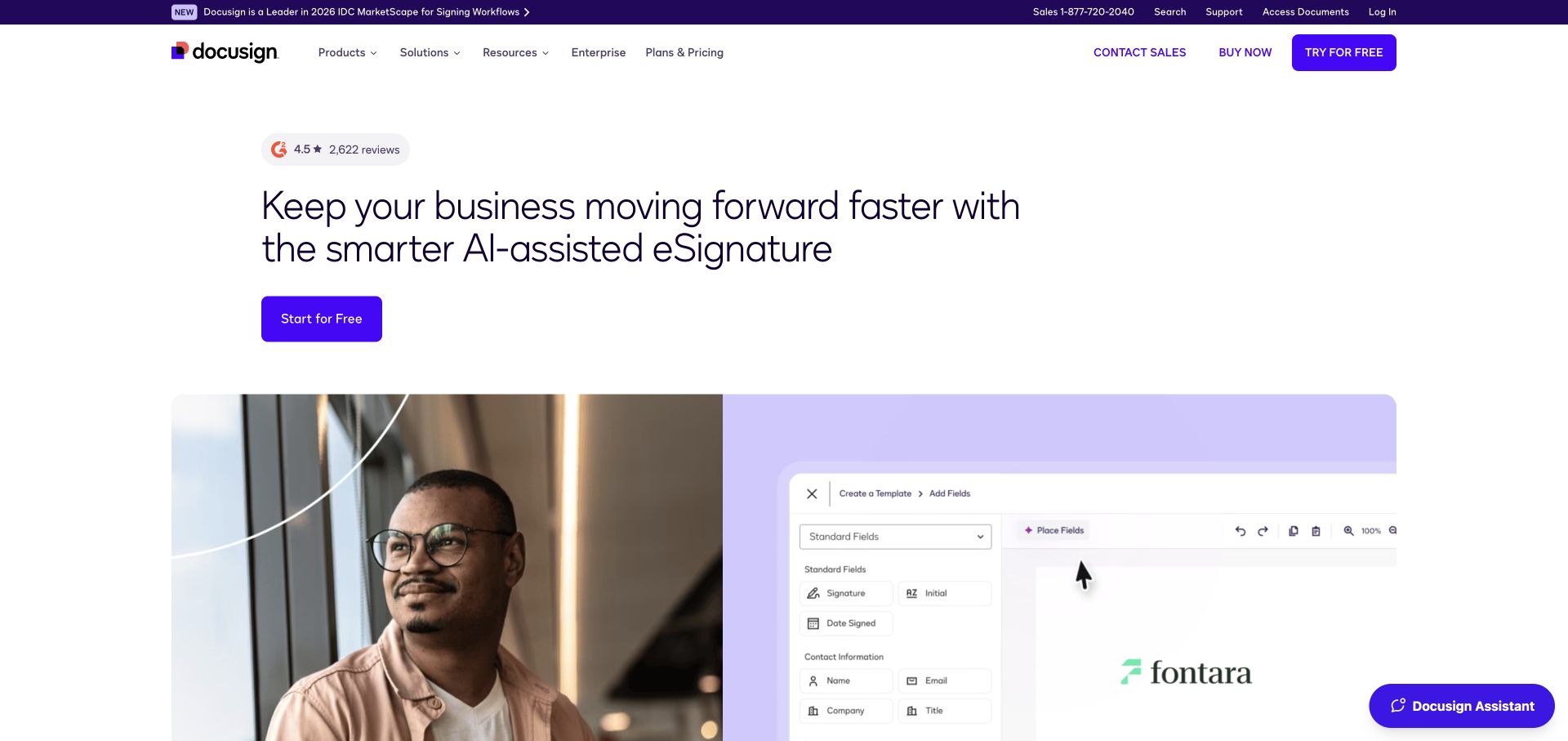
Docusign’s eSignature page layers a small ratings reference, a large product headline, and a prominent trial action above a wide explanatory media panel. Its two-level header distinguishes broad product navigation from buying and support routes. The page is a marketing destination, not a signing session. The official Contentful case study concerns that public content and localization layer rather than the security-sensitive signature application.
What you can learn
Build reusable fields for product positioning, evidence, eligibility details, and calls to action. Let the frontend present those fields in a consistent order while retaining product-level ownership of claims. A headless architecture can separate publishing from transaction systems, but it does not remove the need to review legal wording or keep screenshots current.
Pros
The ratings reference and product explanation appear as different levels of information rather than competing banners.
A conspicuous trial route remains available alongside broader product and pricing navigation.
Cons & considerations
The two-level header presents many choices before the visitor reaches detailed product information.
Marketing media and trial language require periodic review as product capabilities and terms evolve.
ContentfulDocumented platform association; current media delivery observed
Public source checked November 3, 2026. References may be embedded or legacy—not a complete backend inventory.
Platform source: Official Contentful case study — property-scoped evidence. The case study documents Docusign’s marketing website and localized ecommerce content, not the electronic-signature transaction service. This is official documentary evidence for the named public property, not an image-CDN-only inference or an independent inventory of every current backend component. Platform evidence is separate from the direct website screenshot and is not a complete current infrastructure audit.
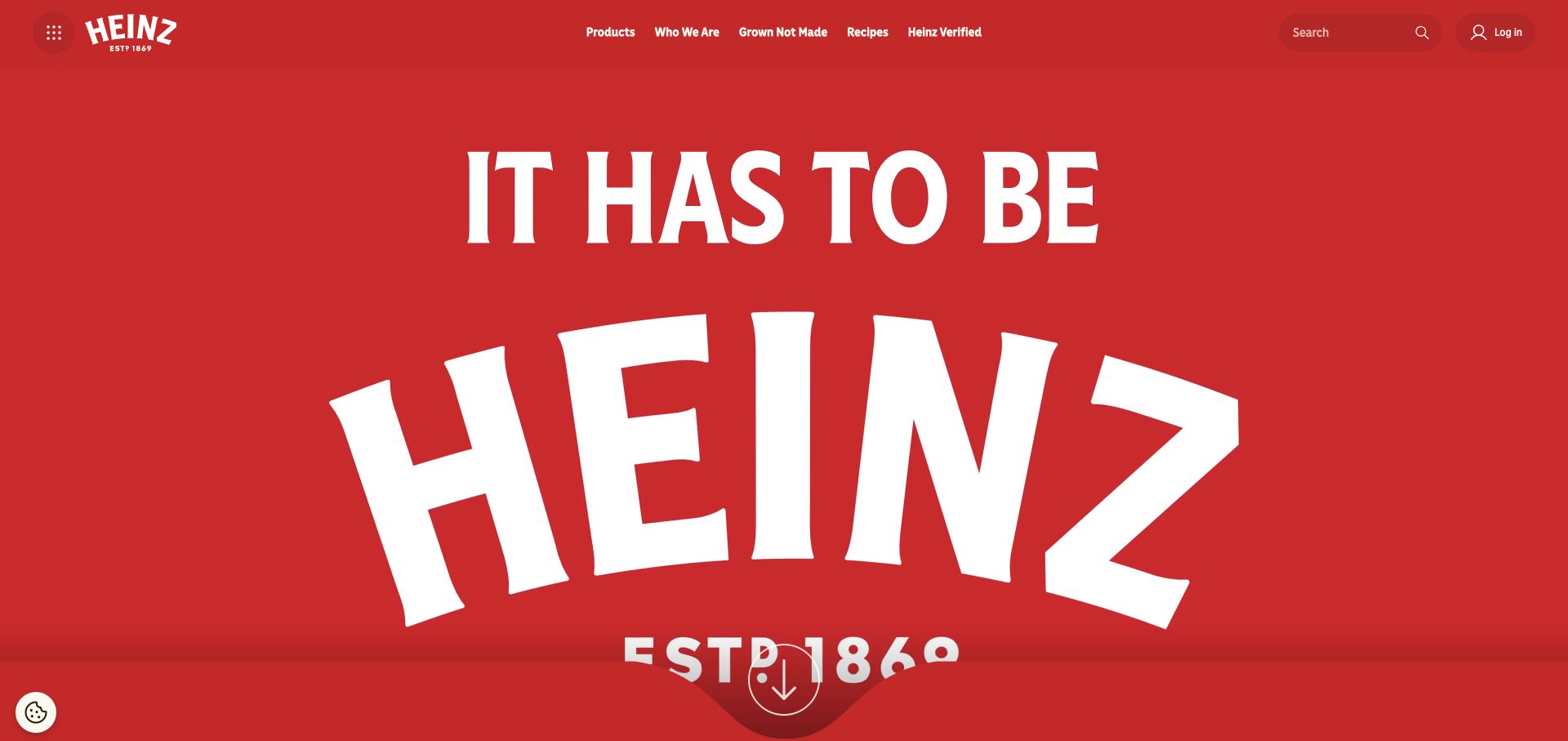
Heinz uses an intensely red canvas, oversized white identity, and animated campaign artwork rather than a generic product-grid opening. The header still names products, brand information, and recipes as dependable destinations. The official Kraft Heinz case study specifically names heinz.com, and the current page loads a named Contentful bundle. The lesson is a reusable content system behind highly individual art direction, not a claim that every parent-company property shares one backend.
What you can learn
Create shared product and recipe structures without forcing every campaign to look identical. Separate controlled product facts from expressive imagery and seasonal messaging. A headless CMS can supply that content, but the frontend and design system must decide how campaign media behaves and how practical information remains discoverable.
Pros
The distinctive color and oversized identity make the brand unmistakable without a long introduction.
Products and recipes remain explicit routes around the changing campaign presentation.
Cons & considerations
Animation and large artwork can delay access to straightforward product information.
Campaign-led pages require usable still imagery and text when motion is unavailable or unwelcome.
ReactAssociated with Next.js; not independently observed
Public source checked November 3, 2026. References may be embedded or legacy—not a complete backend inventory.
Platform source: Official Contentful case study — property-scoped evidence. The Kraft Heinz case study explicitly identifies heinz.com as an early Contentful brand-site redesign. The reviewed page also loads a named vendor-contentful JavaScript bundle. This is official documentary evidence for the named public property, not an image-CDN-only inference or an independent inventory of every current backend component. Platform evidence is separate from the direct website screenshot and is not a complete current infrastructure audit.
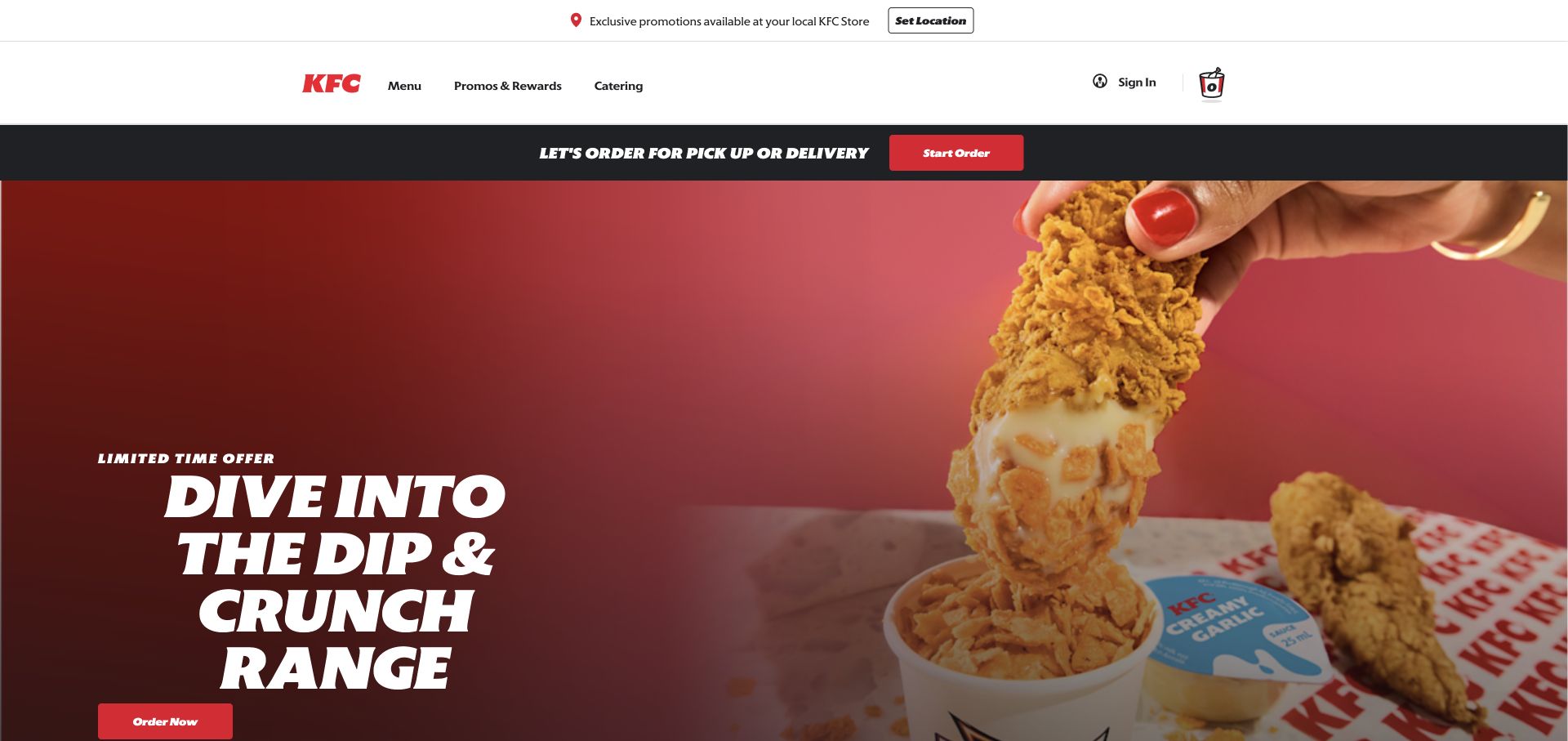
KFC Australia combines a compact white navigation, an ordering strip, and a large product campaign with a red action. Menu categories follow the feature, while the public location control is unset in our capture. The official case study specifically identifies Australia in the Contentful rollout and distinguishes the content system from custom commerce tooling. That scope is important: a promotional homepage does not reveal how orders or branch availability are processed.
What you can learn
Model campaign copy, product imagery, and regional variations separately from operational menu and fulfillment data. The interface must explain when an offer depends on a selected location. Content reuse is useful, but restaurant teams still need reliable approval, expiry, and availability rules that connect editorial material to the appropriate ordering service.
Pros
The ordering context is visually distinct from the campaign imagery and general navigation.
Menu categories give visitors an alternative to following the current promotional offer.
Cons & considerations
Promotional content can be misleading if location-specific availability is not resolved before ordering.
Large food campaigns and ordering prompts can crowd practical restaurant information on smaller screens.
Visible tech stack
Earlier / documented evidence
Contentful
Earlier cited evidence retained; no current scan result. References may be embedded or legacy—not a complete backend inventory.
Platform source: Official Contentful case study — property-scoped evidence. The official KFC case study explicitly describes Australia as the first market in its Contentful website and app content rollout; it distinguishes the content layer from custom commerce services. This is official documentary evidence for the named public property, not an image-CDN-only inference or an independent inventory of every current backend component. Platform evidence is separate from the direct website screenshot and is not a complete current infrastructure audit.
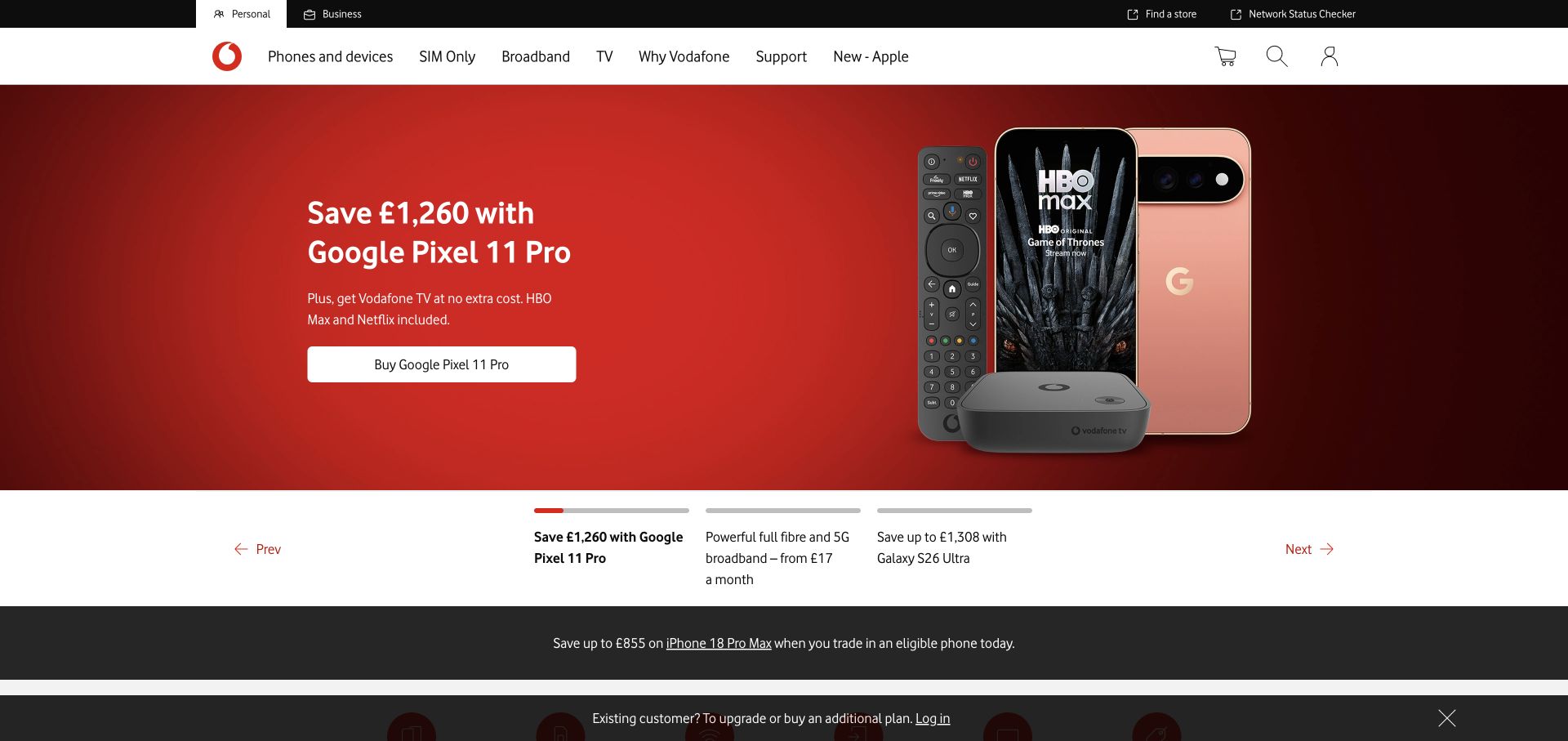
Vodafone UK places a red promotional canvas beneath a broad but orderly product header. The featured device and offer copy occupy separate visual areas, followed by labeled carousel choices and darker informational strips. Those labels provide more context than anonymous dots alone. Contentful’s official case study concerns UK marketing content, not network operations or billing systems, so the public property is kept explicitly market-scoped in this example.
What you can learn
Store recurring offer structures with fields for eligibility, dates, product relationships, and mandatory qualifications. A CMS should help editors replace an offer without rebuilding navigation or leaving contradictory copy in another module. Pair reusable content with a controlled frontend design system, and make sure market ownership is clear before sharing a campaign across regions.
Pros
Labeled feature choices help visitors understand the subjects of alternative promotions.
The red campaign area is visually separate from the more functional product-navigation layer.
Cons & considerations
A dense product header can make a first visit feel choice-heavy.
Fast-changing offers need coordinated review of qualifications, availability, and onward product pages.
Public source checked November 3, 2026. References may be embedded or legacy—not a complete backend inventory.
Platform source: Official Contentful case study — property-scoped evidence. The case study specifically documents UK marketing website content managed in Contentful; this is not a claim about Vodafone billing, network operations, or every national website. This is official documentary evidence for the named public property, not an image-CDN-only inference or an independent inventory of every current backend component. Platform evidence is separate from the direct website screenshot and is not a complete current infrastructure audit.
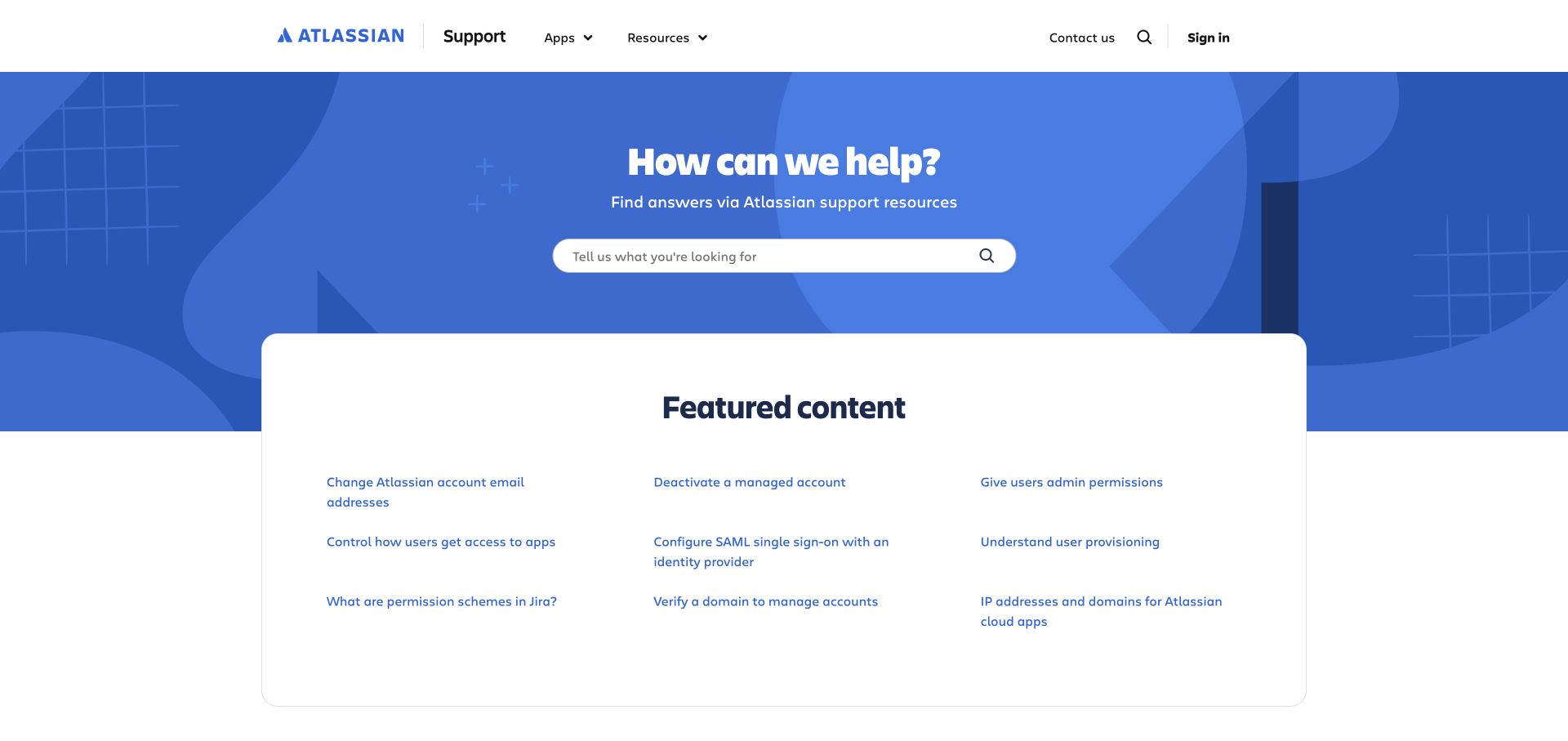
Atlassian Support uses a blue introductory panel with a large search field and a bounded white collection of featured help links. Apps and resources are distinct navigation groups, while sign-in remains separate from public discovery. The page makes finding an answer the primary task, not starting a software trial. The vendor case study explicitly documents external documentation and support content in Contentful rather than claiming the Jira application uses that CMS.
What you can learn
Model help articles around products, tasks, versions, and audience roles. Reusable content only helps when relationships and ownership are clear enough to keep instructions consistent. A search-led interface also needs well-maintained titles and summaries, plus direct category routes for people who do not know the vocabulary needed for a search.
Pros
The large search field directly supports the visitor’s likely question-finding task.
Featured links expose common administrative topics without requiring a search or account login.
Cons & considerations
A search-first experience is only as helpful as its indexing and article labeling.
A multi-product archive needs careful version context so an answer is not applied to the wrong product.
Visible tech stack
Referenced on the public page
Sentry
Amazon CloudFrontDelivery / hosting signal
Earlier / documented evidence
ContentfulDocumented platform association; current media delivery observed
Public source checked November 3, 2026. References may be embedded or legacy—not a complete backend inventory.
Platform source: Official Contentful case study — property-scoped evidence. The official case study documents Atlassian’s external help, documentation, FAQs, and support content in Contentful. This example is the support property, not the main Jira or Confluence application. This is official documentary evidence for the named public property, not an image-CDN-only inference or an independent inventory of every current backend component. Platform evidence is separate from the direct website screenshot and is not a complete current infrastructure audit.
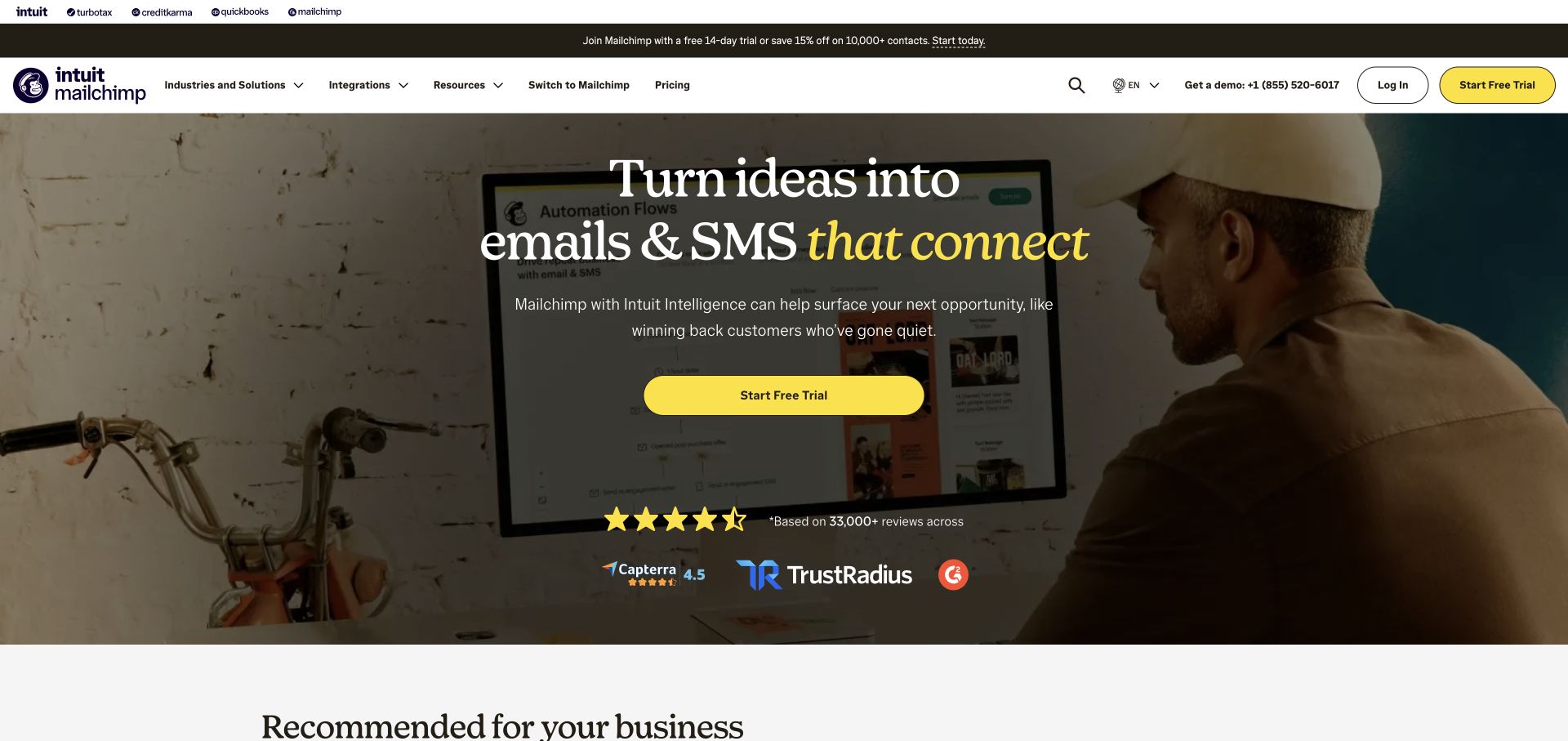
Mailchimp uses a photographic hero beneath a multi-layer header, with a large serif headline and a conspicuous yellow trial action. Ratings references sit below the main action rather than interrupting the introductory copy. Industry solutions, integrations, resources, switching, and pricing have distinct routes. The official Contentful case study documents both the marketing and knowledge-base websites; it does not establish the software responsible for sending customer email campaigns.
What you can learn
Share approved product terminology and reusable explanations across marketing and help material without making the two experiences identical. A CMS model should separate claims, plan details, ratings references, and editorial examples so each can be reviewed independently. Preserve clear handoffs between a public page and account creation rather than treating them as the same publishing task.
Pros
The yellow trial button has a clear visual priority within a detailed photographic opening.
Integration and switching routes acknowledge visitors who already have a specific buying question.
Cons & considerations
Several header layers take substantial space before the introductory message.
Ratings and promotional terms need current source and review metadata, not permanent copy embedded in artwork.
Visible tech stack
Earlier / documented evidence
Contentful
Public source checked November 3, 2026. References may be embedded or legacy—not a complete backend inventory.
Platform source: Official Contentful case study — property-scoped evidence. The case study explicitly documents migration of Mailchimp’s marketing and knowledge-base websites to Contentful, not its email-delivery application. This is official documentary evidence for the named public property, not an image-CDN-only inference or an independent inventory of every current backend component. Platform evidence is separate from the direct website screenshot and is not a complete current infrastructure audit.
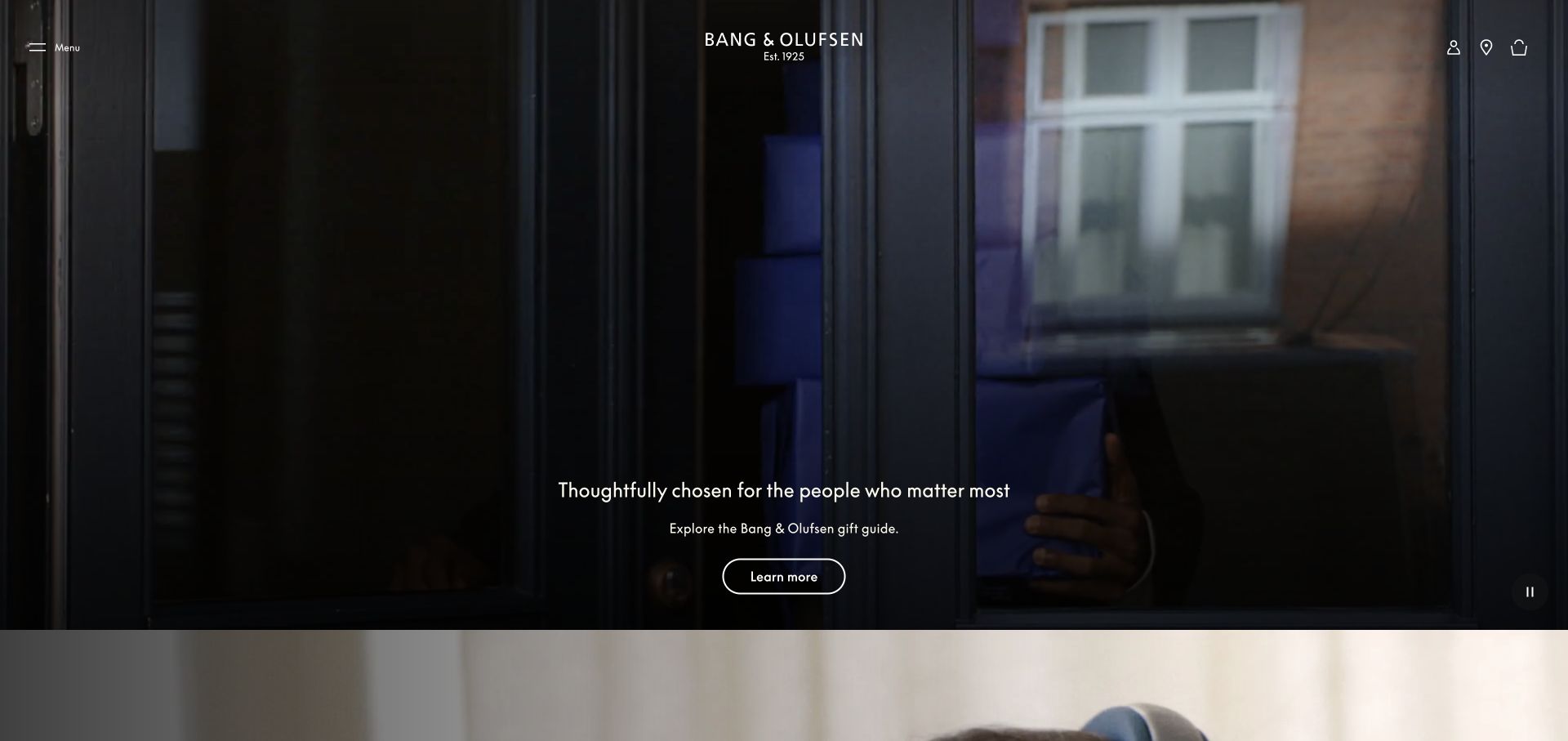
Bang & Olufsen gives its centered wordmark and sparse navigation a large cinematic background. A compact gift-guide message and outlined action sit low in the feature, with account, store, and cart icons kept to one corner. The official case study describes Contentful content alongside a separate commercetools integration. The US route shown here is a public storefront presentation, not evidence of every system involved in payment or fulfillment.
What you can learn
Separate campaign storytelling from product facts while giving them a shared design language. Content relationships should connect a guide to relevant products without duplicating specifications or availability information. A headless CMS provides the editorial layer, but the frontend still has to design a clear browsing journey and coordinate with commerce services.
Pros
The sparse header gives campaign photography room while keeping core utility controls visible.
The guide action introduces an editorial route into the product catalog rather than only a shopping grid.
Cons & considerations
The atmospheric opening provides limited immediate detail about specific products.
A film-led feature needs readable fallback content and careful handling of small-screen crops.
ContentfulDocumented platform association; current media delivery observed
Associated dependencies
ReactAssociated with Next.js; not independently observed
Public source checked November 3, 2026. References may be embedded or legacy—not a complete backend inventory.
Platform source: Official Contentful case study — property-scoped evidence. The case study documents the combined product website and storefront content using Contentful alongside a separate commercetools integration. The screenshot is the explicit US public route. This is official documentary evidence for the named public property, not an image-CDN-only inference or an independent inventory of every current backend component. Platform evidence is separate from the direct website screenshot and is not a complete current infrastructure audit.
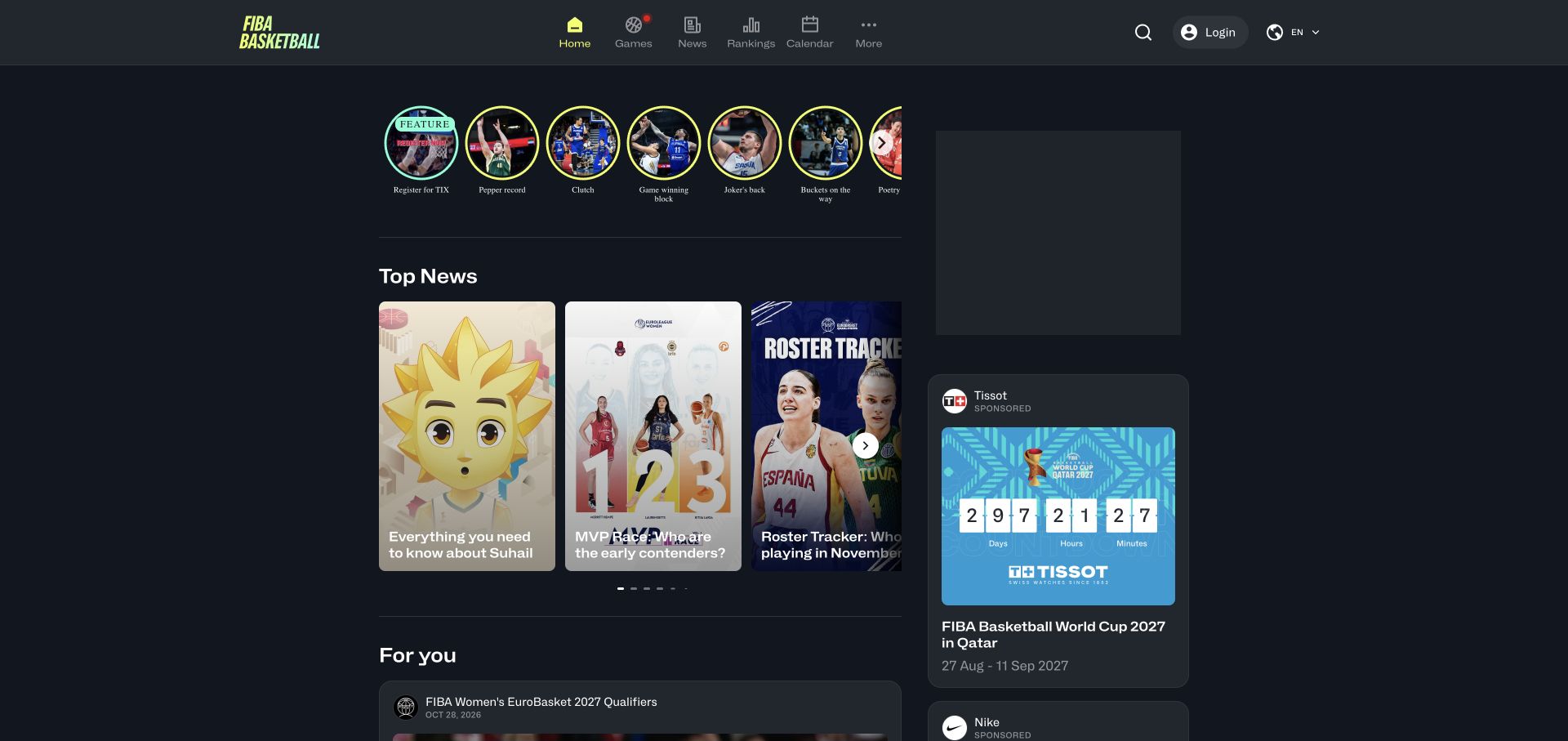
FIBA uses a dark interface with an icon-and-label navigation, a row of short visual features, and compact news cards. A separate event panel includes a competition countdown, showing that the page combines published content with time-sensitive information. The official Contentful case study describes the fan and event websites and their connection to a separate event-data API. Composable content is not itself a live-score engine.
What you can learn
Keep editorial stories, competition descriptions, and real-time data as related but distinct structures. Shared IDs and predictable interfaces matter when a story points to an event whose schedule changes. Plan fallbacks for unavailable advertising or data panels so the surrounding content remains useful and the layout does not depend on every external service responding.
Pros
Labeled games, news, rankings, and calendar routes reflect distinct fan intentions.
The card layout offers several editorial stories alongside the current competition context.
Cons & considerations
A dense portal can overwhelm visitors who only want one game or result.
External data and advertising areas require layout fallbacks when their content is absent.
Public source checked November 3, 2026. References may be embedded or legacy—not a complete backend inventory.
Platform source: Official Contentful case study — property-scoped evidence. The official case study describes FIBA’s fan and event web experiences launched in 2024, with Contentful content connected to a separate event-data API. This is official documentary evidence for the named public property, not an image-CDN-only inference or an independent inventory of every current backend component. Platform evidence is separate from the direct website screenshot and is not a complete current infrastructure audit.
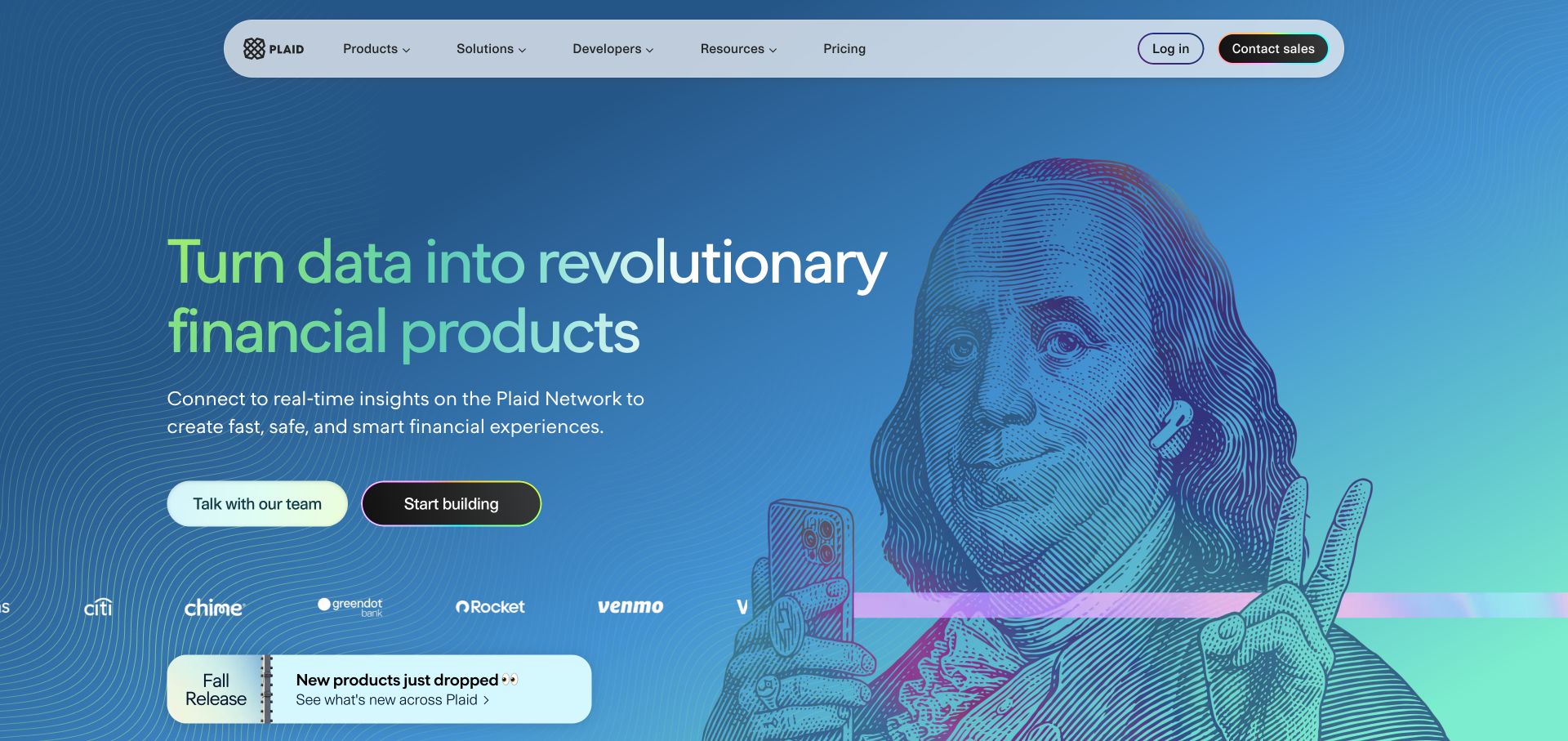
Plaid’s public homepage uses a blue gradient, engraved-style illustration, and large headline, with two distinct actions for commercial conversations and building. A compact floating navigation separates products, solutions, developer material, and resources. The graphic supplies personality while the buttons clarify different next steps. Contentful’s case study specifically concerns the marketing website and blog, not financial-data processing or the account-linking service.
What you can learn
Define separate editorial pathways for evaluators and implementers. They may share product names and explanations, but need different evidence and onward destinations. A headless CMS can hold those relationships while developers create the interface. Keep regulated or technical product claims under explicit review rather than assuming a flexible page builder makes them safe to publish.
Pros
The paired actions distinguish a buying conversation from a developer-oriented entry route.
A coherent illustration and color system gives a technical product a recognizable public identity.
Cons & considerations
The broad visual metaphor still needs concrete product explanations further down the journey.
Animated elements and layered gradients require care so headline readability is not dependent on one frame.
ContentfulDocumented platform association; current media delivery observed
Associated dependencies
ReactAssociated with Next.js; not independently observed
Public source checked November 3, 2026. References may be embedded or legacy—not a complete backend inventory.
Platform source: Official Contentful case study — property-scoped evidence. The case study specifically documents Plaid’s marketing website and blog content migration. It does not establish the implementation of financial-data APIs or account-linking services. This is official documentary evidence for the named public property, not an image-CDN-only inference or an independent inventory of every current backend component. Platform evidence is separate from the direct website screenshot and is not a complete current infrastructure audit.
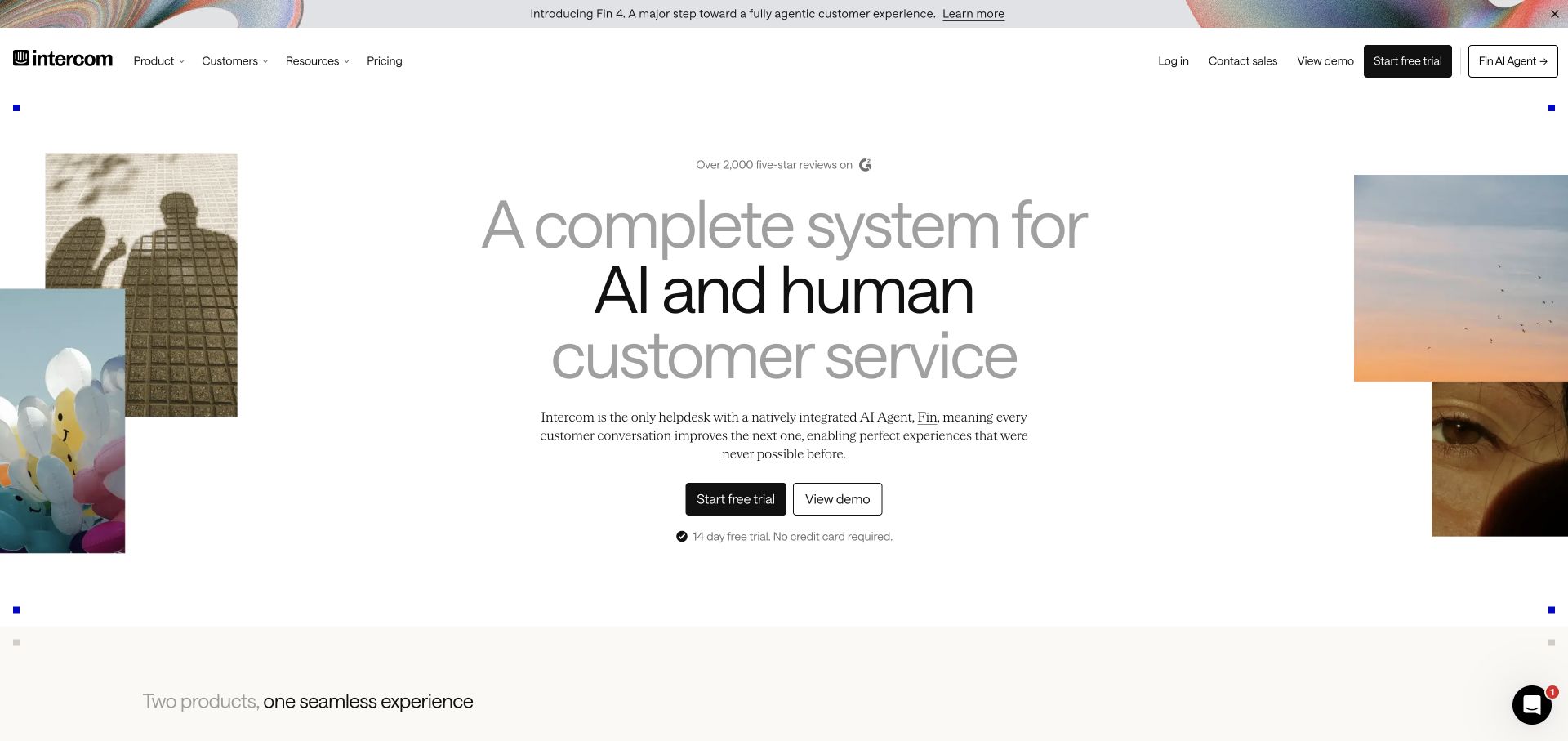
Intercom centers a large multi-line product statement between small photographic fragments, then places a short explanation above trial and demonstration actions. A narrow announcement strip introduces a related product without replacing the primary navigation. The official Contentful case study describes the marketing website and reusable components, not the messaging application or AI-agent runtime. The example illustrates how a headless content layer can support a spare, highly controlled frontend.
What you can learn
Agree on a reusable component vocabulary before giving editors unrestricted layout control. Product statements, proof, explanations, and conversion actions should have clear roles and review owners. Maintain a distinction between content about related products and the applications themselves. The design system must support that relationship without making every page a disconnected one-off.
Pros
The central statement and paired actions establish a straightforward introductory hierarchy.
The related-product announcement occupies a separate strip rather than competing inside the main explanation.
Cons & considerations
Large display text leaves relatively little product detail in the first viewport.
Supplementary photographic fragments add atmosphere but require careful cropping and a clear purpose.
ReactAssociated with Next.js; not independently observed
Public source checked November 3, 2026. References may be embedded or legacy—not a complete backend inventory.
Platform source: Official Contentful case study — property-scoped evidence. The official case study documents Intercom’s public marketing website and reusable content-component library. It is not evidence that the messaging product or Fin service runs on Contentful. This is official documentary evidence for the named public property, not an image-CDN-only inference or an independent inventory of every current backend component. Platform evidence is separate from the direct website screenshot and is not a complete current infrastructure audit.
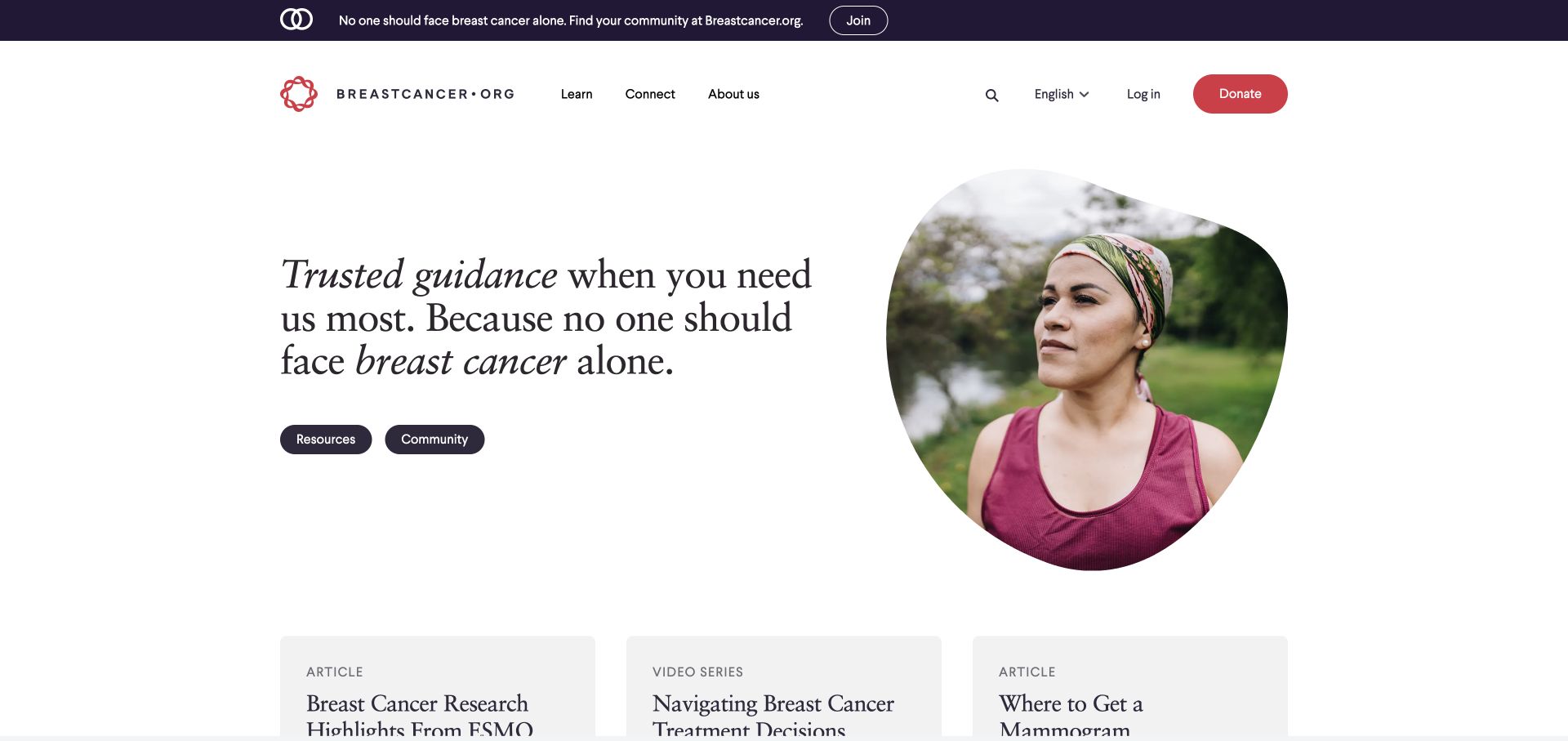
Breastcancer.org combines a restrained serif introduction with a rounded portrait crop and two plainly named routes: informational resources and community. The main navigation similarly separates learning, connection, and organizational background. Article and video labels appear on the next row of cards. Contentful’s case study documents the public information website and structured content relationships; it does not establish the separate community-account implementation.
What you can learn
Treat expert-reviewed information, personal stories, and community discussion as different publication roles. Each needs appropriate authorship, review dates, relationships, and moderation boundaries. A shared CMS can help reuse accurate material, but it does not replace professional review or justify inferring someone’s medical history from a photograph. Design the pathways around what a reader is trying to find.
Pros
The paired resource and community choices distinguish reading from participation.
Format labels help readers recognize written articles and video material before opening them.
Cons & considerations
A broad introductory promise needs clear source and review context deeper in the resource library.
Sensitive information requires ongoing editorial governance beyond a visually reassuring homepage.
ReactAssociated with Next.js; not independently observed
Public source checked November 3, 2026. References may be embedded or legacy—not a complete backend inventory.
Platform source: Official Contentful case study — property-scoped evidence. The case study documents the nonprofit’s public health-information website redesign, structured resource content, and translation relationships using Contentful. It does not establish separate community-account systems. This is official documentary evidence for the named public property, not an image-CDN-only inference or an independent inventory of every current backend component. Platform evidence is separate from the direct website screenshot and is not a complete current infrastructure audit.
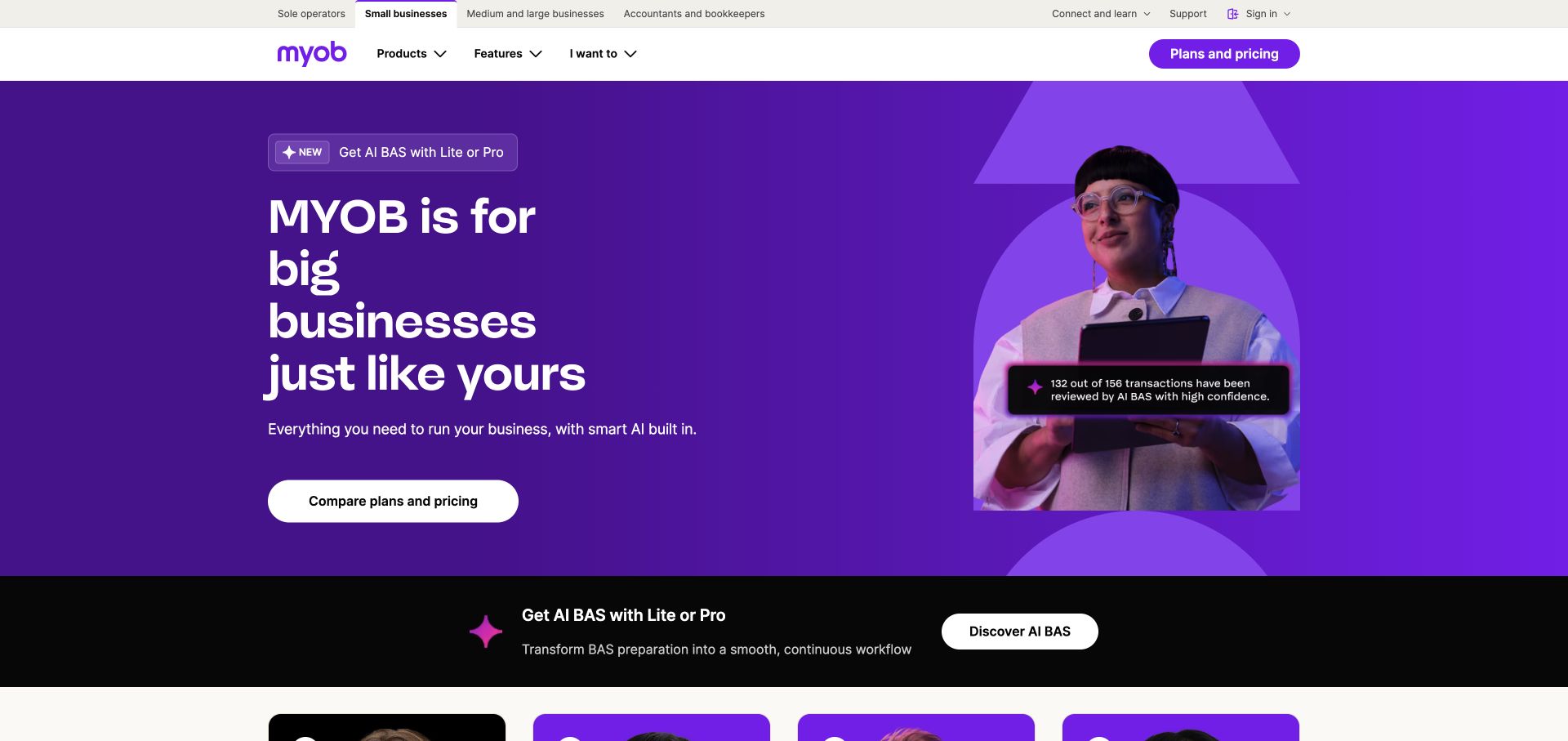
MYOB’s Australian marketing page uses a purple campaign panel, a large changing audience phrase, and a prominent plan-comparison action. The upper navigation distinguishes business sizes and accountants before the product navigation begins. A separate dark strip introduces a specific feature. The September 2026 Contentful case study documents the core website’s content consolidation, not the applications that calculate payroll, manage accounts, or submit tax information.
What you can learn
Model audience, product, and campaign relationships explicitly. A reusable content system should keep shared feature descriptions consistent while allowing different buying journeys and regional qualifications. Give temporary announcements their own lifecycle rather than repeatedly adding permanent homepage sections. The frontend still needs to handle animated wording and changing content lengths responsibly.
Pros
Audience links help visitors identify their relevant product family before exploring detailed features.
The feature strip is visually separate from the general plan-comparison introduction.
Cons & considerations
Changing headline wording can create momentary ambiguity if a visitor catches a transition.
Multiple audience and product layers require careful mobile navigation to avoid repeating similar choices.
ContentfulDocumented platform association; current media delivery observed
Associated dependencies
ReactAssociated with Next.js; not independently observed
Public source checked November 3, 2026. References may be embedded or legacy—not a complete backend inventory.
Platform source: Official Contentful case study — property-scoped evidence. The September 2026 case study describes MYOB’s core website and content operations consolidated on Contentful. The example is the Australian marketing route, not accounting, payroll, or tax-processing applications. This is official documentary evidence for the named public property, not an image-CDN-only inference or an independent inventory of every current backend component. Platform evidence is separate from the direct website screenshot and is not a complete current infrastructure audit.
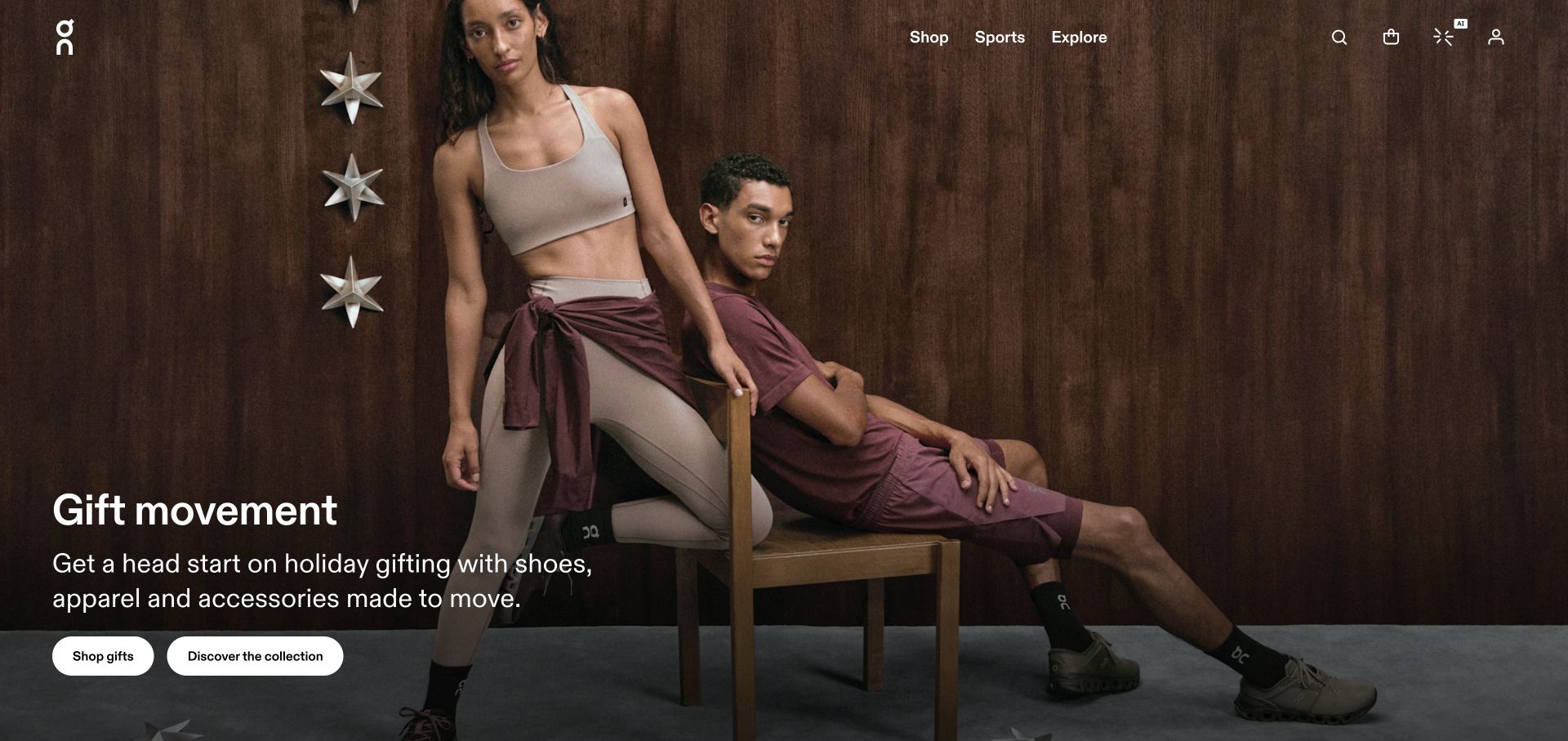
On’s US homepage puts a seasonal photograph across the full opening screen, with a compact white navigation and two rounded shopping routes near the lower edge. The main labels separate shopping, sports, and exploration rather than presenting only product categories. An official Contentful case study documents the content-led website redesign, and the current page names Contentful-related stylesheets. Those observations support the public content layer without proving an inventory or checkout implementation.
What you can learn
Maintain relationships among campaigns, activity categories, stories, and products. Editorial teams should be able to replace seasonal imagery without duplicating catalog facts or breaking evergreen routes. A headless approach needs a frontend design system and coordinated commerce data; it is not a substitute for those responsibilities. Keep promotional overlays from obscuring the first useful task.
Pros
The two campaign actions distinguish immediate shopping from exploring a curated collection.
Sports and editorial exploration remain recognizable routes around the seasonal photograph.
Newsletter and privacy overlays can interrupt the intended opening journey when presented together.
Visible tech stack
Earlier / documented evidence
Contentful
Earlier cited evidence retained; no current scan result. References may be embedded or legacy—not a complete backend inventory.
Platform source: Official Contentful case study — property-scoped evidence. The official case study documents On’s website redesign and content-led commerce design system. The reviewed public page also references ContentfulPage and ContentfulBlocks stylesheet names. This is official documentary evidence for the named public property, not an image-CDN-only inference or an independent inventory of every current backend component. Platform evidence is separate from the direct website screenshot and is not a complete current infrastructure audit.
Ace & Tate’s US homepage uses paired color and monochrome portraits to show eyewear at a very large scale. White navigation sits across the image, with a simple collection action near the lower edge and a narrow shipping strip above. Glasses, sunglasses, accessories, services, and eye care remain distinct choices. Contentful’s case study explicitly describes homepage, evergreen, and campaign content; commerce and visual-building tools are separate parts of the documented setup.
What you can learn
Give campaign pages a relationship to stable product categories and service information. Store editorial image choices separately from product specifications so a seasonal refresh does not create duplicate facts. A headless CMS can support the content workflow, but readable navigation and a useful product-selection journey remain frontend design tasks.
Pros
The paired photographs make the eyewear visible without relying on a wall of product thumbnails.
Service and eye-care routes sit alongside shopping categories rather than being hidden in support links.
Cons & considerations
White navigation over pale image areas needs careful contrast decisions for each campaign.
A large portrait-led opening offers little immediate product comparison or buying guidance.
ReactAssociated with Next.js; not independently observed
Public source checked November 3, 2026. References may be embedded or legacy—not a complete backend inventory.
Platform source: Official Contentful case study — property-scoped evidence. The official case study explicitly documents the eyewear homepage, evergreen pages, and campaign content in Contentful, alongside separate commerce and visual-building tools. This is official documentary evidence for the named public property, not an image-CDN-only inference or an independent inventory of every current backend component. Platform evidence is separate from the direct website screenshot and is not a complete current infrastructure audit.
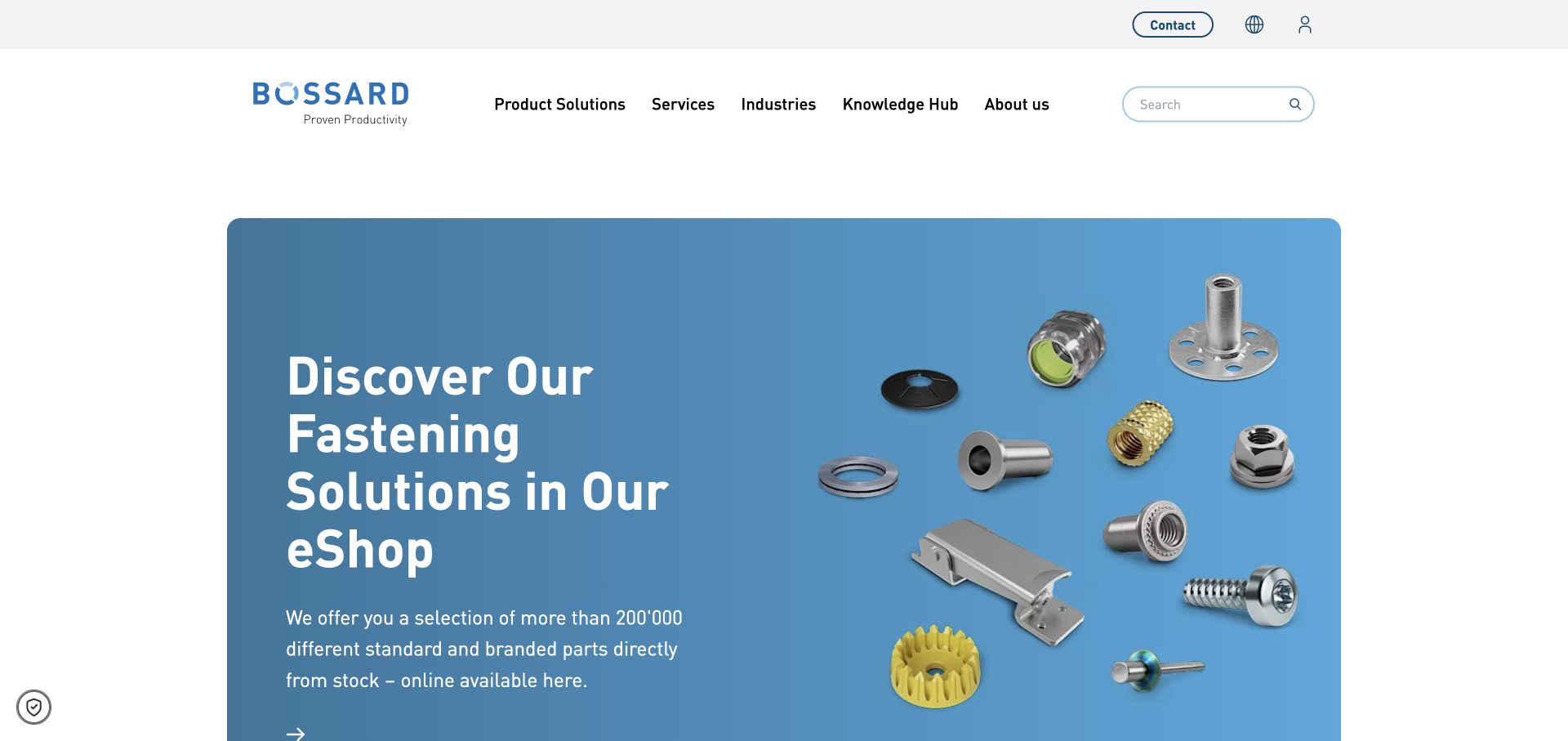
Bossard’s global English page uses a wide white header, a visible search field, and a bounded blue product feature showing individual fasteners. Products, services, industries, and a knowledge hub have distinct navigation roles. The layout is more reference-oriented than a fashion-style campaign. The April 2026 vendor case study documents the Contentful website migration, while the current page separately declares Astro as its presentation framework.
What you can learn
Distinguish editorial explanations from technical product data and commerce operations. A CMS should connect industry applications, engineering guidance, and relevant product families without duplicating authoritative specifications. Plan localization and approval around technical terminology, not just word-for-word page copies. A composable stack still requires clear interfaces between the publishing surface and specialist catalog systems.
Pros
The visible search and explicit product route support visitors who arrive with a specific part or technical question.
The knowledge hub has a separate role from service and product navigation.
Cons & considerations
A long product-feature headline can occupy most of a large card before its action appears.
Technical content and multilingual variants require disciplined ownership to prevent conflicting specifications.
Public source checked November 3, 2026. References may be embedded or legacy—not a complete backend inventory.
Platform source: Official Contentful case study — property-scoped evidence. The April 2026 case study documents Bossard’s website replatform and localized content workflows using Contentful. The public page separately exposes Astro generator metadata; commerce operations are not inferred from the homepage. This is official documentary evidence for the named public property, not an image-CDN-only inference or an independent inventory of every current backend component. Platform evidence is separate from the direct website screenshot and is not a complete current infrastructure audit.
Brookfield Zoo Chicago gives a tiger photograph almost the entire first screen, with a large serif headline and compact visit-oriented navigation. A floating lower bar exposes opening hours, today’s information, and a contrasting ticket action. That practical layer prevents the image from becoming a purely decorative introduction. The September 2026 Contentful case study documents the zoo’s public website and reusable event and species content, not the separately linked ticket-store application.
What you can learn
Model opening information, recurring programs, exceptions, and species descriptions as reusable records. The same detail may appear on a homepage, event listing, or visit page and should not require separate manual corrections. Give urgent closures a clear publishing path, and make ticket handoffs explicit rather than inferring that a CMS processes purchases.
Pros
The visit bar pairs evocative photography with practical information needed for a real trip.
Conservation and exploration remain distinct from ticket-oriented navigation.
Cons & considerations
Very large headline text and photography leave limited room for additional visit details.
Daily schedules and recurring programs need exception handling and timely editorial review.
Vue.jsAssociated with Nuxt; not independently observed
Public source checked November 3, 2026. References may be embedded or legacy—not a complete backend inventory.
Platform source: Official Contentful case study — property-scoped evidence. The September 2026 case study explicitly documents the zoo’s Contentful website launched in early 2026, including event schedules, reusable species information, and public visit content. This is official documentary evidence for the named public property, not an image-CDN-only inference or an independent inventory of every current backend component. Platform evidence is separate from the direct website screenshot and is not a complete current infrastructure audit.
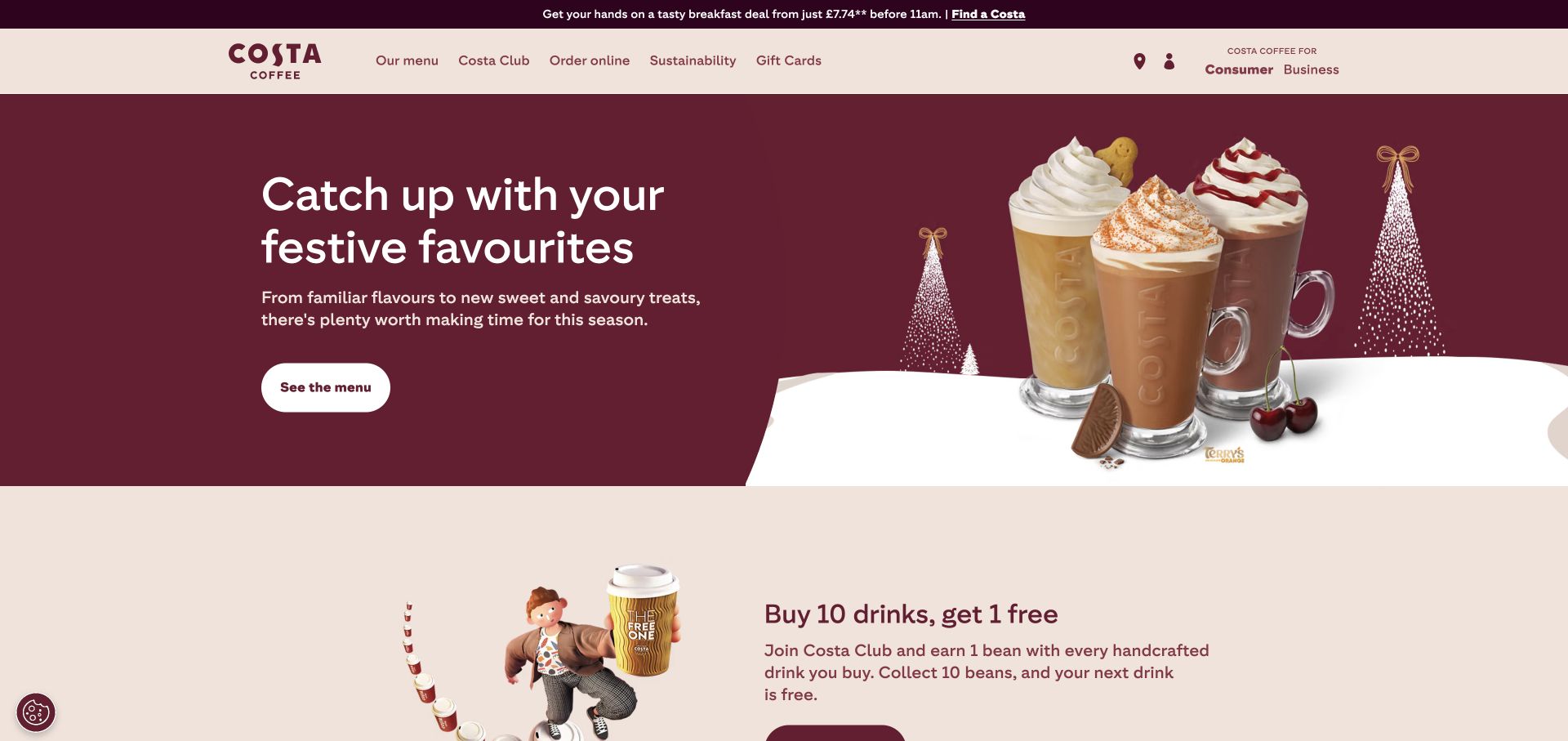
Costa’s UK homepage combines a burgundy seasonal product panel with a cream navigation and a contrasting menu action. Store finding, loyalty information, ordering, sustainability, and gift cards remain explicit routes. A separate section below introduces the loyalty program rather than forcing it into the same hero message. The official Contentful case study documents regional website content modules, not the private rewards-account or ordering backend.
What you can learn
Separate reusable brand material from market-specific menus, campaigns, and operational data. An editorial CMS can manage campaign images and descriptions while store and product information may come from other services. Plan local approvals and expiry rules so a seasonal offer does not remain visible after its availability changes. Shared modules should preserve regional relevance, not merely translate the same page.
Pros
A clear menu action connects the seasonal visual to a practical next step.
Store finding and loyalty remain accessible without relying on the current promotional panel.
Cons & considerations
An announcement strip and several navigation categories compete for limited header space.
Regional promotions need coordinated review of timing, product availability, and qualifications.
Visible tech stack
Earlier / documented evidence
Contentful
Earlier cited evidence retained; no current scan result. References may be embedded or legacy—not a complete backend inventory.
Platform source: Official Contentful case study — property-scoped evidence. The official case study documents Costa’s localized public websites and reusable regional content modules. This screenshot shows the UK public property, not a Costa Club account or the rewards backend. This is official documentary evidence for the named public property, not an image-CDN-only inference or an independent inventory of every current backend component. Platform evidence is separate from the direct website screenshot and is not a complete current infrastructure audit.
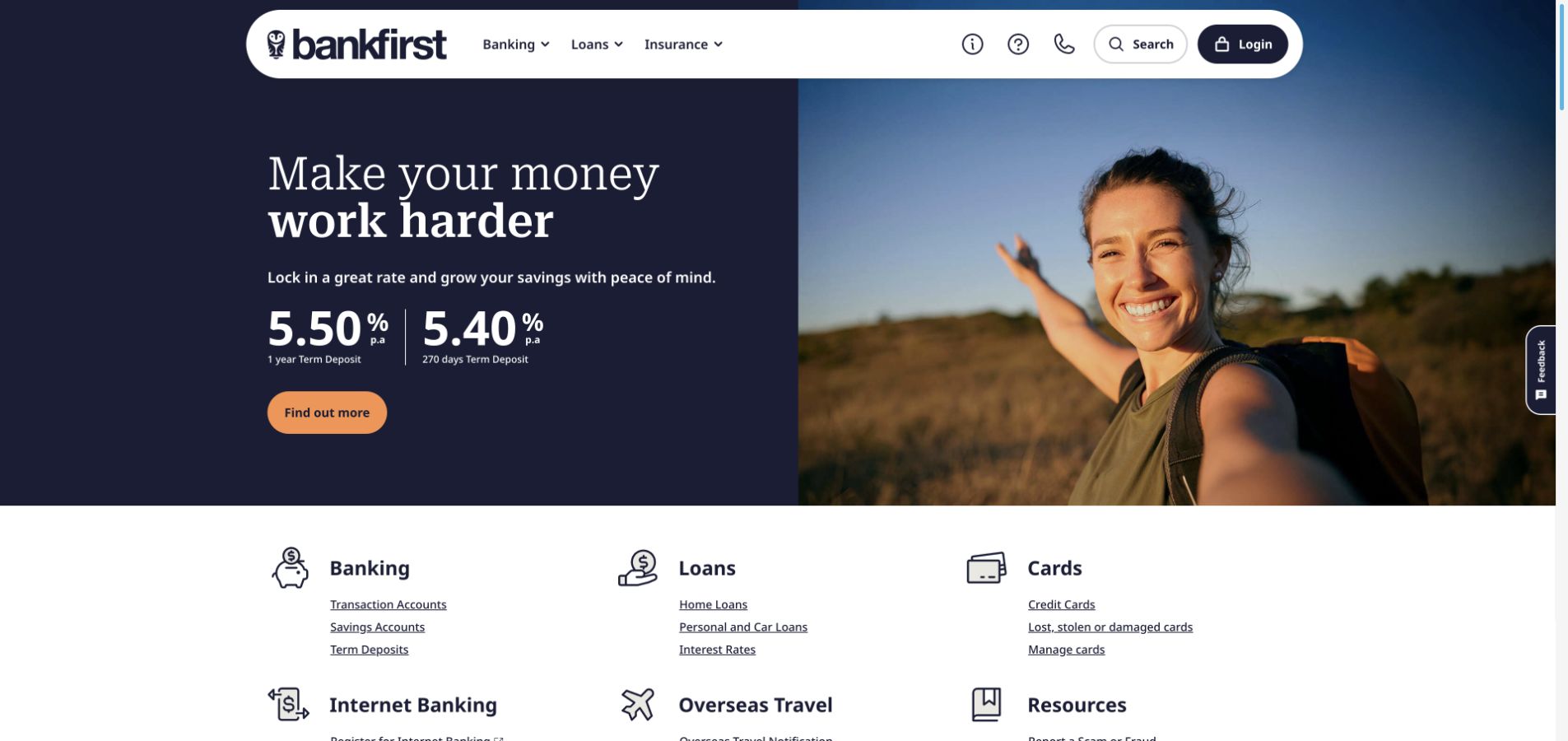
Bank First uses a floating rounded navigation over a split photographic feature, with a large serif message, prominent rate information, and a contrasting product-information action. A grid of banking, lending, card, and practical-service links begins immediately below. The official Contentful case study documents this public website’s modular publishing approach. It does not claim that internet banking, account balances, or transaction processing use the same platform.
What you can learn
Keep controlled product facts and qualifications in reusable, owned content records. A marketing CMS can reduce inconsistent repetition, but financial claims still require appropriate review and a clear route to full terms. Separate public education and product discovery from authenticated services in both the interface and the technical description. The displayed rates are snapshot content, not recommendations.
Pros
The practical link grid offers routes for existing customers as well as prospective buyers.
The split feature gives the product message a consistent reading surface beside photography.
Cons & considerations
Prominent rates require coordinated updates wherever the same product appears.
Several utility icons need clear labels so visitors can distinguish help, contact, search, and login.
Visible tech stack
Earlier / documented evidence
Contentful
Earlier cited evidence retained; no current scan result. References may be embedded or legacy—not a complete backend inventory.
Platform source: Official Contentful case study — property-scoped evidence. The official case study documents Bank First’s public marketing website migration and modular content. It does not establish the platform behind the separately linked internet-banking application. This is official documentary evidence for the named public property, not an image-CDN-only inference or an independent inventory of every current backend component. Platform evidence is separate from the direct website screenshot and is not a complete current infrastructure audit.
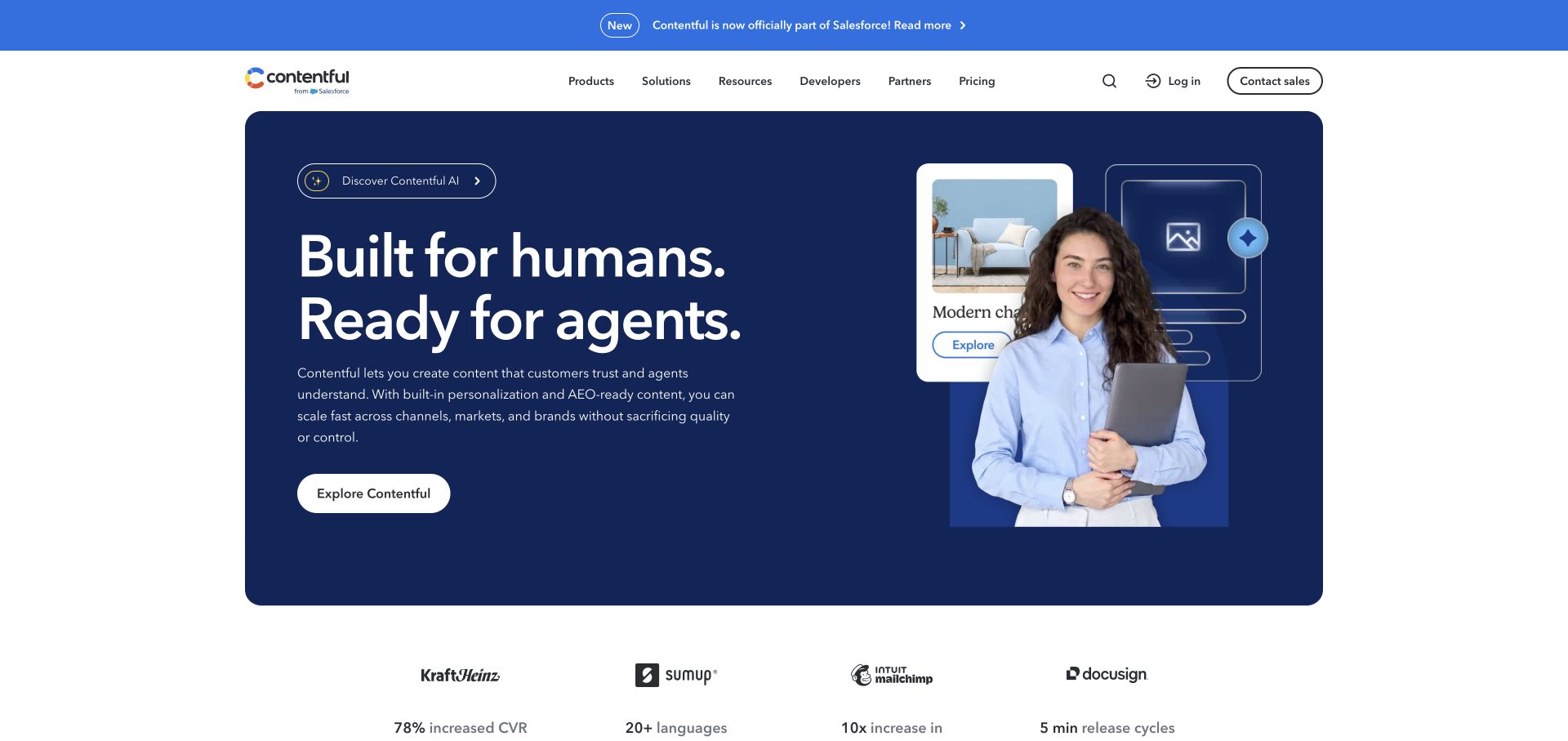
Contentful’s public website uses a bounded navy hero with a large left-aligned statement, a single product-exploration action, and a composed image panel on the right. Products, solutions, resources, developers, and partners occupy distinct navigation groups. A row of customer references follows the hero. Its own case study explicitly documents this marketing property’s content models and independently built Next.js frontend; the authenticated editorial application is a separate surface.
What you can learn
Evaluate a headless platform through the relationship between content structure and frontend components, not through the vendor’s headline promises alone. Define reusable evidence, product explanations, and editorial modules with sensible boundaries. Then test how nontechnical editors preview and maintain them. A vendor’s own website can illustrate an approach without proving that the same architecture is appropriate for every organization.
Pros
The bounded hero creates a clear separation between the introductory message and subsequent customer material.
Developer and partner routes have explicit places alongside commercial product information.
Cons & considerations
A broad introductory statement needs concrete product explanations deeper in the journey.
The number of navigation groups requires careful prioritization as the product catalog expands.
Visible tech stack
Earlier / documented evidence
Contentful
Earlier cited evidence retained; no current scan result. References may be embedded or legacy—not a complete backend inventory.
Platform source: Official Contentful case study — property-scoped evidence. Contentful’s own case study explicitly documents rebuilding contentful.com with its content platform and an independently implemented Next.js frontend. This example is the public marketing website, not the authenticated CMS editor. This is official documentary evidence for the named public property, not an image-CDN-only inference or an independent inventory of every current backend component. Platform evidence is separate from the direct website screenshot and is not a complete current infrastructure audit.
Choose the content scope and frontend responsibilities
Use a focused model for one editorial website
Start with the smallest set of content types that supports real publishing tasks. Build an index, detail page, related-content pattern, and preview before scaling the schema across the entire site.
Share content only where its meaning is actually shared
A common entity can be useful across sites or channels, but language, permissions, and publication timing may differ. Document the boundaries between spaces, environments, and consuming applications rather than treating reuse as an automatic benefit.
Decide which fields are localized, what a missing translation means, and who approves each locale. Test the frontend with uneven translation completeness rather than assuming every market publishes simultaneously.
Have someone create a linked entry, correct an image, preview a draft, and unpublish outdated material. Revise confusing labels and field boundaries before importing hundreds of records.
Specify delivery and freshness behavior
Document how a publication reaches the frontend, how caches change, and how missing linked content is handled. Define failure and recovery paths for webhooks, builds, and other integrations rather than relying on a happy-path demo.
Plan migration and ongoing schema changes
Map old content, URLs, files, references, and translation responsibilities. Rehearse a sample migration and document who updates existing entries when the content model changes.
A useful handover demonstration
Ask the actual team to carry out its routine job: publish a realistic update, correct a mistake, preview a narrow screen, and identify who owns an integration failure. For a library or frontend framework, also ask who maintains the content source and deployment. A polished screenshot does not answer those operational questions.
Beyond the screenshot
A Contentful website launch checklist
Test realistic entries, references, optional fields, and long content.
Demonstrate draft preview without exposing credentials.
Verify publishing, corrections, unpublishing, and cache behavior.
Review localized and incomplete translation states.
Check redirects, metadata, and linked asset destinations.
Test frontend keyboard behavior, forms, and narrow-screen reading.
Assign CMS, frontend, integration, and deployment ownership.
Document migration, schema changes, recovery, and access.
Test with real content, a keyboard, a small screen, slow or failed requests, and the people who will maintain the system. These are planning checks, not an accessibility, security, performance, or search-ranking certification.
Sources & editorial method
How this Contentful collection was reviewed
The collection distinguishes documented Contentful CMS/content-platform associations from media-delivery evidence. Direct screenshots show the named public property; official case studies are attributed and do not constitute a complete current infrastructure audit.
Every image is an unmodified capture from the actual website, with its source and capture date. Some captures are reused from our shared catalog; their dates remain the original capture dates. None comes from a vendor gallery or a generated reconstruction. Moving imagery and live content can change.
Technology attribution uses public page assets or metadata, official platform documentation, or a cited first-party project case study. Documentary and framework-relationship evidence is identified where used; it is not a complete current backend inventory. A CMS image CDN alone does not establish a full CMS deployment. A library’s presence does not prove which individual controls use it, and a platform label does not establish AI authorship.
The composition notes, lessons, pros and tradeoffs are original editorial observations. We have not measured conversion, traffic, security, performance or accessibility conformance. Website owners retain their brands and imagery; these examples are not our client portfolio. Written, Edited and Curated are independent records, not dates advanced by a build. See our editorial standards or suggest a correction.
Questions worth asking
Contentful website development FAQs
Is Contentful the website frontend?
No. A separate frontend consumes and presents content. Its design, rendering, deployment, preview, and integrations need their own implementation.
Does a Contentful image URL prove the CMS?
No. It can establish media delivery, but a full content-platform association needs additional evidence such as an explicit first-party case study or integration evidence.
Can one model serve several markets?
Potentially, but language, references, permissions, and publishing responsibilities need explicit design. Test incomplete translations and market-specific content.
Does changing the model fix existing content?
Not automatically. Plan how existing records, validation, migrations, and frontend consumers will handle the change.