Hosting supports a website’s daily work: publishing content, delivering media, keeping routes available, and connecting visitors to the right services. These examples pair genuine captures with Kinsta specific response evidence or official property specific documentation.
A hosting decision should begin with the website’s responsibilities. A publication needs dependable article updates and archives. A hotel needs accurate information and clear reservation handoffs. A service company needs forms and contact paths that remain useful when optional integrations fail. These requirements are more useful than choosing a host from a homepage’s appearance.
The examples cover regional corporate sites, software blogs, hospitality, publications, creative portfolios, and local services. A Kinsta cache signal or documented customer relationship does not measure speed, uptime, conversion, or the infrastructure of every related property. Review the visible tasks, then create and test an operational plan for your own website.
Before the examples
What makes good Kinsta website development in 2026?
Inventory the property precisely
Record the actual domains, subpaths, content system, media, forms, account areas, and external providers. A blog may use different hosting from the application it promotes. A regional site may differ from the global brand. Keep those boundaries explicit in migration and maintenance plans.
Use staging for representative checks
Kinsta documents staging environments for WordPress work. Use an isolated environment to test the templates and integrations that matter, including redirects, media, forms, and personalized routes. Decide how production content changes will be handled while a staged update is being reviewed.
Backup availability is only part of a recovery plan. Identify what must be restored, who can do it, and how success will be checked. Kinsta’s backup documentation provides the product details; your team still needs a property specific rehearsal and a clear response process.
The opening examples are Konica Minolta Australia, the ClickUp blog, Screaming Frog, Ace Hotel, and Blue Note New York. Each is a specifically identified public property; the evidence is not generalized to every site or application owned by the brand.
We start with five recognizable brands or organizations: Konica Minolta Australia, ClickUp Blog, Screaming Frog, Ace Hotel, Blue Note New York. Each attribution applies to the named website property, not every product or website belonging to its organization. This is a curated reading sequence, not a measured ranking.
Konica Minolta Australia’s homepage pairs a large workplace photograph with a framed report promotion and a clear download action. The navigation separates products, services, support, news, and contact, while the page continues into product selection and corporate updates. Kinsta’s official customer case identifies this Australian property and its move to WordPress hosting. That association is specific to the regional website; it does not extend automatically to the global company’s other sites. The design offers a useful hosting brief built around content maintenance, dependable downloads, and several different visitor tasks.
What you can learn
Inventory product pages, support resources, downloads, and inquiry routes before planning a migration. Test redirects and document links in staging, assign editorial owners, and measure your own representative pages after launch rather than adopting performance claims from a customer story.
Pros
Named product and support routes accommodate both prospective and existing customers.
The campaign panel gives a complex report a clear and readable entry point.
Cons & considerations
A rotating corporate hero requires ongoing editorial and accessibility maintenance.
Regional hosting evidence cannot establish the infrastructure of every global brand property.
Platform source: Official customer case and exact public property. Official Kinsta customer case documents hosting of this specific public website. This is a property-specific hosting association, not a measured performance or uptime claim. Platform evidence is separate from the direct website screenshot and is not a complete current infrastructure audit.
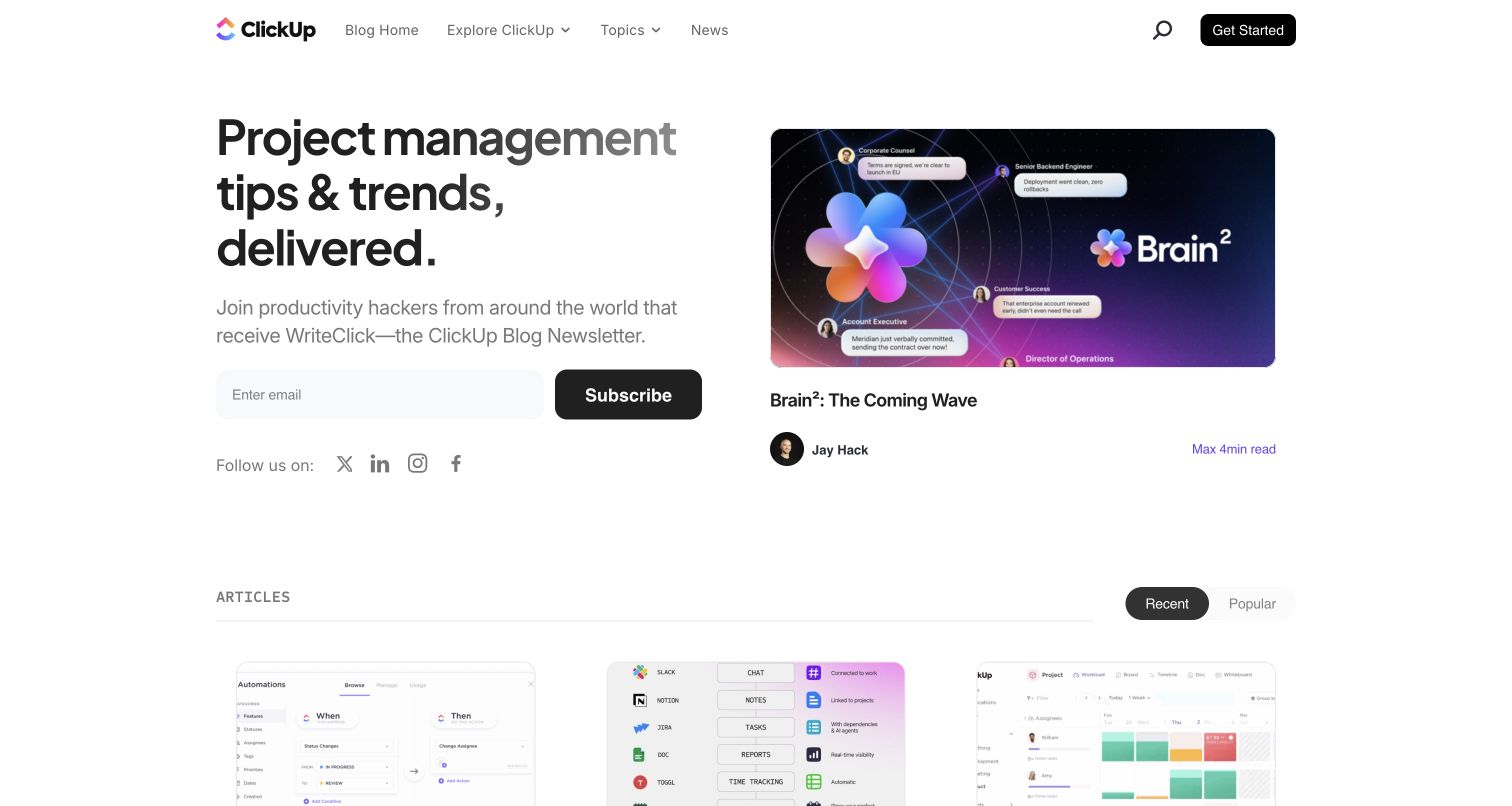
ClickUp’s blog opens with an explicit newsletter promise beside a featured article, then introduces a recent and popular article area. Product links are available, but the page’s main job is editorial discovery. Kinsta’s customer case specifically describes the WordPress blog, and the sampled blog response includes a Kinsta cache header. That is a narrower claim than saying the ClickUp application runs on Kinsta. The distinction is useful for planning: a marketing publication can have different release processes, cache rules, and ownership from the product it supports.
What you can learn
Define the blog’s route, publishing workflow, and application boundary before choosing hosting changes. Test article templates, search, feeds, and campaign links in staging, and verify any reverse proxy arrangement so that editorial updates do not unexpectedly affect product authentication or routing.
Pros
The newsletter promise and featured story establish the publication’s purpose immediately.
Article categories and reading metadata support a substantial ongoing content library.
Cons & considerations
A blog under a product domain can hide important operational boundaries from planners.
A cache header does not measure publishing reliability or application performance.
Platform source: Official customer case and exact public property. Exact public source-page response includes x-kinsta-cache: HIT; official customer case provides additional context. This is a property-specific hosting association, not a measured performance or uptime claim. Platform evidence is separate from the direct website screenshot and is not a complete current infrastructure audit.
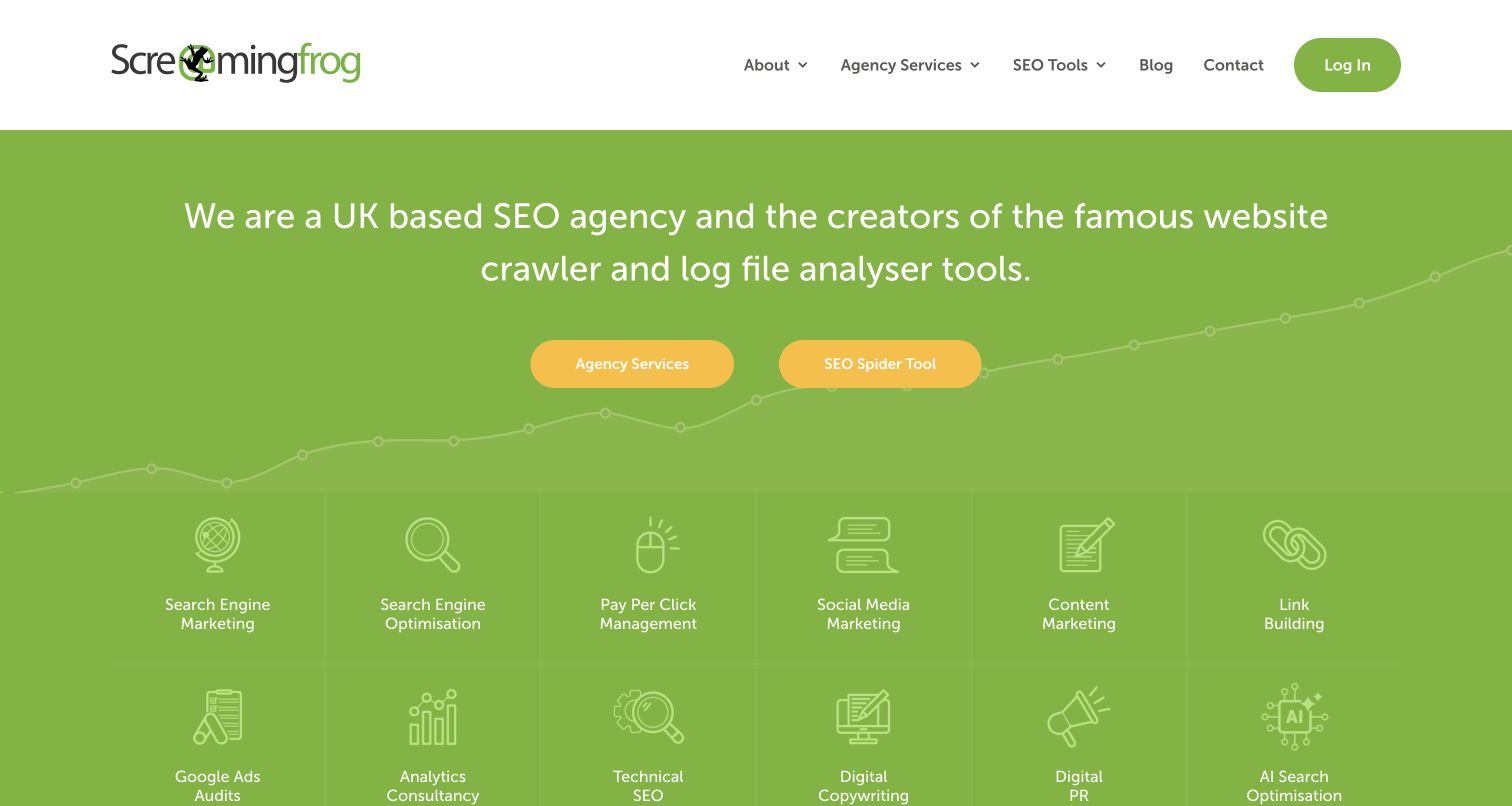
Screaming Frog’s green homepage explains both its agency services and its crawling software, with two large actions before a grid of service categories. The result is a clear split between buying expertise and exploring a product. Kinsta’s case describes the company’s website hosting, and the exact homepage response carries a Kinsta cache signal. This does not imply that the desktop crawler itself runs on the host. The example is useful because software businesses often need a website that combines documentation, downloads, licensing, and professional services without making those responsibilities indistinguishable.
What you can learn
List the website’s downloads, licensing handoffs, content, and service forms separately. Test critical paths in staging without making real purchases, plan cache exclusions for personalized pages, and measure the website’s own reliability independently from the behavior of the distributed software.
Pros
Agency services and the SEO tool receive distinct and prominent starting actions.
A named service grid turns a broad company description into specific navigation choices.
Cons & considerations
Many service categories can become visually repetitive without supporting detail.
Website hosting evidence does not establish how a desktop application operates.
Platform source: Official customer case and exact public property. Exact public source-page response includes x-kinsta-cache: HIT; official customer case provides additional context. This is a property-specific hosting association, not a measured performance or uptime claim. Platform evidence is separate from the direct website screenshot and is not a complete current infrastructure audit.
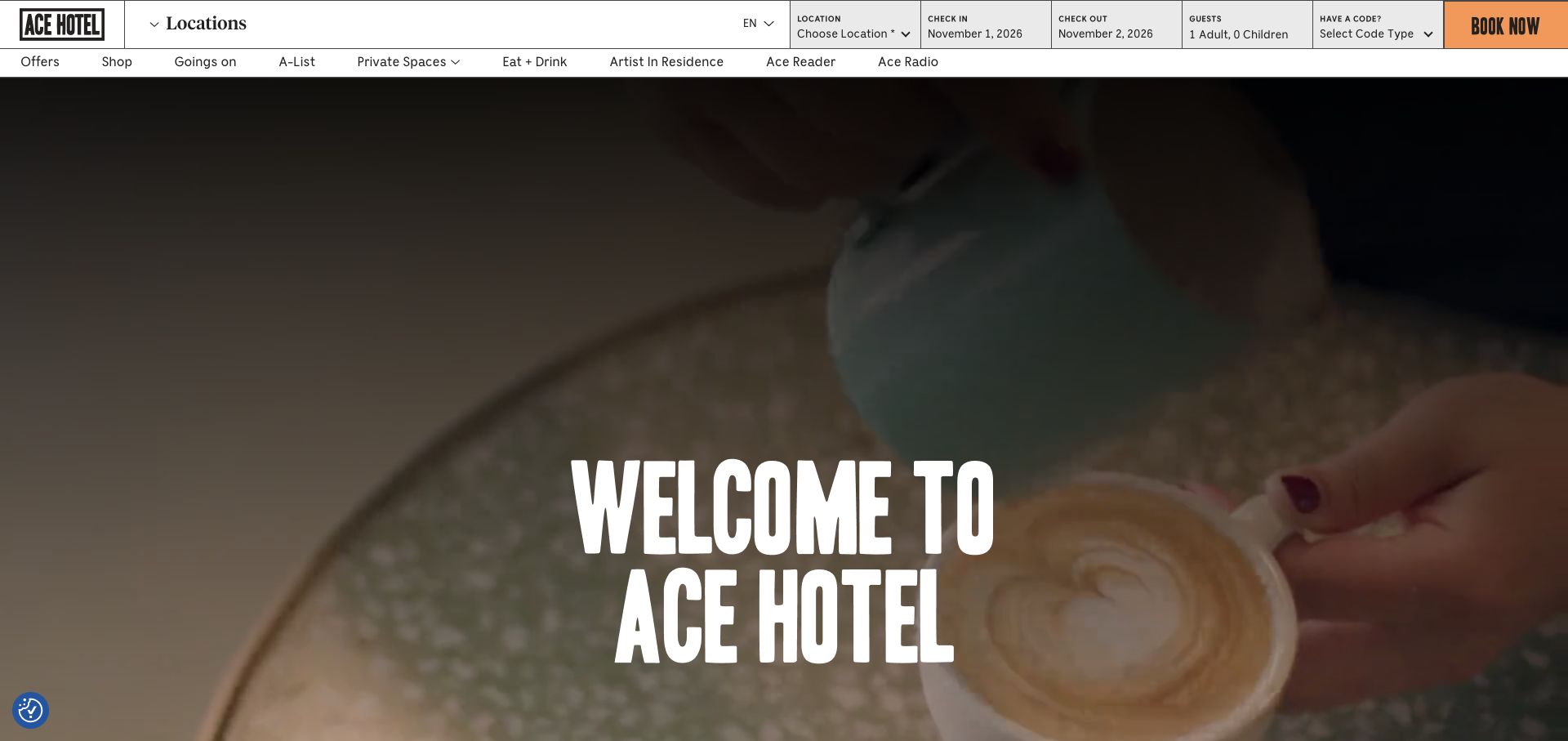
Ace Hotel places a dense reservation strip above an atmospheric hospitality image, retaining location, dates, guests, and booking access in the first view. Editorial and cultural navigation adds depth beyond a room search. The sampled public response contains a Kinsta specific cache header, which supports a hosting association for this page. It does not establish the infrastructure of the reservation provider or prove booking speed. The practical hosting lesson is to keep the public marketing experience reliable while identifying the point where availability and payment move into another system.
What you can learn
Document the reservation provider boundary and test location and date handoffs from staged templates. Cache public editorial pages deliberately, exclude personalized booking states where relevant, and maintain a usable fallback contact route if an external reservation component fails.
Pros
Practical booking controls stay visible while imagery establishes the hotel group’s character.
Location selection provides essential context for a website covering multiple properties.
Cons & considerations
A compact multi field strip needs careful testing across narrow viewports.
A public hosting signal does not verify reservation availability or transaction completion.
Platform source: Exact public source-page evidence. The exact sampled page response includes a Kinsta-specific cache header. This supports hosting association at the recorded observation date, not a speed measurement, uptime guarantee, or evidence about every other property. Platform evidence is separate from the direct website screenshot and is not a complete current infrastructure audit.
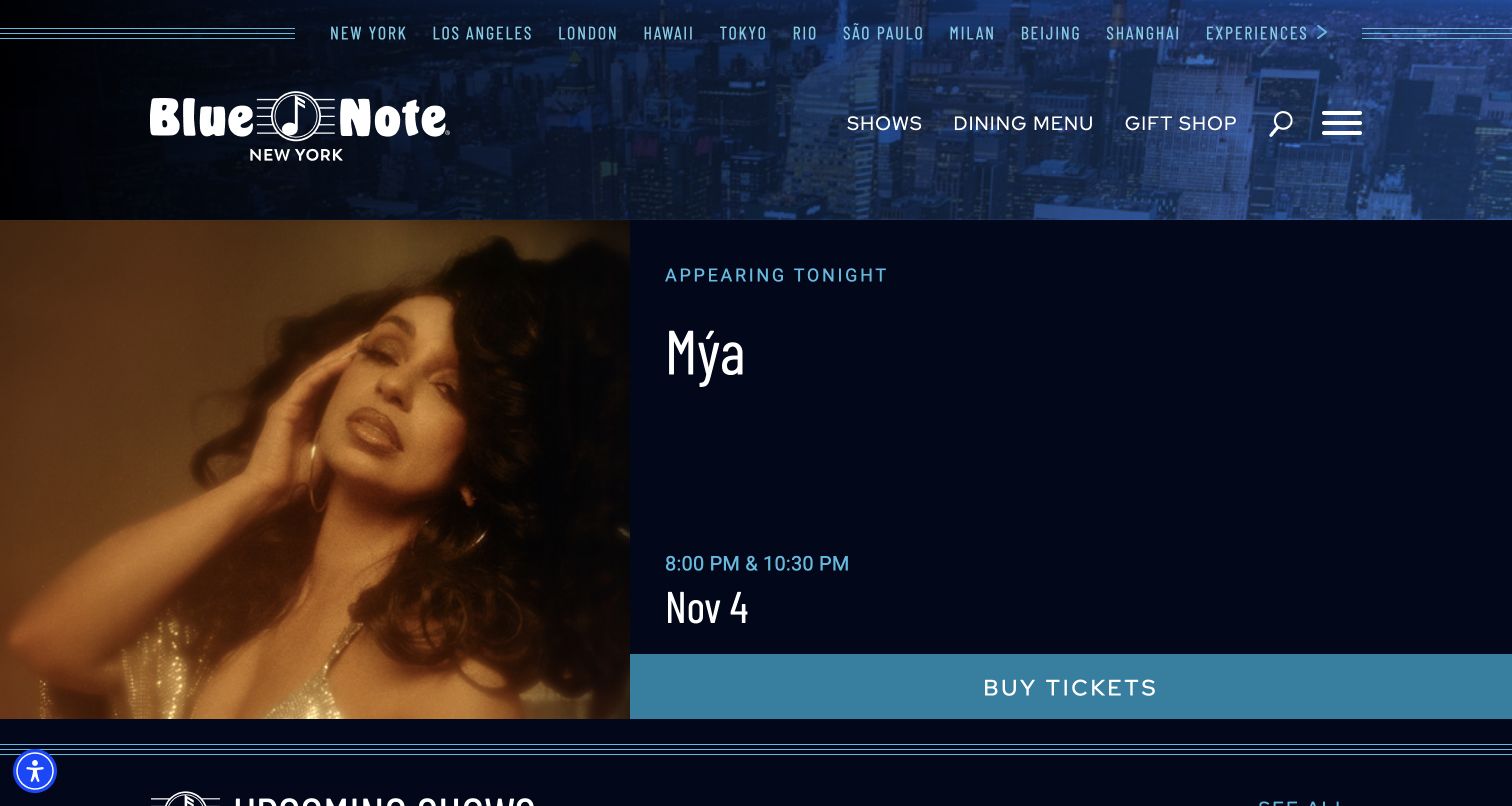
Blue Note New York’s homepage places an artist portrait beside a date, performance times, and a wide ticket action. The dark blue identity and city navigation clearly locate the venue within a larger brand. This is a useful Kinsta example because event pages have a short useful life: an outdated show date can be more damaging than a decorative inconsistency. The Kinsta specific cache header belongs to the sampled New York page and should not be generalized to every Blue Note property or the external system that completes a ticket purchase.
What you can learn
Build publishing and cache invalidation around event start times, sold out states, and archive behavior. Test ticket links and timezone presentation before release, and keep venue information useful when a featured performance changes or an external ticket provider is unavailable.
Pros
Artist, date, times, and ticket action form a concise and practical event unit.
City context helps visitors distinguish this venue from other locations in the brand.
Cons & considerations
An event homepage can become misleading quickly if publishing and cache updates diverge.
Hosting evidence does not verify inventory, payment, or ticket delivery.
Platform source: Exact public source-page evidence. The exact sampled page response includes a Kinsta-specific cache header. This supports hosting association at the recorded observation date, not a speed measurement, uptime guarantee, or evidence about every other property. Platform evidence is separate from the direct website screenshot and is not a complete current infrastructure audit.
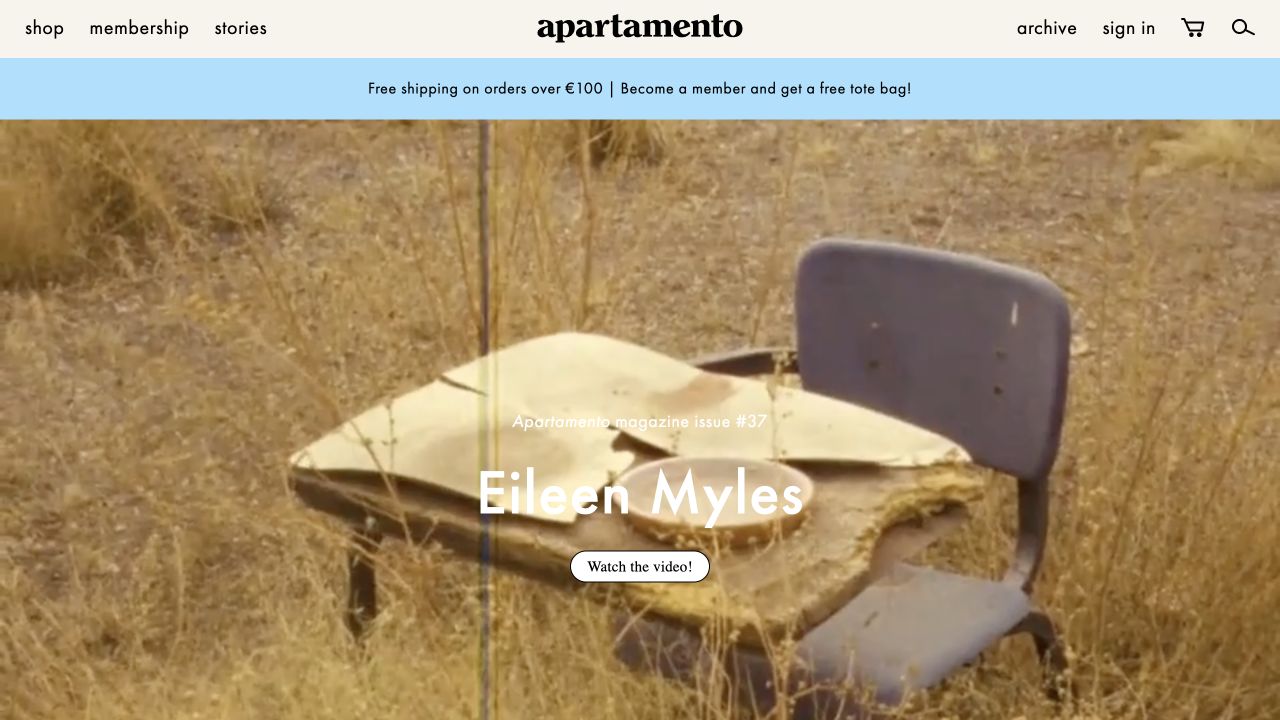
Apartamento uses a large, informal photograph as the stage for a featured editorial video, with a small masthead and concise shop, membership, story, and archive links. The page mixes a publication’s personality with several commercial and account related tasks. Its sampled Kinsta cache header supports a public hosting association, not a claim about the membership database or video delivery provider. For planning a similar site, the useful distinction is between broadly cacheable editorial material and any personalized account, order, or membership experience that must remain accurate for each reader.
What you can learn
Separate editorial templates from account and checkout responsibilities in the hosting brief. Test archive discovery, media loading, and member handoffs in staging, define cache exclusions explicitly, and rehearse content restoration without assuming a homepage screenshot proves transactional reliability.
Pros
The featured photograph gives the publication a distinctive editorial mood.
Shop, membership, and archive routes are clearly named despite the sparse header.
Cons & considerations
Large media can dominate the initial load unless delivery is carefully planned.
A cache signal cannot establish the correctness of personalized member or order data.
Platform source: Exact public source-page evidence. The exact sampled page response includes a Kinsta-specific cache header. This supports hosting association at the recorded observation date, not a speed measurement, uptime guarantee, or evidence about every other property. Platform evidence is separate from the direct website screenshot and is not a complete current infrastructure audit.
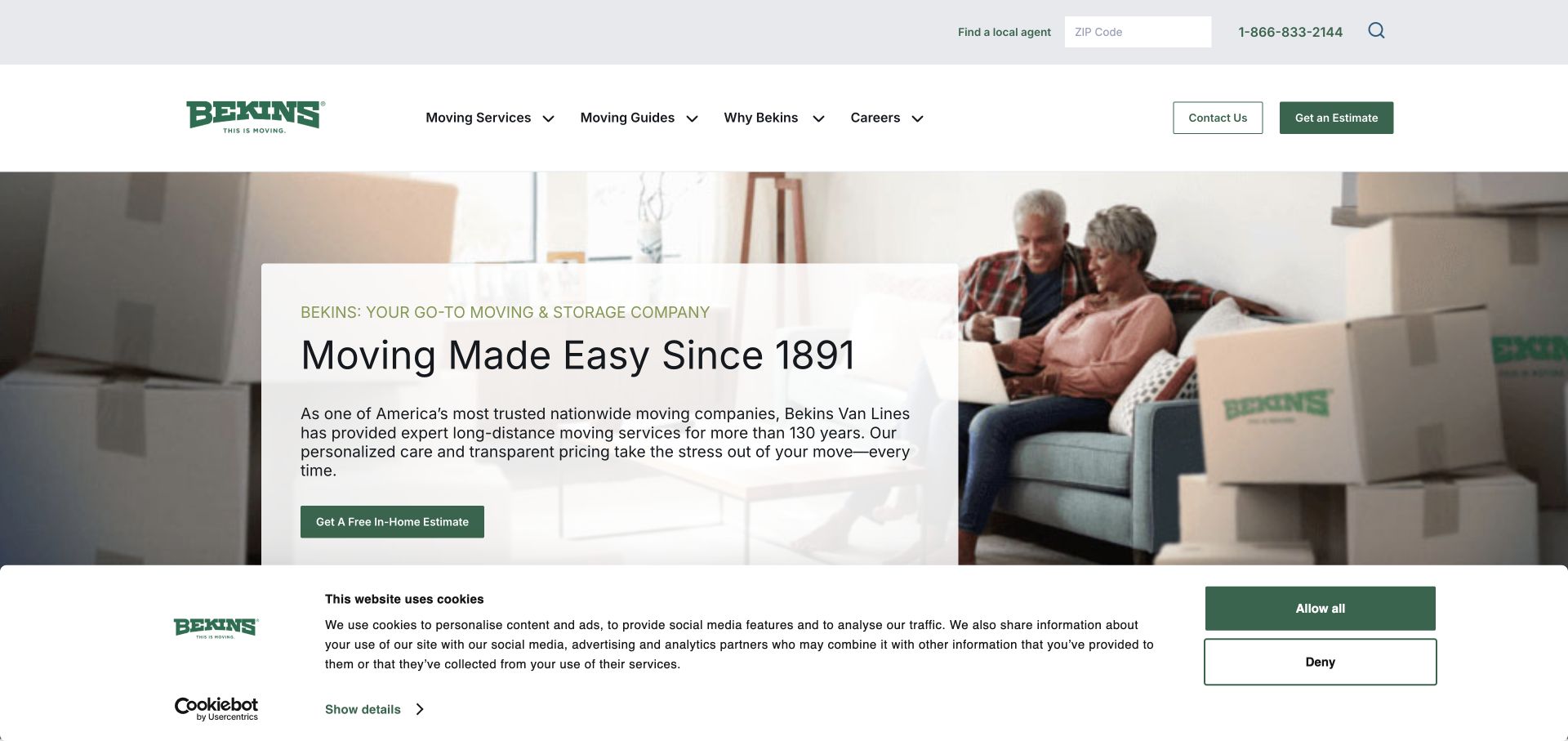
Bekins places a home moving photograph behind a readable information panel and estimate action. The header includes local agent search, moving guides, service navigation, and telephone access. Those details define a practical hosting requirement: the website must help a visitor find a relevant service and reach the right provider, even if optional scripts fail. The sampled response’s Kinsta cache header supports this property’s hosting association. It does not prove that agent lookups or estimate submissions are processed by Kinsta, nor does it measure the accuracy of any quoted service availability.
What you can learn
Document local lookup and estimate dependencies separately from page hosting. Test postal code handling, contact destinations, and confirmation states with designated fixtures, and verify that cache settings cannot reuse one visitor’s location or form result for another person.
Pros
Local agent search gives a national moving brand a concrete regional entry point.
Guides and telephone access support visitors who are not ready to request an estimate.
Cons & considerations
Large consent panels can obscure the estimate route in the first view.
A hosting header does not verify agent matching or the delivery of an inquiry.
Platform source: Exact public source-page evidence. The exact sampled page response includes a Kinsta-specific cache header. This supports hosting association at the recorded observation date, not a speed measurement, uptime guarantee, or evidence about every other property. Platform evidence is separate from the direct website screenshot and is not a complete current infrastructure audit.
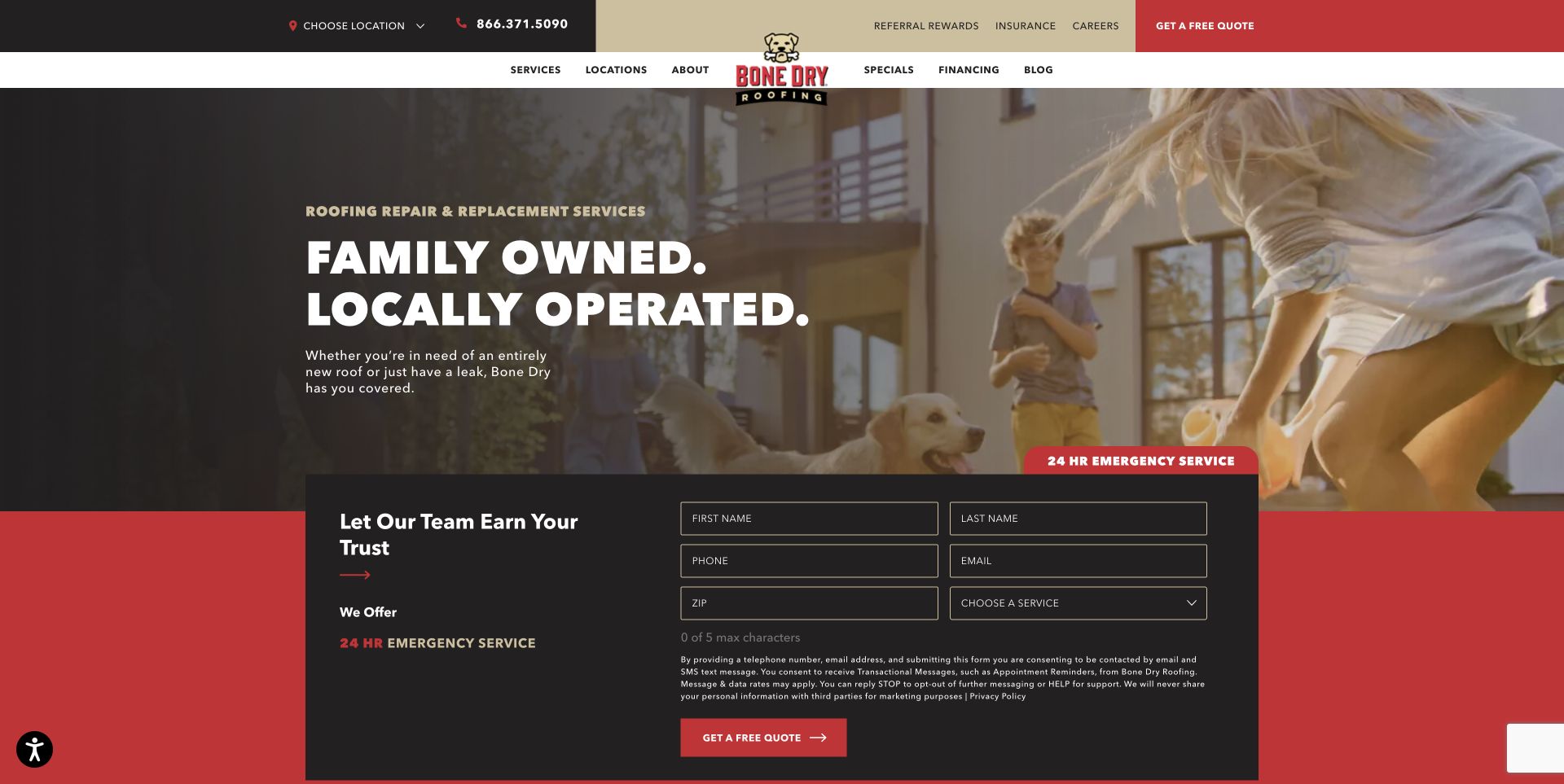
Bone Dry Roofing combines a household photograph and local service message with a large quote form in the first screen. Location selection, telephone access, and emergency service context surround the form. This makes the website’s operational priorities visible: visitors need to understand coverage and submit a request reliably. A Kinsta cache header associates the sampled page with the host, but it does not establish where form messages go or whether a quote was received. The hosting lesson is to treat form behavior as a separate acceptance criterion from simply rendering the page.
What you can learn
Test validation, spam controls, routing, and confirmation in a safe staging workflow. Confirm that dynamic form tokens and personalized results are excluded from inappropriate caching, and retain telephone or emergency alternatives when a third party form dependency cannot load.
Pros
The quote form makes the service request available without a long navigation path.
Location and emergency context help visitors assess whether the company fits their need.
Cons & considerations
A dense first screen form can feel demanding before visitors understand the service.
A cached page response cannot establish successful delivery of a lead.
Platform source: Exact public source-page evidence. The exact sampled page response includes a Kinsta-specific cache header. This supports hosting association at the recorded observation date, not a speed measurement, uptime guarantee, or evidence about every other property. Platform evidence is separate from the direct website screenshot and is not a complete current infrastructure audit.
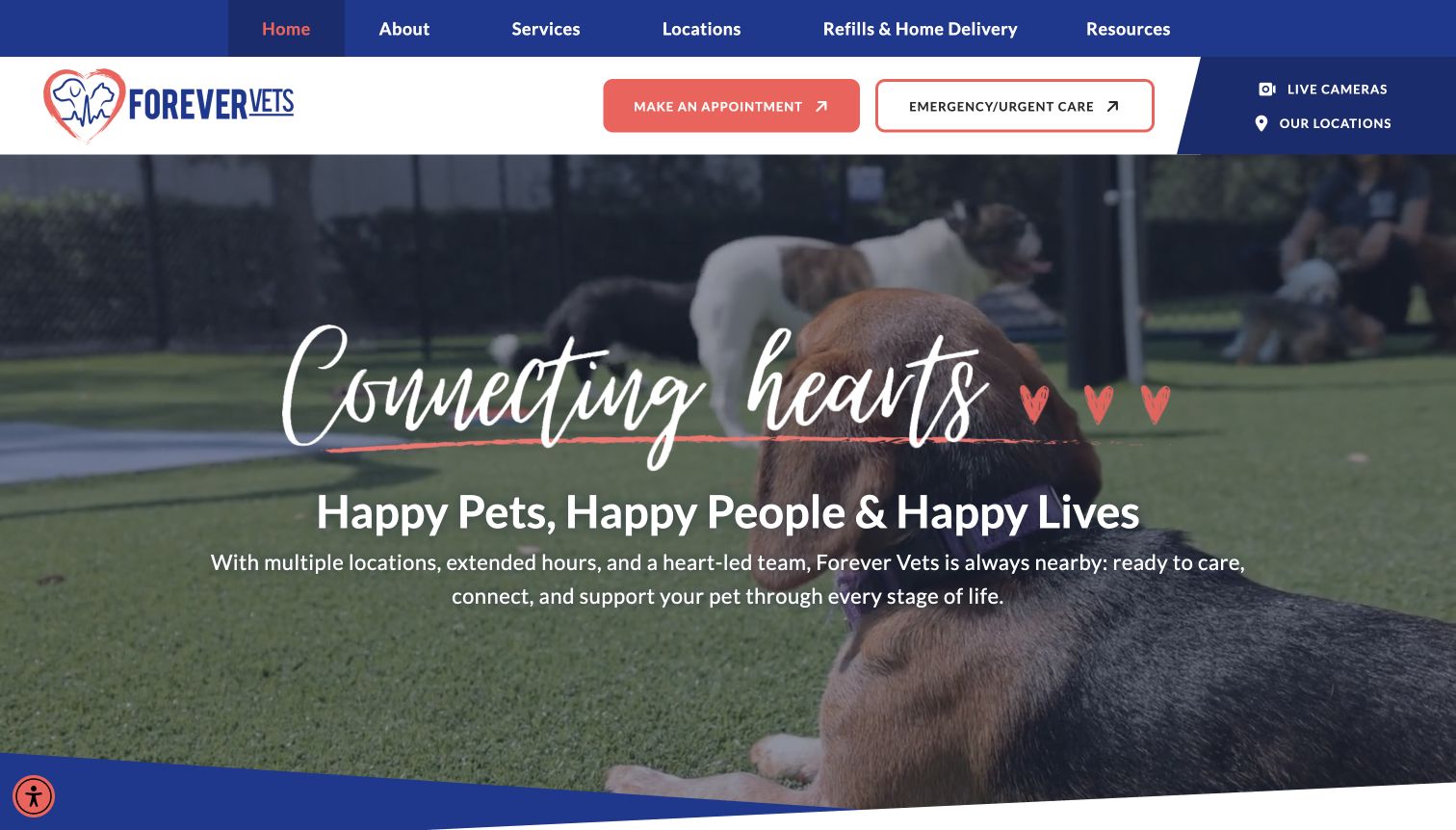
Forever Vets uses an animal focused hero beneath a header with appointment and emergency care actions. Location information and service navigation remain visible, giving visitors practical alternatives to the emotional brand message. The sampled Kinsta cache signal establishes a hosting association for the public page. It does not identify clinical software, appointment records, or emergency response systems. For a similar website, hosting decisions should prioritize access to the essential contact and location information, while treating video, marketing scripts, and decorative effects as supporting elements rather than prerequisites for obtaining care information.
What you can learn
Define essential pages and telephone routes that remain usable when optional integrations fail. Test location navigation, emergency instructions, and appointment handoffs in staging, and keep sensitive clinical information outside generic website forms unless a separately approved system is designed to handle it.
Pros
Appointment and emergency actions distinguish routine planning from urgent needs.
Location routes make a multi practice organization easier to navigate.
Cons & considerations
Large hero media can consume attention before practical care details are read.
Public hosting evidence cannot establish clinical systems or appointment processing.
Platform source: Exact public source-page evidence. The exact sampled page response includes a Kinsta-specific cache header. This supports hosting association at the recorded observation date, not a speed measurement, uptime guarantee, or evidence about every other property. Platform evidence is separate from the direct website screenshot and is not a complete current infrastructure audit.
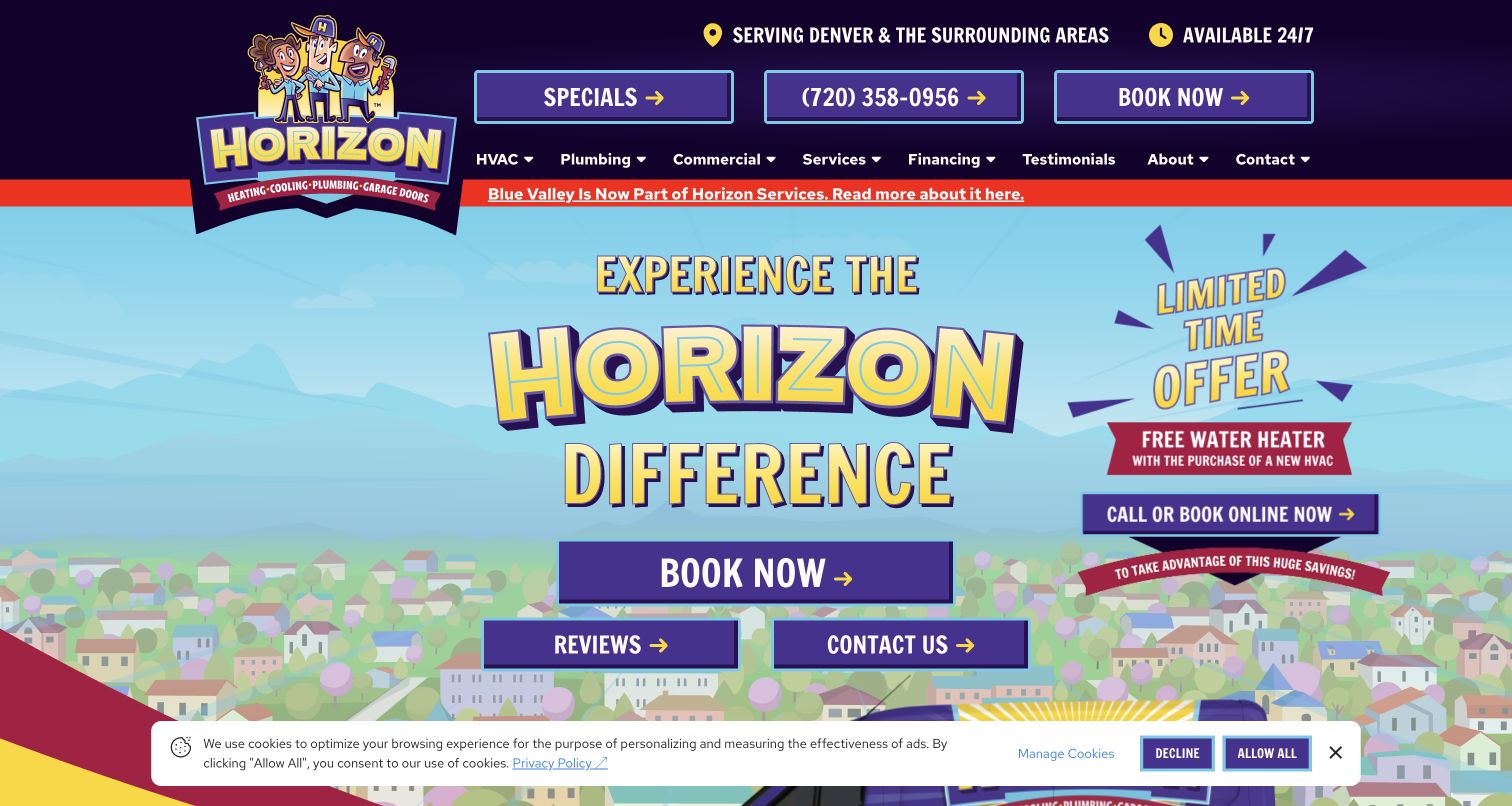
Horizon Services Denver uses bright illustrations, a large brand message, and several booking and contact actions. A limited time offer sits prominently beside the main call to action, while a telephone number and service area statement remain in the header. This is a useful Kinsta hosting example because promotional accuracy and practical availability matter together. The response header supports a hosting association for this Denver property, not for every similarly named business. It also does not prove the booking provider, service dispatch process, or whether the advertised offer applies to a particular visitor.
What you can learn
Publish offers with explicit owners and expiry checks, then verify cache refreshes when terms change. Test telephone and booking links on mobile, document third party scheduling dependencies, and keep an alternative contact route visible if a promotional component fails.
Pros
Telephone, booking, and service area information are easy to locate in the header.
The campaign artwork gives the local service brand a distinctive visual identity.
Cons & considerations
Many competing actions can weaken the priority of the main service request.
A hosting signal does not confirm promotional eligibility or scheduling availability.
Platform source: Exact public source-page evidence. The exact sampled page response includes a Kinsta-specific cache header. This supports hosting association at the recorded observation date, not a speed measurement, uptime guarantee, or evidence about every other property. Platform evidence is separate from the direct website screenshot and is not a complete current infrastructure audit.
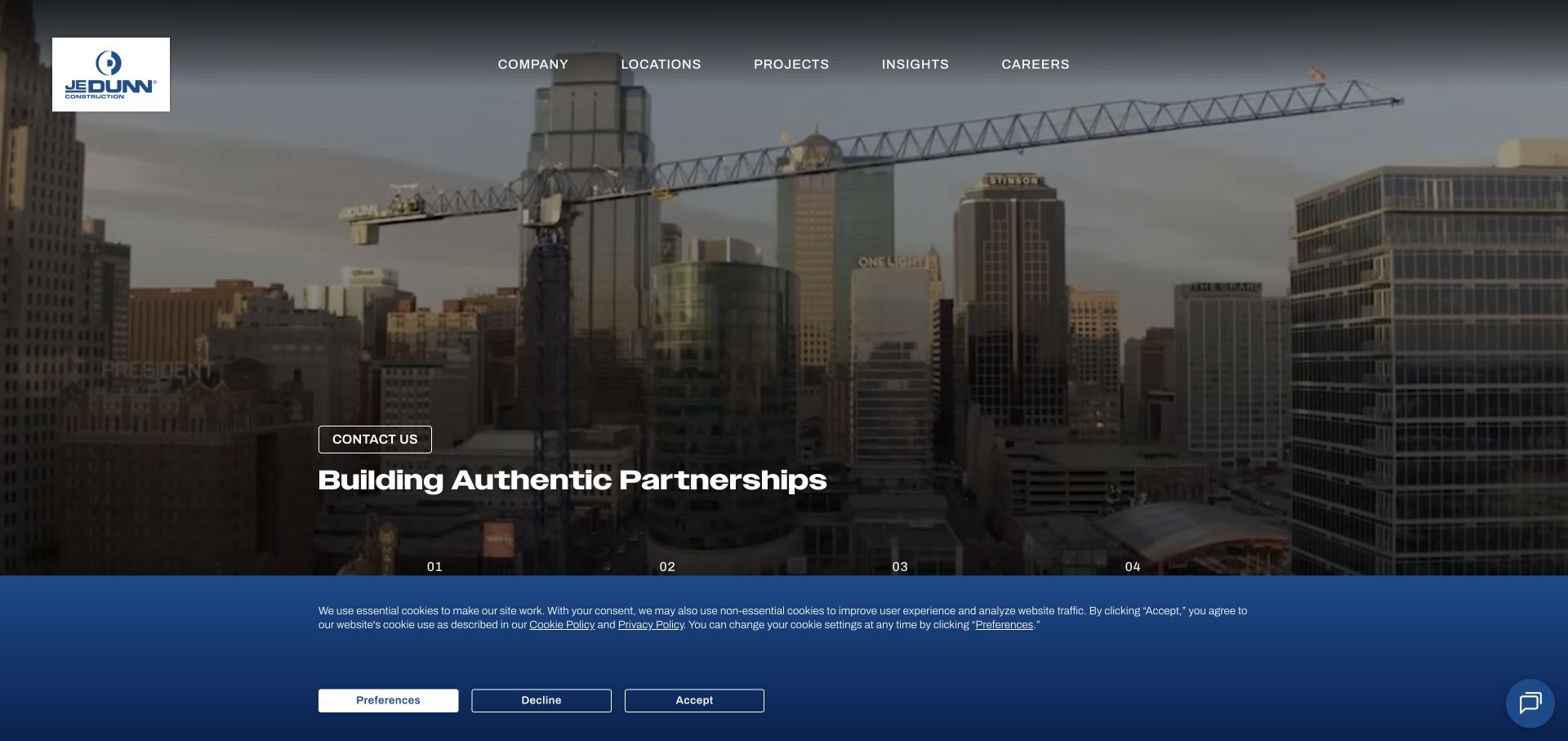
JE Dunn’s homepage introduces the firm through a large construction scene, a brief partnership message, and a small contact action. Navigation directs visitors to locations, projects, insights, and careers. The Kinsta specific cache header provides a public hosting association, but the more useful planning insight comes from that content structure. A construction portfolio needs consistent project metadata, regional context, and a maintainable publishing process. Hosting alone does not create those editorial disciplines, and this observation does not establish the company’s internal project systems or the performance of its website under campaign traffic.
What you can learn
Define project and location templates before planning hosting or migration work. Test media handling, regional links, recruitment handoffs, and archived URLs in staging, and make ownership of content updates and cache clearing part of the release process rather than an informal afterthought.
Pros
Project imagery provides concrete evidence of the firm’s field of work.
Locations, insights, and careers recognize several distinct audiences in the navigation.
Cons & considerations
Large project media can become costly without consistent image and video budgets.
A cache header does not verify editorial governance or confidential project systems.
Platform source: Exact public source-page evidence. The exact sampled page response includes a Kinsta-specific cache header. This supports hosting association at the recorded observation date, not a speed measurement, uptime guarantee, or evidence about every other property. Platform evidence is separate from the direct website screenshot and is not a complete current infrastructure audit.
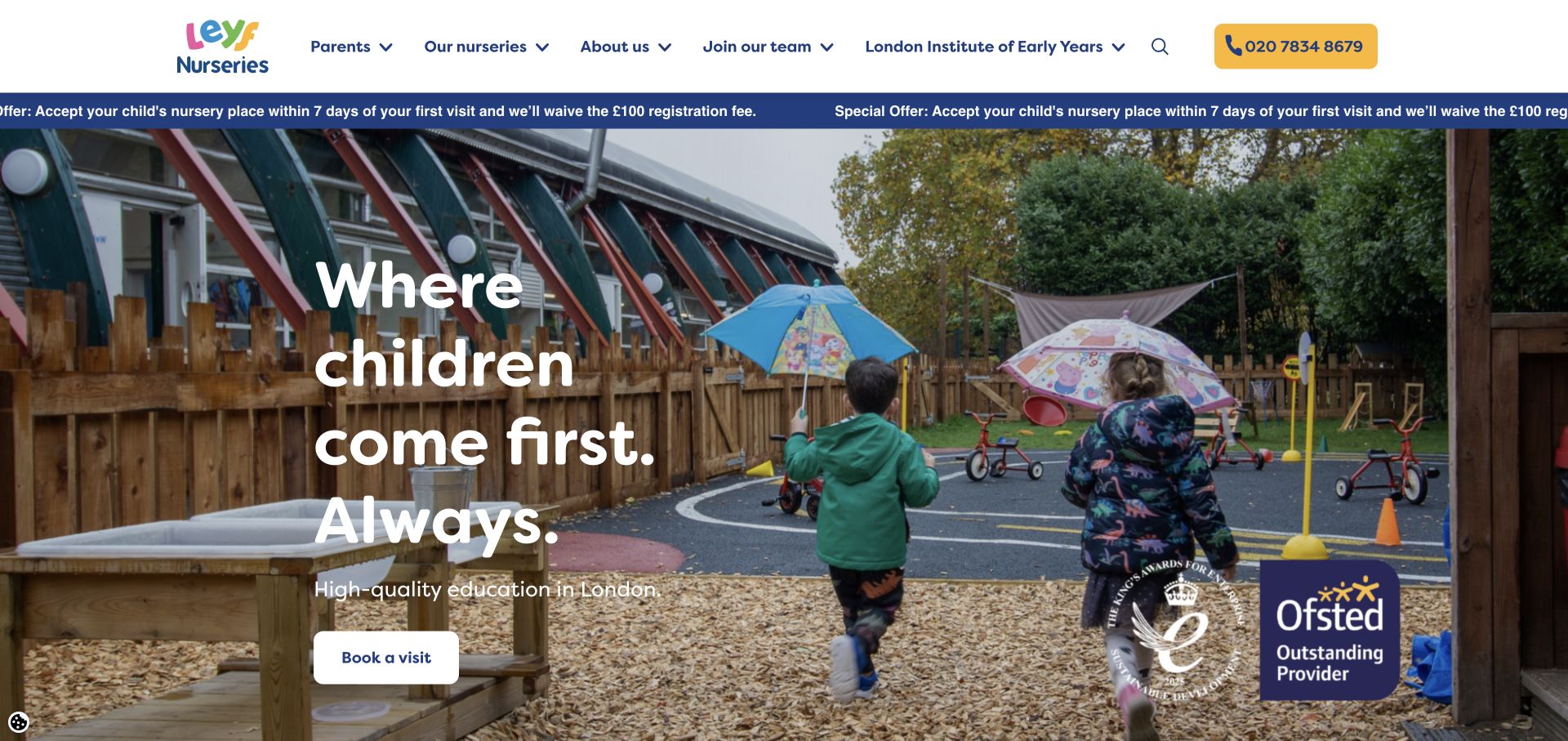
London Early Years Foundation uses an outdoor nursery photograph, a large child focused message, and a visit booking action. Parent, nursery, recruitment, and training routes appear in the header, while a promotional strip adds timely information. A Kinsta cache header associates the sampled public page with the host. The useful operational lesson is that families need accurate local details and dependable visit information, even as campaigns change. The hosting evidence does not establish enrollment availability, parent accounts, or the treatment of personal information submitted through separate admissions systems.
What you can learn
Give each nursery a maintained information record and test its visit and contact routes before publishing. Coordinate cache refreshes with changing offers or opening details, keep essential information independent of optional marketing scripts, and use safe test data for form verification.
Pros
A visible visit action turns the educational introduction into a practical next step.
Parent and nursery navigation support location specific research before an inquiry.
Cons & considerations
Time sensitive promotional strips require maintenance beyond the main page copy.
Hosting association does not prove enrollment capacity or parent account security.
Platform source: Exact public source-page evidence. The exact sampled page response includes a Kinsta-specific cache header. This supports hosting association at the recorded observation date, not a speed measurement, uptime guarantee, or evidence about every other property. Platform evidence is separate from the direct website screenshot and is not a complete current infrastructure audit.
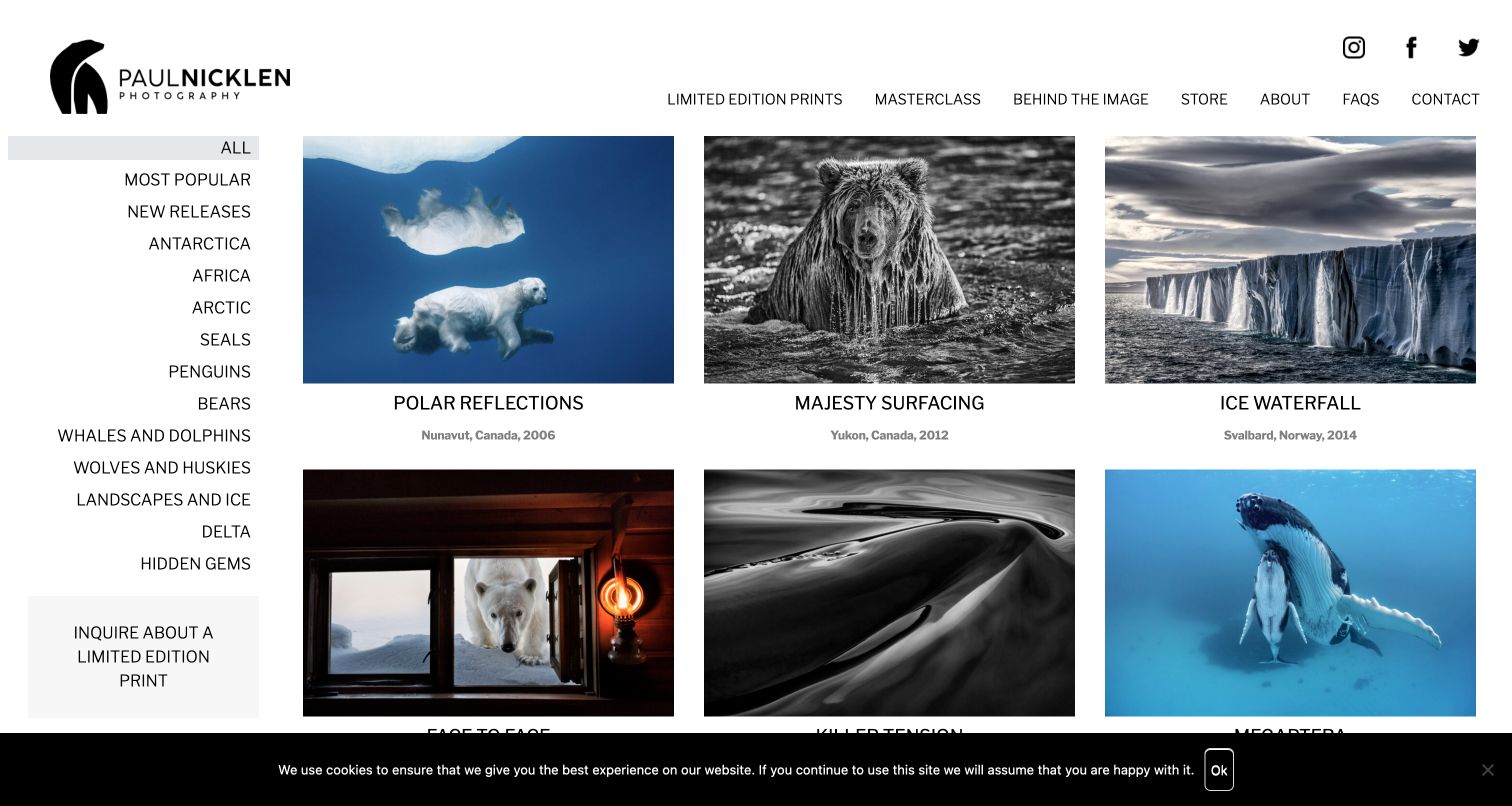
Paul Nicklen’s limited edition page presents a grid of photographs beside a detailed category rail. Titles and location captions help visitors interpret individual images, while a separate inquiry route acknowledges the considered nature of the purchase. The Kinsta signal belongs to this specific limited edition page. It should not be treated as a benchmark for image speed or an assertion about every store and educational property associated with the photographer. The planning lesson is to make a large visual catalog usable through dependable thumbnails, meaningful metadata, and a clear route to further information.
What you can learn
Prepare image sizes and captions consistently before uploading, and test category navigation and inquiry links across devices. Keep original files and rights records organized, verify backups and restoration for media, and measure real delivery behavior independently from the presence of a hosting header.
Pros
Category navigation helps visitors explore a substantial collection of photographic work.
Titles and location captions preserve context beyond the visual impact of each image.
Cons & considerations
A dense image grid needs careful loading and responsive layout decisions.
The hosting signal cannot verify edition availability, print fulfillment, or image performance.
Platform source: Exact public source-page evidence. The exact sampled page response includes a Kinsta-specific cache header. This supports hosting association at the recorded observation date, not a speed measurement, uptime guarantee, or evidence about every other property. Platform evidence is separate from the direct website screenshot and is not a complete current infrastructure audit.
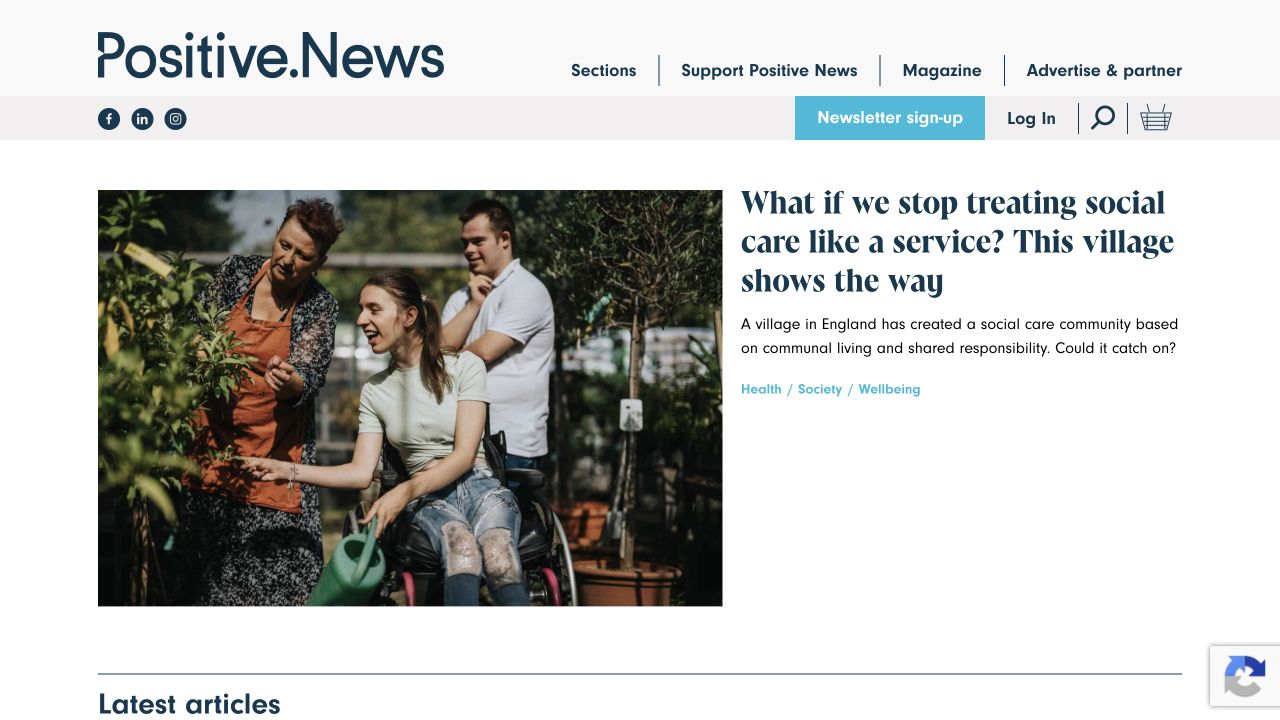
Positive News pairs a large editorial photograph with a headline and summary, keeping sections, magazine, support, login, and newsletter access in the header. The layout gives the publication a clear story led entrance while acknowledging several ways readers can participate. A Kinsta cache header supports the hosting association for this public page. It does not establish the subscription platform, reader accounts, or newsletter delivery. For planning a comparable site, the useful point is that article publishing, archive discovery, and supporter handoffs each need explicit testing and ownership around the hosting layer.
What you can learn
Document article, archive, search, and supporter routes before a migration. Rehearse redirects and content restoration in staging, confirm which account pages need cache exclusions, and test newsletter and donation handoffs without counting a link click as a completed subscription or contribution.
Pros
The lead story includes enough context to support an informed reading choice.
Newsletter and support routes are visible without replacing the editorial hierarchy.
Cons & considerations
Multiple supporter and account systems can complicate a seemingly simple publication site.
A cache response does not prove content freshness or successful reader transactions.
Platform source: Exact public source-page evidence. The exact sampled page response includes a Kinsta-specific cache header. This supports hosting association at the recorded observation date, not a speed measurement, uptime guarantee, or evidence about every other property. Platform evidence is separate from the direct website screenshot and is not a complete current infrastructure audit.
The Calile Hotel’s opening view is almost entirely an overhead pool image, with a small brand identity and a restrained booking control. The visual composition is the primary introduction to the property. Its sampled response includes a Kinsta cache signal, which supports a public hosting association but says nothing about measured load time, occupancy, or the reservation system. The useful planning lesson is to treat imagery as an operational responsibility. A minimal interface can still require careful image sizing, fallback behavior, and reliable booking links to turn atmosphere into a usable hotel website.
What you can learn
Set a media budget for the first view and test it on realistic mobile connections. Keep booking and contact actions accessible if decorative media fails, verify external reservation handoffs, and plan backups and editorial ownership for seasonal photography before launch.
Pros
The focused pool composition communicates the property’s design character immediately.
A persistent booking action provides a practical route within the sparse interface.
Cons & considerations
Large visual assets can dominate delivery costs despite the minimal page design.
A cache header does not establish speed, reservation accuracy, or booking conversion.
Platform source: Exact public source-page evidence. The exact sampled page response includes a Kinsta-specific cache header. This supports hosting association at the recorded observation date, not a speed measurement, uptime guarantee, or evidence about every other property. Platform evidence is separate from the direct website screenshot and is not a complete current infrastructure audit.
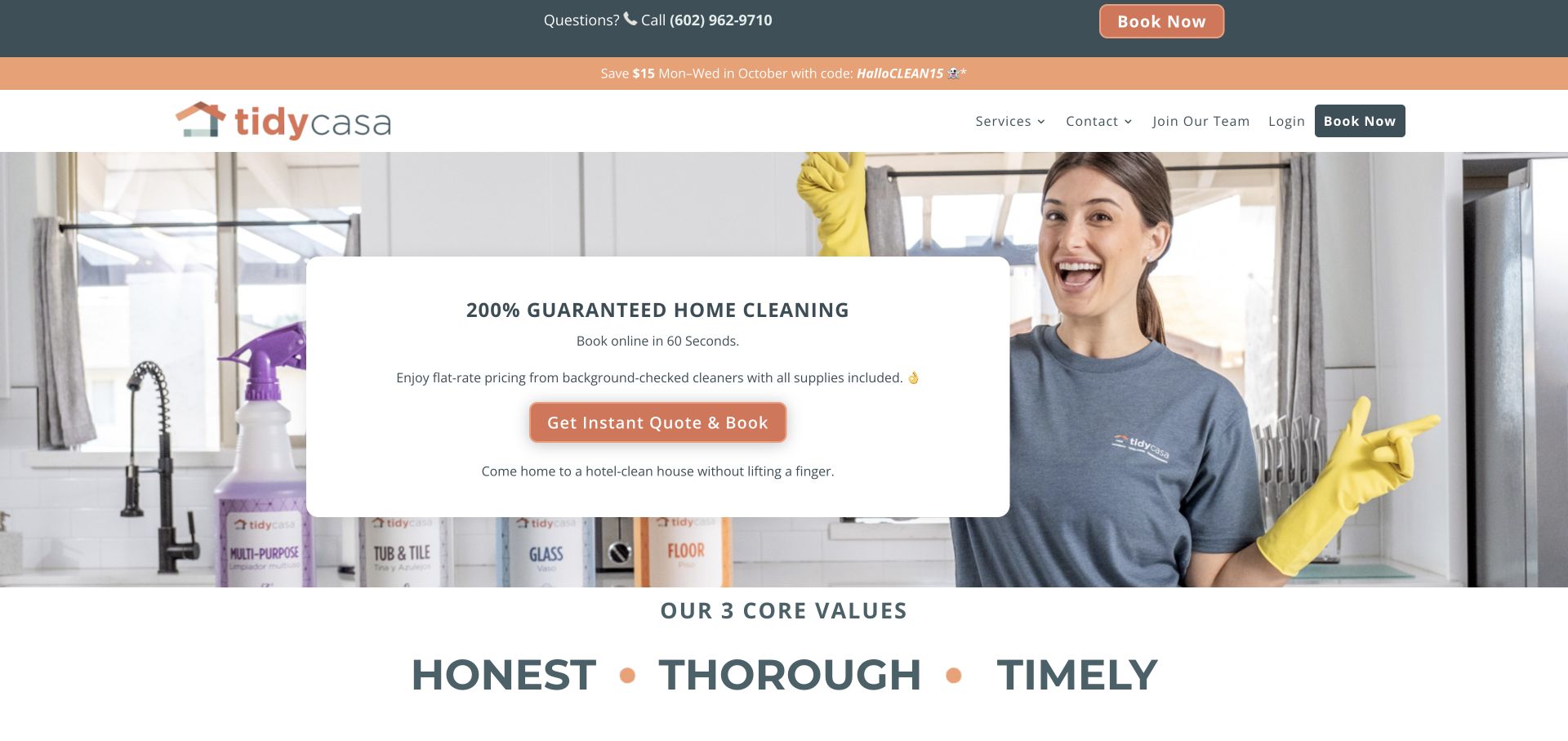
Tidy Casa centers an instant quote and booking action in a white panel over a cleaning photograph. Telephone access, repeated booking controls, and a short values statement support the main task. The design makes the desired next step unusually clear. A Kinsta specific response header identifies the sampled public page’s hosting association, but it does not prove that the quote tool calculates correctly or that a booking reaches the business. The transferable lesson is to treat the public page and its interactive quote journey as related systems with separate verification needs.
What you can learn
Test representative service areas, form states, and handoffs in an approved test workflow. Confirm that personalized quote results are not cached across visitors, keep the telephone alternative visible, and verify confirmation messaging without creating real customer bookings during routine website QA.
Pros
The quote action is centered and supported by a concise explanation of the service.
Telephone and repeated booking routes offer practical alternatives for different visitors.
Cons & considerations
Strong guarantees need clear supporting terms beyond the opening promise.
A successfully served homepage does not establish a correct quote or confirmed appointment.
Platform source: Exact public source-page evidence. The exact sampled page response includes a Kinsta-specific cache header. This supports hosting association at the recorded observation date, not a speed measurement, uptime guarantee, or evidence about every other property. Platform evidence is separate from the direct website screenshot and is not a complete current infrastructure audit.
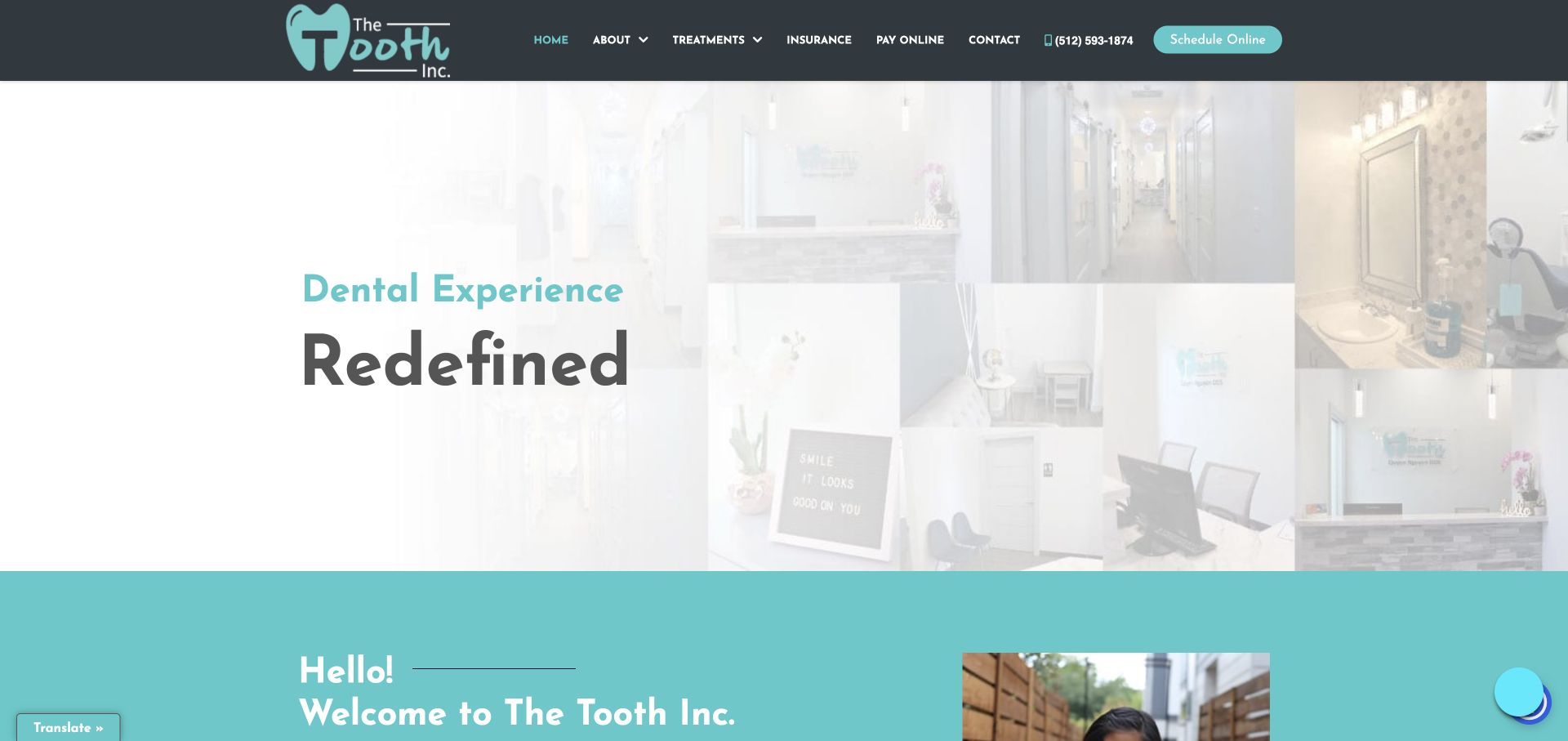
The Tooth Inc. uses a pale interior photograph and large introductory typography beneath a dark navigation band. Treatment, insurance, payment, contact, and scheduling routes provide practical options around the brand message. The Kinsta cache header associates the sampled public page with the host, not with any clinical record system. For a similar practice website, the important planning distinction is between public information and the separate services used for appointments or payments. Visual polish should not obscure those boundaries or make essential telephone and location information depend on optional integrations.
What you can learn
Document scheduling and payment providers separately from public page hosting. Test handoffs, labels, and mobile contact access in staging, avoid real patient data in website QA, and ensure cache settings and backups are appropriate to the actual information each component handles.
Pros
The navigation names practical tasks that prospective and existing patients may need.
The interior image gives visitors a sense of the physical practice environment.
Cons & considerations
Pale photography and text require contrast checks across display conditions.
Public hosting evidence does not establish clinical privacy or appointment processing.
Platform source: Exact public source-page evidence. The exact sampled page response includes a Kinsta-specific cache header. This supports hosting association at the recorded observation date, not a speed measurement, uptime guarantee, or evidence about every other property. Platform evidence is separate from the direct website screenshot and is not a complete current infrastructure audit.
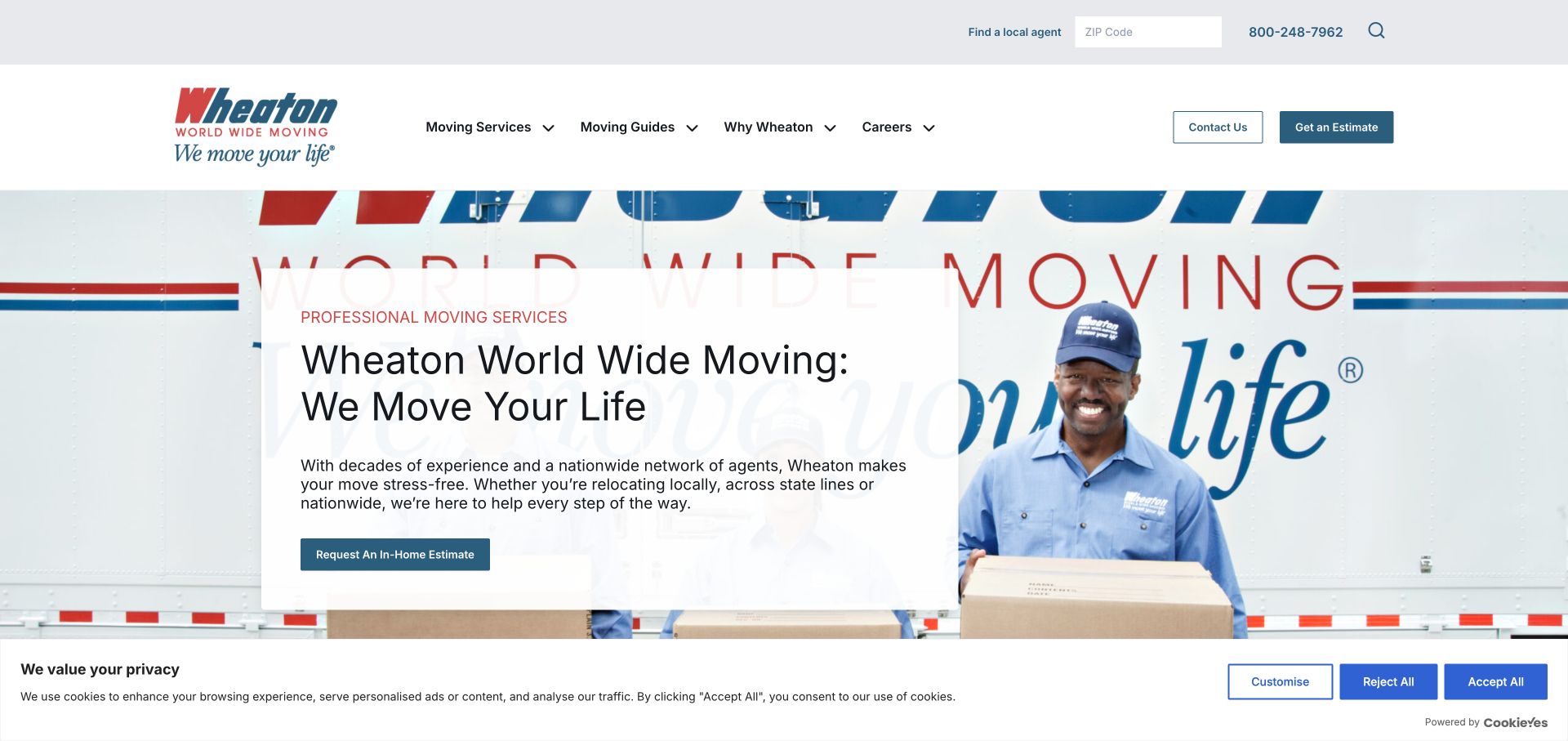
Wheaton’s homepage pairs a branded moving vehicle and employee photograph with a readable introduction and estimate action. A local agent lookup, telephone number, moving guides, and service navigation support the first decision. The sampled page includes a Kinsta cache header, which supports a property specific hosting association. It does not confirm the internal agent network software or the accuracy of an estimate. The useful hosting brief would prioritize current service information, reliable regional handoffs, and forms that remain correct as page caches and marketing campaigns are updated.
What you can learn
Test local lookup and estimate destinations independently from the homepage template. Preserve meaningful redirects for service and guide pages during migration, keep visitor specific form states outside shared caching, and verify the acknowledgment process with test fixtures rather than real moving requests.
Pros
The employee and vehicle photograph gives the service a concrete human context.
Local lookup and guides support visitors at different stages of planning a move.
Cons & considerations
A broad national message still requires accurate local service information downstream.
A hosting header does not establish inquiry delivery or estimate validity.
Platform source: Exact public source-page evidence. The exact sampled page response includes a Kinsta-specific cache header. This supports hosting association at the recorded observation date, not a speed measurement, uptime guarantee, or evidence about every other property. Platform evidence is separate from the direct website screenshot and is not a complete current infrastructure audit.
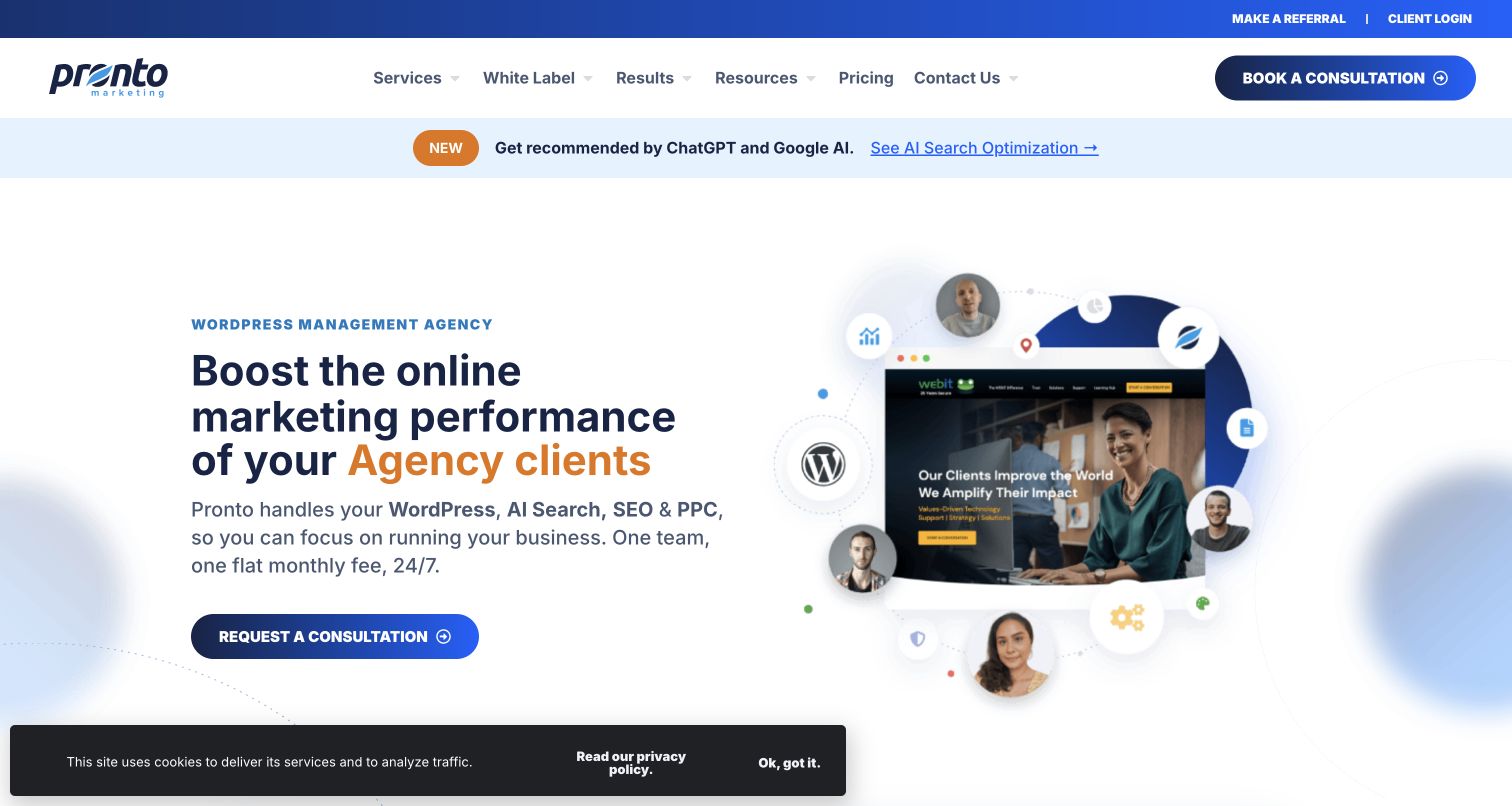
Pronto Marketing’s homepage combines a clear WordPress management message with a montage of people, website work, and platform imagery. A consultation action appears in both the header and hero, while pricing, results, and service routes support further evaluation. The exact homepage response includes a Kinsta cache signal. The official customer case also discusses the agency’s wider hosting operations, but that does not mean every pictured client shares the same infrastructure. The design lesson is to give prospects a concrete service and response path while documenting the operational scope behind each hosting claim.
What you can learn
Distinguish the agency’s own website from each client environment in your hosting inventory. Define staging, backups, access roles, and incident ownership per property, and test consultation forms and case study links without treating marketing examples as an authoritative infrastructure list.
Pros
The service category and consultation route are clear in the first view.
Results and pricing links support a more informed conversation before contact.
Cons & considerations
A montage of clients and tools can imply broader technical relationships than evidence supports.
A homepage cache signal does not verify every managed client environment.
Visible tech stack
Earlier / documented evidence
Kinsta
Platform source: Official customer case and exact public property. Exact public source-page response includes x-kinsta-cache: HIT; official customer case provides additional context. This is a property-specific hosting association, not a measured performance or uptime claim. Platform evidence is separate from the direct website screenshot and is not a complete current infrastructure audit.
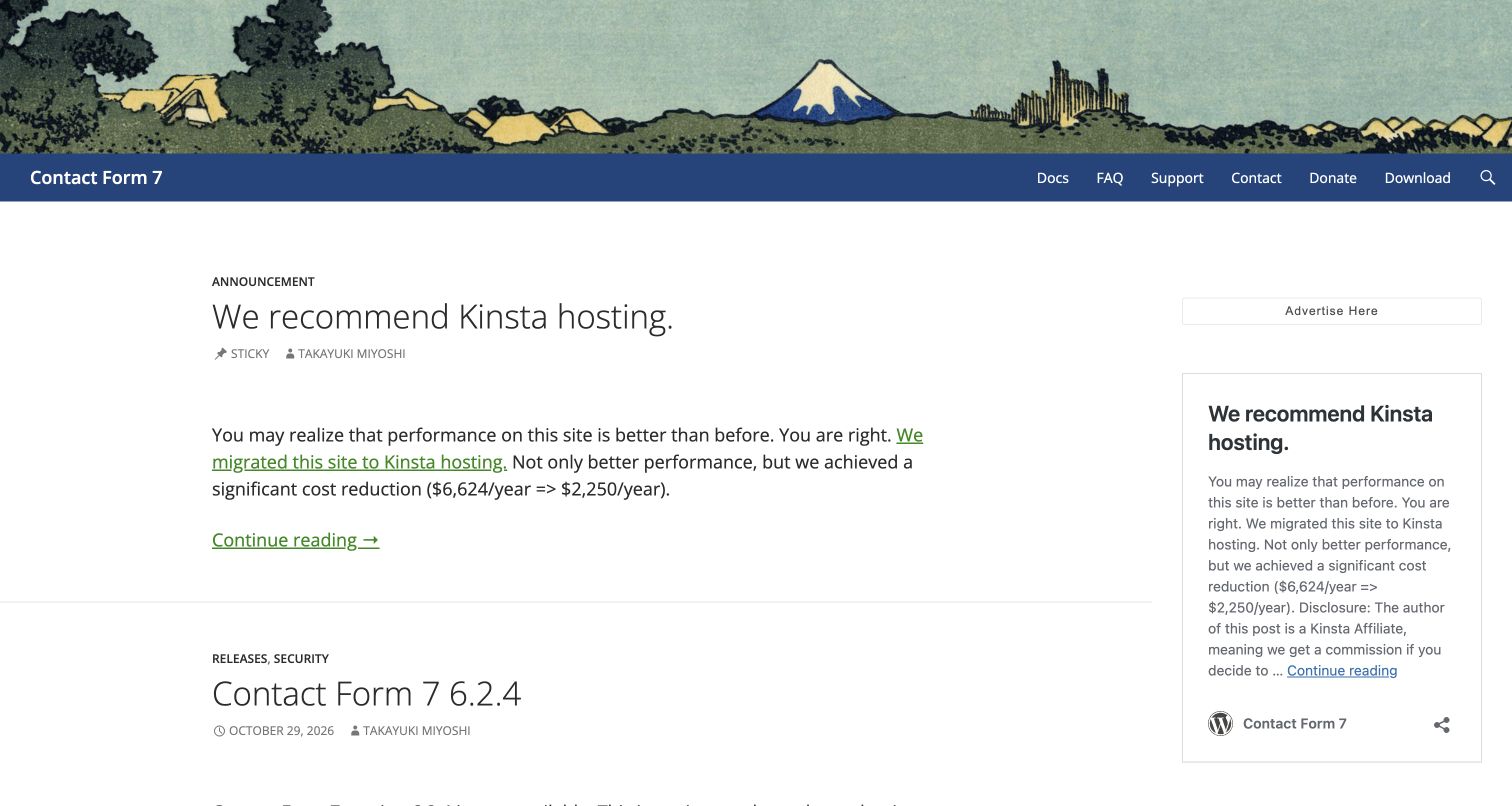
Contact Form 7’s homepage uses a straightforward article list below an illustrated header, with documentation, FAQ, support, and download routes clearly named. A pinned first party announcement states that this website migrated to Kinsta, and Kinsta publishes a corresponding customer case. The page’s practical value comes from timely release and security information, not a complex visual presentation. This is a useful hosting example for a project where visitors need reliable reference material. It does not imply that sites using the Contact Form 7 plugin also use Kinsta.
What you can learn
Treat documentation URLs, release archives, and download handoffs as critical migration checks. Keep update notices easy to discover, rehearse restoration of the publishing system, and distinguish the project’s own hosting from the many independent websites where its software may be installed.
Pros
Named documentation and support routes make the site’s practical purpose immediately clear.
Dated release posts provide an understandable chronology for returning users.
Cons & considerations
A pinned hosting announcement can compete with newer technical notices for first view attention.
Hosting the project website says nothing about the infrastructure of plugin users.
Visible tech stack
Earlier / documented evidence
Kinsta
Platform source: Official customer case and exact public property. Official Contact Form 7 homepage currently displays its first-party announcement that this site migrated to Kinsta; Kinsta case identifies the official documentation website. This is a property-specific hosting association, not a measured performance or uptime claim. Platform evidence is separate from the direct website screenshot and is not a complete current infrastructure audit.
Define article, category, archive, search, and media templates. Assign publishing owners and document how caches refresh when content changes. Verify old URLs and feeds before a migration, and make content restoration part of the maintenance routine.
Plan a service or hospitality website
List essential telephone, location, emergency, quote, and booking routes. Identify external providers and fallback contact options. Test the public information separately from transactional handoffs, and keep visitor specific states out of shared caching where appropriate.
Plan a commercial or account experience
Separate public product and marketing pages from carts, accounts, memberships, and payment providers. Document cache exclusions and data boundaries. Use approved test transactions or fixtures, and verify the intended result in the authoritative system rather than relying on a button click.
From references to requirements
Build a release and maintenance plan
Define acceptance checks
Choose representative routes and visitor tasks, including older content and error states. Check mobile navigation, essential assets, redirects, forms, and external links. Measure actual performance separately, using consistent conditions and realistic pages instead of inferring speed from a host name.
Assign access and ownership
Identify who publishes content, maintains code, manages hosting, and receives incidents. Give each person the access needed for their role. Record dependencies and renewal responsibilities so a domain or third party integration does not become an unowned part of the website.
Prepare the change window
Record the current version, migration target, content freeze or synchronization process, and rollback criteria. Confirm backups and redirects, then verify the live property after launch. Keep the exact deployment or migration record so future maintenance can start from known facts.
A useful handover demonstration
Ask the actual team to carry out its routine job: publish a realistic update, correct a mistake, preview a narrow screen, and identify who owns an integration failure. For a library or frontend framework, also ask who maintains the content source and deployment. A polished screenshot does not answer those operational questions.
Beyond the screenshot
Kinsta website planning checklist
Identify the exact website property and its external systems.
Inventory content templates, media, redirects, and critical visitor tasks.
Test representative changes in an isolated staging environment.
Define cache behavior for public and personalized pages.
Verify forms and handoffs with designated test fixtures.
Document backups and rehearse restoration of important content.
Measure performance and availability independently from hosting evidence.
Assign release, maintenance, and incident owners with a rollback plan.
Test with real content, a keyboard, a small screen, slow or failed requests, and the people who will maintain the system. These are planning checks, not an accessibility, security, performance, or search-ranking certification.
Sources & editorial method
How this Kinsta collection was reviewed
Examples use genuine direct browser captures. Most associations come from Kinsta specific cache headers observed on the exact public source page; selected additions include official property specific customer documentation and first party statements. Original observation and capture dates are retained. Customer performance claims were not adopted as independent measurements, and no real forms, bookings, or purchases were submitted.
Every image is an unmodified capture from the actual website, with its source and capture date. Some captures are reused from our shared catalog; their dates remain the original capture dates. None comes from a vendor gallery or a generated reconstruction. Moving imagery and live content can change.
Technology attribution uses public page assets or metadata, official platform documentation, or a cited first-party project case study. Documentary and framework-relationship evidence is identified where used; it is not a complete current backend inventory. A CMS image CDN alone does not establish a full CMS deployment. A library’s presence does not prove which individual controls use it, and a platform label does not establish AI authorship.
The composition notes, lessons, pros and tradeoffs are original editorial observations. We have not measured conversion, traffic, security, performance or accessibility conformance. Website owners retain their brands and imagery; these examples are not our client portfolio. Written, Edited and Curated are independent records, not dates advanced by a build. See our editorial standards or suggest a correction.
Questions worth asking
Kinsta website development FAQs
Does a Kinsta cache header prove a site is fast?
No. It is a hosting association signal for the sampled response. Speed and reliability require separate measurements under defined conditions, and the result may vary across routes, devices, and external dependencies.
Does the ClickUp example mean its application runs on Kinsta?
No. The documented and captured property is the public ClickUp blog. A blog can have its own content system and hosting boundary within a larger product organization.
What should be tested before a hosting migration?
Test representative pages, redirects, media, forms, search, account boundaries, and external handoffs. Rehearse recovery and confirm who owns the release. The right checklist follows the actual responsibilities of the website.
Can a hosting provider replace ongoing maintenance?
No. Content accuracy, application updates, integration ownership, access review, and incident response still need responsible people. Managed hosting can support that work, but the team must define the process.
Choose hosting around the website’s real responsibilities, test the boundaries between systems, and leave the next maintainer a clear operational record.