This collection studies 20 distinct public properties with dated CookieYes resource evidence. It includes both cloud script references and identifiable WordPress plugin resources. The precise source matters: neither form of reference proves how consent is configured or enforced.
CookieYes can sit beside very different visitor tasks: reading a science article, choosing a travel destination, comparing a roof service or finding espresso equipment. The interface should make its choices legible while preserving enough page context for those tasks to remain clear.
A familiar brand is useful as a design reference, but its configuration is not a template for another organization. Study the visible hierarchy and placement, then brief the real requirements of your own site: scripts, languages, returning visits, preference changes and responsibility for future updates.
Before the examples
What makes good CookieYes website development in 2026?
Coordinate the first screen
Map the opening page with all likely fixed elements: header, consent controls, location selector and support launcher. Check which action remains obvious at a narrow width. Prioritize readable choices and page context over decorative animation.
Distinguish product variants
A dated WordPress plugin path and a cloud-hosted script are different technical observations. CookieYes documents differences associated with its WordPress plugin history and interface. Record the actual setup before applying instructions or assuming every example uses the same implementation.
People should be able to find preferences after the initial decision. CookieYes documents actions for accepting, rejecting and customizing choices. Design the corresponding controls and feedback so the visitor understands what changed without relying on a page reload or ambiguous icon.
SOM, Tourism Ireland’s ireland.com, Quanta Magazine, La Marzocco USA and CentiMark open the collection. They are recognizable within architecture, destination travel, science journalism, espresso equipment and commercial roofing. The exact public properties carry their own evidence; recognition does not imply that every corporate system uses CookieYes.
We start with five recognizable brands or organizations: SOM, Tourism Ireland, Quanta Magazine, La Marzocco USA, CentiMark. Each attribution applies to the named website property, not every product or website belonging to its organization. This is a curated reading sequence, not a measured ranking.
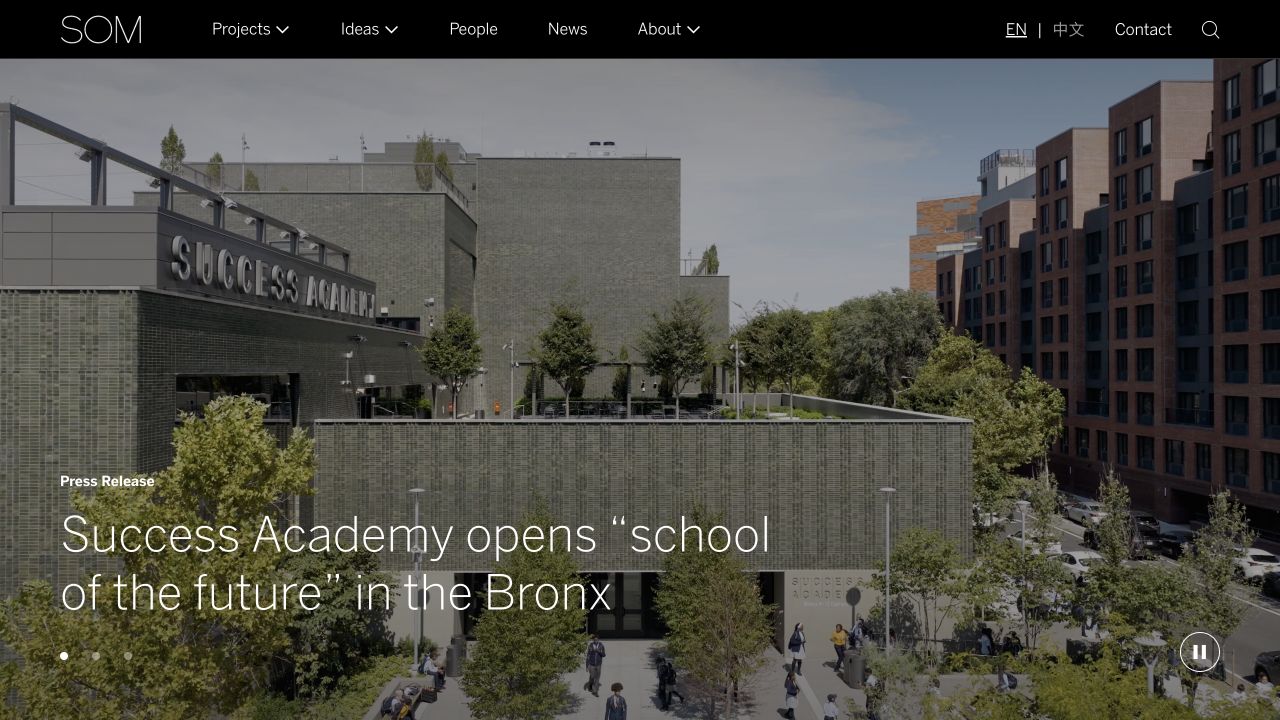
SOM opens with a photographed school and a short press-release headline, while projects, ideas, people and news share the header. The composition gives a real building the central role and identifies why it is being shown. For consent design, this is a useful information-first model: the visitor should retain access to the project and article when optional measurement or media enhancements are unavailable. The dated CookieYes resource reference establishes a scoped integration, not a compliance or enforcement finding.
What you can learn
Keep project names, credits and article links outside optional presentation layers. A preference change should preserve the visitor's place and leave a readable path through the firm's public work.
Pros
The photograph and news label connect a specific building with a timely editorial reason for placing it on the homepage.
The header separates portfolio, people and ideas, giving different audiences a clear alternative to the featured story.
Cons & considerations
Thin white text over a building photograph needs consistent contrast across image changes, mobile crops and enlarged text.
The CookieYes reference does not prove that external media or analytics are correctly withheld, nor does it establish every regional consent requirement.
Public source checked November 3, 2026. References may be embedded or legacy—not a complete backend inventory.
Platform source: Dated public page resource observation. The public source page referenced CookieYes resources on 2026-11-03. This is a scoped integration signal, not proof of configuration or successful behavior. The direct screenshot retains its separate original capture date. Platform evidence is separate from the direct website screenshot and is not a complete current infrastructure audit.
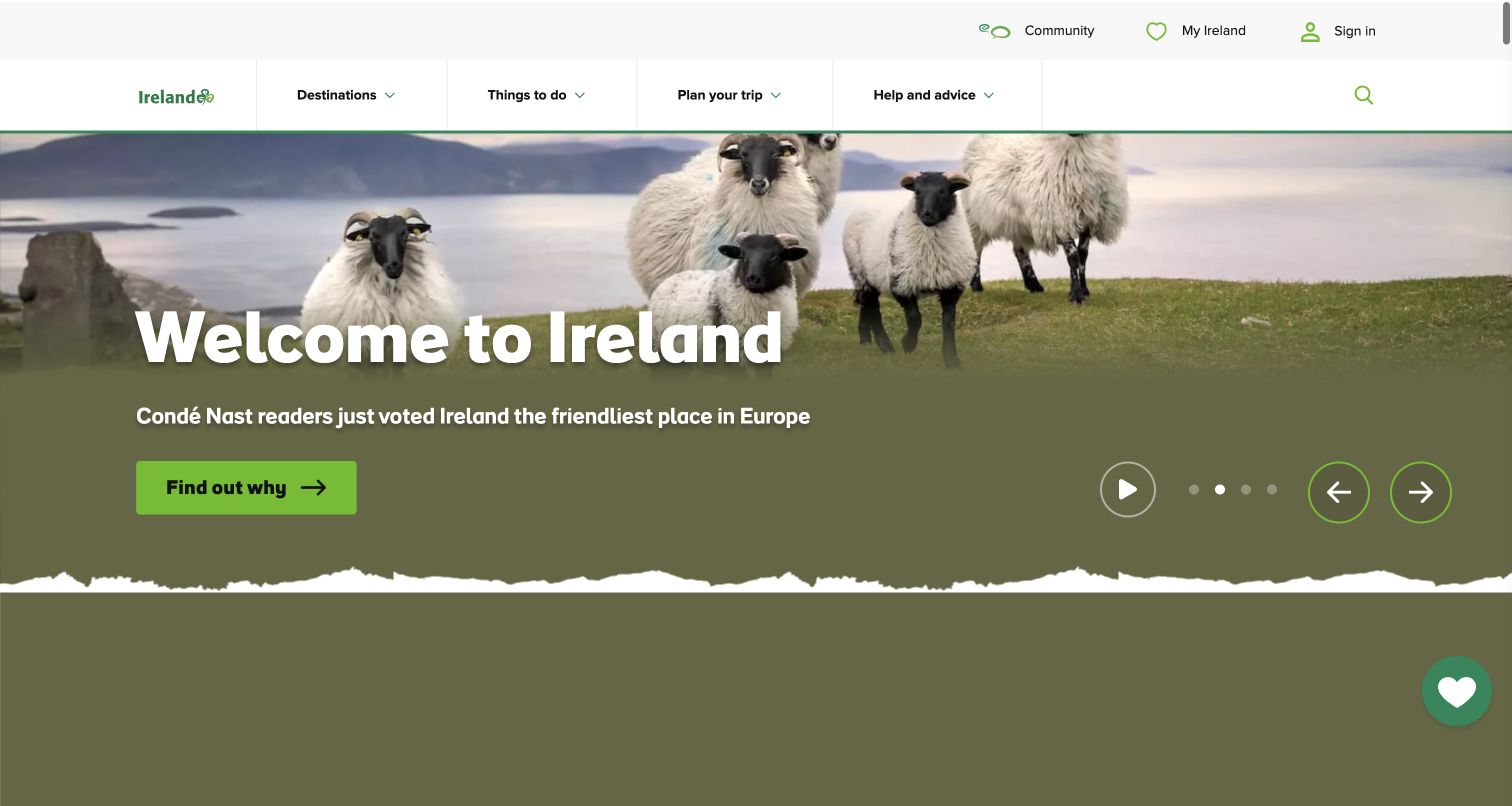
Tourism Ireland combines a landscape and sheep photograph with a broad welcome, then exposes destinations, activities, trip planning and help in the header. The captured hero includes carousel controls and a saved-items heart. These additions make preference handling a design concern: visitors should understand whether a feature simply changes the page or requires persistent storage, and ordinary destination information should remain reachable regardless. The dated CookieYes resource reference establishes a scoped integration, not a compliance or enforcement finding.
What you can learn
Separate essential trip information from optional personalization. Keep destination and planning links usable without a saved-items feature, and explain the state of preferences without relying only on an icon.
Pros
The landscape image gives the destination a recognizable visual identity while the header supports concrete trip-planning questions.
Visible carousel controls provide a discoverable way to move between campaigns rather than making the photograph entirely passive.
Cons & considerations
Saved-item icons need clear labels and feedback, particularly when storage choices affect whether a selection will persist.
The displayed destination accolade is a publisher claim; neither this screenshot nor the consent integration independently verifies its current ranking.
Public source checked November 3, 2026. References may be embedded or legacy—not a complete backend inventory.
Platform source: Dated public page resource observation. The public source page referenced CookieYes resources on 2026-11-03. This is a scoped integration signal, not proof of configuration or successful behavior. The direct screenshot retains its separate original capture date. Platform evidence is separate from the direct website screenshot and is not a complete current infrastructure audit.
Quanta Magazine places a large scientific illustration beneath a compact subject navigation. A privacy bar at the lower edge includes a distinct do-not-share action and a close control in the retained capture. The page shows how editorial content and preference controls occupy the same reading surface. The useful development question is whether the visitor can reach articles and manage choices without an optional script becoming a prerequisite for reading. The dated CookieYes resource reference establishes a scoped integration, not a compliance or enforcement finding.
What you can learn
Treat reading access and privacy choice as separate journeys. Preserve subject navigation and article text while testing the notice's focus order, closing behavior and route back to preference settings.
Pros
Subject categories such as physics and mathematics provide a clear structure around a visually ambitious lead illustration.
The privacy notice presents an explicit preference action rather than relying exclusively on a generic acceptance button.
Cons & considerations
A full-width notice can push article context below the initial view, especially on short screens or at high zoom.
The visible notice cannot demonstrate the actual handling of analytics, advertising or other requests after a visitor changes a choice.
Public source checked November 3, 2026. References may be embedded or legacy—not a complete backend inventory.
Platform source: Dated public page resource observation. The public source page referenced CookieYes resources on 2026-11-03. This is a scoped integration signal, not proof of configuration or successful behavior. The direct screenshot retains its separate original capture date. Platform evidence is separate from the direct website screenshot and is not a complete current infrastructure audit.
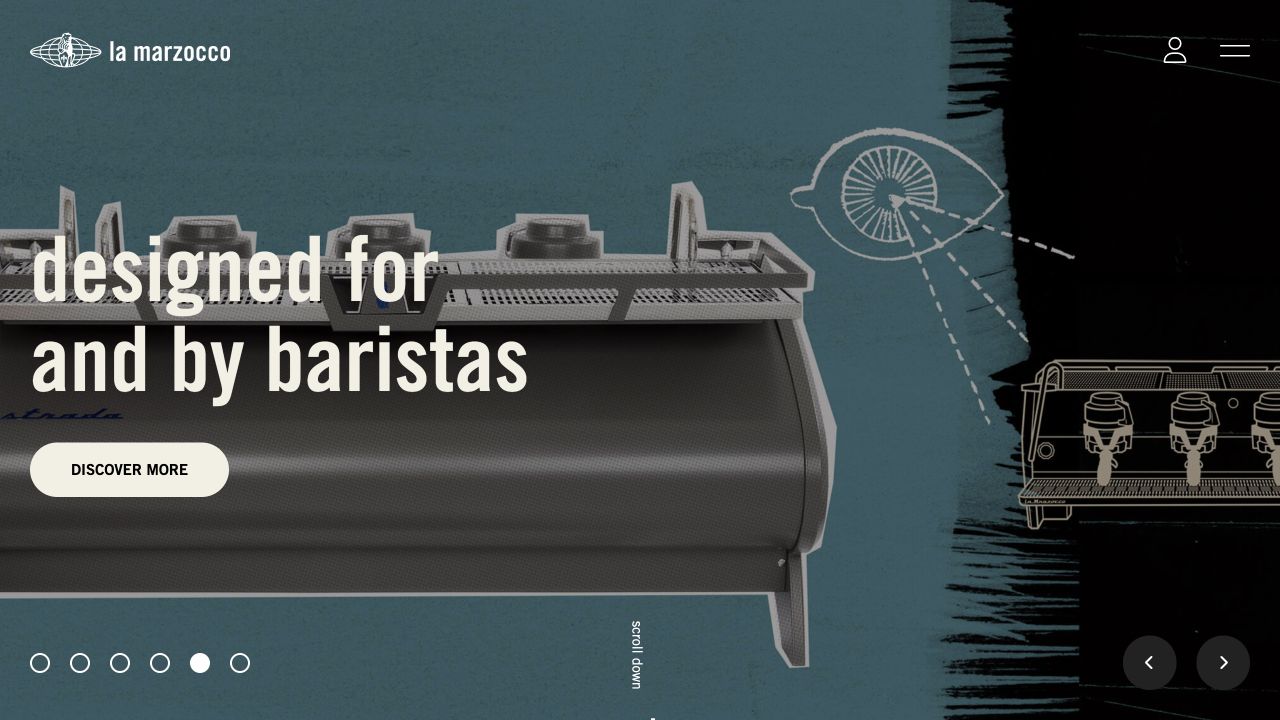
La Marzocco USA places an espresso machine against a graphic background and states that the equipment is designed for baristas. The discovery action sits close to the product, while a compact menu and account control occupy the top. Consent design should preserve this simple task relationship. A visitor should still be able to find product information and support when optional video, animation or marketing resources are not available. The dated CookieYes resource reference establishes a scoped integration, not a compliance or enforcement finding.
What you can learn
Keep product discovery and service documentation as ordinary links alongside campaign media. Test preference interfaces against the visible carousel controls and the small menu before approving the composition.
Pros
The named barista audience gives the product image a clear professional context rather than presenting the machine as decoration alone.
The restrained discovery action lets the equipment remain the visual focus while still providing a next step into the range.
Cons & considerations
A compact menu can conceal important support routes unless it remains keyboard accessible and understandable without additional scripts.
The CookieYes observation applies to this US public property; it does not establish behavior on every distributor, store or support system.
Public source checked November 3, 2026. References may be embedded or legacy—not a complete backend inventory.
Platform source: Dated public page resource observation. The public source page referenced CookieYes resources on 2026-11-03. This is a scoped integration signal, not proof of configuration or successful behavior. The direct screenshot retains its separate original capture date. Platform evidence is separate from the direct website screenshot and is not a complete current infrastructure audit.
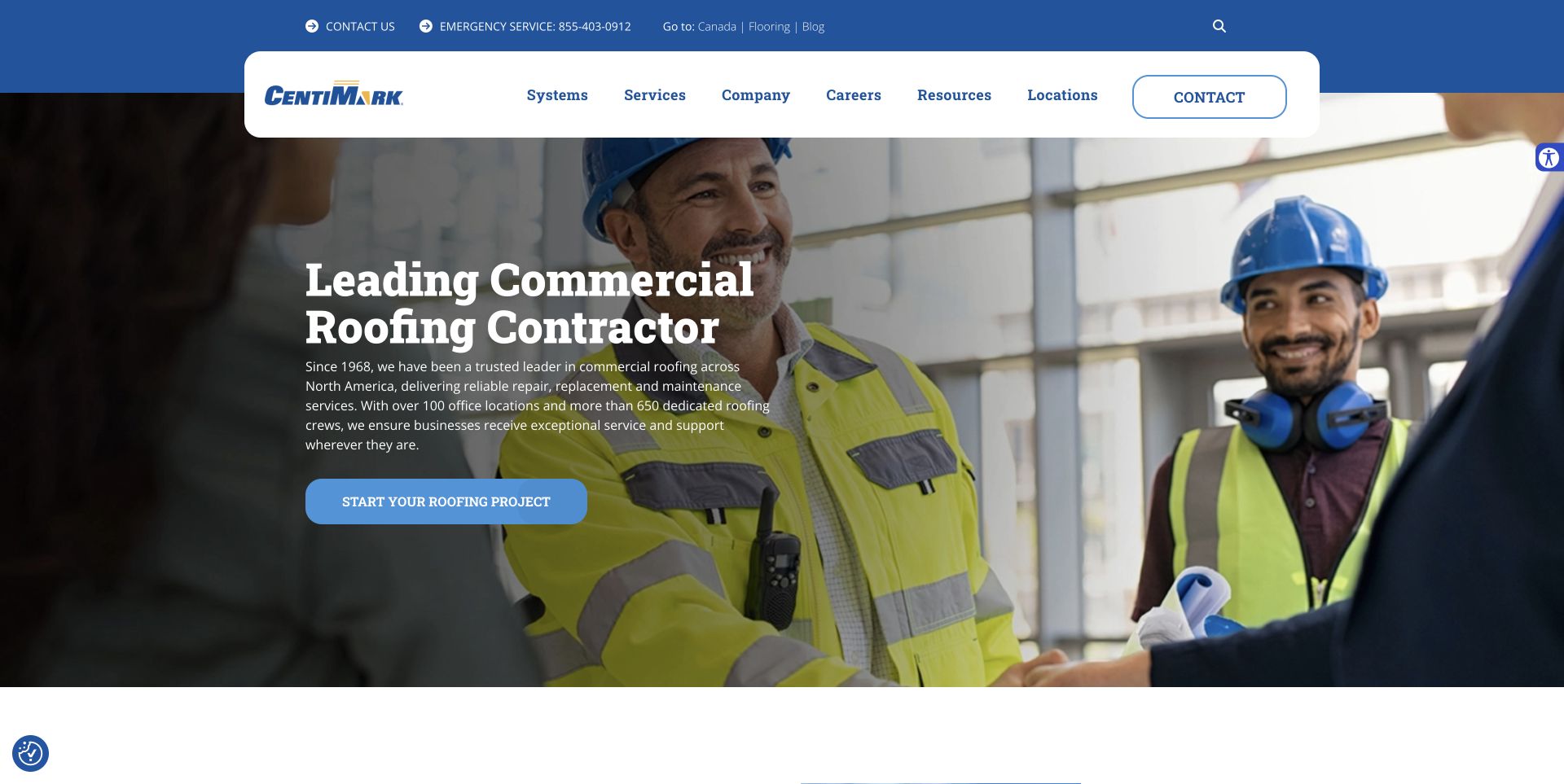
CentiMark places workers in the hero, with a direct description of commercial roofing and an action to begin a project. Contact and emergency information appear above the main navigation, keeping urgent and planned inquiries distinct. The consent lesson is practical: preference controls should never hide the emergency route or prevent a visitor from reading services. Optional measurement can be unavailable without making essential contact information unavailable too. The dated CookieYes resource reference establishes a scoped integration, not a compliance or enforcement finding.
What you can learn
List critical contact routes before designing a preference panel. Check that emergency numbers, project links and location information remain readable and operable in every first-visit state.
Pros
The worker photograph gives the service description a concrete operational setting, supporting the page's commercial rather than residential focus.
Emergency contact information and the project action serve different needs, reducing reliance on one generic contact link.
Cons & considerations
Several header layers require responsive review so urgent information does not disappear below a consent panel on small screens.
A consent resource reference does not verify service-area coverage, response times or how a later inquiry form handles personal information.
Public source checked November 3, 2026. References may be embedded or legacy—not a complete backend inventory.
Platform source: Dated public page resource observation. The public source page referenced CookieYes resources on 2026-11-03. This is a scoped integration signal, not proof of configuration or successful behavior. The direct screenshot retains its separate original capture date. Platform evidence is separate from the direct website screenshot and is not a complete current infrastructure audit.
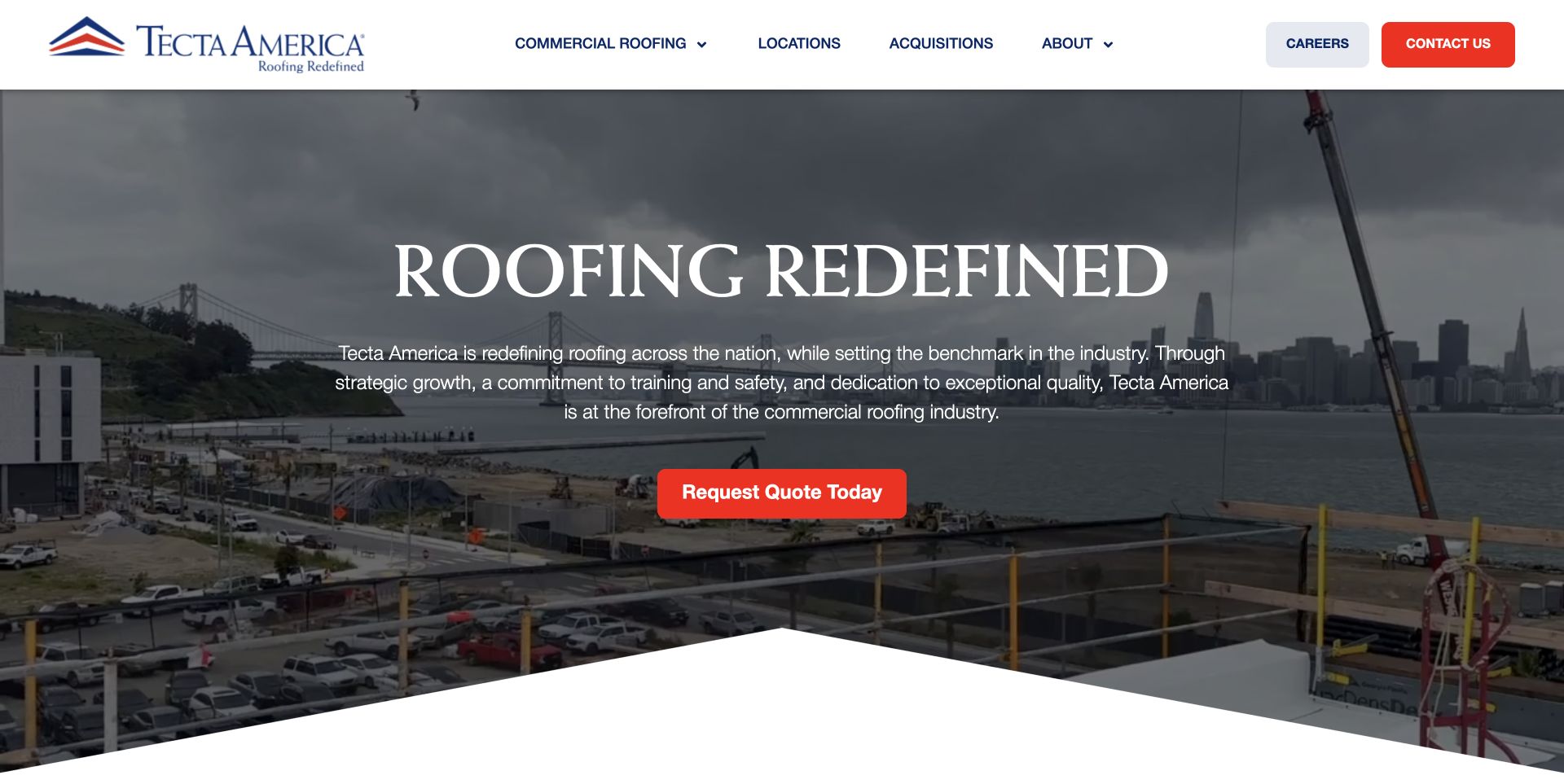
Tecta America's homepage centers a roofing statement over a large project image and follows it with a red quotation action. Commercial roofing, locations, acquisitions and careers sit across the header. The page separates a customer request from corporate interests, which helps define consent tests. Visitors should still reach local service information and the inquiry entrance when optional campaign or marketing code is blocked. The dated CookieYes resource reference establishes a scoped integration, not a compliance or enforcement finding.
What you can learn
Test location discovery and quote access independently of promotional scripts. Preserve a clear contact alternative and avoid making an optional preference decision a hidden requirement for finding service information.
Pros
The contrasting quotation action makes the next customer step visible without requiring visitors to search the corporate navigation.
Locations and careers occupy distinct routes, acknowledging that the homepage serves both potential customers and other audiences.
Cons & considerations
Text over an active project image needs careful contrast control, particularly when notices reduce the available reading area.
The public CookieYes signal does not prove that the quotation form, regional company pages or external recruiting tools share a consistent preference state.
Public source checked November 3, 2026. References may be embedded or legacy—not a complete backend inventory.
Platform source: Dated public page resource observation. The public source page referenced CookieYes resources on 2026-11-03. This is a scoped integration signal, not proof of configuration or successful behavior. The direct screenshot retains its separate original capture date. Platform evidence is separate from the direct website screenshot and is not a complete current infrastructure audit.
North American Roofing uses a close view of roofing material behind a centered service panel. The page names replacement and repair directly, with an inquiry action and emergency contact information near the header. It is useful for studying a practical service entrance where the visitor may be under time pressure. Consent controls need to remain legible without displacing the service description or forcing an unrelated choice before contact information is available. The dated CookieYes resource reference establishes a scoped integration, not a compliance or enforcement finding.
What you can learn
Preserve an ordinary route to urgent help and service details. Test a preference panel against the actual service action and any floating contact controls, rather than reviewing each element separately.
Pros
The explicit replacement-and-repair wording identifies the task more clearly than a broad construction slogan would do.
The material photograph reinforces the service category while a solid text panel protects the main message from background detail.
Cons & considerations
Floating contact controls near the screen edge can overlap a consent notice and need coordinated spacing at smaller widths.
The resource observation does not establish emergency response availability, quotation outcomes or correct blocking of all optional third-party requests.
Public source checked November 3, 2026. References may be embedded or legacy—not a complete backend inventory.
Platform source: Dated public page resource observation. The public source page referenced CookieYes resources on 2026-11-03. This is a scoped integration signal, not proof of configuration or successful behavior. The direct screenshot retains its separate original capture date. Platform evidence is separate from the direct website screenshot and is not a complete current infrastructure audit.
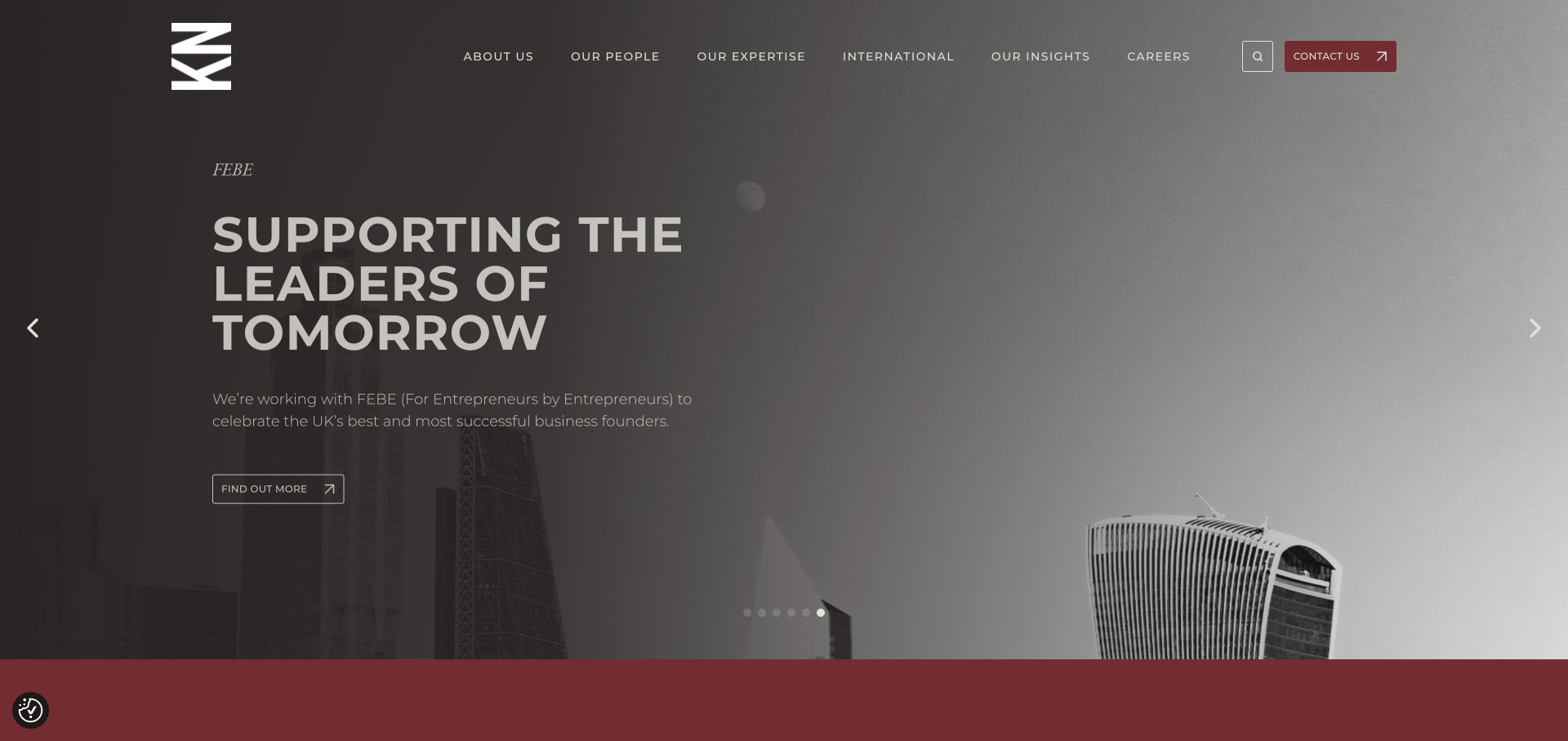
Kingsley Napley gives a leadership-oriented campaign the opening screen, using large type over a subdued city background. The header exposes people, expertise, international work and insights, making the broader firm structure available beside the campaign. A consent implementation should keep those information routes accessible and avoid treating a visitor's legal-service interests as unrestricted analytics data merely because a public resource can be loaded. The dated CookieYes resource reference establishes a scoped integration, not a compliance or enforcement finding.
What you can learn
Make expertise and people pages usable before adding optional tracking or content recommendations. Keep privacy controls clear, and limit any diagnostic or marketing context collected from sensitive inquiry paths.
Pros
The header provides direct access to people and expertise, giving visitors alternatives to the campaign's more general message.
Muted imagery and strong type establish a calm hierarchy suited to a professional information site rather than a product store.
Cons & considerations
The featured campaign may not explain the firm's legal services immediately, so the ordinary navigation carries substantial responsibility.
A CookieYes script reference is not evidence of confidentiality practices, legal-service quality or compliant handling of information submitted through later forms.
Public source checked November 3, 2026. References may be embedded or legacy—not a complete backend inventory.
Platform source: Dated public page resource observation. The public source page referenced CookieYes resources on 2026-11-03. This is a scoped integration signal, not proof of configuration or successful behavior. The direct screenshot retains its separate original capture date. Platform evidence is separate from the direct website screenshot and is not a complete current infrastructure audit.
Stark & Stark pairs a meeting photograph with a red panel containing a short firm introduction and three service-category buttons. A phone number is isolated above the navigation, and live chat appears at the lower edge. The layout offers several contact paths, but each extra layer changes the space available for consent controls. A coherent implementation should keep those choices distinct and avoid collecting sensitive descriptions unnecessarily. The dated CookieYes resource reference establishes a scoped integration, not a compliance or enforcement finding.
What you can learn
Review phone, chat, inquiry and preference paths together. Give visitors enough information to choose the appropriate route while keeping private matter details out of broad optional tracking contexts.
Pros
The three service buttons translate the general introduction into distinct audience paths instead of one undifferentiated contact action.
A visible phone route gives visitors an alternative to chat or forms when their situation requires a conversation.
Cons & considerations
The combination of chat and additional notices can crowd the lower screen and obscure service-category controls on narrow devices.
The observed consent integration does not verify confidentiality, conflict checks or how third-party chat and inquiry providers process submitted details.
Public source checked November 3, 2026. References may be embedded or legacy—not a complete backend inventory.
Platform source: Dated public page resource observation. The public source page referenced CookieYes resources on 2026-11-03. This is a scoped integration signal, not proof of configuration or successful behavior. The direct screenshot retains its separate original capture date. Platform evidence is separate from the direct website screenshot and is not a complete current infrastructure audit.
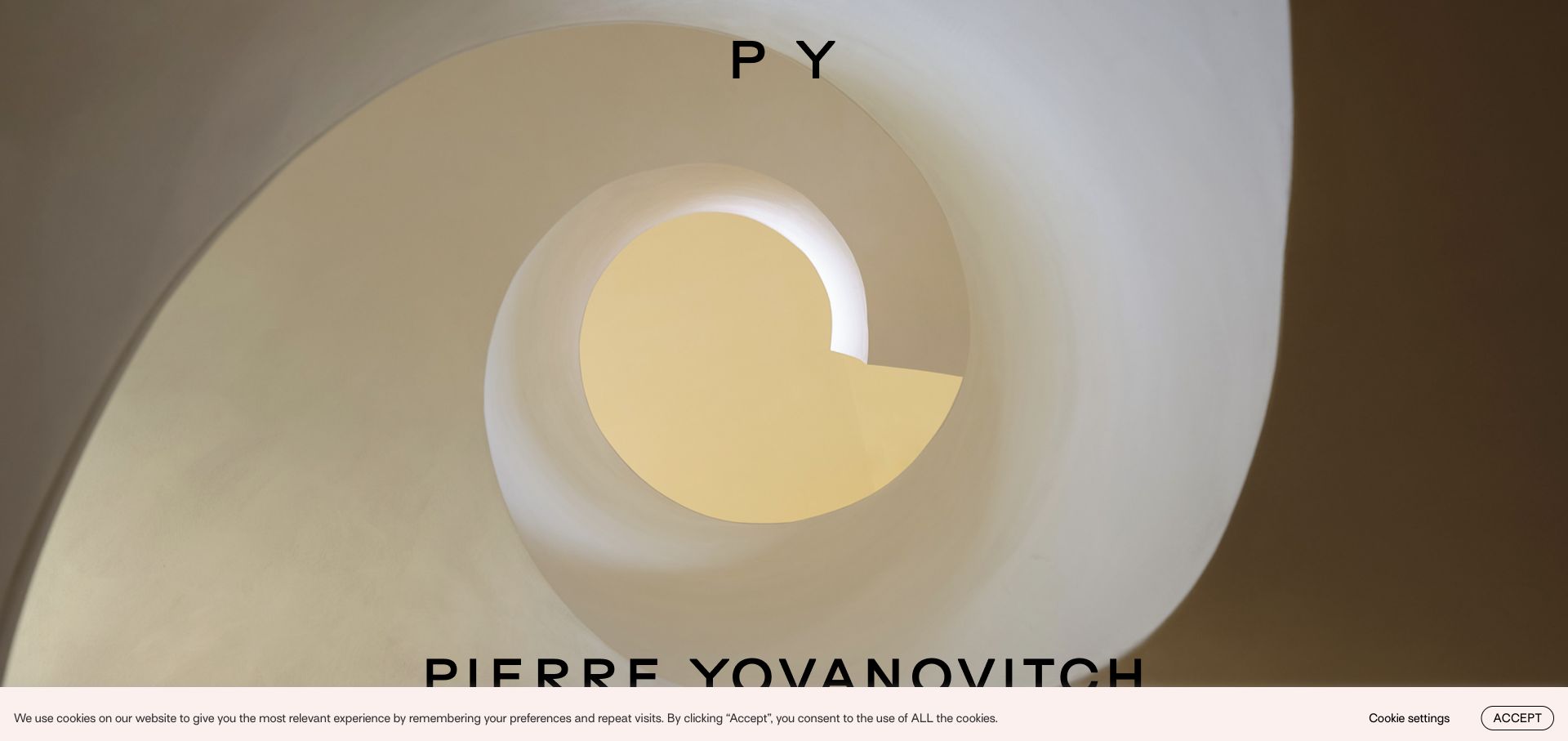
Pierre Yovanovitch fills the opening with a sculptural interior view and a restrained monogram. A narrow cookie strip runs across the bottom, with settings and acceptance controls on the right in the retained image. The page demonstrates the tension between a deliberately quiet composition and the need for discoverable preferences. A minimal visual treatment should still give controls readable labels, adequate space and a clear return path. The dated CookieYes resource reference establishes a scoped integration, not a compliance or enforcement finding.
What you can learn
Preserve the visual calm without shrinking privacy controls below comfortable use. Test the settings route with keyboard navigation, text enlargement and a short viewport before judging the banner unobtrusive.
Pros
The architectural image communicates a distinctive design sensibility without a dense first-screen sales message or competing project cards.
The consent strip is visually separated from the hero, making its functional role distinguishable from the photographed interior.
Cons & considerations
Small preference text and tightly arranged buttons may become difficult to operate on a phone or with enlarged browser text.
The screenshot does not show every preference option or establish what happens to optional resources after settings are changed.
Public source checked November 3, 2026. References may be embedded or legacy—not a complete backend inventory.
Platform source: Dated public page resource observation. The public source page referenced CookieYes resources on 2026-11-03. This is a scoped integration signal, not proof of configuration or successful behavior. The direct screenshot retains its separate original capture date. Platform evidence is separate from the direct website screenshot and is not a complete current infrastructure audit.
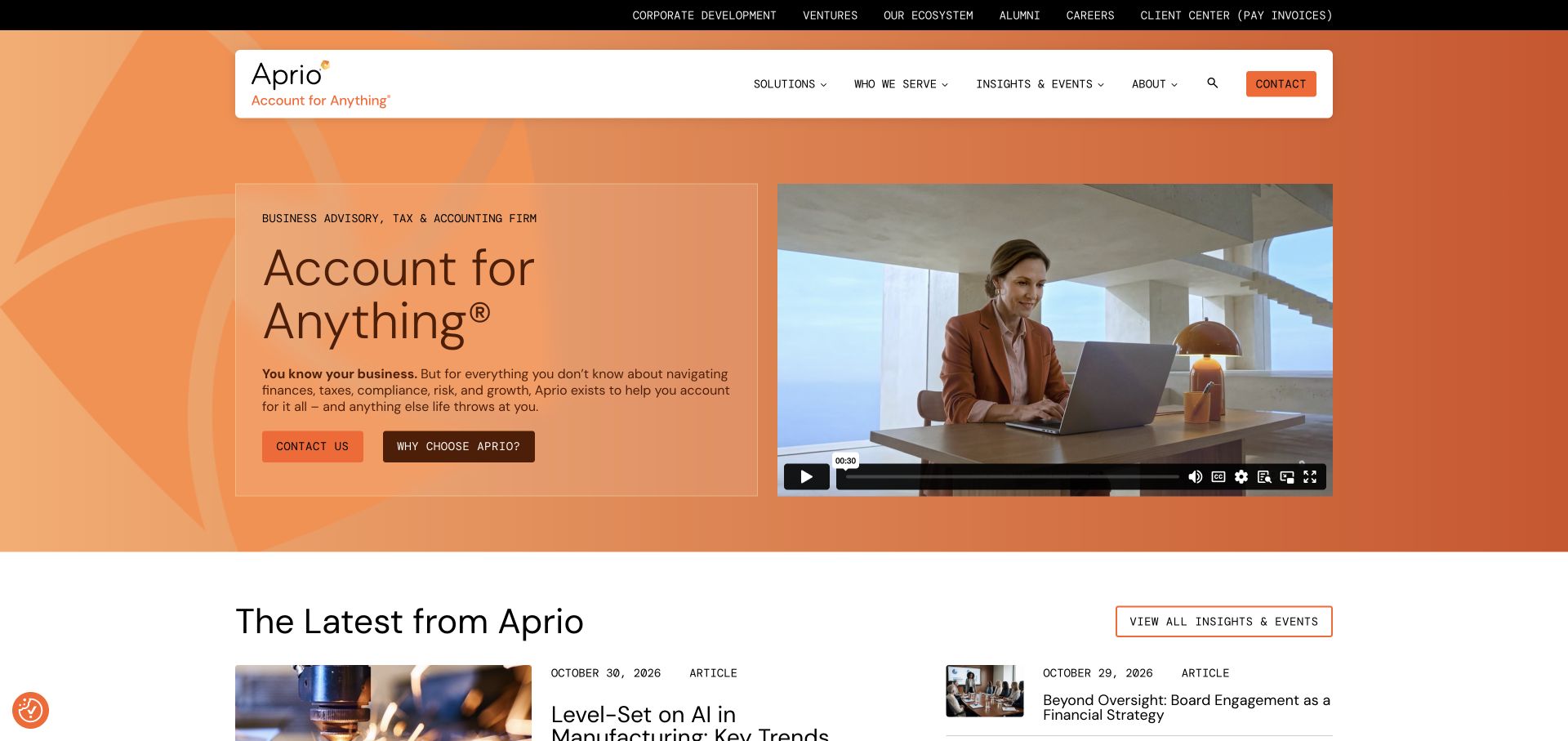
Aprio uses an orange brand field, a short service introduction and a video panel alongside the principal contact actions. Recent insights begin immediately below, so the visitor can move from the firm's positioning into current articles. A consent implementation needs to consider the video separately from the text. Refusing an optional media or measurement category should leave the service explanation and ordinary article routes intact. The dated CookieYes resource reference establishes a scoped integration, not a compliance or enforcement finding.
What you can learn
Provide a useful textual introduction and a clear media fallback. Test whether a blocked video explains its state without repeatedly demanding consent or hiding the surrounding contact and insight links.
Pros
The written service category and contact actions remain alongside the media, giving visitors a route that does not depend on watching.
The nearby insights section offers a way to evaluate the firm's thinking before starting a sales or advisory conversation.
Cons & considerations
A player can introduce controls, requests and focus behavior that need testing independently of the site's basic consent panel.
The CookieYes resource observation does not identify which video requests are gated or establish how inquiry data is handled after contact.
Public source checked November 3, 2026. References may be embedded or legacy—not a complete backend inventory.
Platform source: Dated public page resource observation. The public source page referenced CookieYes resources on 2026-11-03. This is a scoped integration signal, not proof of configuration or successful behavior. The direct screenshot retains its separate original capture date. Platform evidence is separate from the direct website screenshot and is not a complete current infrastructure audit.
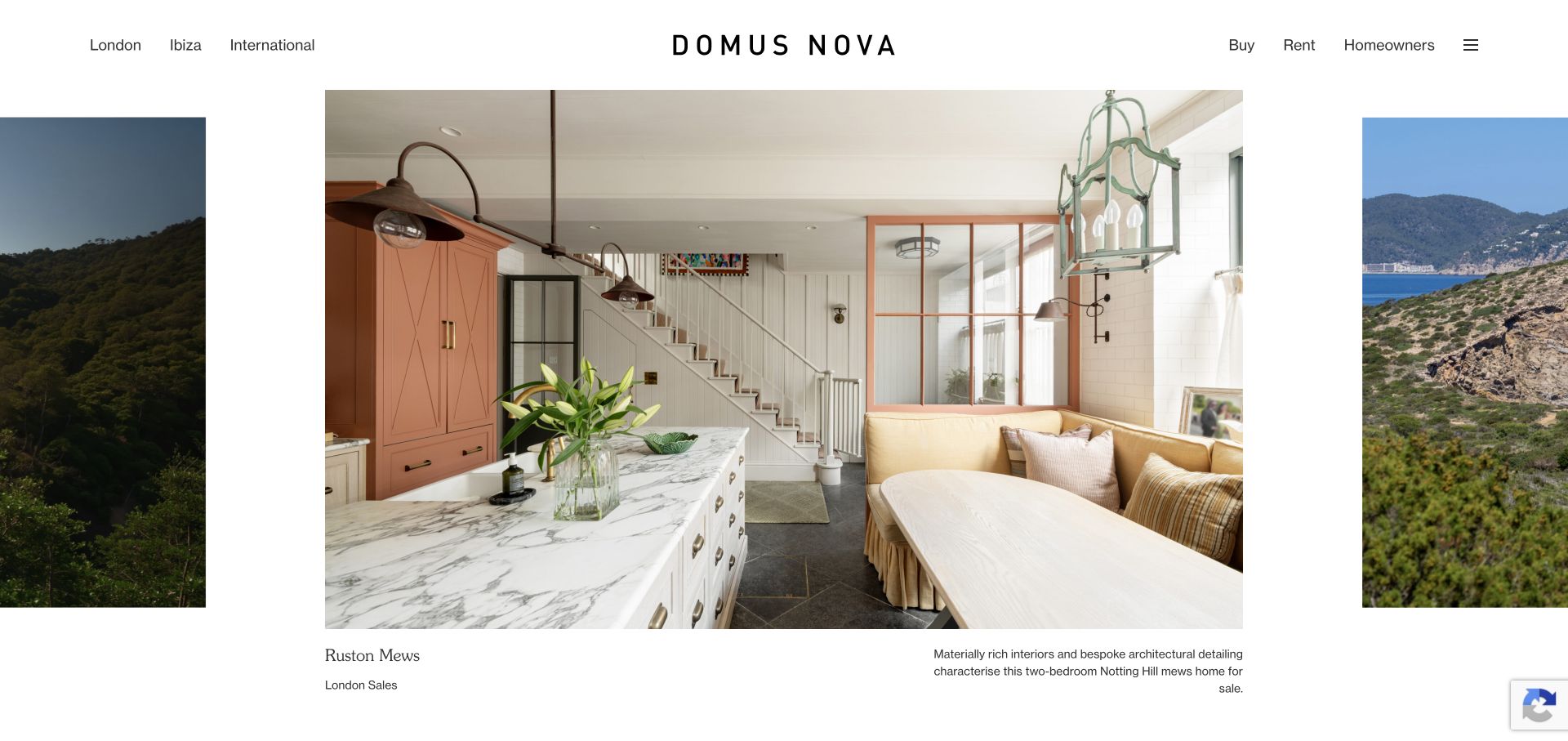
Domus Nova gives a domestic interior the central frame, with neighboring images implying more properties and a compact location caption underneath. Buying, renting and homeowner routes occupy the header. The restrained page makes the photographed space easy to study, but captions and property actions sit close to the lower edge. Consent controls should protect that context rather than masking the location or forcing visitors into a carousel-only navigation path. The dated CookieYes resource reference establishes a scoped integration, not a compliance or enforcement finding.
What you can learn
Keep property names, locations and ordinary listing links available when rich presentation is limited. Test notices against captions and edge controls so the visitor can still identify the featured home.
Pros
The large interior photograph reveals material, layout and light in more detail than a small grid thumbnail could provide.
Separate buy, rent and homeowner routes acknowledge distinct tasks without overloading the image with several competing buttons.
Cons & considerations
Partial neighboring images may imply interaction that needs clear keyboard access and a non-carousel way to browse properties.
The consent integration does not validate listing availability, price, location accuracy or the behavior of connected inquiry and mapping tools.
Public source checked November 3, 2026. References may be embedded or legacy—not a complete backend inventory.
Platform source: Dated public page resource observation. The public source page referenced CookieYes resources on 2026-11-03. This is a scoped integration signal, not proof of configuration or successful behavior. The direct screenshot retains its separate original capture date. Platform evidence is separate from the direct website screenshot and is not a complete current infrastructure audit.
BODYROK uses a purple exercise scene, oversized type and a prominent booking button. The header repeats booking and class-purchase routes alongside studio information. The high-energy treatment makes the offer recognizable, but consent implementation should preserve the practical difference between choosing a class and buying a package. A visitor needs both paths to remain clear when promotional or analytics resources are unavailable. The dated CookieYes resource reference establishes a scoped integration, not a compliance or enforcement finding.
What you can learn
Test booking and package purchasing as separate journeys under each preference state. Keep studio information and an ordinary support route accessible if an embedded scheduling interface fails to appear.
Pros
The repeated booking action gives visitors a clear next step from both the header and the campaign itself.
The exercise photograph shows equipment and participation, making the class category more concrete than typography alone would do.
Cons & considerations
High-intensity color and large type still need contrast and reduced-motion review rather than being assumed accessible from one image.
The CookieYes resource evidence does not establish consent handling or transaction reliability inside a separate class-booking or membership system.
Public source checked November 3, 2026. References may be embedded or legacy—not a complete backend inventory.
Platform source: Dated public page resource observation. The public source page referenced CookieYes resources on 2026-11-03. This is a scoped integration signal, not proof of configuration or successful behavior. The direct screenshot retains its separate original capture date. Platform evidence is separate from the direct website screenshot and is not a complete current infrastructure audit.
Psycle opens with a full-width reformer exercise photograph, a compact message and a small getting-started action. The booking control remains in the top corner while other navigation is condensed into a menu. The picture communicates an activity clearly, but sparse navigation makes reliable controls especially important. A consent layer should not obscure the few available actions or force a reload that loses the visitor's chosen route. The dated CookieYes resource reference establishes a scoped integration, not a compliance or enforcement finding.
What you can learn
Test the small set of critical actions with consent controls open and closed. Preserve an ordinary route to studios, class details and help when optional media or booking enhancements cannot load.
Pros
The exercise image establishes the class context immediately, reducing the need for a long explanation in the opening screen.
The header booking control and introductory action offer a direct route for both returning visitors and first-time customers.
Cons & considerations
Small copy over a large photograph requires careful contrast and crop testing, particularly when the subject moves or imagery changes.
A public consent resource reference does not verify the current class timetable, membership conditions or privacy behavior within external scheduling services.
Public source checked November 3, 2026. References may be embedded or legacy—not a complete backend inventory.
Platform source: Dated public page resource observation. The public source page referenced CookieYes resources on 2026-11-03. This is a scoped integration signal, not proof of configuration or successful behavior. The direct screenshot retains its separate original capture date. Platform evidence is separate from the direct website screenshot and is not a complete current infrastructure audit.
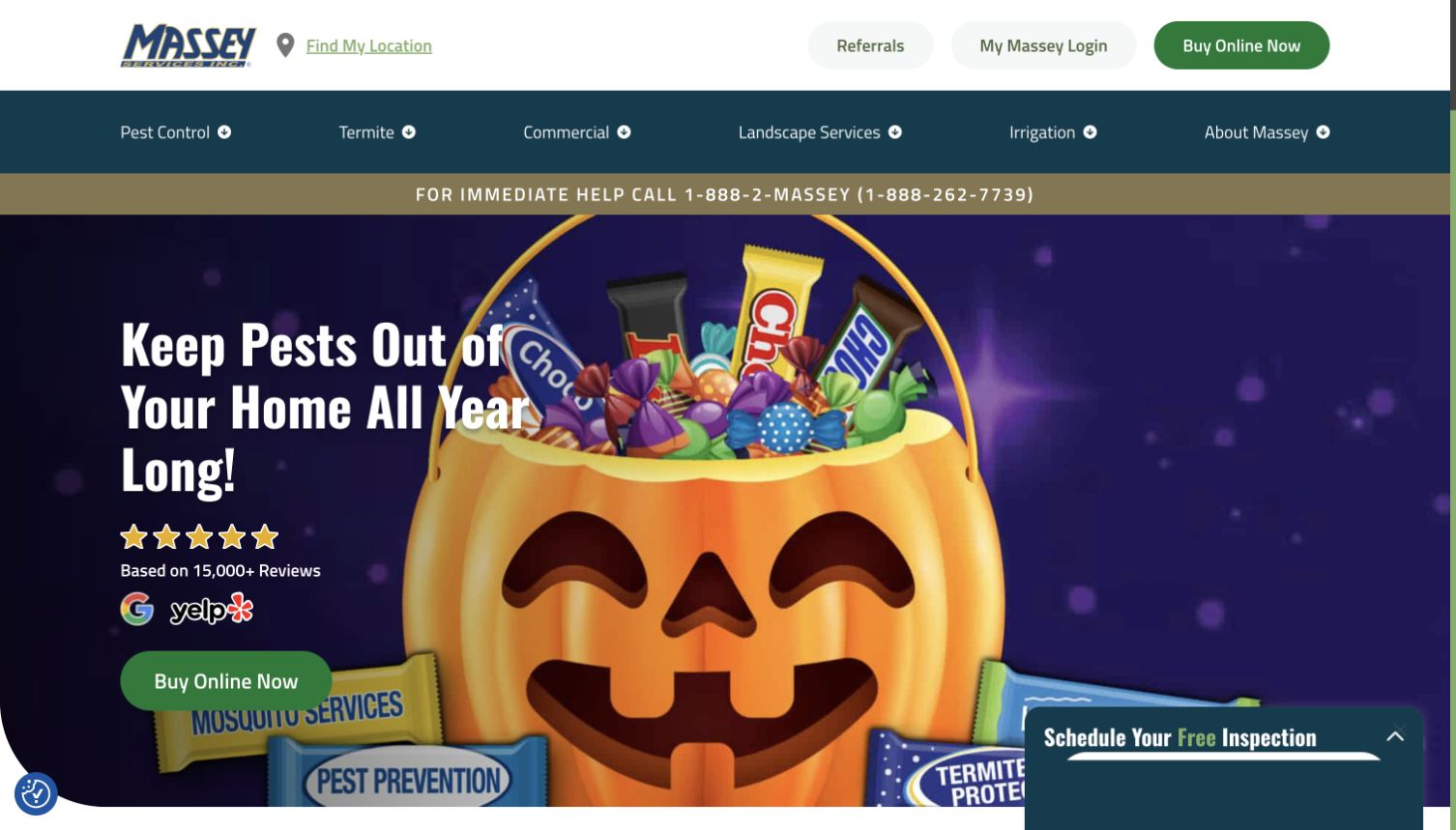
Massey Services uses a seasonal pest-control campaign beneath service navigation, location access and account utilities. A green purchase action is visible in the hero, while an inspection panel sits near the lower edge. This illustrates how promotional, account and lead-generation layers can accumulate. Consent controls need a coordinated position so they do not hide the inspection route, the immediate-help number or a way to manage preferences again. The dated CookieYes resource reference establishes a scoped integration, not a compliance or enforcement finding.
What you can learn
Review the complete first-visit stack of panels and notices. Keep location and urgent contact paths available while separating optional marketing behavior from essential service information and account access.
Pros
Service categories remain visible above the seasonal campaign, helping customers find pest, termite or landscaping information directly.
Location, account and immediate-help routes reflect practical customer needs beyond the promotional offer in the central image.
Cons & considerations
A floating inspection panel can collide with consent controls, so mobile spacing and keyboard progression need coordinated testing.
The CookieYes signal does not substantiate ratings, service guarantees or the handling of customer information in purchasing and scheduling systems.
Public source checked November 3, 2026. References may be embedded or legacy—not a complete backend inventory.
Platform source: Dated public page resource observation. The public source page referenced CookieYes resources on 2026-11-03. This is a scoped integration signal, not proof of configuration or successful behavior. The direct screenshot retains its separate original capture date. Platform evidence is separate from the direct website screenshot and is not a complete current infrastructure audit.
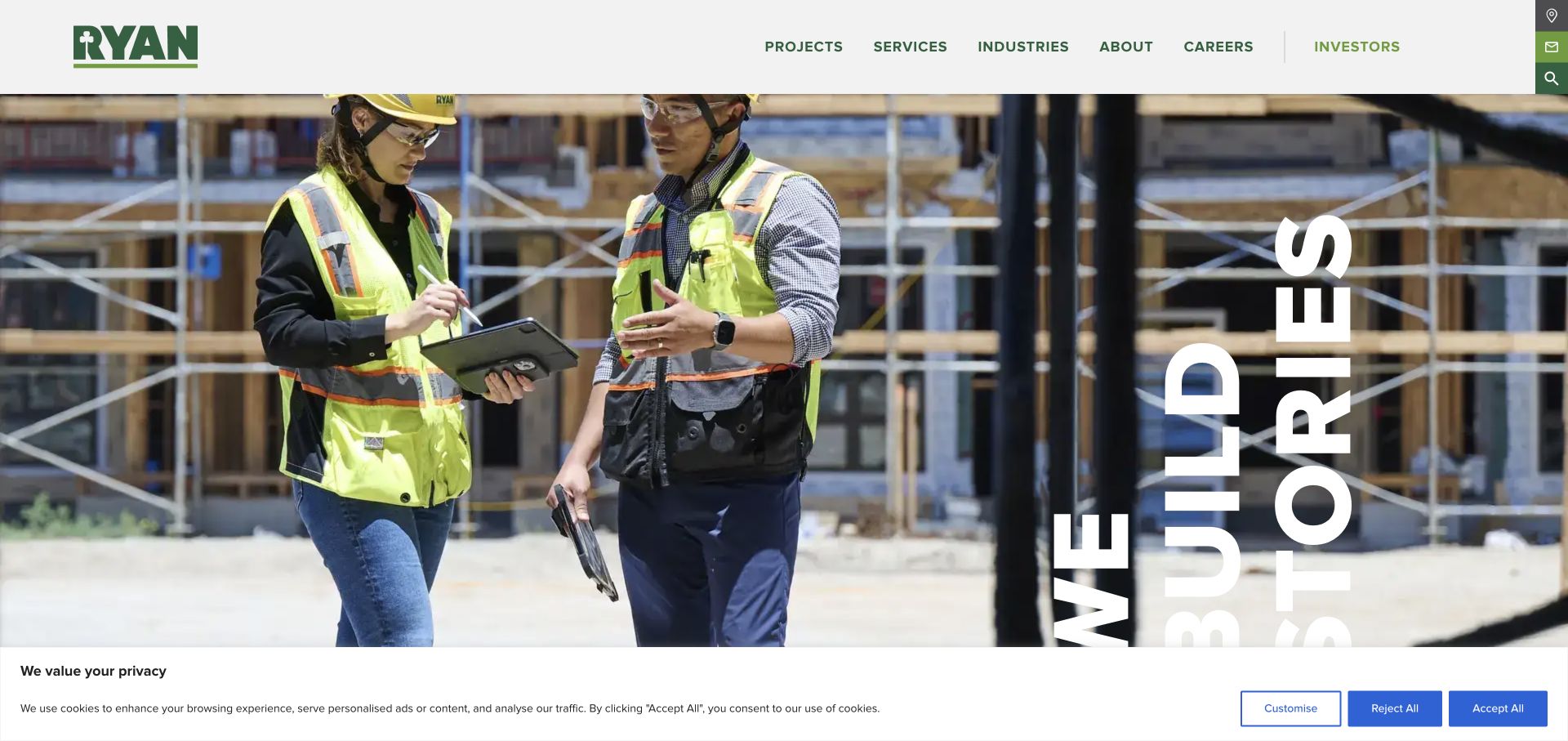
Ryan Companies uses a photograph of two people at a construction site, with a vertically arranged statement along the right. Projects, services, industries and careers sit in a compact header. A cookie strip with customize, reject and accept controls is visible below. The image and controls offer separate kinds of information: the photograph establishes the public presentation, while the actual response to each consent choice still requires implementation testing. The dated CookieYes resource reference establishes a scoped integration, not a compliance or enforcement finding.
What you can learn
Give consent controls a stable readable location without covering the project story. Verify their behavior using real navigation tasks such as reaching services, projects and careers after changing preferences.
Pros
The team photograph grounds the construction message in visible work and people rather than relying only on finished-building imagery.
The preference controls use distinct labels, making several choices visible within the retained first-screen composition.
Cons & considerations
Vertical campaign type may be harder to read at small widths and should have a sensible linear reading order.
Visible reject and accept buttons do not prove correct resource blocking or preference propagation to recruiting and other connected systems.
Public source checked November 3, 2026. References may be embedded or legacy—not a complete backend inventory.
Platform source: Dated public page resource observation. The public source page referenced CookieYes resources on 2026-11-03. This is a scoped integration signal, not proof of configuration or successful behavior. The direct screenshot retains its separate original capture date. Platform evidence is separate from the direct website screenshot and is not a complete current infrastructure audit.
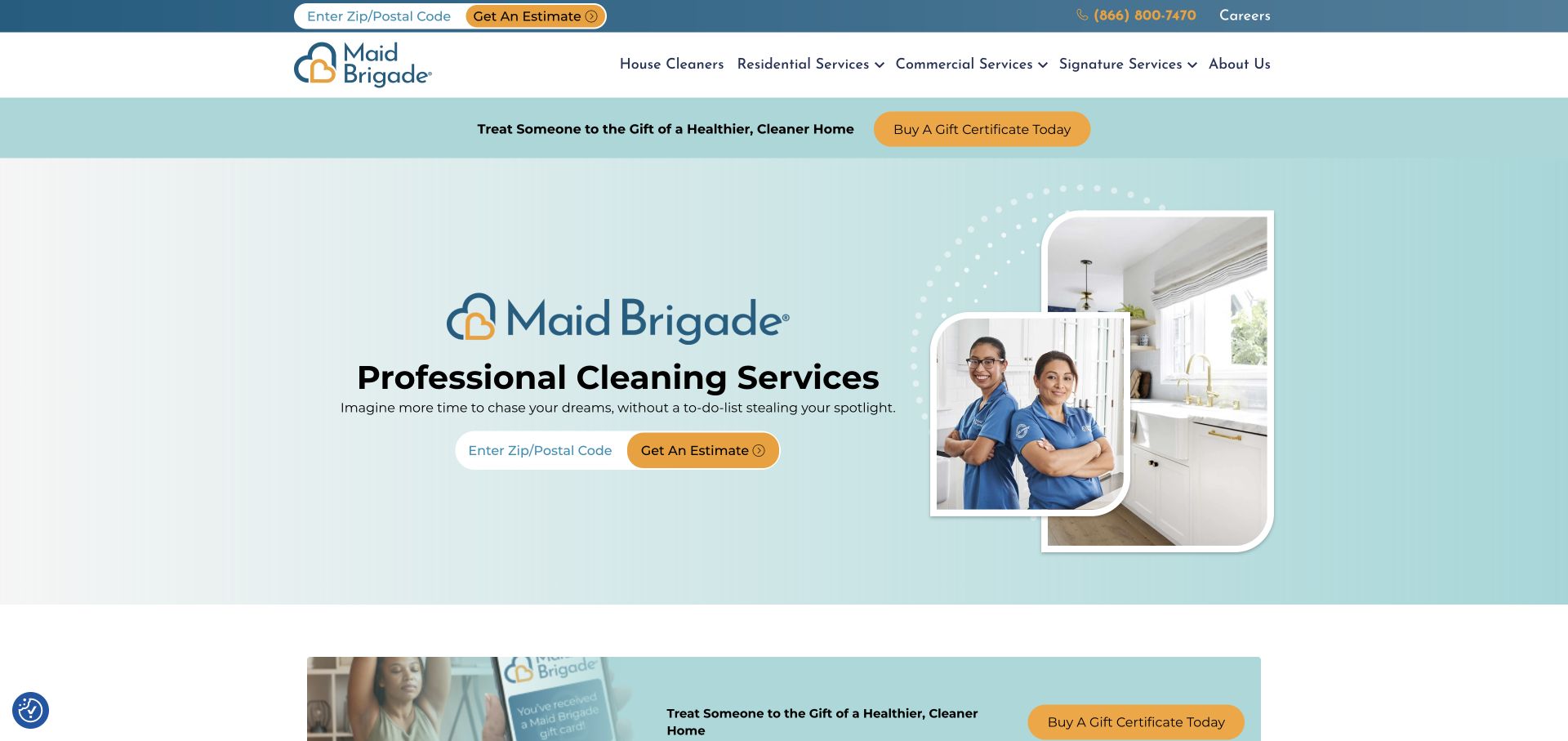
Maid Brigade places a postal-code field and estimate action in both the utility bar and the main introduction. A small photograph of cleaners supports the service description, while residential and commercial routes remain in the header. The page makes location a useful first question. Consent implementation should preserve the entered code through preference changes and avoid making optional marketing decisions necessary for discovering service availability. The dated CookieYes resource reference establishes a scoped integration, not a compliance or enforcement finding.
What you can learn
Treat the postal-code field as part of a recoverable service journey. Keep its purpose clear, preserve useful input on errors and separate local matching from optional promotional data collection.
Pros
The postal-code entrance connects the broad cleaning offer with a concrete availability question that visitors can answer quickly.
Residential and commercial service links provide alternatives for people who need scope information before requesting an estimate.
Cons & considerations
Repeated location fields should remain synchronized or clearly independent so visitors do not enter contradictory information in two places.
The public consent reference does not verify local coverage, estimate accuracy or the data handling of franchise and scheduling systems.
Public source checked November 3, 2026. References may be embedded or legacy—not a complete backend inventory.
Platform source: Dated public page resource observation. The public source page referenced CookieYes resources on 2026-11-03. This is a scoped integration signal, not proof of configuration or successful behavior. The direct screenshot retains its separate original capture date. Platform evidence is separate from the direct website screenshot and is not a complete current infrastructure audit.
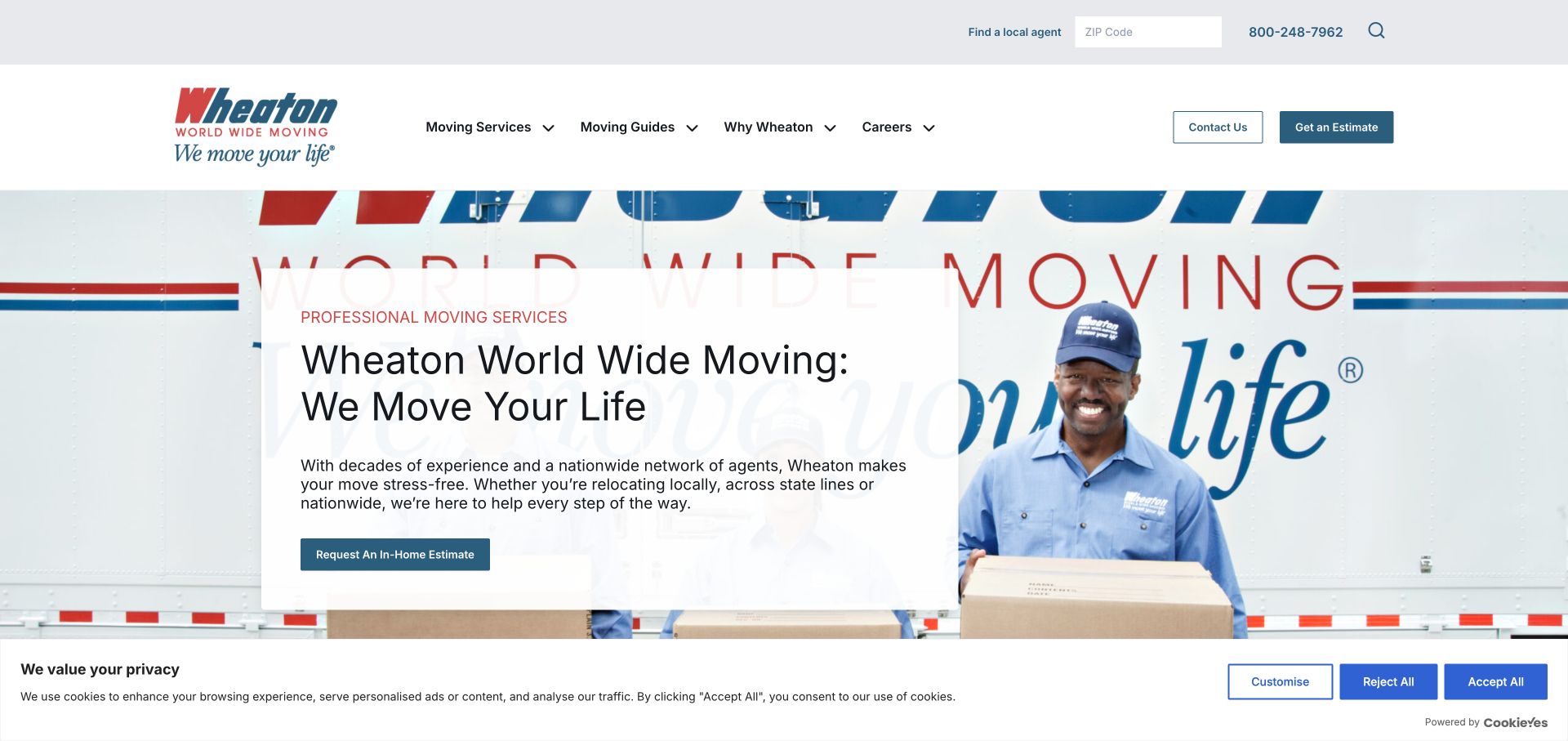
Wheaton World Wide Moving combines a truck and mover photograph with a white introduction card and an estimate action. A local-agent search and phone number sit above the header, while a CookieYes-branded strip is visible below. The page offers several routes for visitors planning a move. Consent design should preserve those routes without collecting more journey detail than necessary to operate the selected service. The dated CookieYes resource reference establishes a scoped integration, not a compliance or enforcement finding.
What you can learn
Keep agent discovery and quotation steps separate from optional measurement. Test that preference changes preserve entered location details and leave a usable phone or agent route if the form cannot continue.
Pros
The photograph supplies a concrete service context while the white panel keeps the introduction readable against the branded truck.
The local-agent search offers a practical alternative to the general estimate action for visitors seeking regional assistance.
Cons & considerations
The combination of a utility bar, main header and consent strip leaves less room for introductory information on small screens.
A visible consent banner does not establish how local agents, quotation providers or other connected services handle the visitor's choices.
Public source checked November 3, 2026. References may be embedded or legacy—not a complete backend inventory.
Platform source: Dated public page resource observation. The public source page referenced CookieYes resources on 2026-11-03. This is a scoped integration signal, not proof of configuration or successful behavior. The direct screenshot retains its separate original capture date. Platform evidence is separate from the direct website screenshot and is not a complete current infrastructure audit.
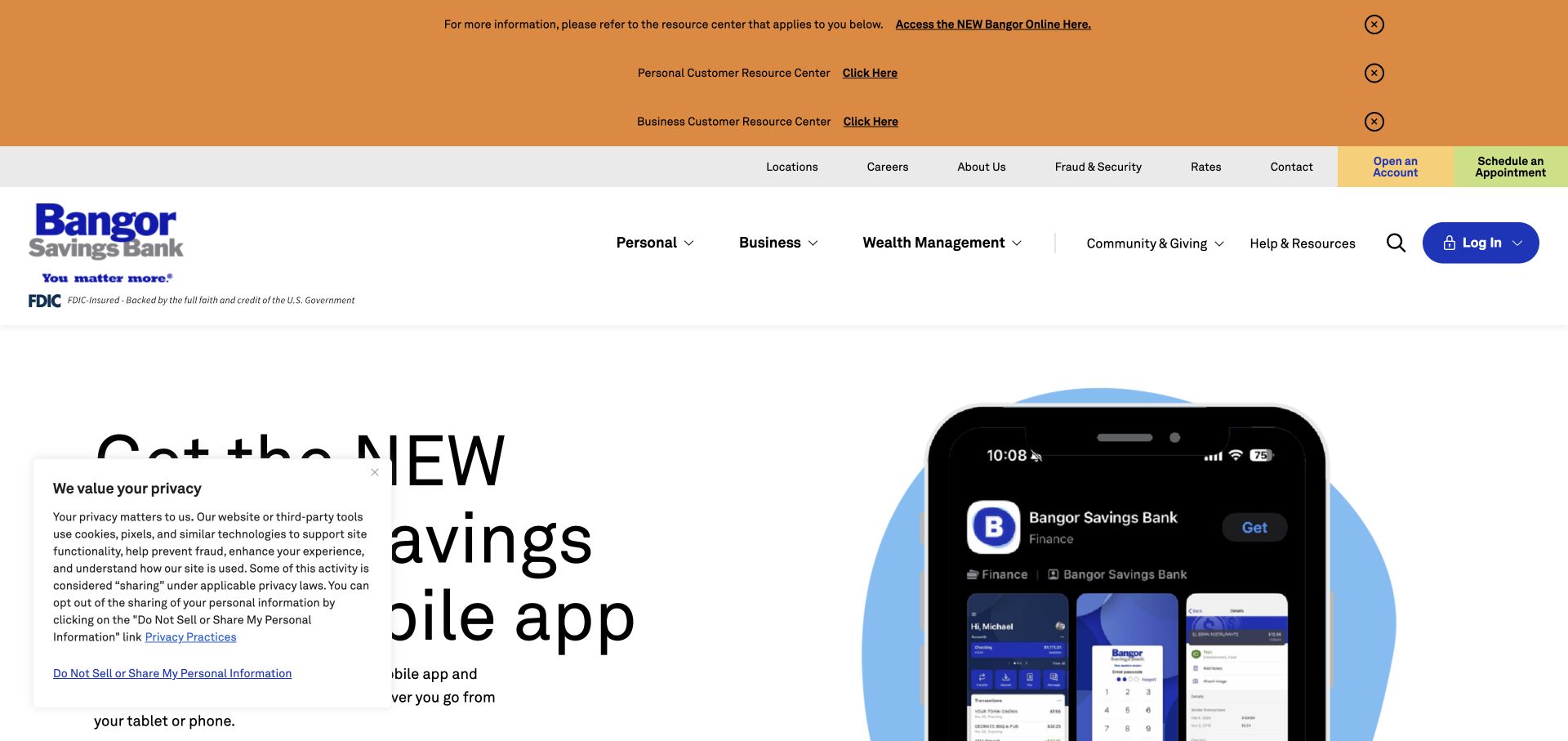
Bangor Savings Bank places several orange resource notices above its main navigation and a mobile-app promotion. A privacy panel occupies the lower left in the retained screenshot. The composition reflects a page serving existing customers as well as prospective ones, making access to login, help and security information particularly important. Optional consent layers should not obscure critical operational notices or make the secure banking entrance ambiguous. The dated CookieYes resource reference establishes a scoped integration, not a compliance or enforcement finding.
What you can learn
Prioritize essential customer routes before adding promotional or preference layers. Test login and security-help visibility at short screen heights, while keeping the public marketing site's evidence separate from authenticated banking systems.
Pros
The operational notices are visually distinct from the standard navigation, helping returning customers identify information about a service change.
The login control is isolated as a clear action rather than mixed into a long list of promotional links.
Cons & considerations
Multiple notices and a privacy panel can overwhelm the initial view and need a deliberate priority order on mobile.
The CookieYes observation does not establish security, financial-product suitability or consent behavior inside the separate authenticated banking application.
Public source checked November 3, 2026. References may be embedded or legacy—not a complete backend inventory.
Platform source: Dated public page resource observation. The public source page referenced CookieYes resources on 2026-11-03. This is a scoped integration signal, not proof of configuration or successful behavior. The direct screenshot retains its separate original capture date. Platform evidence is separate from the direct website screenshot and is not a complete current infrastructure audit.
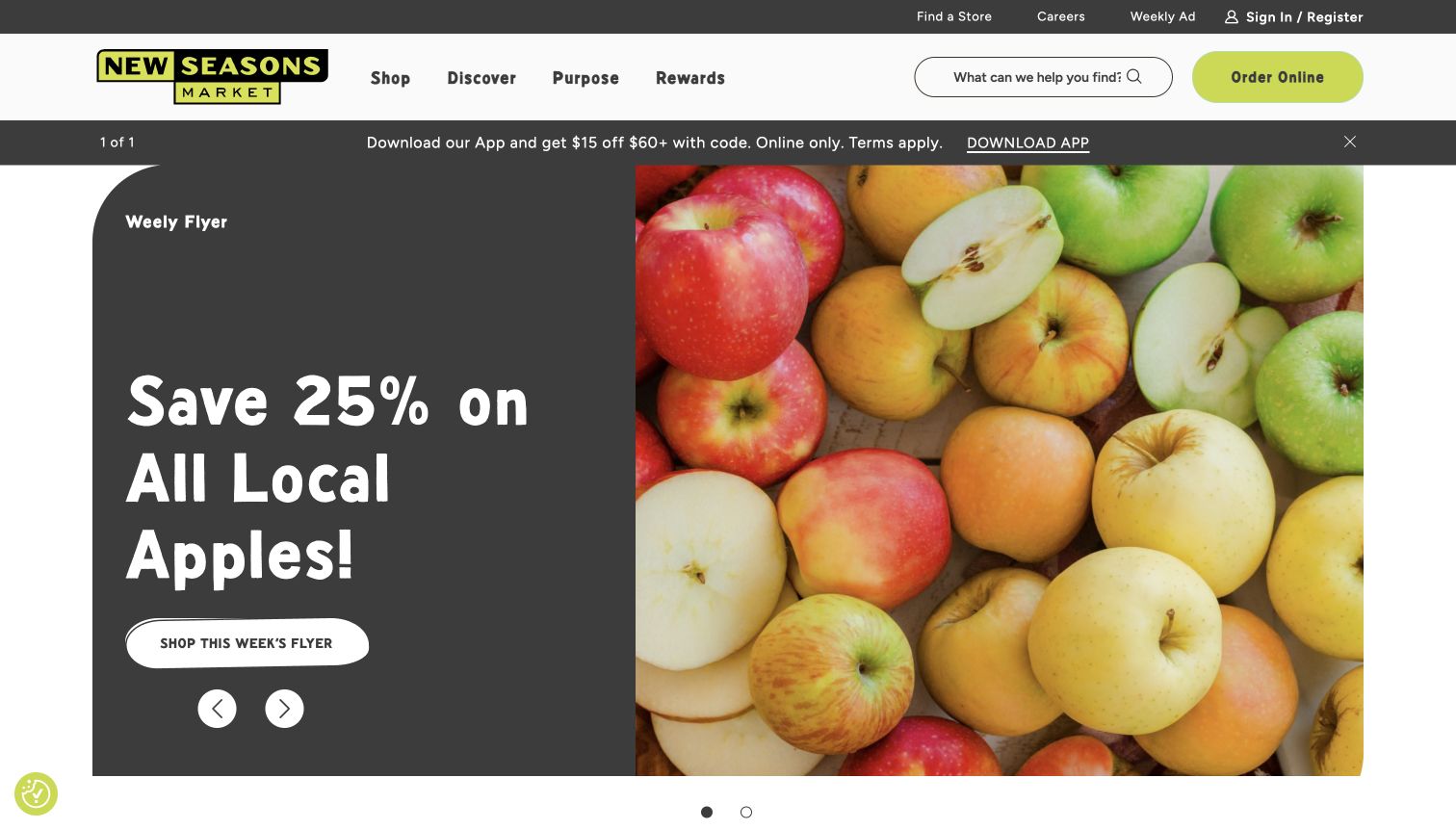
New Seasons Market gives a local-apple promotion a large split layout, with clear copy on the left and product photography on the right. Search, online ordering, stores and the weekly ad remain available above. The page is useful for studying a retail entrance that depends on current offers and location context. Consent controls should preserve the weekly-ad route and ordinary store information even when optional personalization is unavailable. The dated CookieYes resource reference establishes a scoped integration, not a compliance or enforcement finding.
What you can learn
Test promotional links and store utilities under each preference state. Keep offer dates and location limits with the promotion, and preserve a plain route to the weekly flyer when richer presentation fails.
Pros
The split composition makes the promoted product and action clear without placing important text over a complex photograph.
Store access, search and ordering remain visible, supporting shoppers whose immediate goal is unrelated to the featured offer.
Cons & considerations
Promotional claims and app incentives need current terms; the screenshot records a dated presentation rather than a continuing price promise.
The public consent reference does not establish preference handling, stock accuracy or order completion in connected grocery-commerce systems.
Public source checked November 3, 2026. References may be embedded or legacy—not a complete backend inventory.
Platform source: Dated public page resource observation. The public source page referenced CookieYes resources on 2026-11-04. This is a scoped integration signal, not proof of configuration or successful behavior. The direct screenshot retains its separate original capture date. Platform evidence is separate from the direct website screenshot and is not a complete current infrastructure audit.
Give an article title, publication identity and reading entrance sufficient room. A lower panel can still crowd a short screen, so test both the opening and scrolling states. Review whether the visitor can reach the article and preference controls without repeated interruptions.
Support place and service decisions
Location and service sites often combine phone numbers, service regions and forms. Keep that practical information legible when consent controls are present. If an optional map cannot load, provide a plain address and a useful route forward.
Support equipment and product comparison
Product photography needs adjacent labels and navigational context. Evaluate consent placement beside category menus, sticky shopping controls and promotional panels. Avoid a sequence of stacked dismissals before a visitor can understand the offer.
From references to requirements
Plan configuration alongside the content system
Record the deployment route
Identify whether the site uses the WordPress plugin, a direct script or another documented integration. Keep the current version and responsible owner in the project notes. Test updates in a safe environment before copying changes to a shared template.
Map consent signals to actual tags
CookieYes provides Google Consent Mode integration guidance. Treat that as one named integration with its own setup and checks. Document the tags and intended states you actually use, and inspect those states instead of treating a banner screenshot as proof of correct signal handling.
Test a first visit, a return visit and a changed preference. Include translated content, keyboard navigation and optional embeds. Keep an observable result for each check so a later template or plugin update can be compared with the prior behavior.
A useful handover demonstration
Ask the actual team to carry out its routine job: publish a realistic update, correct a mistake, preview a narrow screen, and identify who owns an integration failure. For a library or frontend framework, also ask who maintains the content source and deployment. A polished screenshot does not answer those operational questions.
Beyond the screenshot
Before releasing a CookieYes integration
Record the actual CookieYes integration type and maintained version.
Inventory scripts, embeds, tag managers and their responsible owners.
Review clear choice labels and a discoverable preferences entrance.
Check translations, focus behavior and keyboard navigation.
Inspect overlaps with fixed headers, promotions and support controls.
Test any configured consent signals against the intended tag behavior.
Verify first, returning and changed-choice states in a test environment.
Retain the configuration decision and a dated release check.
Test with real content, a keyboard, a small screen, slow or failed requests, and the people who will maintain the system. These are planning checks, not an accessibility, security, performance, or search-ranking certification.
Sources & editorial method
How this CookieYes collection was reviewed
The collection was authored on November 4, 2026 using genuine direct browser screenshots with their original capture dates, dimensions and source URLs. Public resource observations preserve their own timestamps. CookieYes cloud and WordPress plugin evidence remains scoped to the observed property. No real forms were submitted, and the reviews do not establish consent enforcement, recording, regional coverage or legal compliance.
Every image is an unmodified capture from the actual website, with its source and capture date. Some captures are reused from our shared catalog; their dates remain the original capture dates. None comes from a vendor gallery or a generated reconstruction. Moving imagery and live content can change.
Technology attribution uses public page assets or metadata, official platform documentation, or a cited first-party project case study. Documentary and framework-relationship evidence is identified where used; it is not a complete current backend inventory. A CMS image CDN alone does not establish a full CMS deployment. A library’s presence does not prove which individual controls use it, and a platform label does not establish AI authorship.
The composition notes, lessons, pros and tradeoffs are original editorial observations. We have not measured conversion, traffic, security, performance or accessibility conformance. Website owners retain their brands and imagery; these examples are not our client portfolio. Written, Edited and Curated are independent records, not dates advanced by a build. See our editorial standards or suggest a correction.
Questions worth asking
CookieYes website development FAQs
Are CookieYes and its WordPress plugin the same observation?
They belong to the named product ecosystem, but a plugin resource path and a cloud script reveal different implementation details. Each example preserves the resource actually observed instead of asserting a shared configuration.
Does the collection prove Google Consent Mode is enabled?
No. A CookieYes reference alone does not identify configured integrations or their state. Consent Mode needs its own configuration evidence and behavior checks.
Why include sites without a visible consent panel?
The screenshot and resource observation answer separate questions. One records the page design at a moment in time; the other identifies a dated public integration signal.
What should I borrow from these examples?
Borrow a useful relationship between navigation, content and fixed interface elements. Write your own labels and verify the behavior against your site’s actual inventory and requirements.